
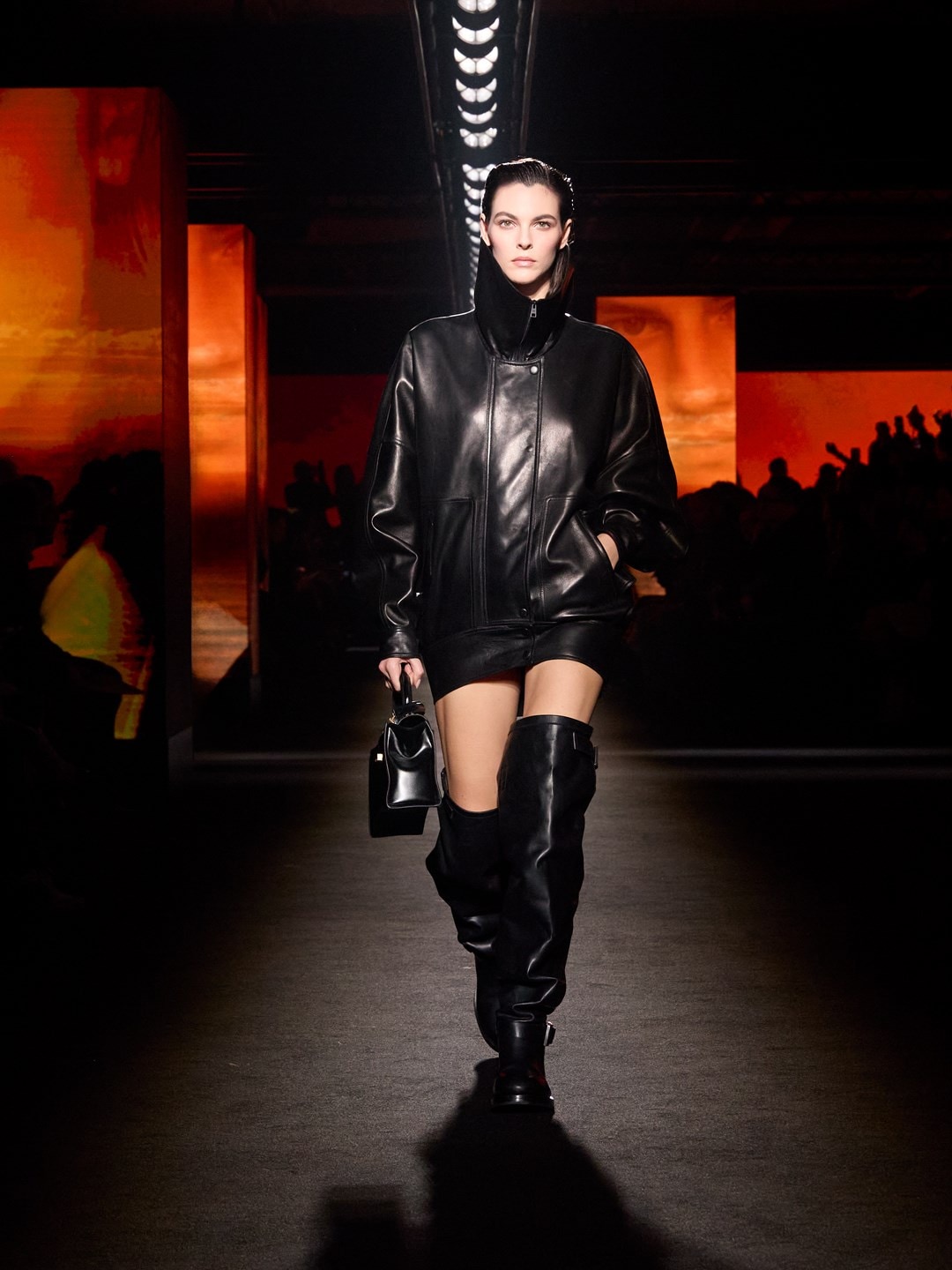
“A fresco of humanity.” That was a powerful declaration of intent from Pierpaolo Piccioli for his second Balenciaga show. To amplify it, he enlisted the filmmaker Sam Levinson, who interpreted the notion as a literal frieze of video screens juxtaposing premiere snippets of characters from the forthcoming third season of his seminal television series Euphoria, with deserted landscapes and broiling sunsets that glowered up Balenciaga’s nighttime venue like a three-bar fire. Outside, there was a second fresco of humanity, rather less controlled, in the form of thronging crowds of fans enthused for the fashion house and, perhaps, Euphoria’s famed cast.
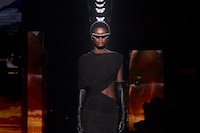
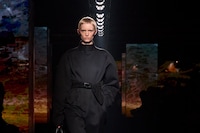
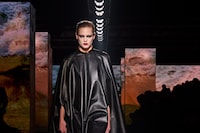
Piccioli provided a third interpretation of the notion, not least in a cast that charted as one of the most diverse and all-encompassing of the entire season in terms of age, ethnicity and size inclusivity. Those are, of course, ideas deeply ingrained in Piccioli’s creative psyche – a few years ago, in his prior incarnation as creative director of Valentino, he designed an haute couture collection specially engineered not for the stereotypical singular, rake-thin couture ‘ideal’, but a great swathe of divergent body types and sizes; another was entirely shown on models of colour.
Piccioli titled his collection ClairObscur, after the French term for one we borrow from his Italian, chiaroscuro. That said, France is actually where the idea originated, with seventeenth-century art critic Roger de Piles in his Débat sur le coloris – yet Piccioli’s take was decidedly Mannerist, a great big old Roman pile-up of draped velvet dresses and grand swooping coats and face-framing sculptural collars, illuminated profiles projecting proudly. Deeply shadowed like Caravaggio figures, their nuances of glowing watermelon, Goya green and liturgical purple could’ve been frolicking on – you guessed it – a Renaissance fresco. Or, equally, colouring the neon tubes of truck stop signage, in Levinson’s grittier take. It’s all about perspective, after all. They also nailed a petroleum-hued colour-story that’s shaded the entire season, so were bang on the money.

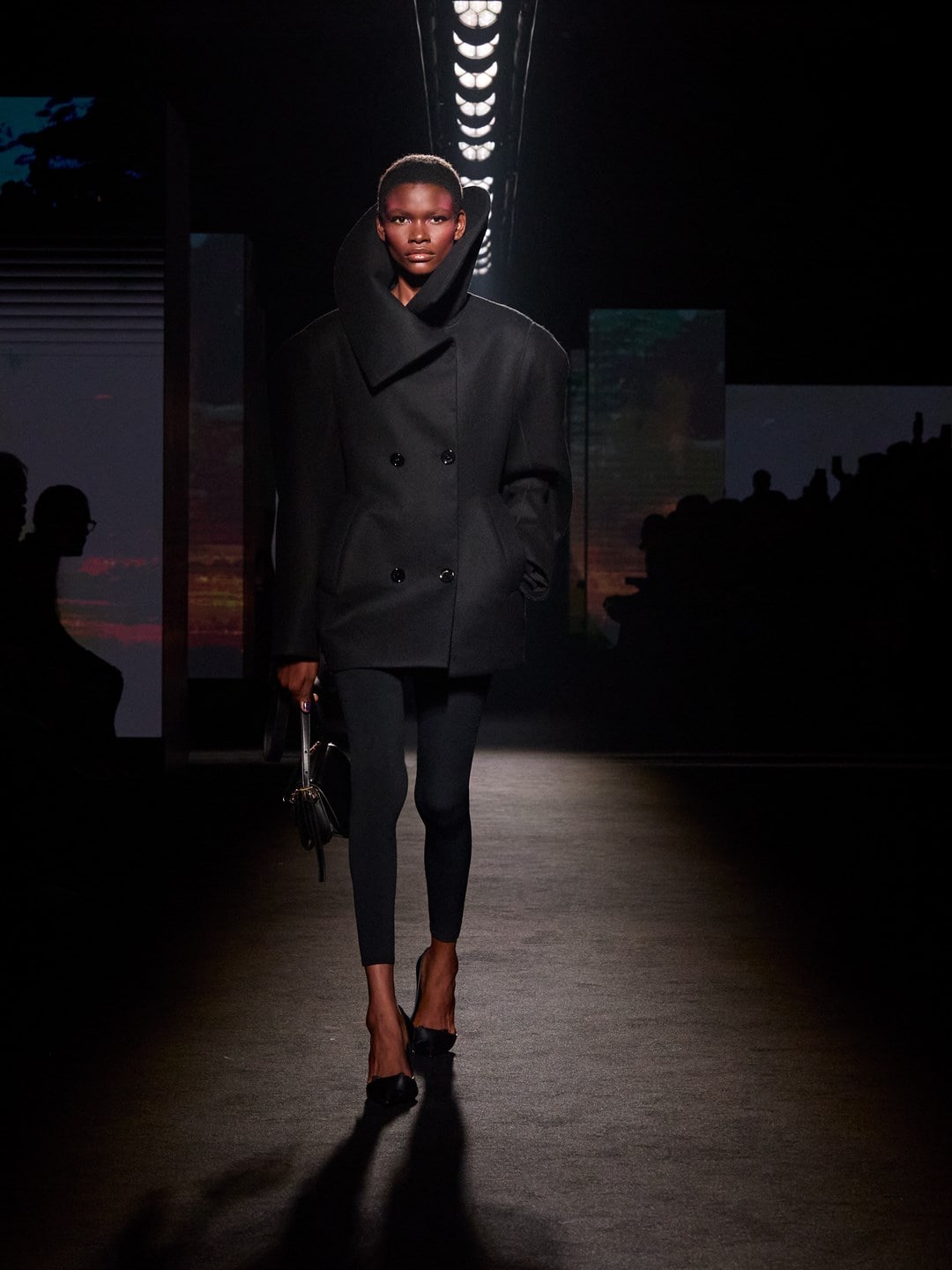

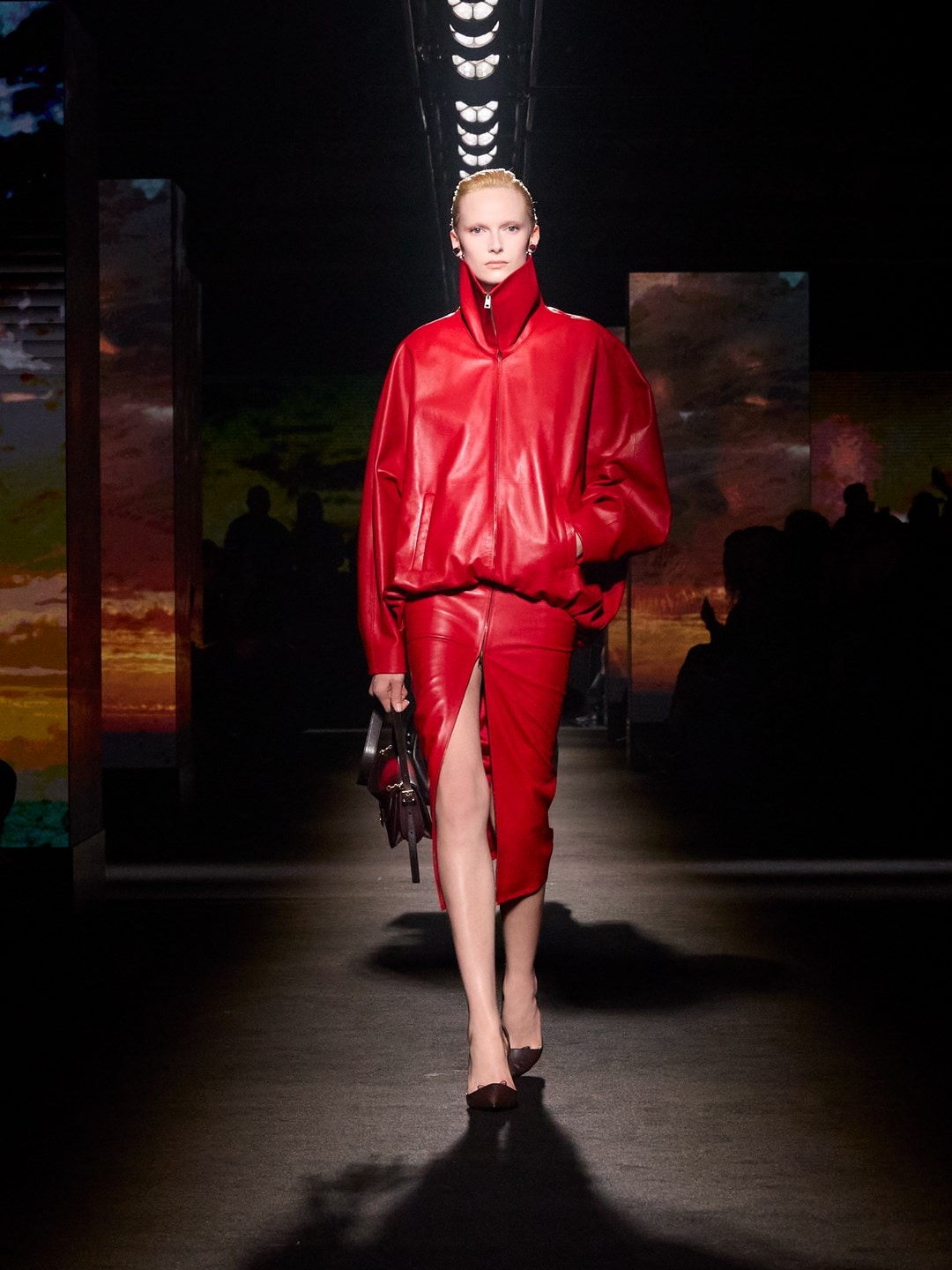
If Piccioli declared he was finding the light in this show, it was also about him finding himself, after an opening salvo that paid a degree of reverence to Cristóbal’s legacy, and also reflected his respect for Demna’s ground-breaking tenure. Perfectly-pitched tailoring and dresses that seemed to freeze deeply-shaded swathes of jersey against the body were more Piccioli’s language – although, granted, if you squinted, you could see Francisco de Zurbarán there too, who inspired many a frigidly elegant Balenciaga evening gown back in the day. Here, however, they slithered across and slinked open on the skin in a decidedly twenty-first century interpretation.
The clearest expression of clair-obscur came in a sequence of column dresses and bags embroidered and patinated to seem as if light was cast sharply across their surfaces. They had a noble beauty. The light-dark thing was more readily expressed through physically light clothes and dark colours, sometimes obscured by the pitch-black venue. That said, their richly textured materials gleamed with lustre as they moved through Cimmerian gloom – bar the light cast by Levinson’s ever-flickering video screens. Those included the house’s signature gazar, the matte-est of wools, and a leather that, Piccioli said, was pressed with cashmere cloth to give its sheen a peach texture, even in black. In a sense, that was playing to a skill Piccioli rarely showcased: his eye-socking sense of colour often means his sensibility with fabrics takes second place. At Balenciaga, he’s making choices that are unusual: a cotton jersey voile for a columnar evening dress, for instance, deflating its formality with the attitude of a T-shirt. Likewise, instead of restrictive corseting, the inside of gowns were held in place with knits – light in feeling, not just the visual.
Piccioli is barely three collections into his iteration of Balenciaga, chiming his own romantic and poetic approach with the brand’s contemporary urgency and cultural currency, let alone the big black shadow cast by Cristobal Balenciaga’s awe-inspiring legacy. His vision is expanding, and evolving. Up next is the haute couture.
