
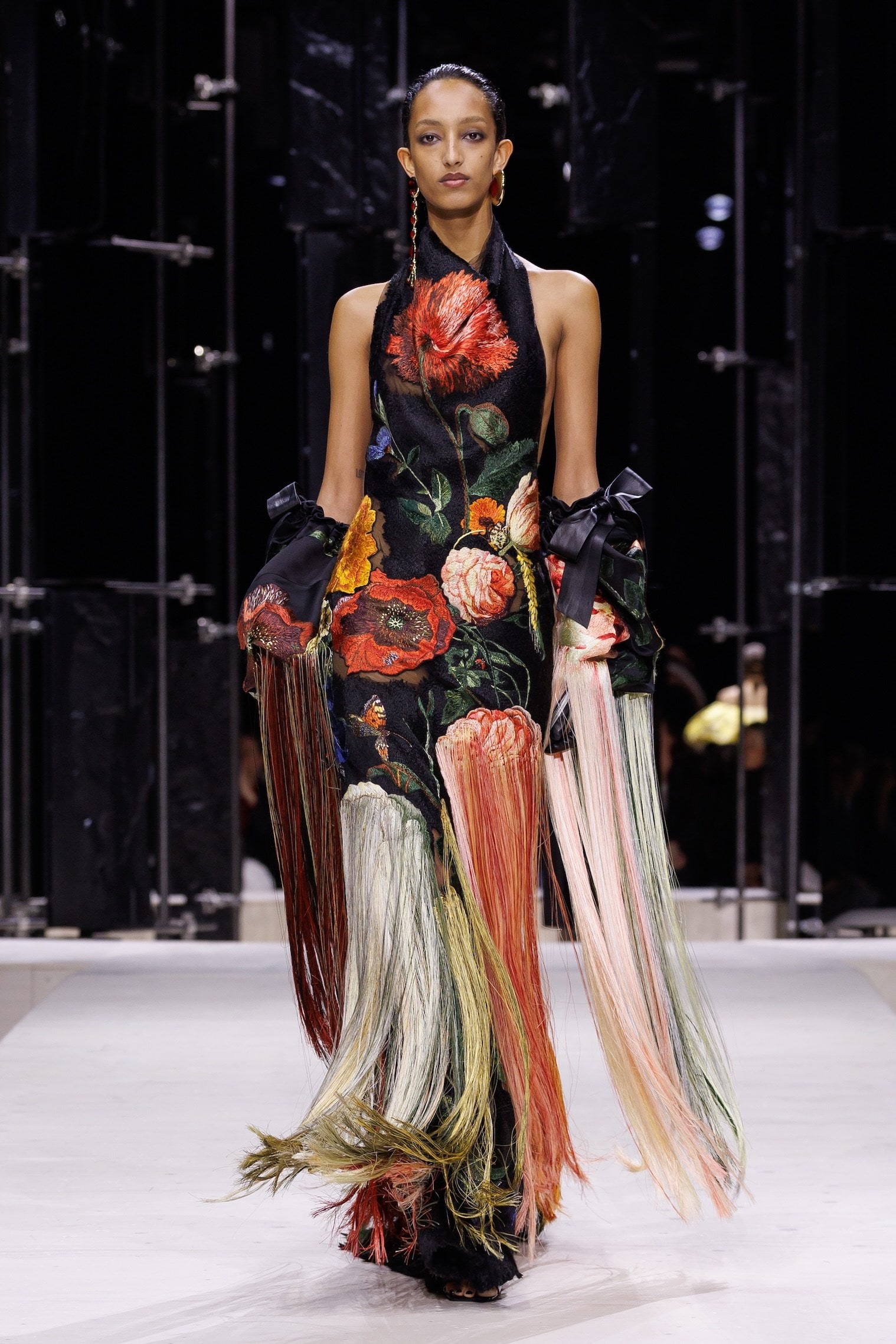
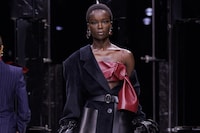
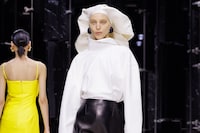
There were headpieces at Sarah Burton’s third show for Givenchy that had a solemn, chaste grandeur – they were part Benedictine abbess, part 1960s Richard Avedon couture portrait, a couple of parts old Dutch master. Double dutch, double duchess – in actual fact, they were all T-shirt, said the milliner Stephen Jones backstage, confessing to their humble origins (although they were in that cloyingly heavy, clotted cream-like satin). You can take Burton out of London and plonk her in one of the hautest, snobbiest French haute couture houses, but there’s still the grit of the penniless invention of the 1990s London fashion scene informing her decisions.

I say Givenchy is snobby because it is, and he was – unlike the bourgeoise Dior, whose family dealt fertiliser before they went bust during the Depression, or Balenciaga, whose father was a fisherman, le comte Hubert Taffin de Givenchy was … well, exactly that. His dad was a marquis, his family owned the Gobelins and Beauvais tapestry factories, who made hangings for kings and emperors. Le nepo bébé? Kind of. His mother and grandmother, who raised him, wore couture, and a teenaged Givenchy was apprenticed at Jacques Fath, later Elsa Schiaparelli, before starting his own house at the tender age of 25. In short, he never put a T-shirt on someone’s bonce.
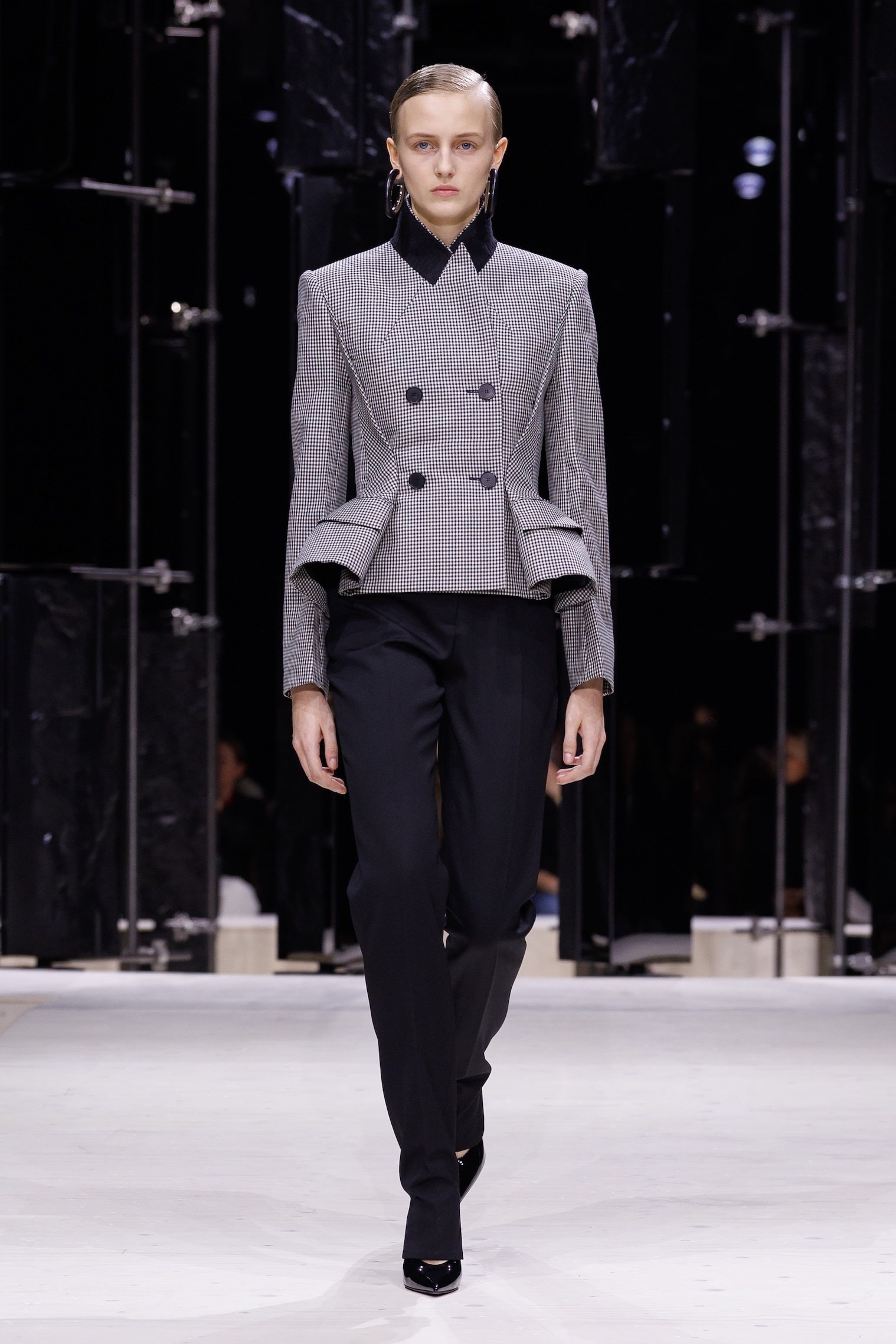
But that was then, and him, and there, and this is now. The spirit of Hubert de Givenchy did stalk Burton’s Autumn/Winter 2026 show, which was unequivocally her best since she started at his house. And the best bits were those Givenchy bits, both the gestures to his work – those headdresses, the fluted peplums of taut little jackets, the bubbling volume and dipping back of a crisp white blouse – but his literal ghost, through shorn-headed women in formidable gentleman’s tailoring, double-breasted, pinstriped, with shirt and tie, exactly what the patrician couturier wore every day of his career. Those women looked fantastic, and so those suits – uncluttered, unfused, and quintessentially unchanged from what le comte wore. Although, with Burton’s skewed hand and eye, they wound up Kray Twin, rather than ever looking twee.


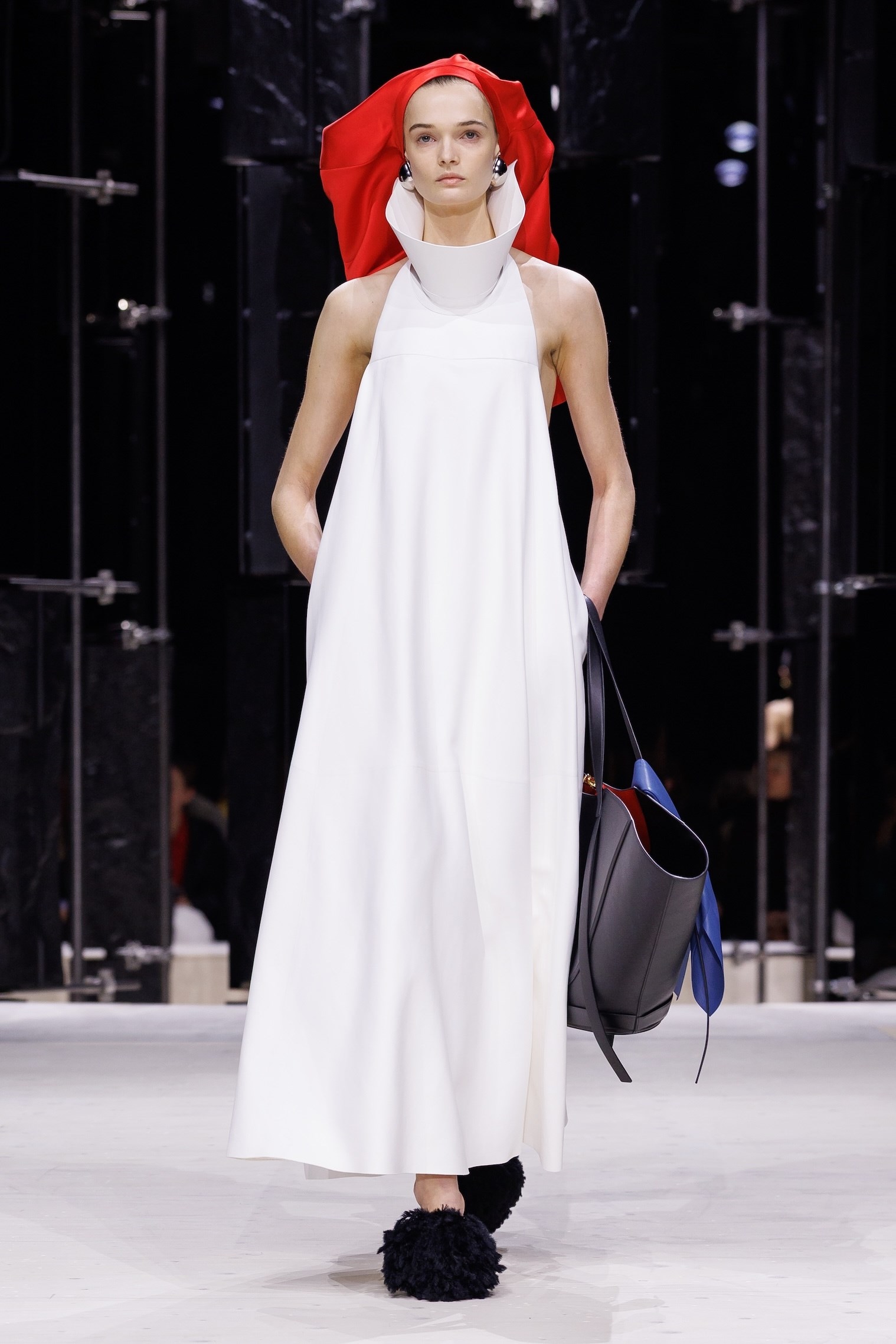
The same was true, actually, of this whole offering. If couture chez Givenchy was a chapel – devoted disciple as he was of Cristobal Balenciaga – Burton’s nuns were on the run, her wimples executed not only in purest white but red as sin, habits slit high against the leg. Silk foulards were transmuted to fetishistic leather, and there were nods to Givenchy’s own past, a dress woven like a tapestry with a 17th-century-ish Dutch floral still life, disintegrating into loose threads as if the weaver got bored halfway through. A prissy, delicate and classically Givenchy dress of guipure lace, threaded with black satin ribbons, seemed to have been chopped up into leggings, worn under a bomber jacket, while men’s jackets were pinched in to hourglass a waist or round hips. Couturiers of old would be aghast.
But that’s what you have to do, at a place like Givenchy – take risks, rattle those gilded cages, move fast and break things. Then painstakingly stitch them back together again, to end up with something new. “How can we put ourselves back together in the world we’re living in,” was a question Burton asked herself. Her answer was here – it’s a work in progress (give her time), yet she is refining and reiterating her language at Givenchy, figuring what she likes, what she doesn’t like, and what works. Most people have forgotten what Givenchy looked like half a century ago – which was, honestly, a frigid, static and decidedly dusty brand of gloved and pillboxed chic – so she has to invent it herself. Here, the language wasn’t so much that hackneyed masculine-feminine story, but the done with the undone, minimal with excess, reverence with a healthy dose of disrespect, to jolt Givenchy out of any potential dotage on the past and into relevancy.
Those suits said it all. Burton can cut it.
