
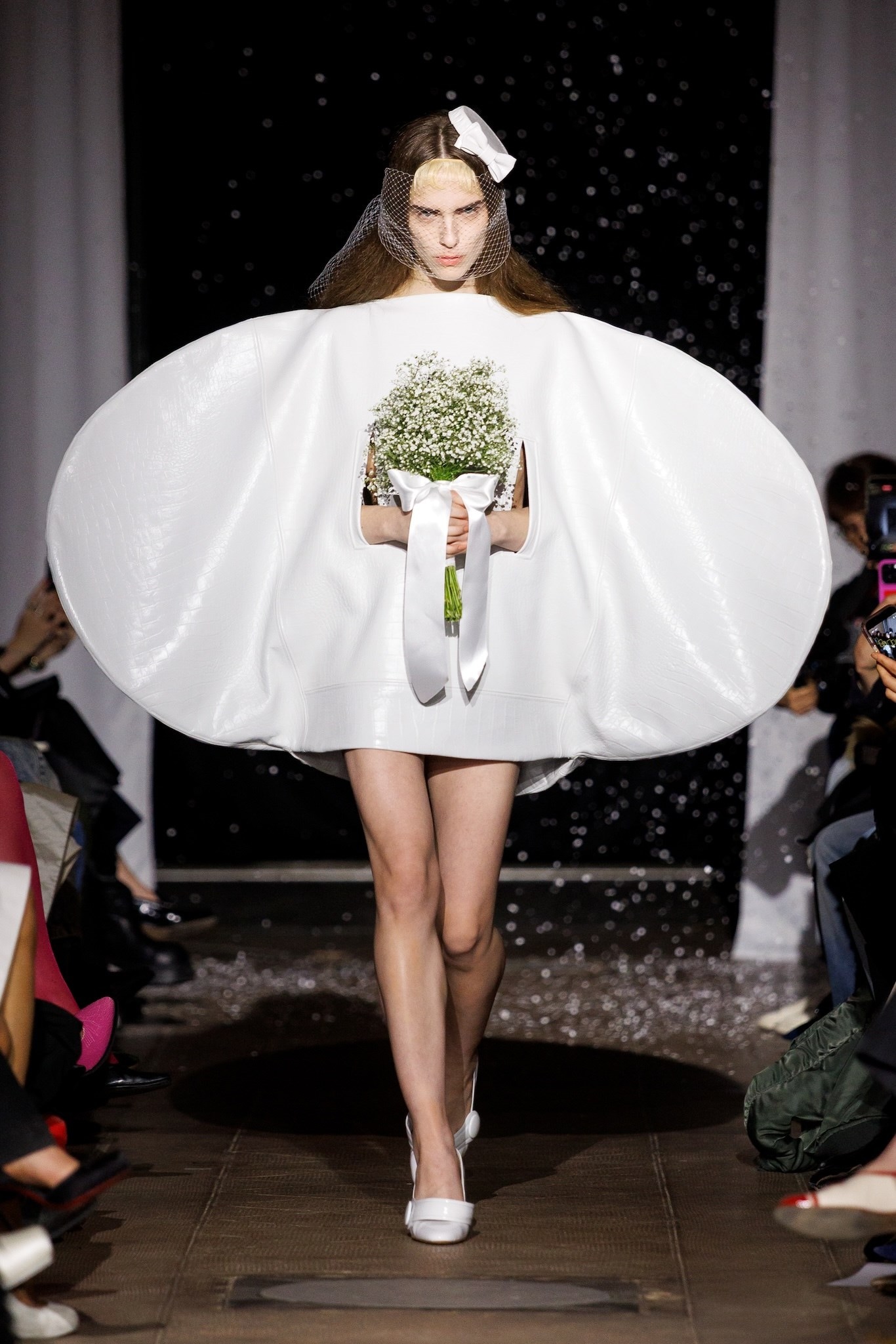
Bryn Taubensee and Patric DiCaprio of the label Vaquera staged their latest hymn to fashion in a church up past the Arc de Triomphe. Triumph, religion, French architecture? It all came together there in an Autumn/Winter fashion show that was part Pierre Cardin couture, part Crazy Horse strip show and a big ol’ chunk of Rudi Gernreich, whose aesthetic basically hovered someplace between the two. There’s an interesting anecdotal reference there, in that Balenciaga’s couture ateliers were – and, since their revival, still are – right on top of the topless dancers over on the Avenue George V. Could there be anything more Parisian than that?
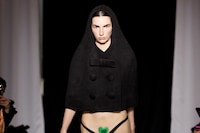
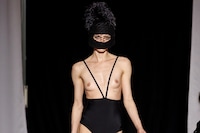
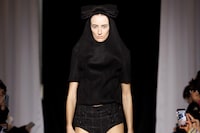
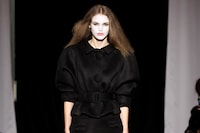
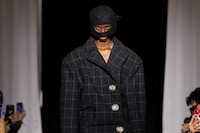
Of course, Crazy Horse is full of American tourists, which is what Vaquera still are in Paris – they moved here less than a year ago. There was an outsider’s embrace of French fashion standards in this show, like an open-top omnibus tour at breakneck, gendarme-enraging speed of tailored hooded boleros with sweet bows perched on the noggin like something by Marc Bohan or a young Hubert de Givenchy. There were zip-scarred bodycon dresses that I refuse to accept as anything other than homage to Azzedine Alaïa’s seminal 1986 originals, alongside Crazy Horse panties inappropriately worn under squared-up or puffed-out silhouettes à la Balenciaga.

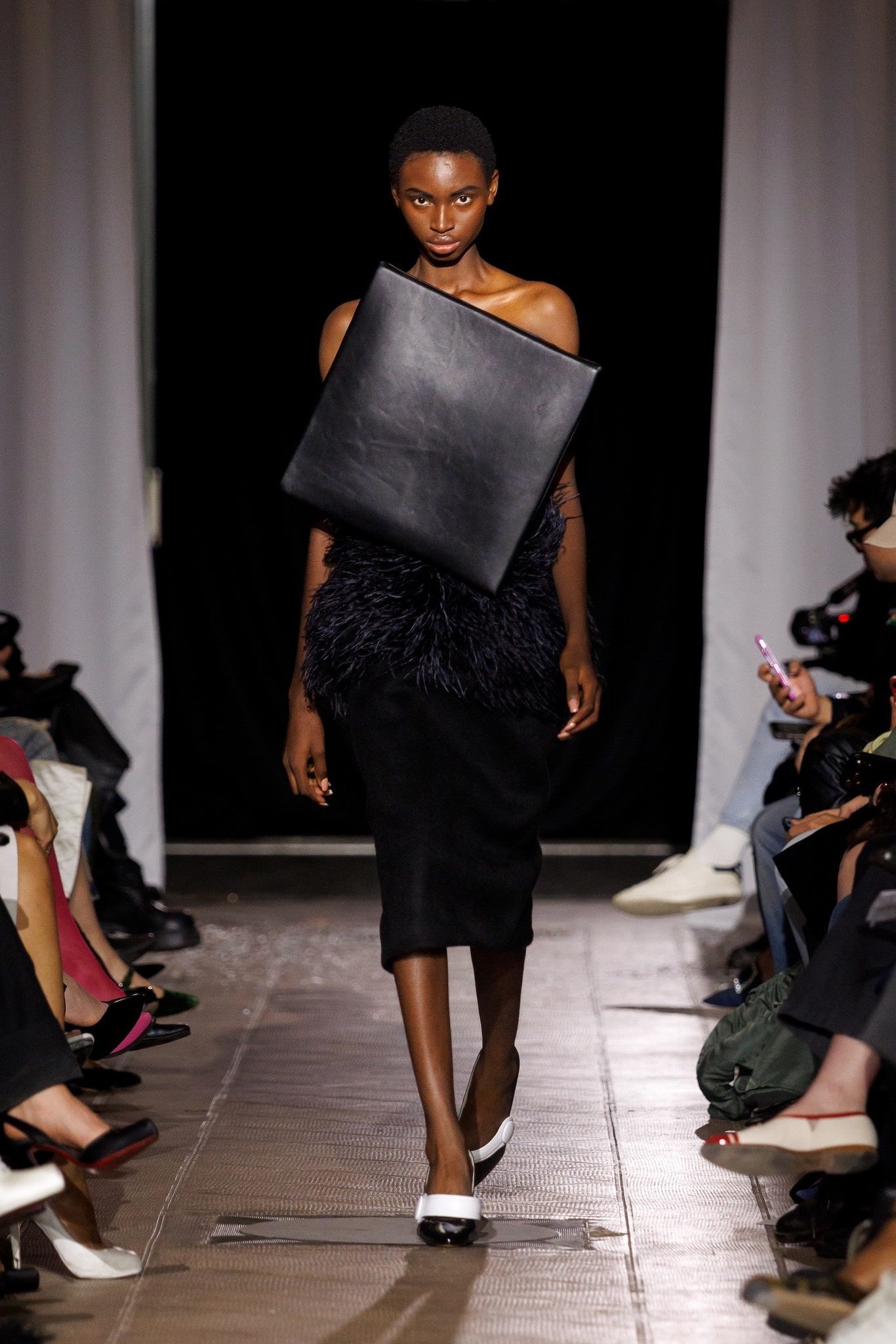

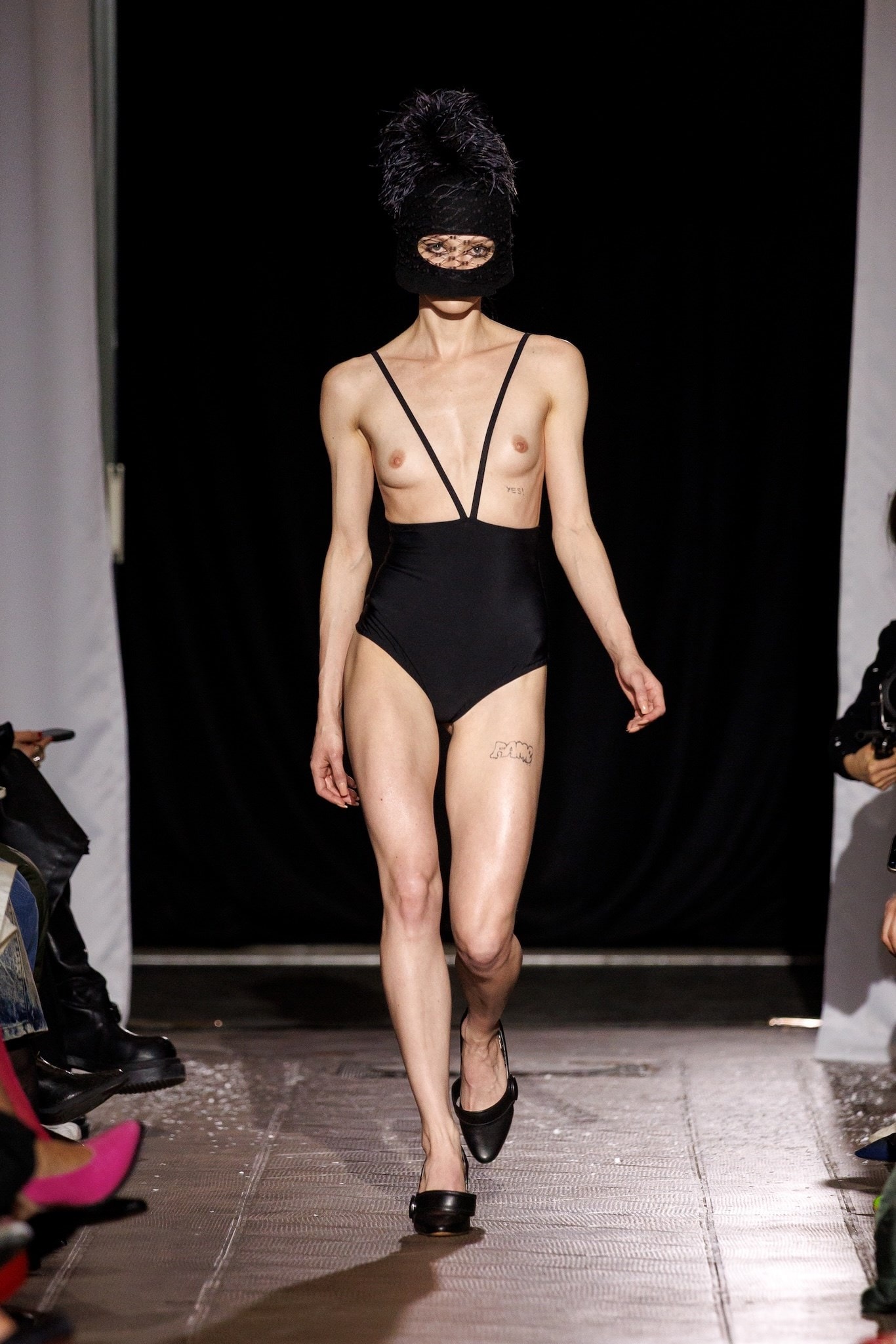
Cristóbal, or Nicolas Ghesquière? Maybe both – Taubensee and DiCaprio have talked before about their own fashion fandom. It’s a neat, post-modern take on the idea of appropriation, from the regular riff to outright theft. The crepe-flat wedding gown – spoiler opener rather than traditional couture closer – felt Cardin; the beefy black knickers haltered with a shoestring are exactly what shows up if you Google image search “Monokini Gernreich”. The geometric shapes affixed in leatherette weirdly evoked the metal dresses of the now-60-year-old Qui Êtes-Vous, Polly Maggoo?, photographer William Klein’s sarky spoof of fashion’s pomposity. It was just the first of more than a few references during the week to that film – resonating at a time when, like in the 1960s, fashion seems to teeter on the brink of either seismic change, or irrelevancy. They made you think.

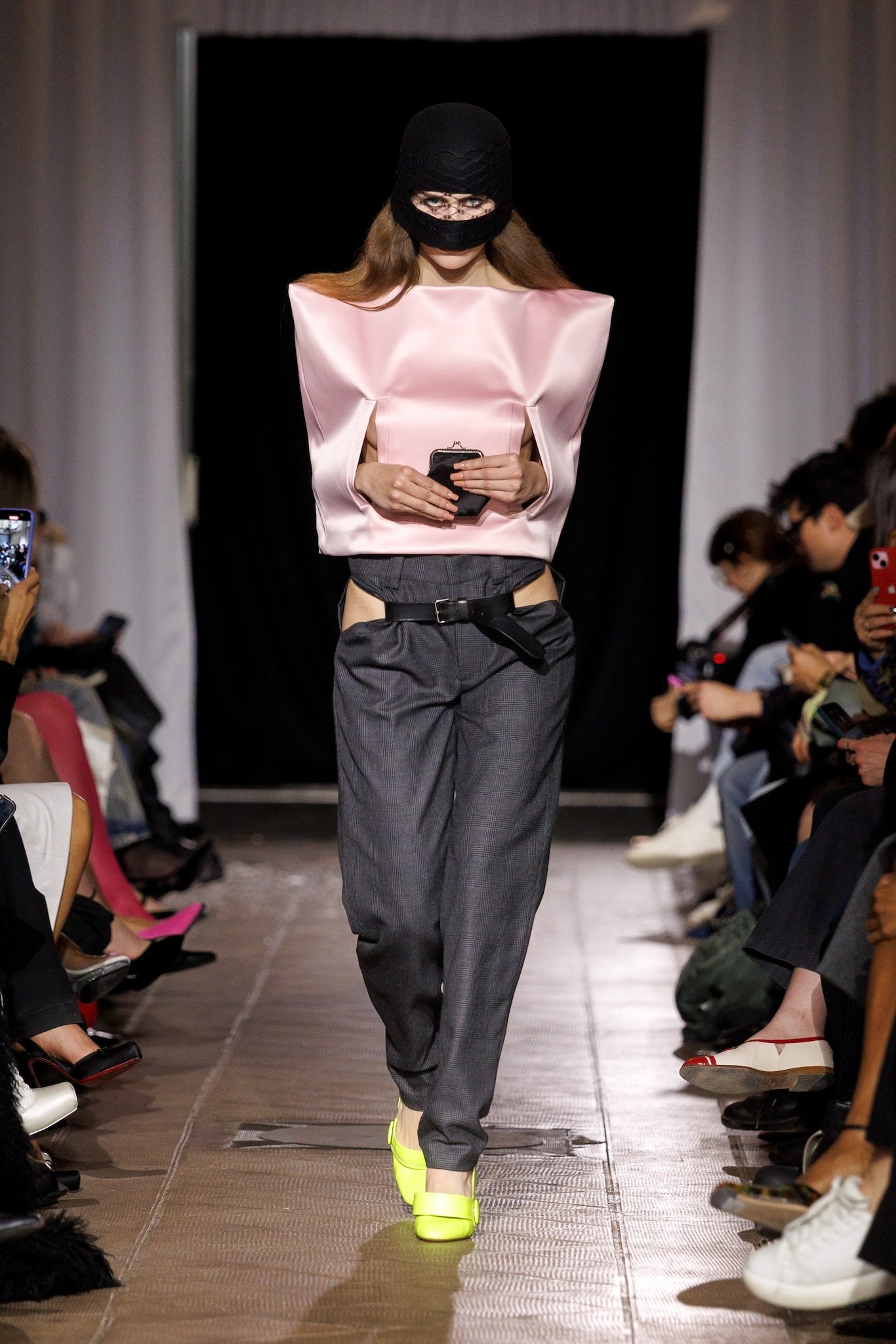

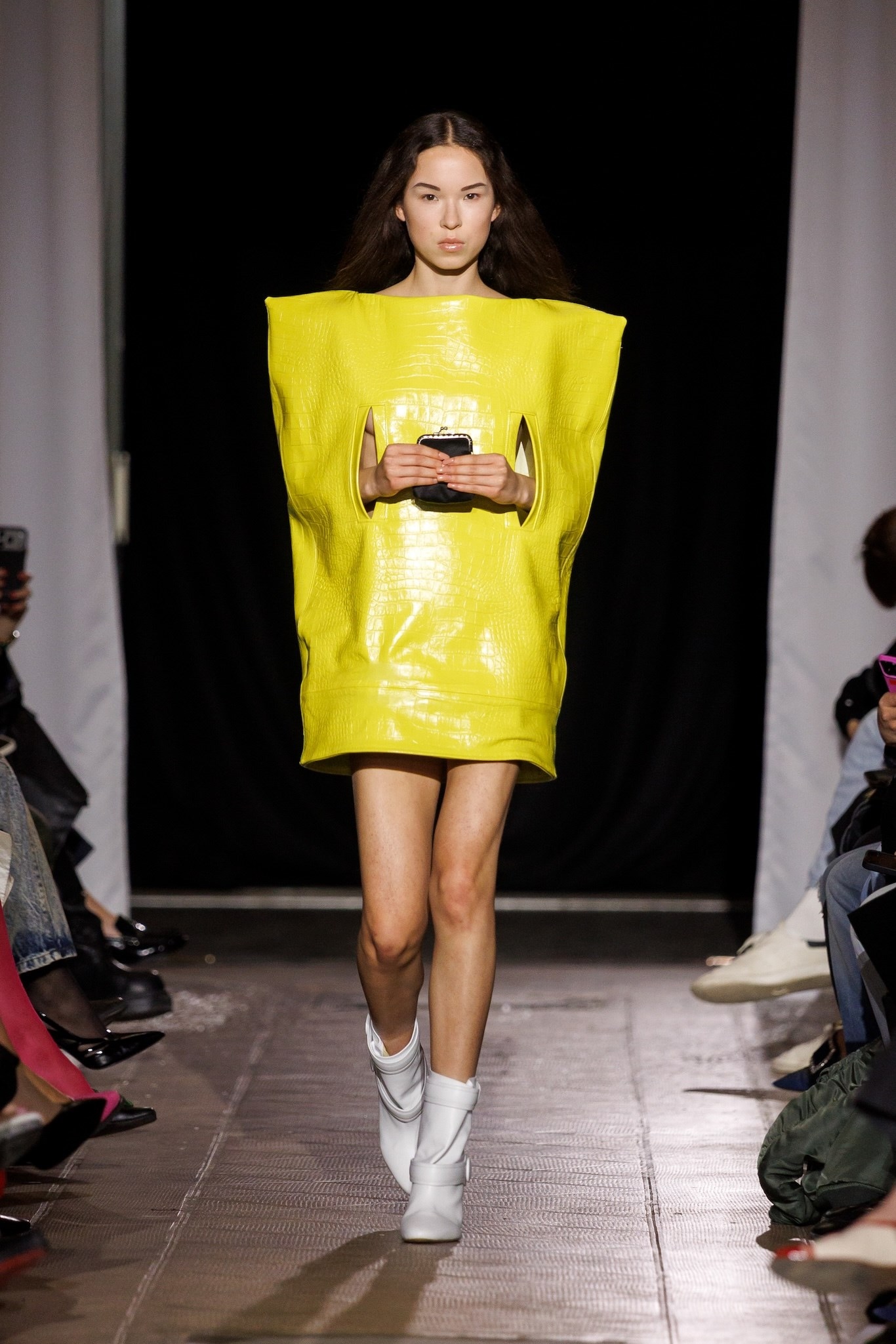
Back to the clothes, which were knowingly known – intentionally, nothing new. Vaquera can play with those stylistic quotations precisely because they’ve fashioned their own style. Their blown-out proportions, witty T-shirts and barrel-cut jeans are a ubiquitous uniform for a younger generation of stylists and editors, fashionable anti-fashion, knowing send-ups, like Polly Maggoo in polyester form. If there was, understandably, less in this topless, striptease-coded offering to immediately wear than in previous incarnations, it was nevertheless packed with ideas, and ideas about ideas.
