
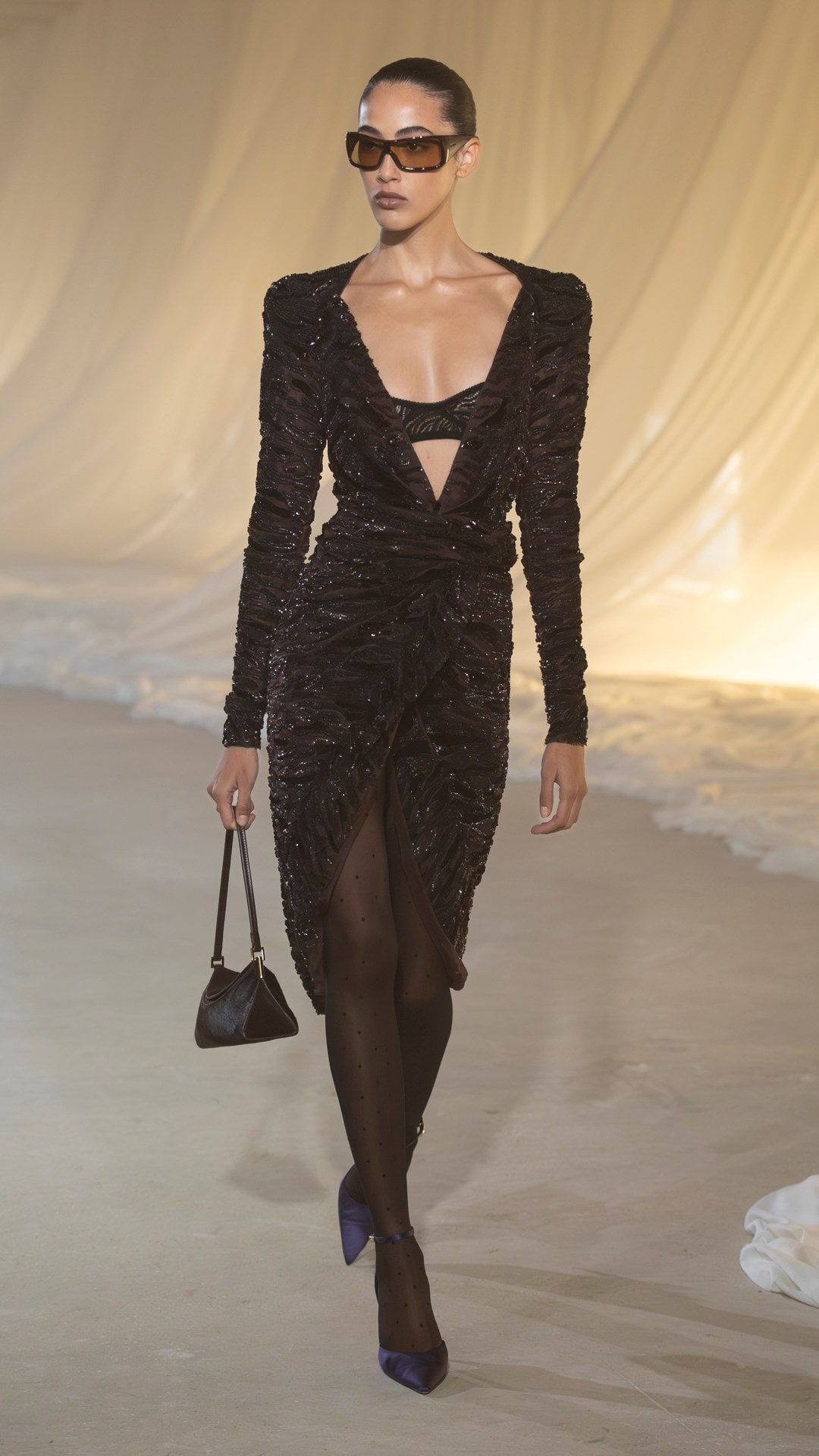
When I meet Antonin Tron, a month or so before his debut at Balmain, there’s a slender black dress in the corner of his very white studio. The skirt is wool jersey, long, ruched along the leg, seamed into a narrow bodice of black silk velvet, long-sleeved and high-necked. It looks striking, modern, an unexpected juxtaposition of materials, a sensuality that ties in with Tron’s work for Atlein, the label he founded a decade ago. The dress, conversely, is 80 years old, and it isn’t his.


It’s by Pierre Balmain – Tron shows me a René Gruau illustration of the look where, with a platter hat, white fox stole and opera-length gloves, the look is borne back ceaselessly into the past. It’s an illustration in a book titled The New French Style, of Balmain outfits with an essay by Alice B Toklas, the partner of Gertrude Stein. The outfit is described as “pour les Ballets des Champs Elysee”, to further anchor it in a literal history book. But for him, it’s the starting point for a new vision of Balmain, something strict but sensuous, gently rinsed of the excesses of decoration and silhouette of the past few years, but retaining the power.
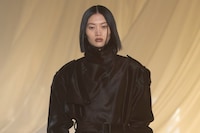
Tron’s Autumn/Winter 2026 Balmain show – his first – was composed of snippets of history, or rather histories, generally cinematic, and specifically fashion. None were as old as that dress, granted. A backdrop of billowing draped curtains nodded to couture salons of old on the one hand, but also to scenes from the Tony Scott-directed, Bowie and Deneuve-starring The Hunger, about a coven of vampires dressed in Saint Laurent and Alaïa at the cusp of the 1980s. Mixed into the music was a snippet of Qui Êtes-Vous, Polly Maggoo? – the fashion show scene, of course – and Prisoner by Barbra Streisand, which soundtracked The Eyes of Laura Mars back in 1978.

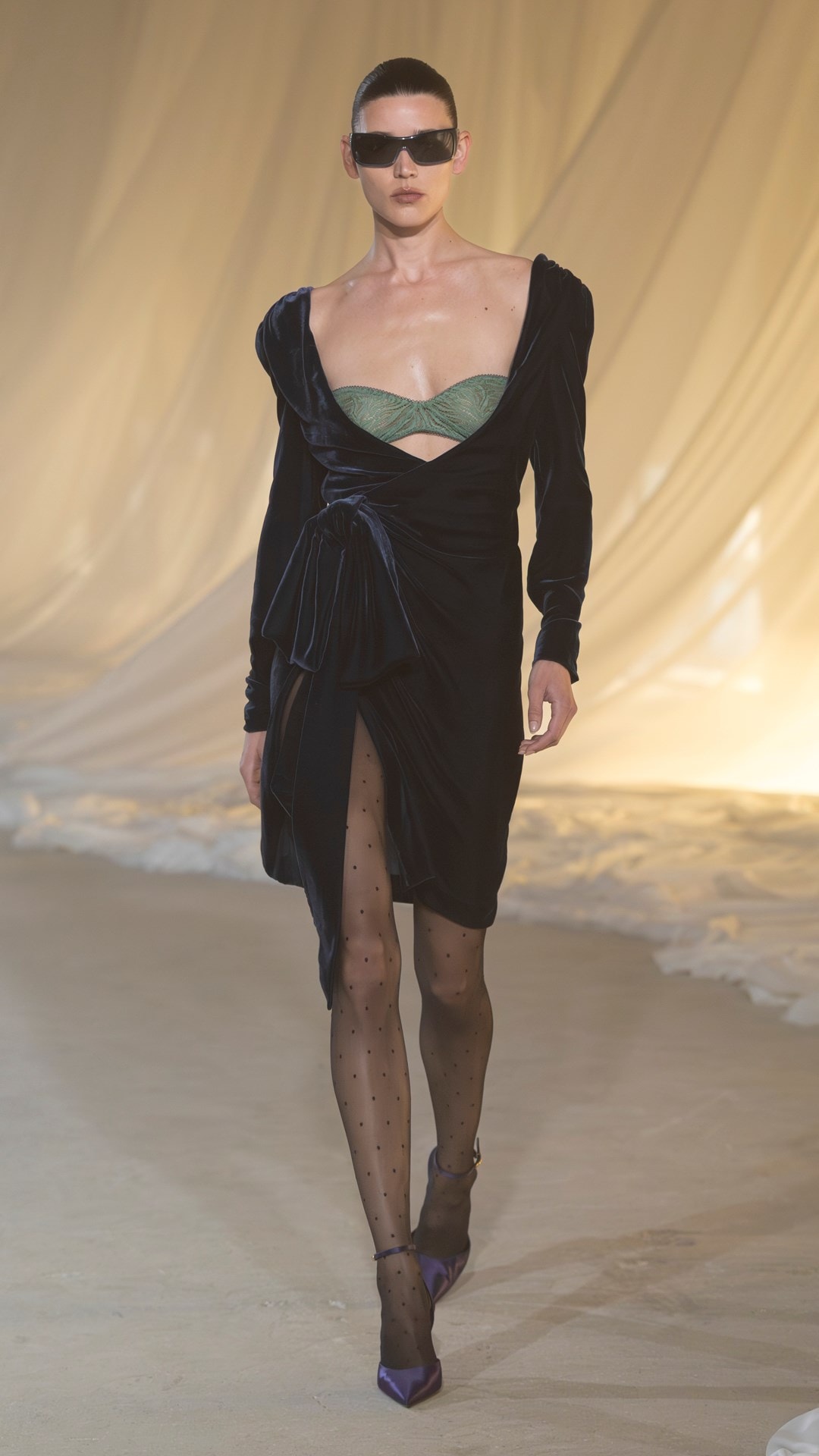

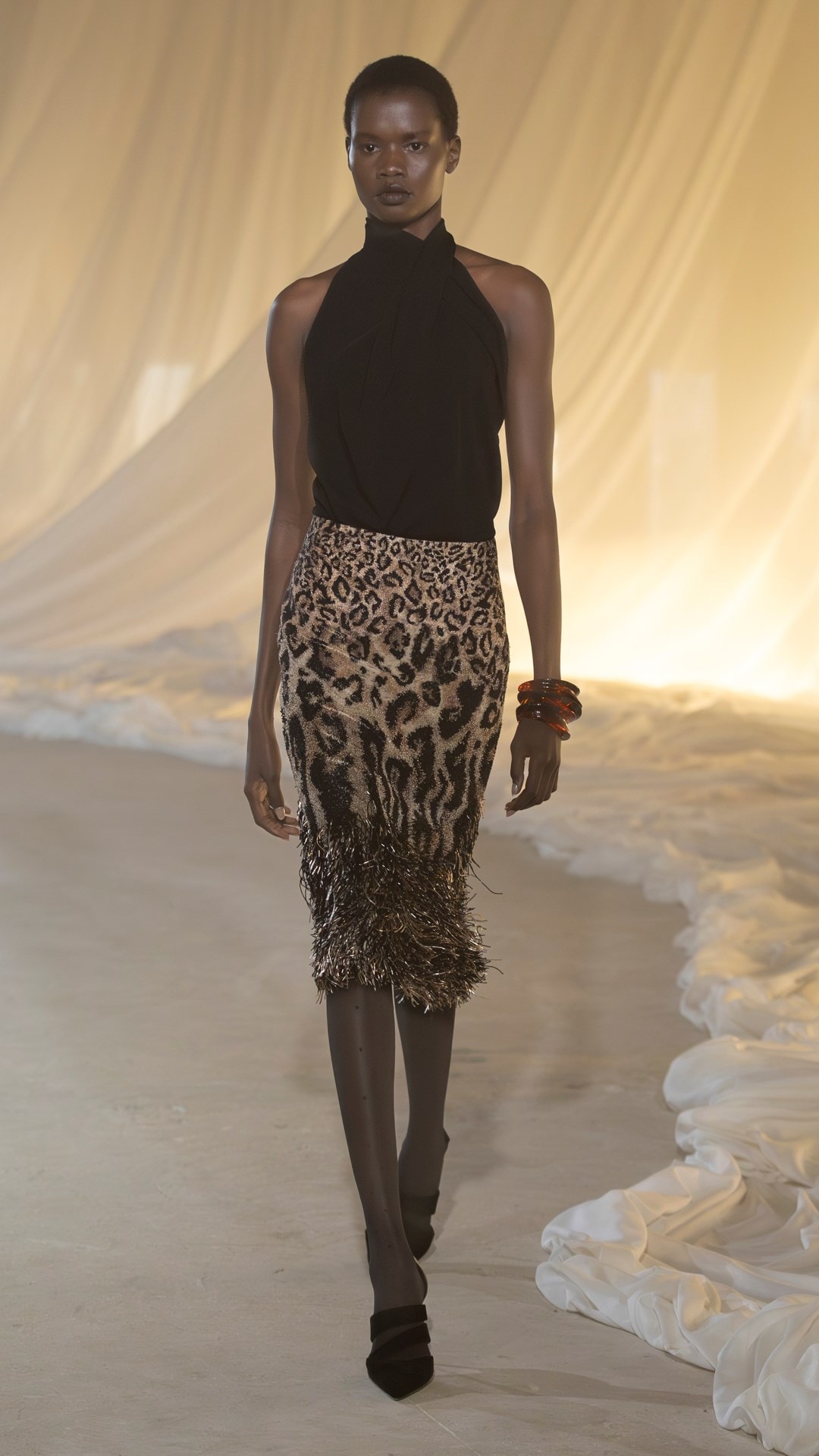
That’s a healthy dose of stylistic geekdom, which was also present in the clothes, riffing back to that rucked-up velvet and jersey number with looks that tucked and draped around the body, wrapping legs, framing décolletages. Laura Mars’ crime scene couture photography came courtesy of Helmut Newton (check the end credits!) and there was a similar sense of vampish, predatory femininity on show here, clad in articulated reptilian scales, in ersatz beaded and devoré animalier print and bubbly metallic cloqué like terribly glamorous amphibians. Tron’s Balmain women take no prisoners.
Those are general reminiscences that have shaped fashion for a few decades – not least at Balmain, whose prior creative directors mined the Eighties to inspire assertive, attention-grabbing clothes with skyward swaggering shoulders blitzed liberally with glitz and padlocked with giant shiny brass buttons as a badge of ostentatious belonging. Balmain had nothing really to do with that first time around, but those Mugler and Montana codes came to define it in modern fashion parlance.
Tron embraced that. Rather than fighting those associations, he outright revived that bowing wishbone shoulder line in tailoring, leather blousons, blouses and dresses as a new house emblem, a silhouette Balmain could own. Buttons did still festoon jackets like jewellery, but with a softer sensibility. His own expertise in soft draping, that made a name of Atlein, formed a striking contrast with those structured Balmain silhouettes – sometimes, a little like a Christo-wrapped national monument. Balmain kind of should be that – it’s never quite achieved the reverence of contemporaries like Dior or Balenciaga, but Tron is ready to sing Pierre’s praises and figure clever ways to connect Balmain’s contemporary identity with a history that deserves to be more storied. I mean, Gertrude Stein! And while Pierre Balmain’s prissy post-war Jolie Mesdames in trim tweed suits didn’t reappear – this isn’t the time, nor the place – there was a sense of refinement that hinted at the house’s couture past. And a promising new future.
