
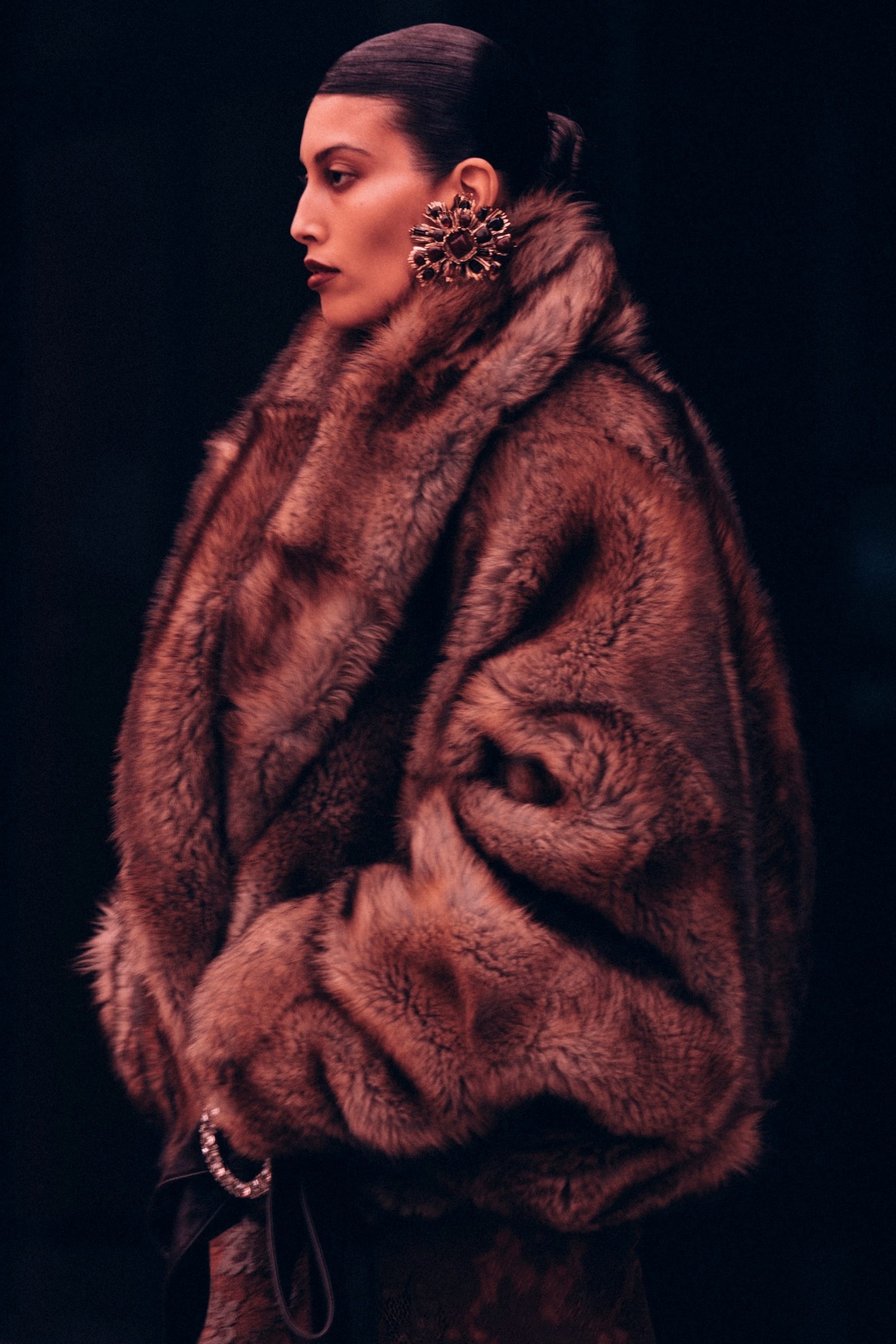
The wood panelling and cognac-coloured haze that enveloped Anthony Vaccarello’s Autumn/Winter 2026 show were designed to evoke the rue Babylone apartment shared for almost 40 years by Yves Saint Laurent and Pierre Bergé. “Opulence” was the word Vaccarello used of that now-imaginary place – its contents scattered in a near-legendary 2009 auction of the artworks, trinkets and tchotchkes that we’d hitherto have characterised as priceless but which, in the event, netted almost $400 million. Opulence was the word, alright.
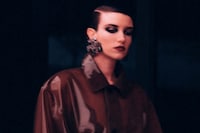
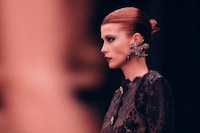
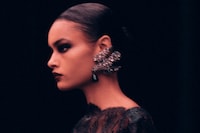
That space wasn’t some lavish backdrop to Saint Laurent’s entertaining but, rather, a living, breathing collaborator in his creative enterprises. Yves Saint Laurent gets a Matisse, then makes a Matisse dress; Bergé buys Goya’s 1791 Portrait de Luis María de Cistué y Martínez, and Saint Laurent translates that baby Spanish aristocrat’s pink sash to a bowed 1983 evening gown. Granted, the duo bought their Piet Mondrians after Yves had already made a bunch of Mondrian dresses, but they are still expressive of a creative exchange. In Vaccarello’s case, the apartment was stripped bare, plundered. “It’s kind of depurated to the maximum,” he said. That is, bar a single sculpture of an athlete’s torso in marble. The original was created between the 1st and 2nd centuries; Vaccarello’s replica, merely a few weeks old, but blown up several times, to cinematic scale.
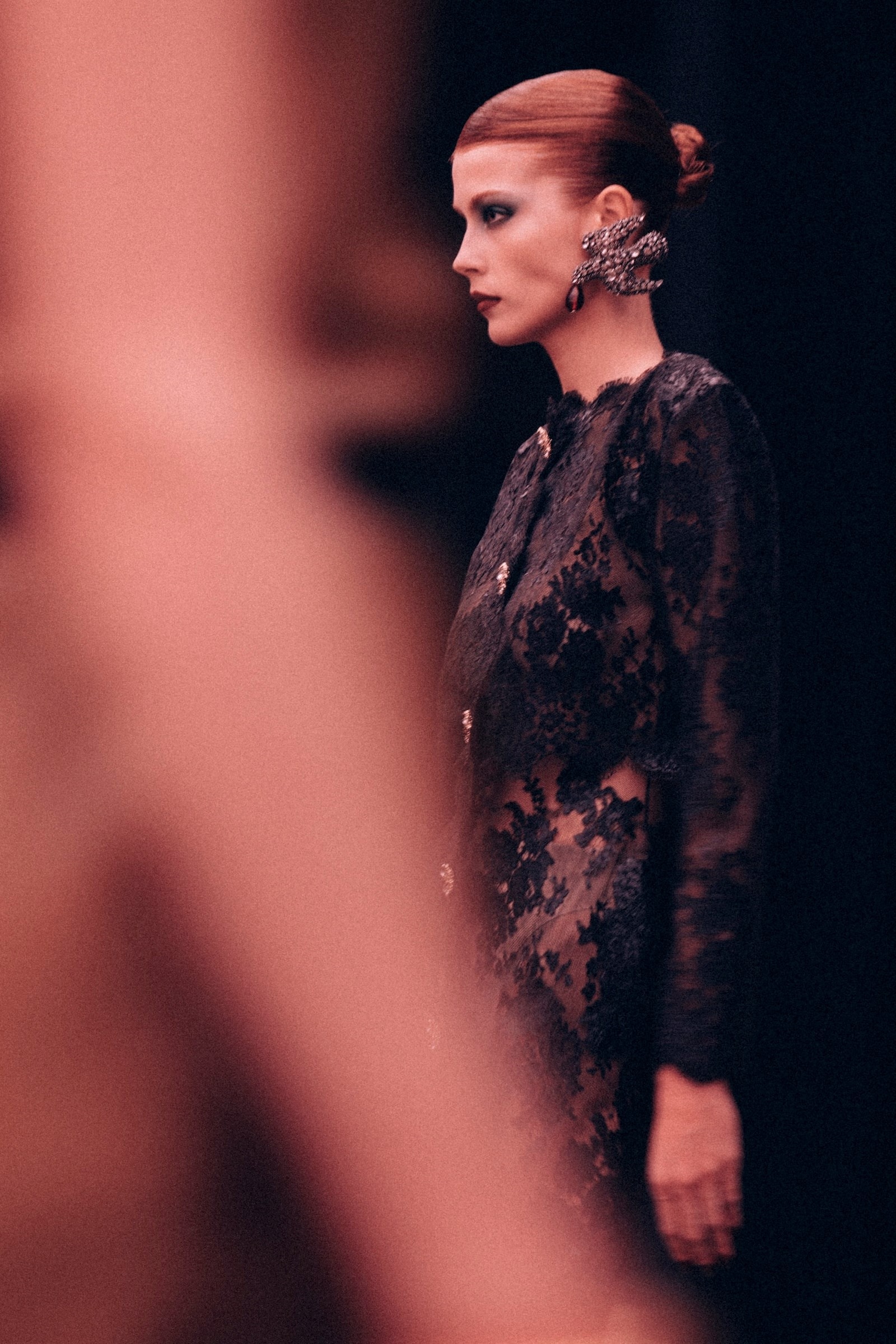
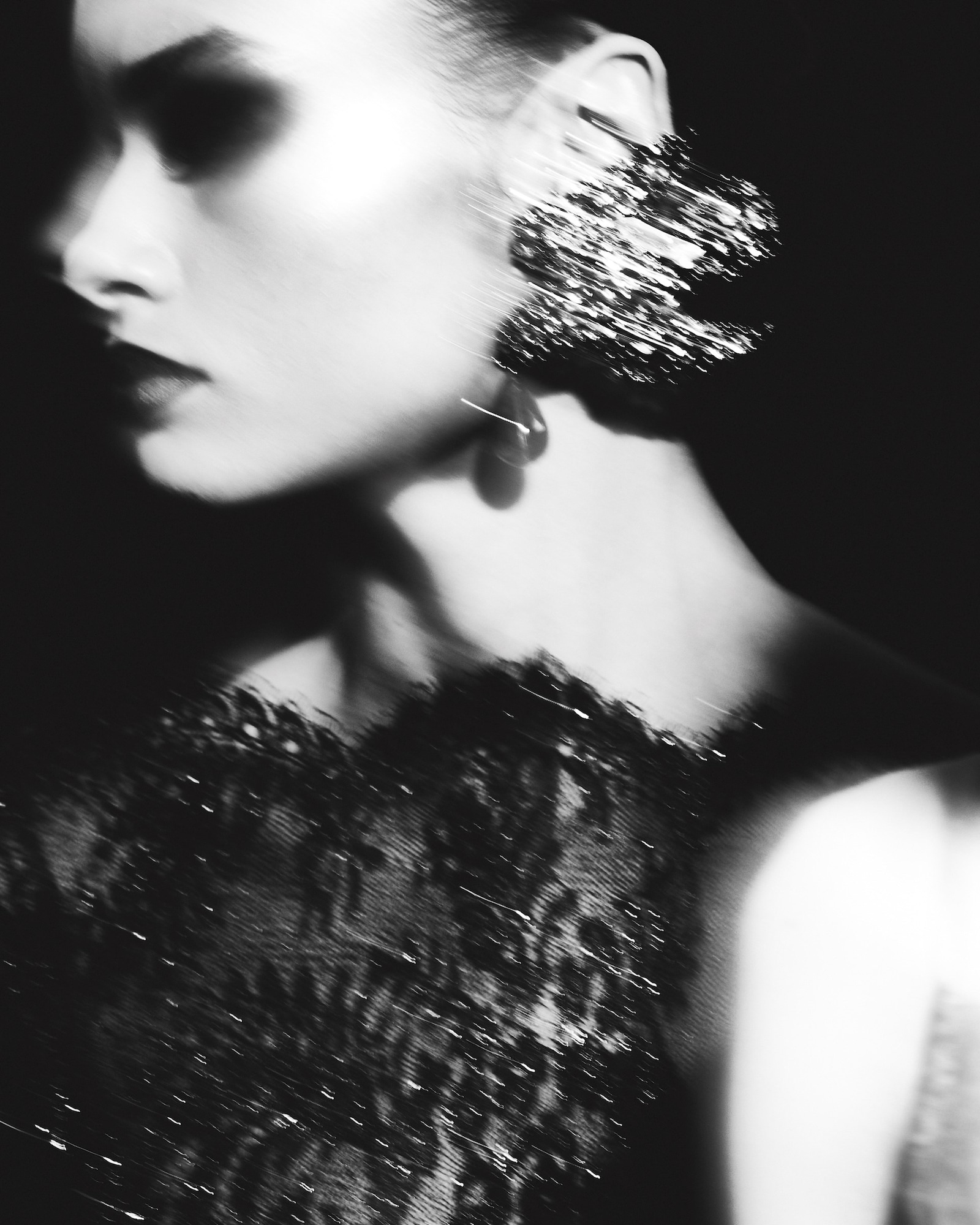
That neatly echoes a shift in proportion and perspective that Vaccarello has brought – and continues to bring – to his vision of Saint Laurent, as well as his font of knowledge. He was talking, backstage an hour or so before his show, about the doves that swooped in metal and crystal around his models’ earlobes. Were they Braque? “Non, Picasso,” Vaccarello stated, stabbing at a sparkling avian outline with a pigeon’s-blood ruby droplet dangling from its savage beak. That model was made-up, heavily, like Saint Laurent women of old; her image, like a Newton throwback, was pinned on a wall of cork that felt like a wink to another Saint Laurent’s obsession. Reference, on reference, on knowing, knowledgeable reference. “There’s the Braque also. Picasso is more straight, Braque is more round.”

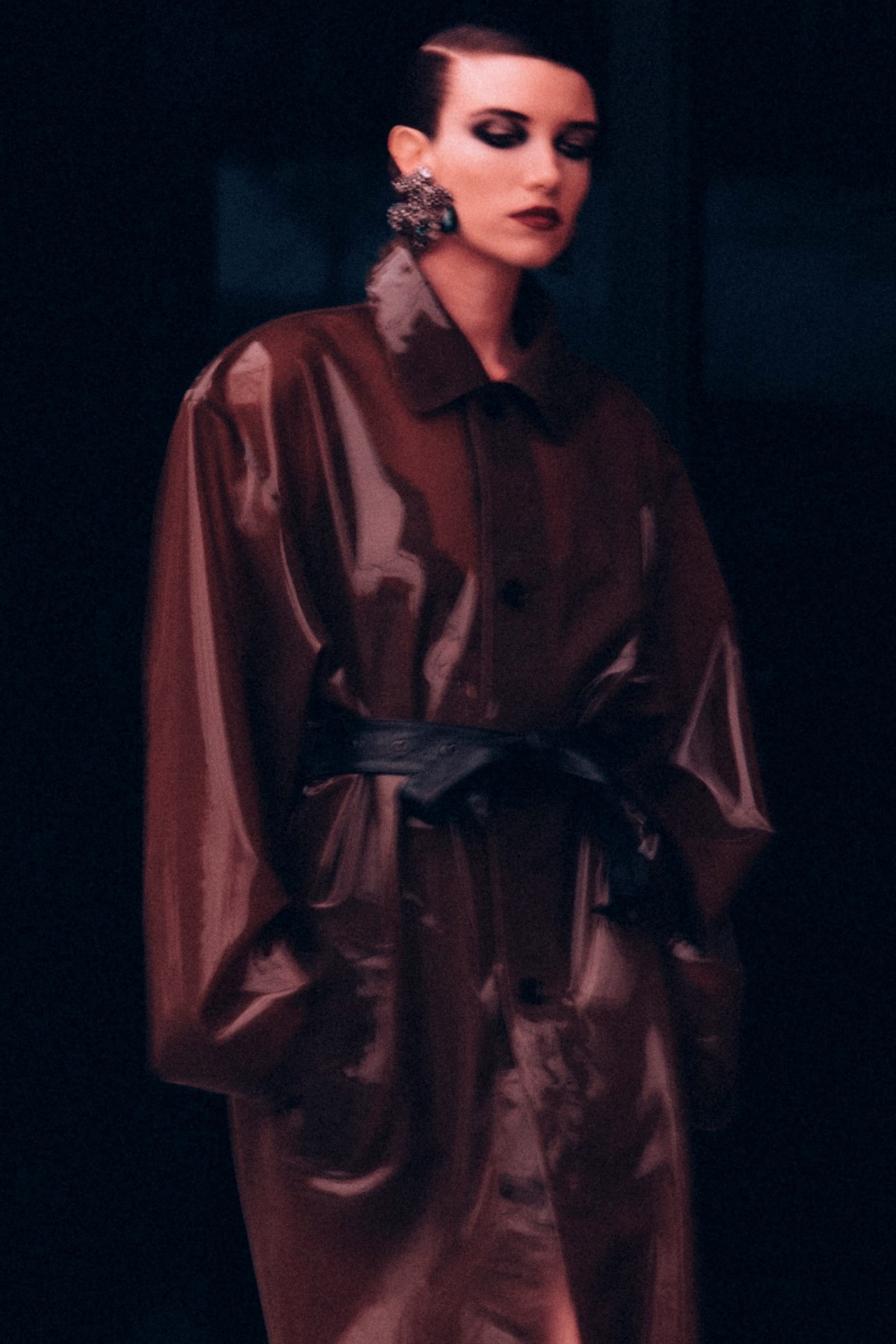

Vaccarello’s vision of Saint Laurent is never straightforward, and each season he rounds it out. He opened this season of opulence with his most stripped-back iteration of Saint Laurent’s womenswear, a selection of the tuxedos, the French term Le Smokings, with updated proportions and all bombast removed, slithering over bare skin. “Very fluid, no lining, a certain construction which is new for me,” Vaccarello said, of these wedge-shouldered, shadowy suits in blacks and almost-blacks of blotted navy and bruised marron glacé.
If Vaccarello started by rendering the hard soft, he rounded it out by getting the soft hard. Read into that what you will – but he did it by chintzing lace of all description and design with silicone to give it a different kind of strength, like lingerie made to go to war. “There’s no softness,” Vaccarello said. “It’s like a second skin.” Their colours were exquisite, oil paint shades of raw umber, Prussian blue and Caput Mortuum. Some models were swaddled with great Renaissance furs, buckled low in crystal-like doublets, the models’ faces perched like pearls atop. The pointed toes of their shoes were tugged out, like illustrations, Saint Laurent fantasies come to life.


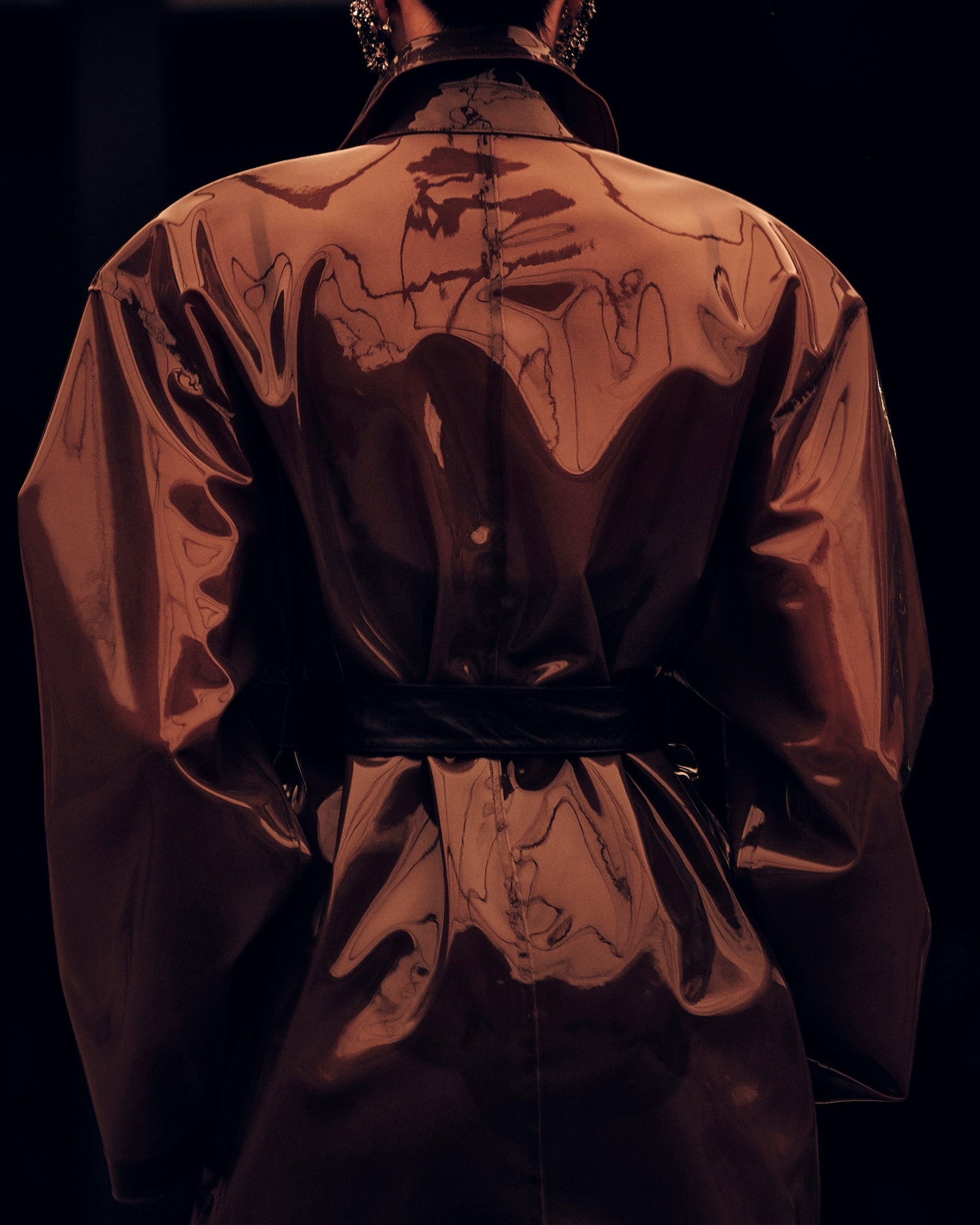
Saint Laurent’s dreams of women, however, were never about fragility. That’s why Vaccarello’s women exude strength, whether in their armorial chantilly and crowning jewels, or that paradoxically mercurial tailoring. Incidentally, it was the 60th anniversary of the first time those suited women strode through the Saint Laurent salons, radical and ground-breaking and reshaping of contemporary women’s wardrobes. Vaccarello didn’t do that on purpose, but rather by instinct. Those are evidently to be trusted.
“Those women dressed in those fabulous colours, opulence, richness of lace,” Vaccarello commented. “They are the most important thing.” And they were decidedly not decorative – they could have been perceived as substitutes for the bibelots and paintings that vacated that space, avatars of Saint Laurent inspiration past, luxurious objectifications. It felt nothing of that sort. “Giving power to women,” Vaccarello stated as his aim. Maybe easy in a tuxedo, these days. But in a sheath of transparent lace? Masterful.
