
“Let’s open the whole thing up.” That was Jonathan Anderson’s thinking about his Autumn/Winter 2026 Dior venue, which, rather than a closed off and darkened tent, was a glazed pavilion smacked in the centre of the Tuileries gardens, painted laurel-green to replace the foliage on still-bare trees. The sides were open, and a bridge spanned the real grand bassin of the Parc’s fountains, its placid surface punctuated with imitation waterlilies that looked realer than real. The actual weather was unseasonably warm. Six bleary-eyed hours before his show, models in porcelain-flowered shoes circuited in their street clothes, pursued by movement director MJ Harper. They passed, seamlessly, from inside to out.




Anderson’s opening up is more fundamental than just knocking down some glass walls. It’s about opening up Dior to a wider audience, to discussions both deeper and broader, away from rarefied archival gestures and art-world collaborations. This show, Anderson said, was inspired by the idea of parks and promenades in the 18th and 19th centuries. “Where you would go to be seen,” he said. “Dressing up.” Is that so different to where we are right now? And the art he was referencing wasn’t obscure, but the chocolate-box scenes of George Seurat’s La Grande Jatte, and Claude Monet’s Waterlilies, images with a universality that bear no great understanding.
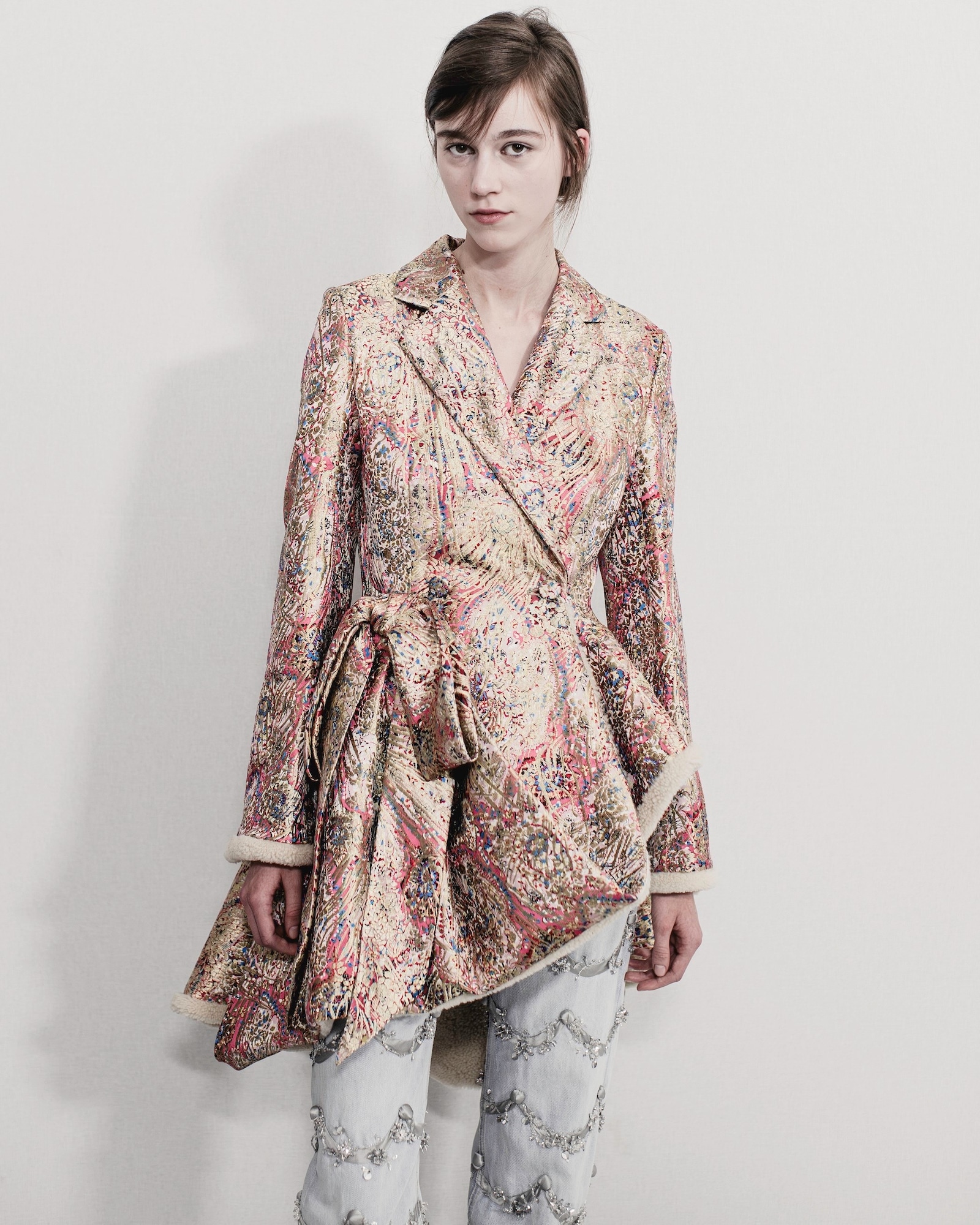
Fake waterlilies floated in the fountain and punctuated dresses and shoes; the bustled silhouettes of Seurat’s 1884 walkers shaped jackets with a big bow at the small of the back, snaked up the poitrine with tiny buttons, fastening high on the neck and slim on the arm. It was a historiographical excavation, one that in turn had inspired Christian Dior himself – his clothes returned to silhouettes and construction methods of that prior century; his ‘Zig Zag’ line of Spring/Summer 1948 first revived those bustles. But, for Anderson, it was a quotation, a citation. If last season was about Anderson’s burden of proof – him showing the world that he knew Dior, could do Dior – this collection was about freedom. Open spaces, wide frontiers. “That show was done in 26 days,” Anderson states of his debut Dior womenswear collection. He’s almost incredulous himself. “It was more a reactionary thing – what do I see in the brand?” He paused. “Last year was so intense. Now I’ve relaxed into it.”


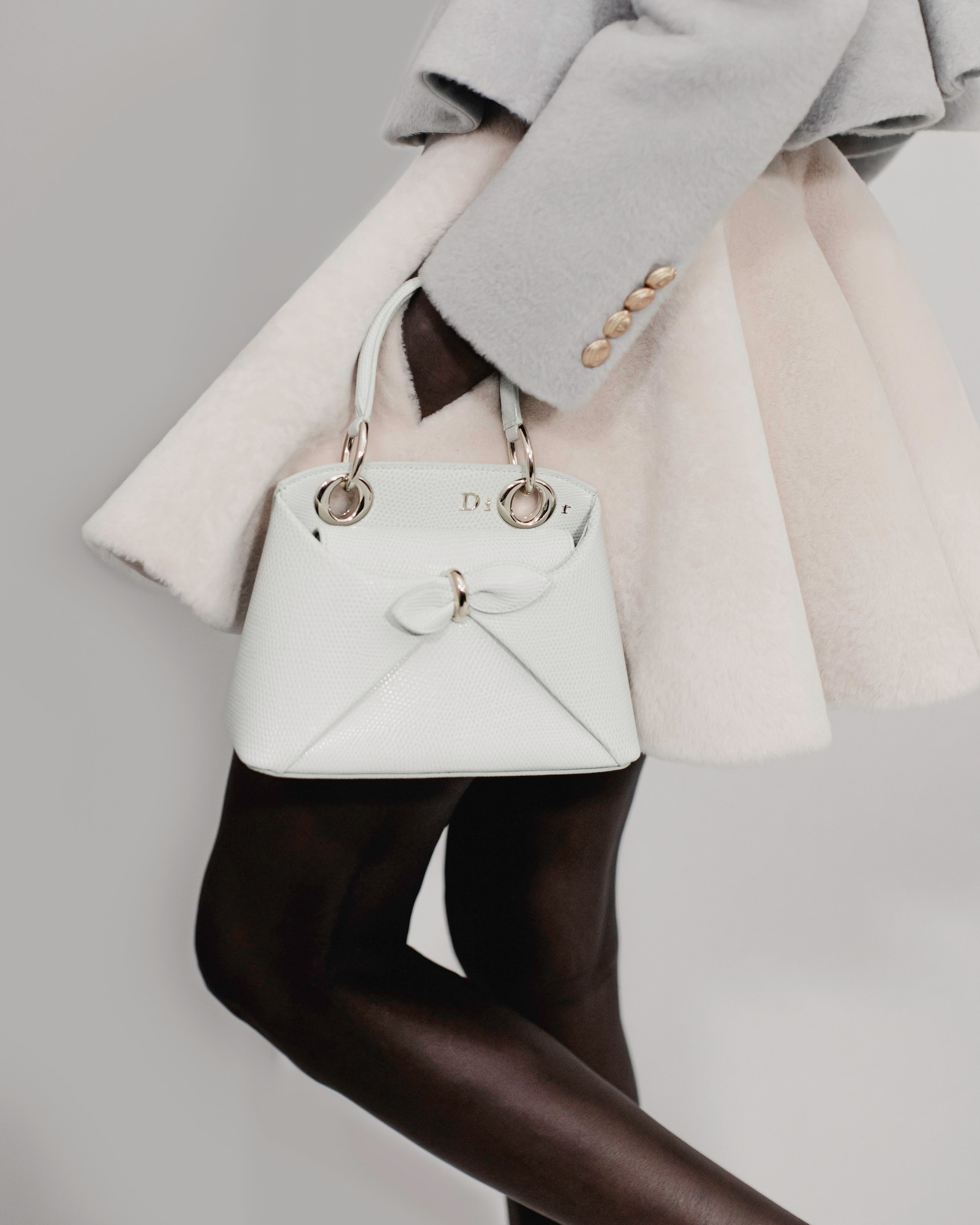
Accordingly, this wasn’t about Dior box ticking. There were flowers – but waterlilies aren’t usual Dior fodder, although Anderson felt that, perhaps, they’ve become a symbol of Frenchness via Monet. His waterlily paintings are, incidentally, housed in a special room at the Musée de l’Orangerie in the corner of the Tuileries. You couldn’t see that museum from the Dior set – but, depending on where you were seated, you could glimpse the Eiffel Tower, and the gilded Obélisque de Louxor in the centre of the Place de la Concorde. French monuments, French institutions – just like Dior. “These brands are institutions,” Anderson said. “And you’re trying to break down these institutions, ultimately.”
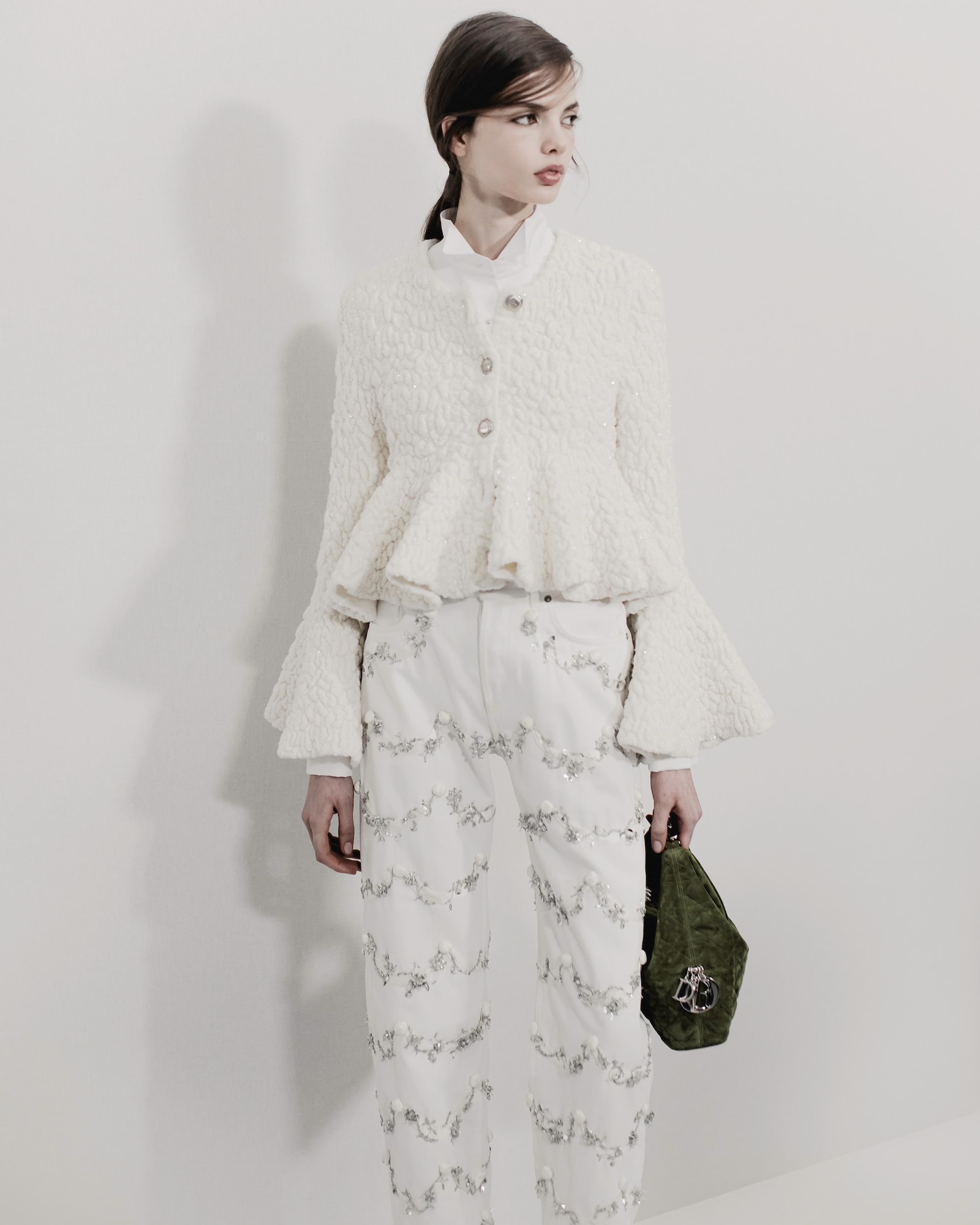
“Dior can get very heavy in history,” Anderson said. “It has this giant past, but it has to release itself.” Release was a theme, from archival restrictions but physically as well. Dior’s silhouettes flowed, exploding into ruffles under those fitted jackets; ballgowns seemed poufed over or turned inside-out, as if their plissé overskirts had gusted up. Bar silhouettes expanded at the hip, sculpted into coats, or were packed with millefeuille layers under peplum jackets. There was an identity of Dior, but without direct reference, rhyme or reason. In the best way. There was an essence of Dior, without all that weight. A flower pinned on a shoe, or executed in tinkling porcelain, like Madame de Pompadour’s Sevrès garden.

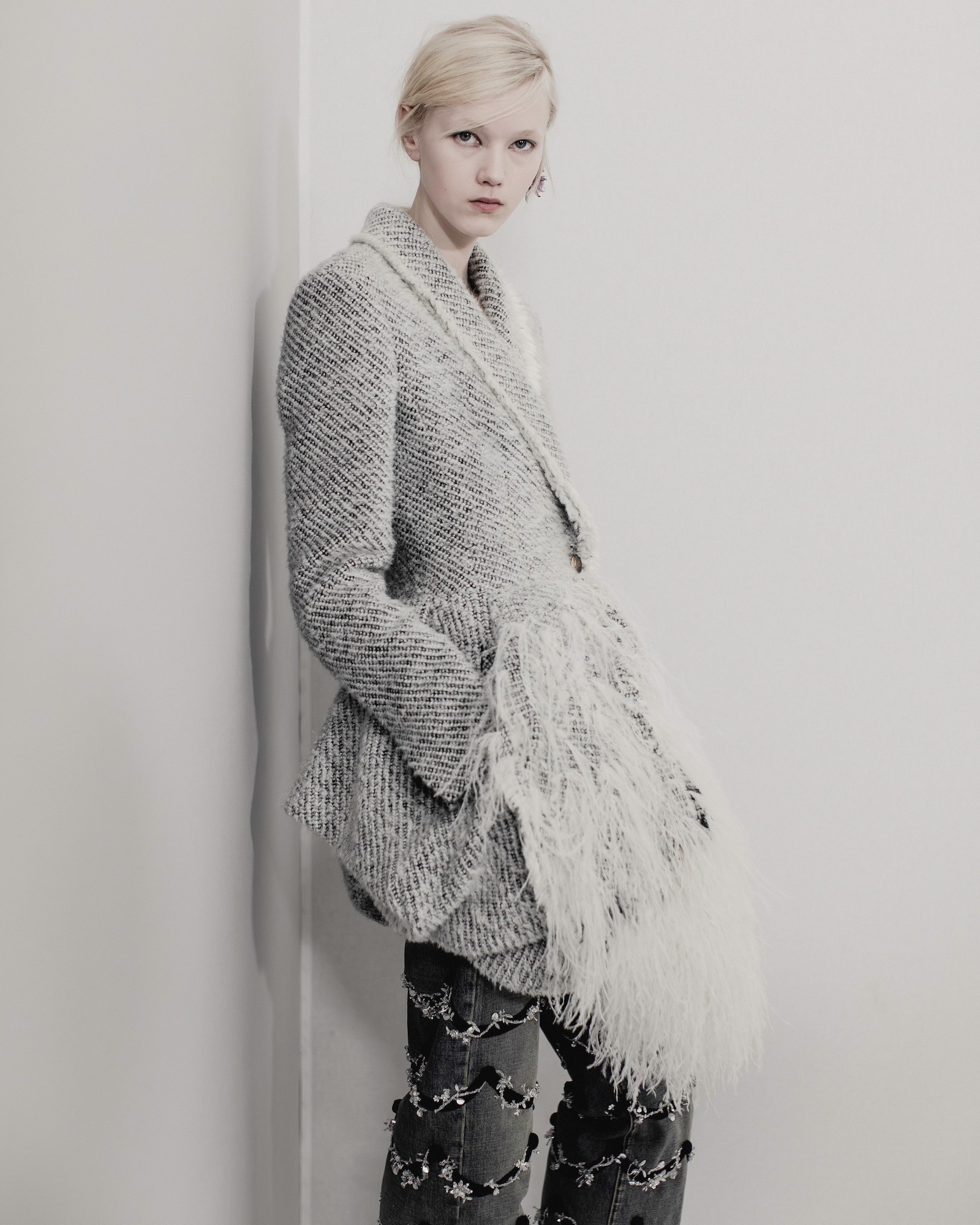

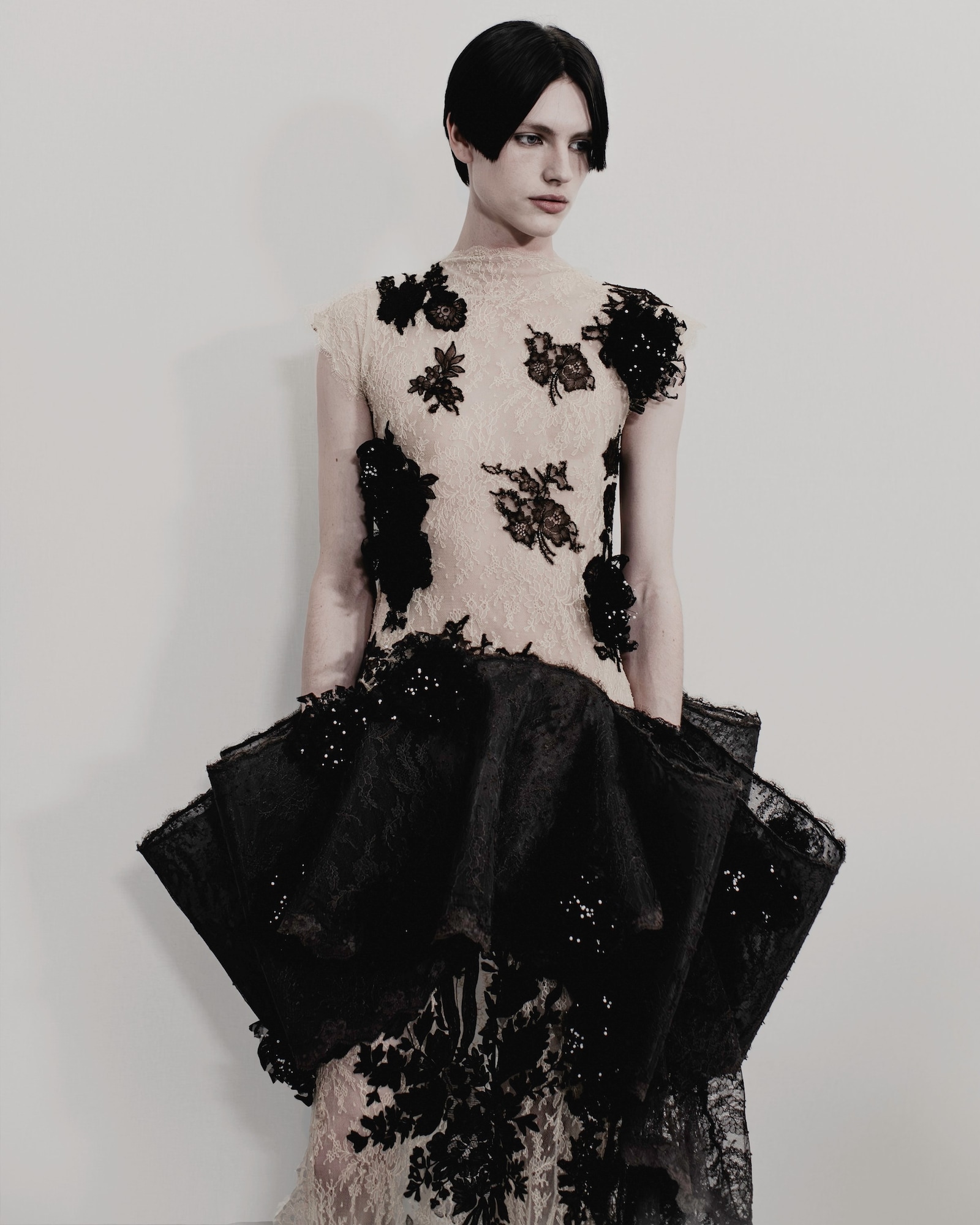
If Anderson’s first collection proposed new takes on that old-New look thing – different proportions, new fabrications, rethought – this time was a reassertion of those convictions. There were specially-loomed Venetian jacquards, first explored in his menswear in January (can’t weave those in 26 days), anticipated embellished laces and unexpected embroidered denims. “High and low,” said Anderson, although he didn’t really mean it, except perhaps in the trailing ruffled hems of embroidered skirts that resembled ballgowns unravelling beneath sweet knitted chenille jackets.
Throughout, the sense was Anderson remodelling this house, ready to remake it in his image. There’s respect for the history, sure, but he won’t be held prisoner by the ancient régime. This show was the plainest evidence yet of his intentions – to blow open the walls, show what you can do. Live in glass maisons, but do throw stones.
