
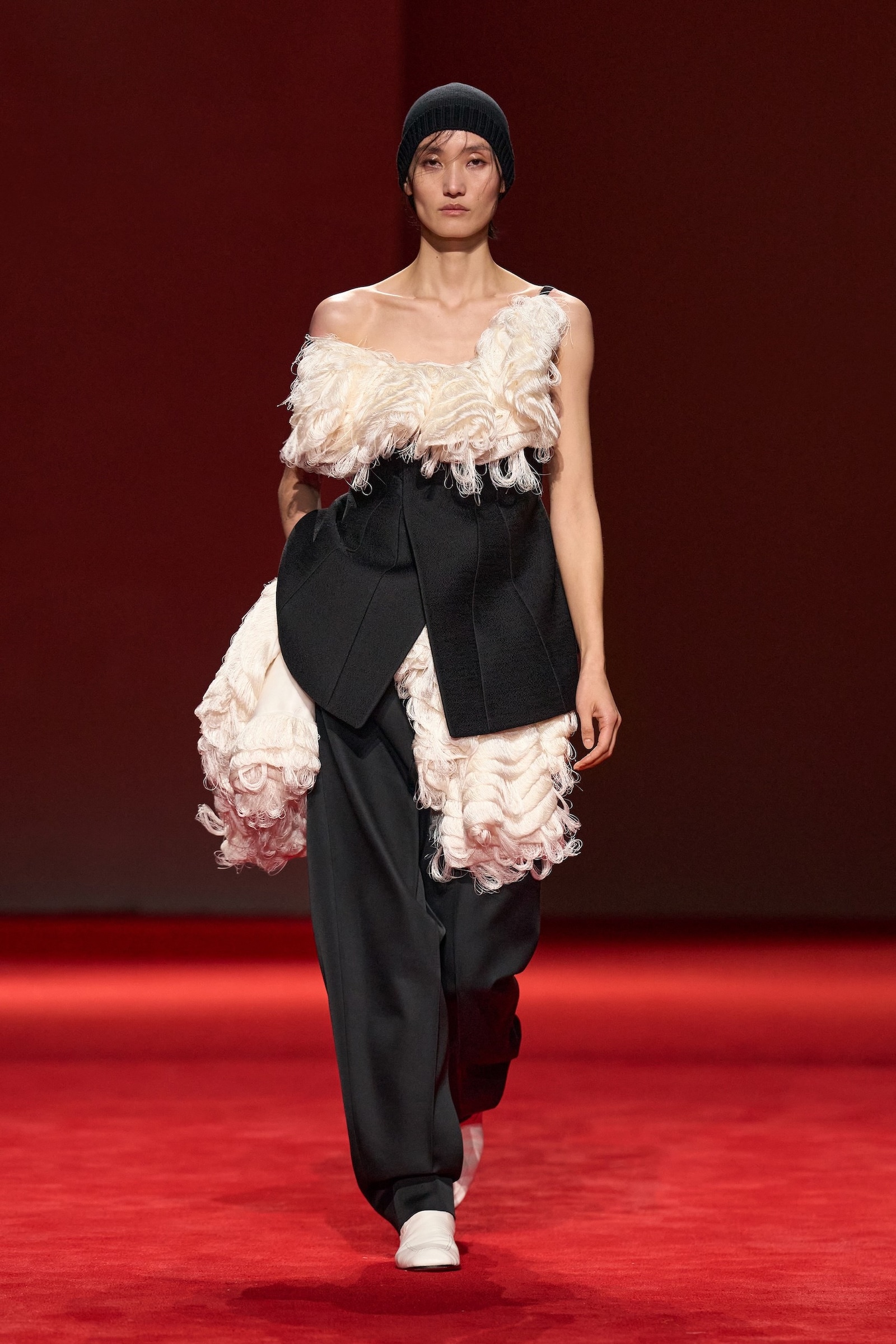
Louise Trotter’s accent still flares up when she speaks: you can take the woman out of Sunderland, but you can’t take it out of the woman. And those ideas, of identity and locality and how that shapes your cultural and indeed aesthetic handwriting were her primary considerations in her longer, and stronger, sophomore collection for Bottega Veneta. “It’s about what Milanese style means to me and to Bottega Veneta,” she said backstage to a small throng of gathered reporters, vowels flattened (just like mine). “Less studied, more accurate.”
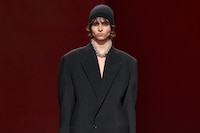
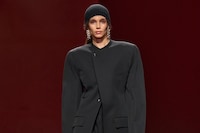
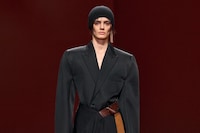
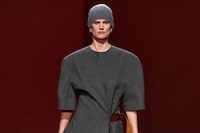
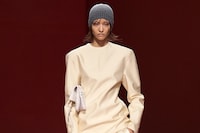
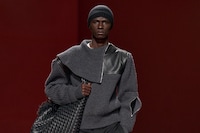
Trotter started at Bottega just over a year ago – and has been, understandably, spending more and more time in Milan during that period. Hence the fact it’s about living the life, not just observing it. Designers say stuff like that all the time, but you could really sense it in Trotter’s clothes for Autumn/Winter 2026 – even the neat knit caps tugged down low added a wry reality (hey, it gets cold in Milan too). If, for her debut, Trotter’s clothes seemed very much about a ‘look’, about swaggering wide intrecciato leather coats and swooshy tinselly skirts that made impressive imagery but, perhaps, made tricky business of getting in and out of a taxi (or, with those shoulders, any door that wasn’t double), this time they felt designed for living. Trotter said people had commented that clothes were heavy. “You have to always reflect,” she said, somewhat earnestly, allowing that tailoring had been deconstructed, layers lightened. There were slender sweaters for men (those looks were great), and some easy draped skirts for women, a few ruffled up to show the leg. You certainly got a sense of lightness as the models bombed it around her carpeted venue in their largely flat shoes, moving as if they had somewhere genuinely to go, rather than just the hamster wheel of their catwalk circuit.
“Well, life in Milan is quite fast,” Trotter reasoned, laughing. “And I wanted you to see the movement.”

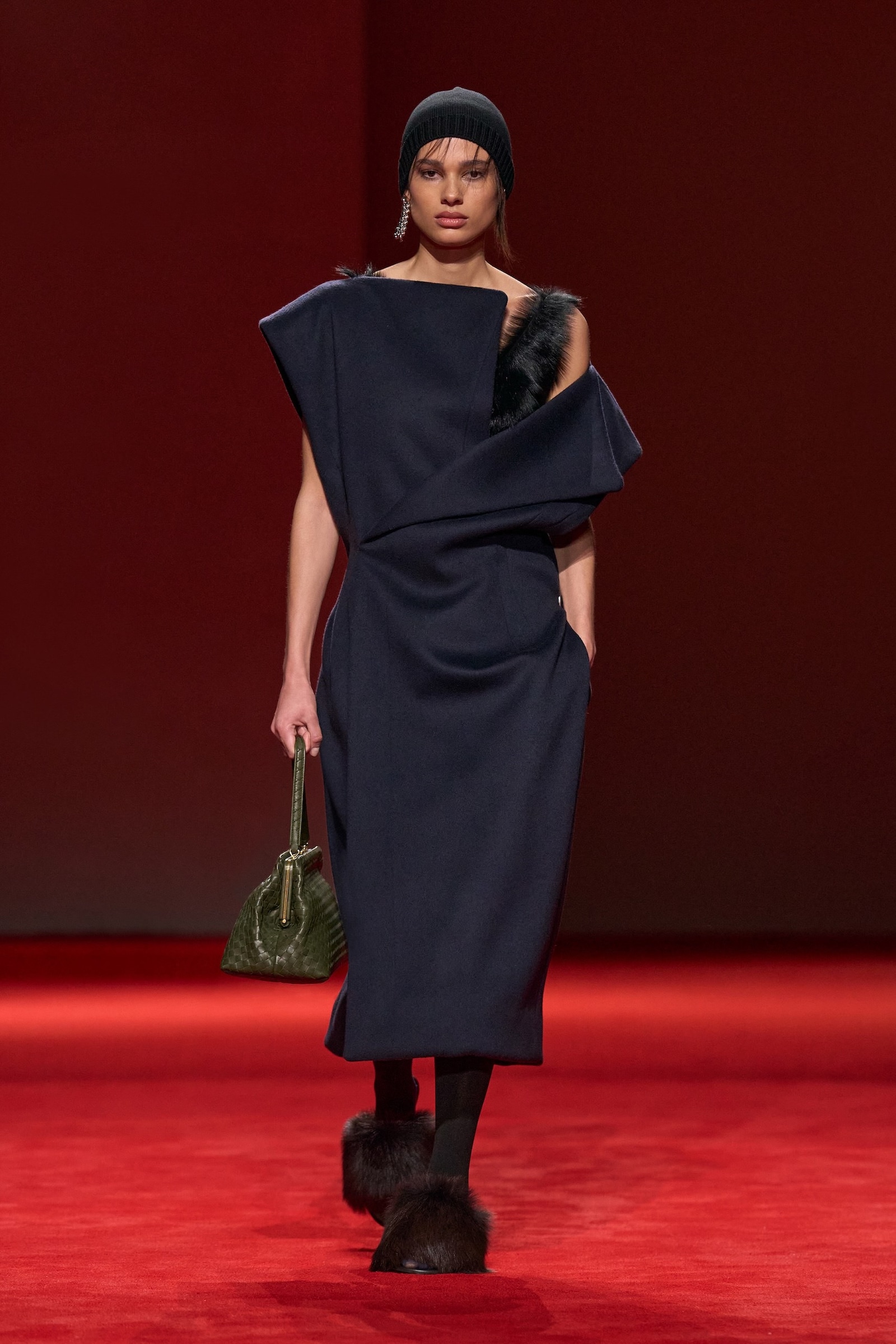

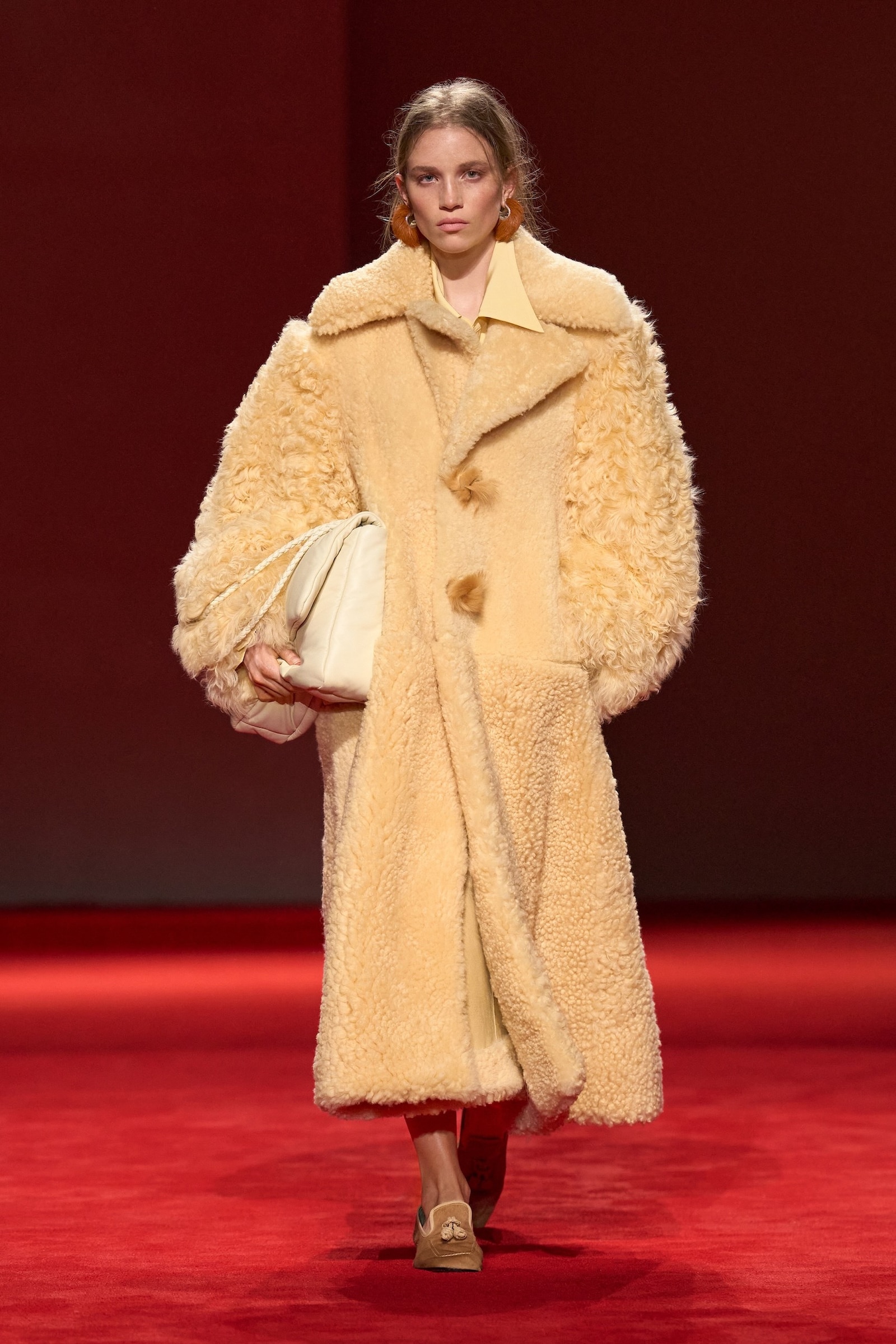
Fast-paced is one word she used for that city. Its antithesis, operatic, was another, and she showed in the shadow of La Scala, on a thick ruby red carpet. “People in Italy dress up,” Trotter stated, her own voice rising from contralto to soprano on that last word. “Dressing up for yourself, and your community.” And from curvilinear women’s tailoring buttoned high on the throat and slim in the waist, through draped dresses and sweeping men’s coats, to a finale of fur-free-fur dresses and coats in fringed tufts of thread that swayed as the models meandered, in renaissance shades of Adriatic blue or Tiepolo pink (Bottega is originally from Venice, after all), her Bottega did too.
What was most satisfying here was that this did seem like her Bottega, Trotter’s, a brand positing a meaningful and distinct point of view. If last season was a respectful transition from former creative director Matthieu Blazy’s take on the label, Trotter is now exerting more confidence. She’s cleaning it up – well, Milan is the home of Rationalism – and doubling down on the craft (there was intrecciato silk as well as leather, and complex reiterations of the fringing from her debut), yet making it all look much easier. She’s basically relaxing into the role. It’s great to see.
Furthermore, what also great to see is how her Bottega Veneta is evolving into is a brand that’s not about the way something looks, or even the way something’s made, but rather the way it feels. “Clothes bring joy and confidence,” Trotter said. Please note the assertion in that statement. “You put them on and they make you feel better.” You could understand how her strong shoulders, slick tailoring, and preciously crafted leathers would do just that.
