
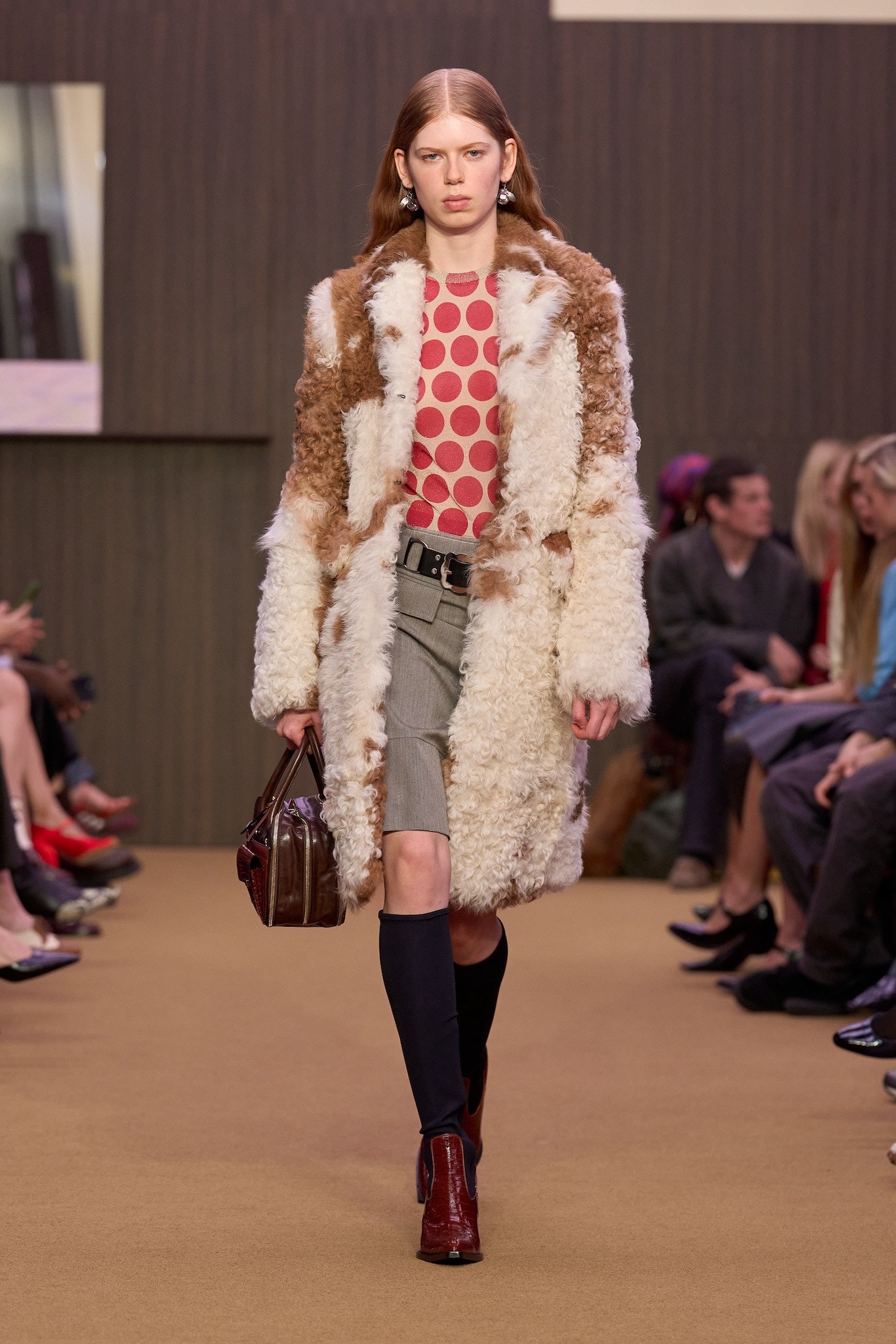
Memory has kind of shaped up as a big theme this season. It was certainly what Meryll Rogge had on her mind before making her debut at Marni. She had her own Marni memories, for sure, but she also wanted, with this first collection, to jolt the rest of us, remind us what Marni means, what it could stand for. And, of course, where she could take it in the future.






And, arguably, we’ve all forgotten what Marni really means. Under its founder Consuelo Castiglioni, Marni garnered a repute in the 1990s for collaged, crafty clothes, expanding to contradictory combinations of folksy and sci-fi, or sports and couture in latter decades. She departed her label in 2016, with Francesco Risso taking the reins – ex-Prada, he continued with paradoxes, albeit in an often off-kilter, even helter-skelter and utterly singular style that took Marni far from the maddening crowd, but equally far from its roots. Right now, it’s tricky to nail down.
Which was exactly the challenge Rogge set herself. A few days before her debut, in Marni’s bright headquarters in southern Milan, she’d pinned up a selection of images from Marni’s earliest shows. “Before style.com,” she said – the old-school, pre-app Vogue Runway, for those who remember way back when. From the mid-90s, there were slim-line coats in animal prints (Marni started out as a fur house, although they only use shearling as a byproduct now), and later in the 2000s, blurry, low-res images of polkadot prints and ombré lines, both of which cropped up. And Rogge’s own pedigree connects to Marni, for sure. A Belgian, she’s designed for Marc Jacobs and headed women’s design at Dries Van Noten before launching her own line. They’re kindred spirits to Marni’s gentle, tender clothes, texturally complex but simple in shape. And there’s an affinity between her and the label’s female founder.

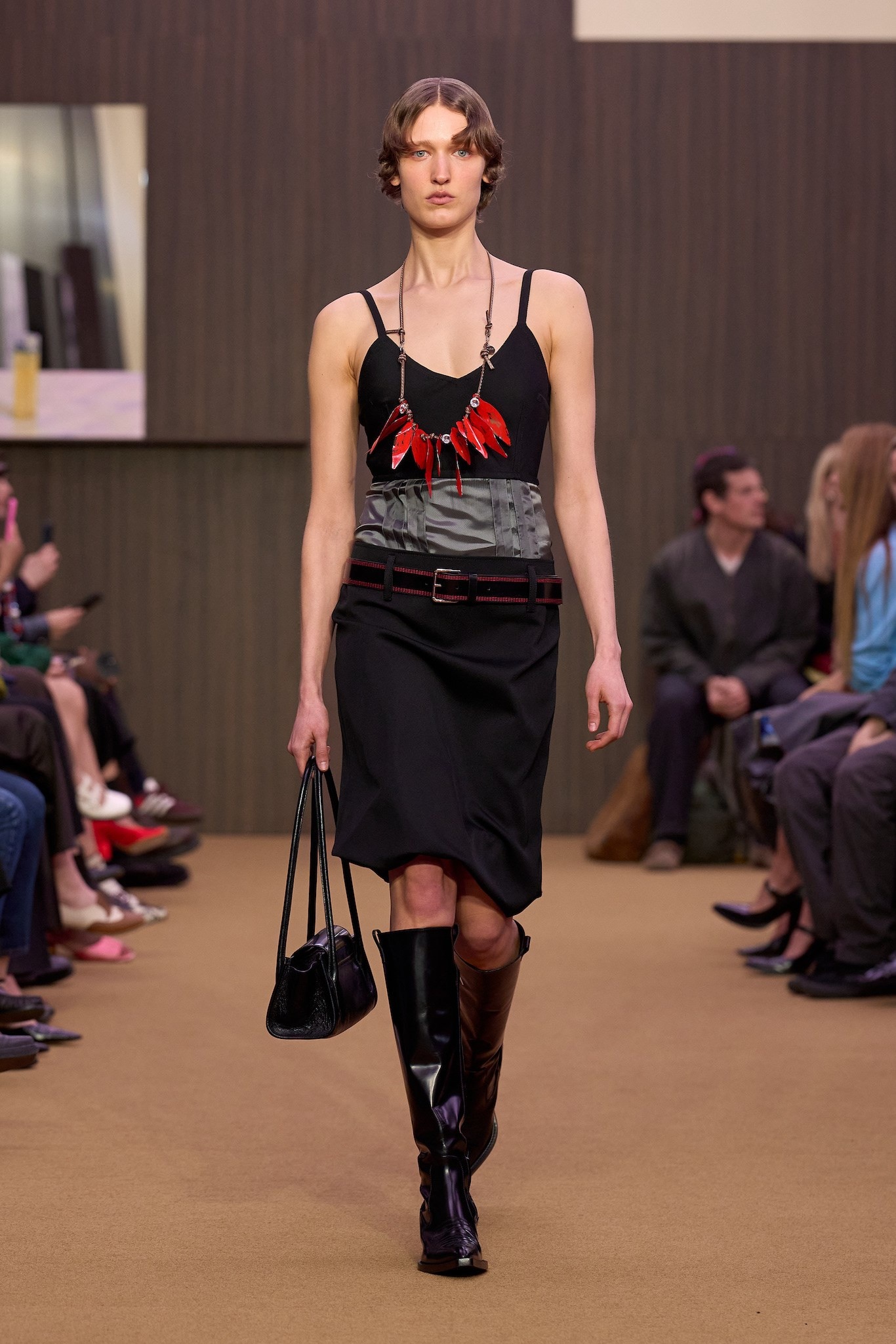

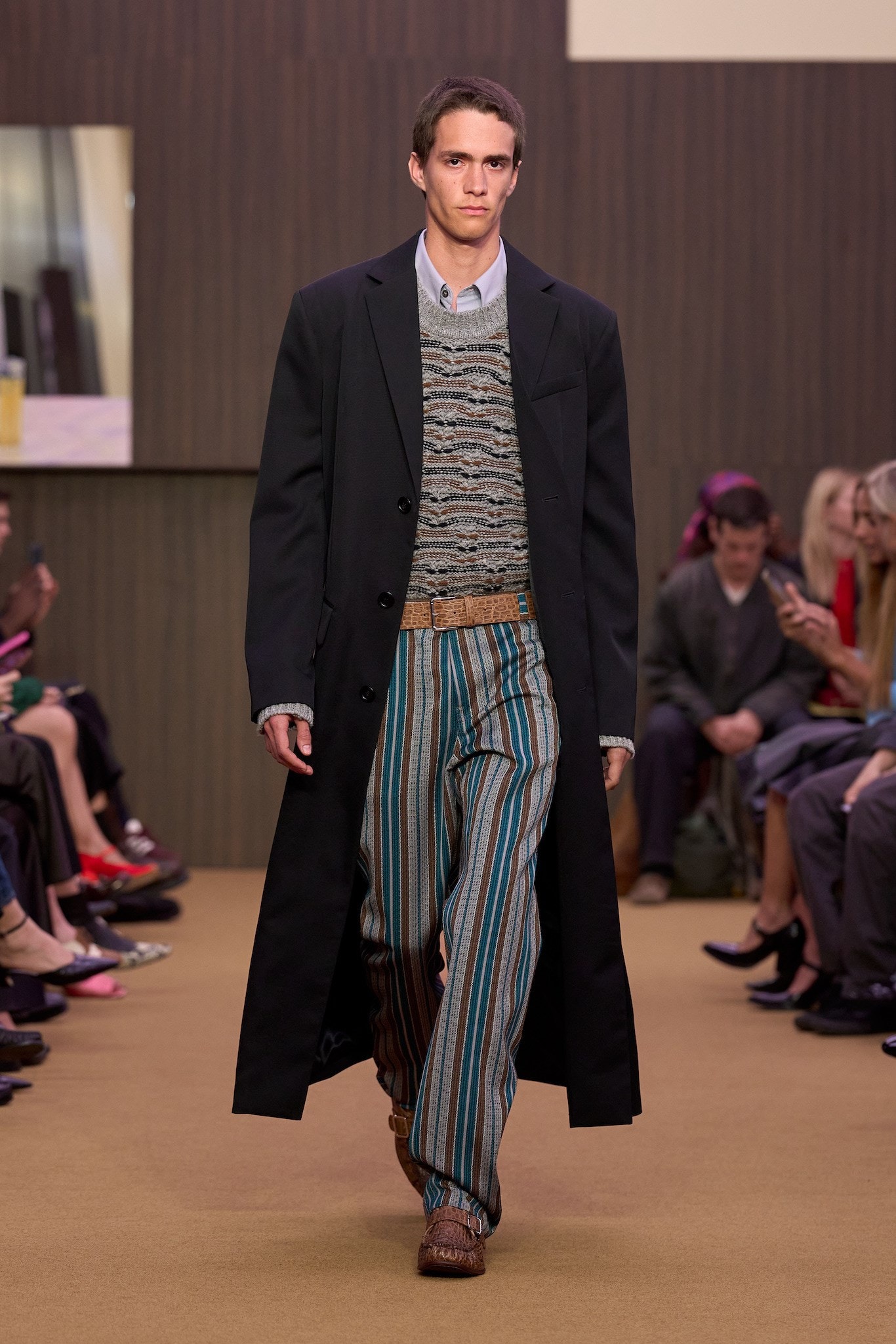
Familiarity was Rogge’s starting point for her Marni reimagining. And she rolled out a welcome mat for her debut show, carpeting the entire venue of her Autumn/Winter 2026 show with the kind of sisal mat that we all know denotes an entry, fittingly enough. With wood veneer walls, the rear had an echo of archetypical 70s rec rooms, a distinct cultural resonance. And her clothes themselves? They were glimpses of Marni, recalibrated – a snatch of print, a throwback silhouette. “I was more interested in recollection than reference,” Rogge said. “Rather than directly taking things from the archive to rework, I wanted something we can imagine is Marni.”
Some of that was direct – we all remember Marni’s swinging, crunchy jewellery, artisan and Arte Povera and generally artsy. That was back in force, some studded with crystals, some like bits of fruit peel in metal clattering around the neck, suspended from topstitched leather string. Stitching, indeed, became something of a Marni marker for Rogge – she tramlined it up sweet satin tops and skirts, while some jewellery was just the stitched leather, boiling it down to the simplest Marni indicator. A 1996 leopard coat in one of those narrow shouldered, close-to-the-body lines – single-breasted, skinny sleeved, to the knee – came out in compact knit. There were similar styles in shearling lined in dry, papery cotton poplin, and the slender silhouette carried throughout. No mess, no fuss.

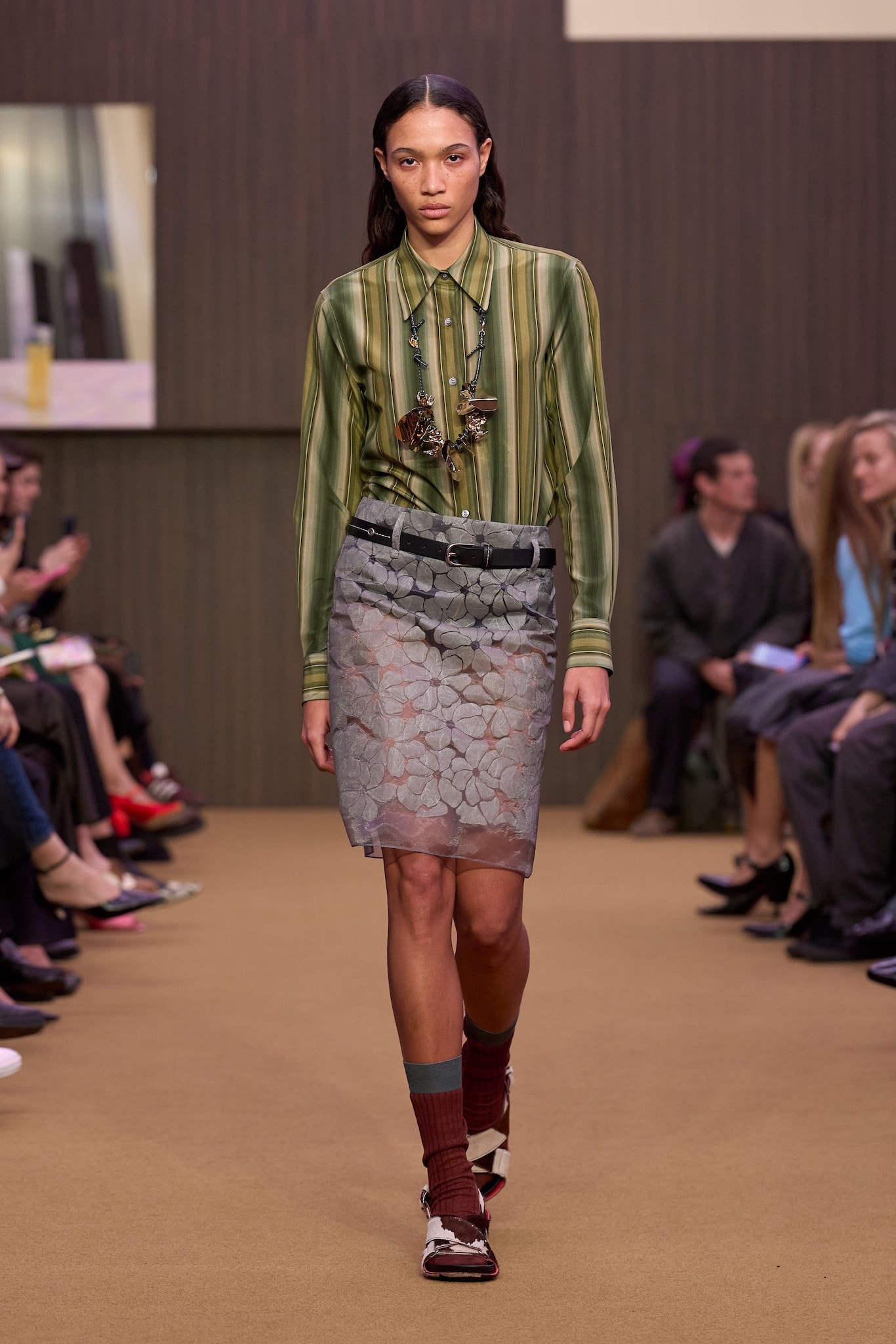

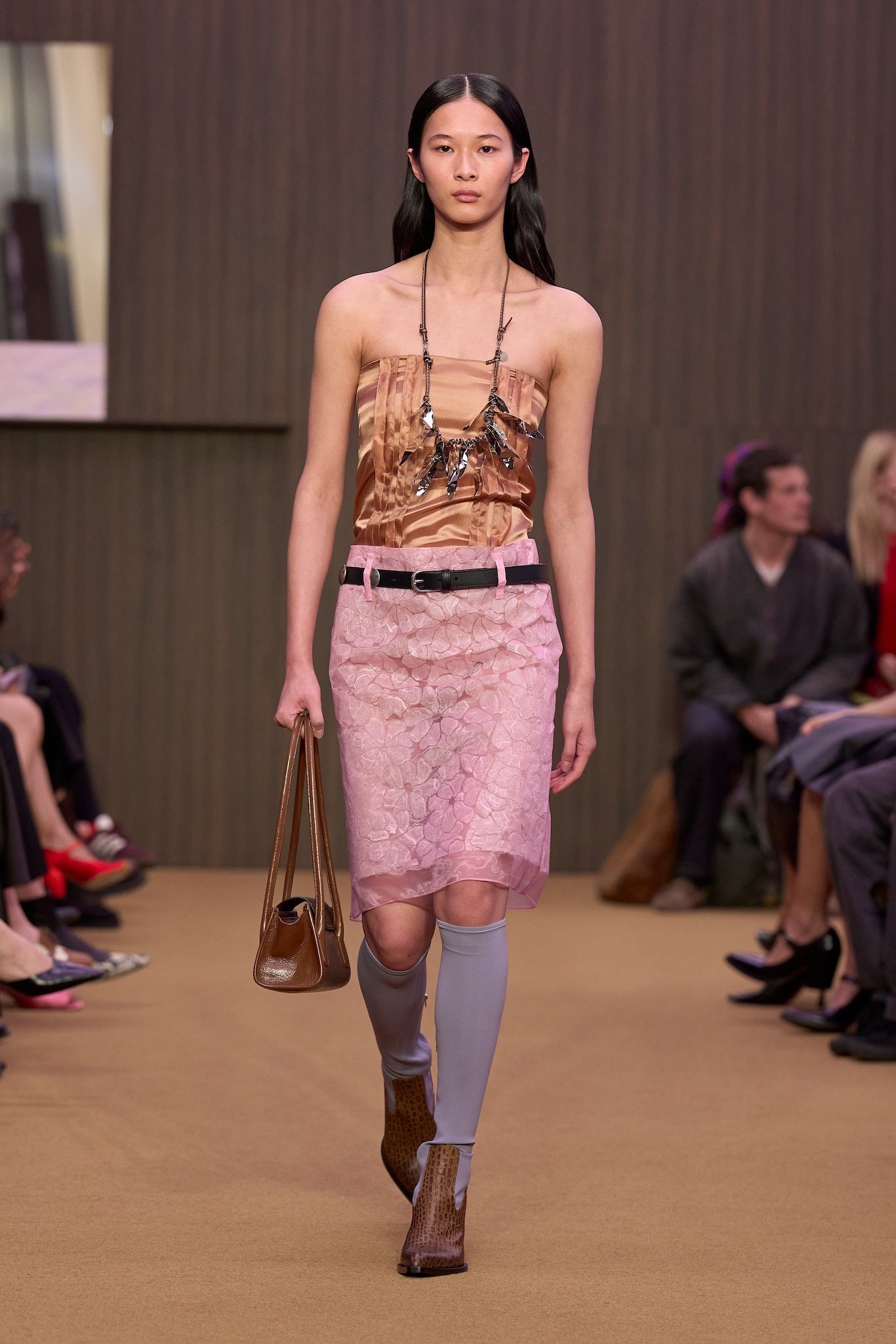
But there was also new. Marni is Milanese, Rogge reasoned, so she took inspiration from the surrounding Dolomites and referenced hiking boots and lederhosen-y embroidered leather and slightly Alpine knits of multicoloured tulips. Those reminded Rogge – who moved to Milan late last year – of the sweet clothes the city’s middle-classes dress their kids in, and that naivety is another distinctly Marni touch. Tailoring was studded with carved metal buttons – but then contrasted with technical sportswear, albeit in satin or thick wool. Marni’s polka-dots were executed in thick sequins, or clattering mother of pearl discs that tinged like wind chimes as models walked. It looked like Marni should’ve done that in the past, but weirdly they never did. Which was, generally, the feeling here.
It was less about returning to Marni’s roots, and more about clothes rooted in an idea of the label, that imagined Marni-ness Rogge was talking about. Not maybe Marni, but may be Marni. There was an assurance here, an authorship. And – for men and women alike – lots of brilliant clothes.
