
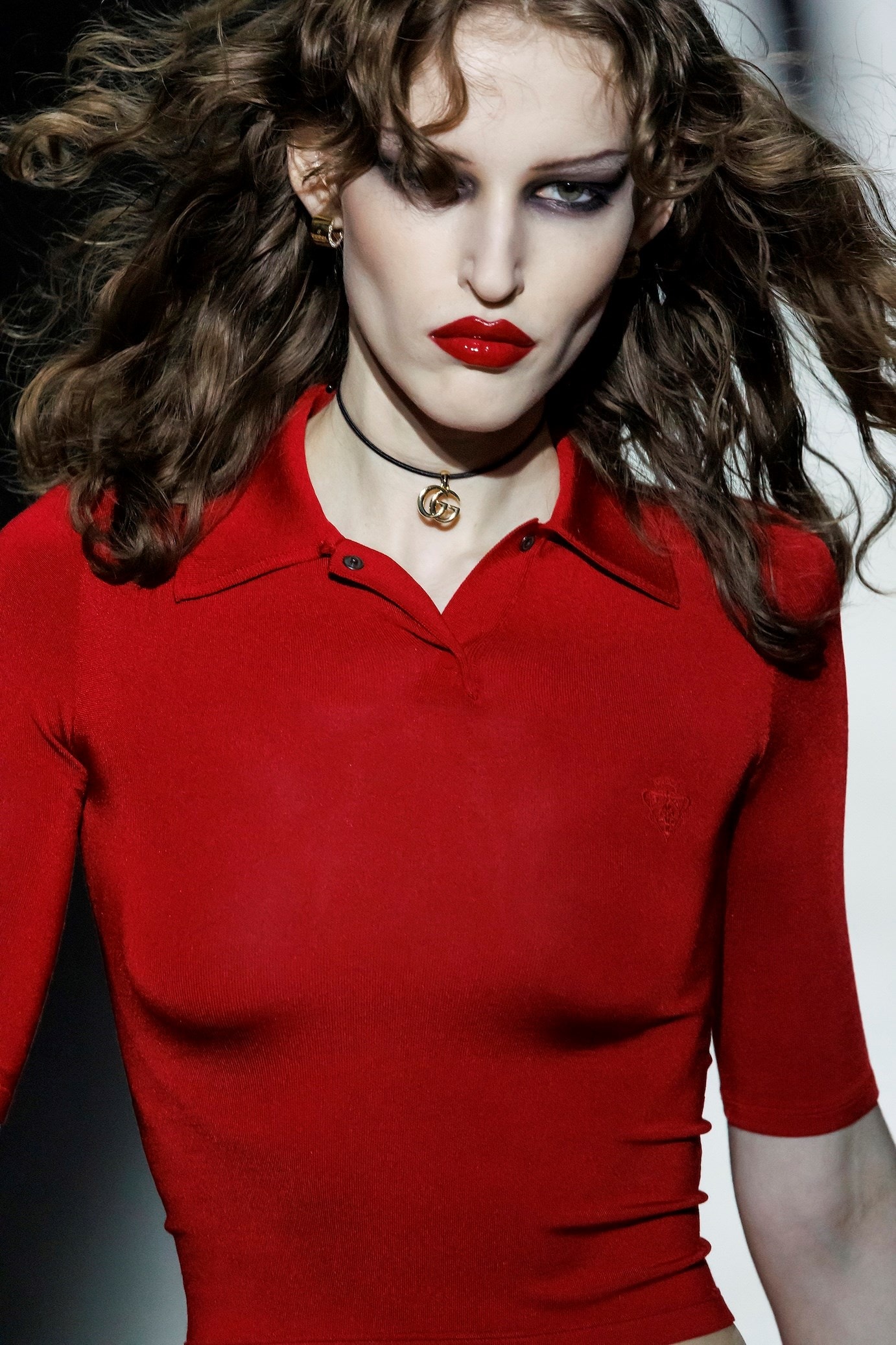
Demna’s Gucci debut for Autumn/Winter 2026 actually wasn’t a debut at all, strictly speaking. There have been two collections and an advertising campaign already: the first is sitting in stores, while across Milan the latter is on show, head-hacked images of shirts worming open over bare flesh stamped with the Gucci name. Although, actually, you don’t need those – despite the passage of creative directors since, the reinventions, both quiet and bombastic, everyone still synonymises Gucci with sex, with undressing rather than dressing, as spectacularly instigated by Tom Ford when he transformed Gucci from a minor heritage Italian brand churning out bloated licensee fodder to an era-defining fashion force 30 years ago. Demna’s mood thus far is a gentle retrospective to those dressing-free salad days – the Tom Ford-era white on black label has been reinstated, alongside a pheromonic whiff of the era’s unapologetic sex appeal. At 44, that’s precisely what Demna himself remembers of Gucci.


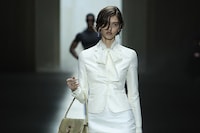
Yet, yes, we’re mythologising this collection as the first. Demna said Gucci isn’t based on a myth, but I’d argue the contrary: how about the house’s non-existent equestrian roots, ramped up because riding linked early Gucci to the haute aristocracy of Europe? And anyway, myth is a big thing in Italy generally – which is perhaps why Gucci erected a faux-colosseum of marble and heroic musclebound statues, fragments of other mythologies, bearing witness to this one. History was an important thing, for sure. The mononymic designer released a statement, ahead of the show, stating he plunged into the brand’s archives in Florence, alongside the Uffizi (natch) and Michelangelo’s David (of course). More myth-making. Before he left Balenciaga last summer, too, a tranche of pieces were couriered to Paris for Demna to study inside out, to get a beat ahead of the behemoth task in hand.
Undoubtedly the most culturally significant portion of that archive – Gucci’s own history – is given over, currently, to the work of Ford, which not only reshaped fashion but, arguably, helped iterate a new sexual identity in a post-AIDS crisis era. A bold claim, but Ford is an image-maker first and foremost – his horned-up advertising campaigns and blatantly sexy clothes blew into fashion like nothing we’d seen since the late 1970s, which was exactly his stomping ground, of lace kaftans barely tethered to the skin with flimsy horse bits and clingy jersey dresses with great holes chewed out of them like lovebites in fabric form. Bodies were slathered with grease, eyes were less come-to-bed than freshly … well, you know. It affected an era.

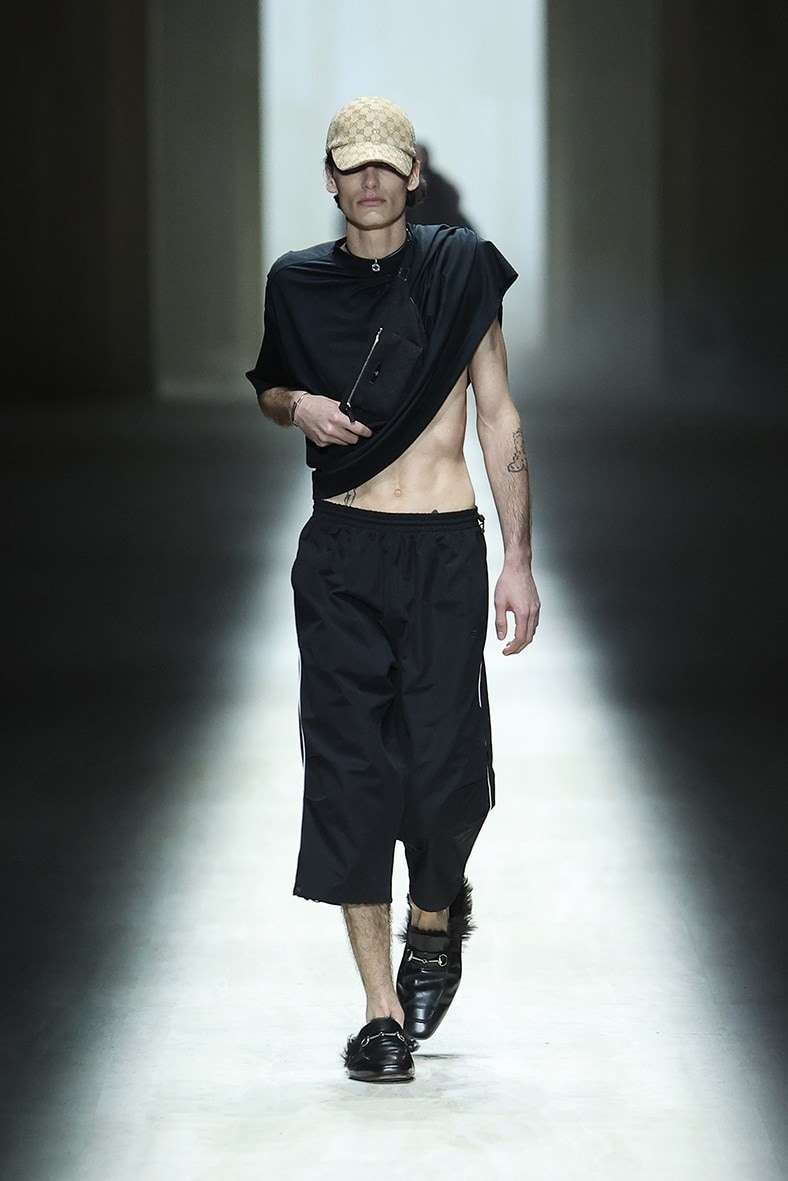

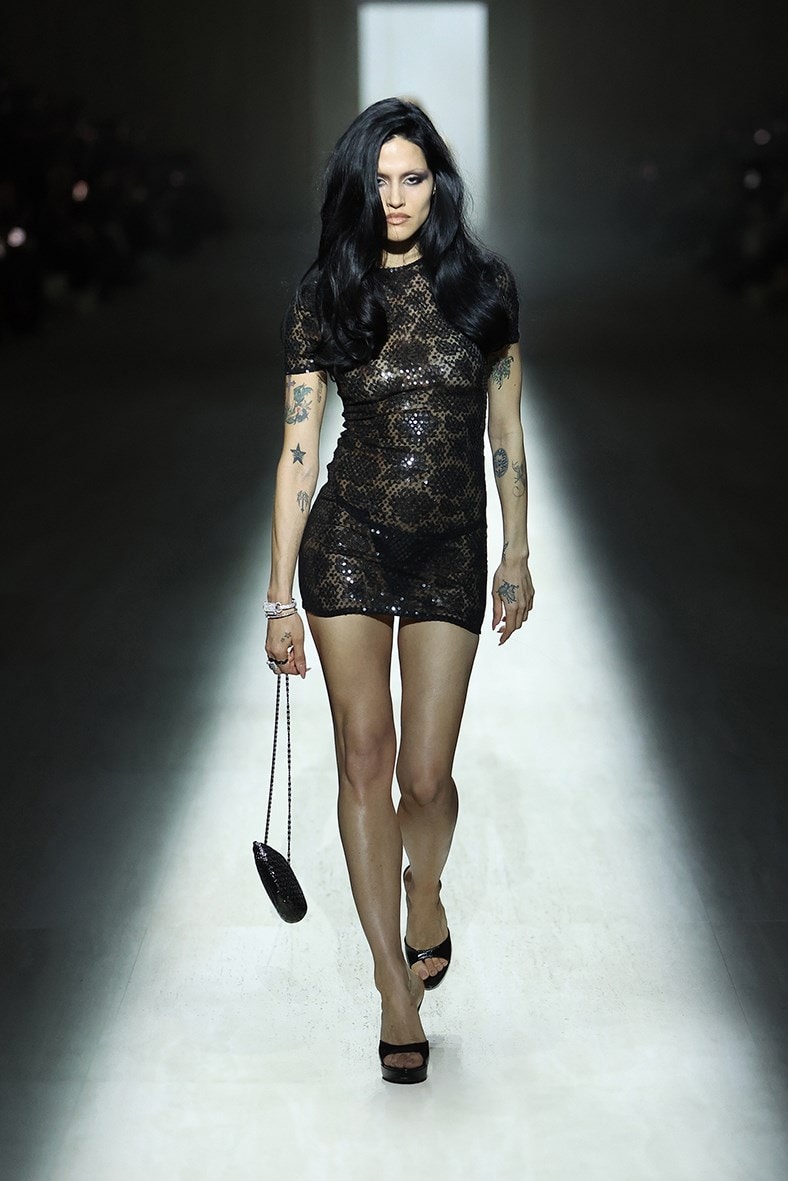
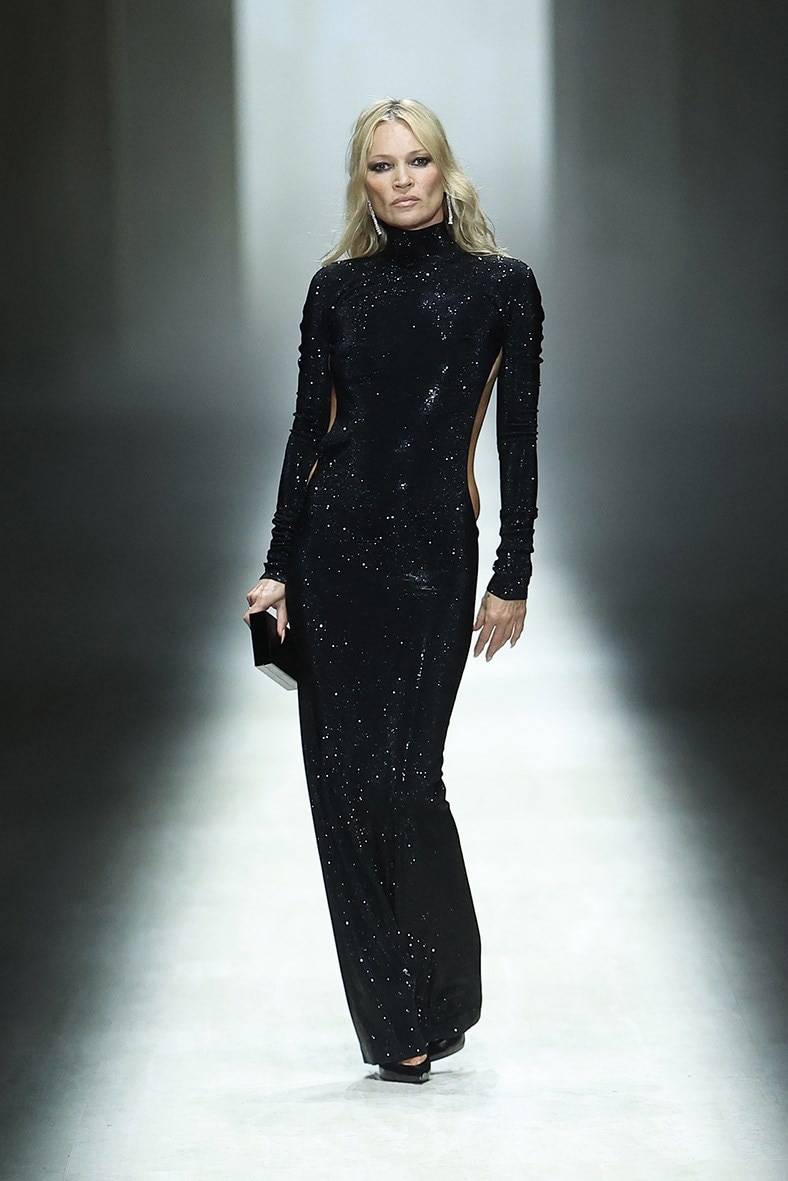
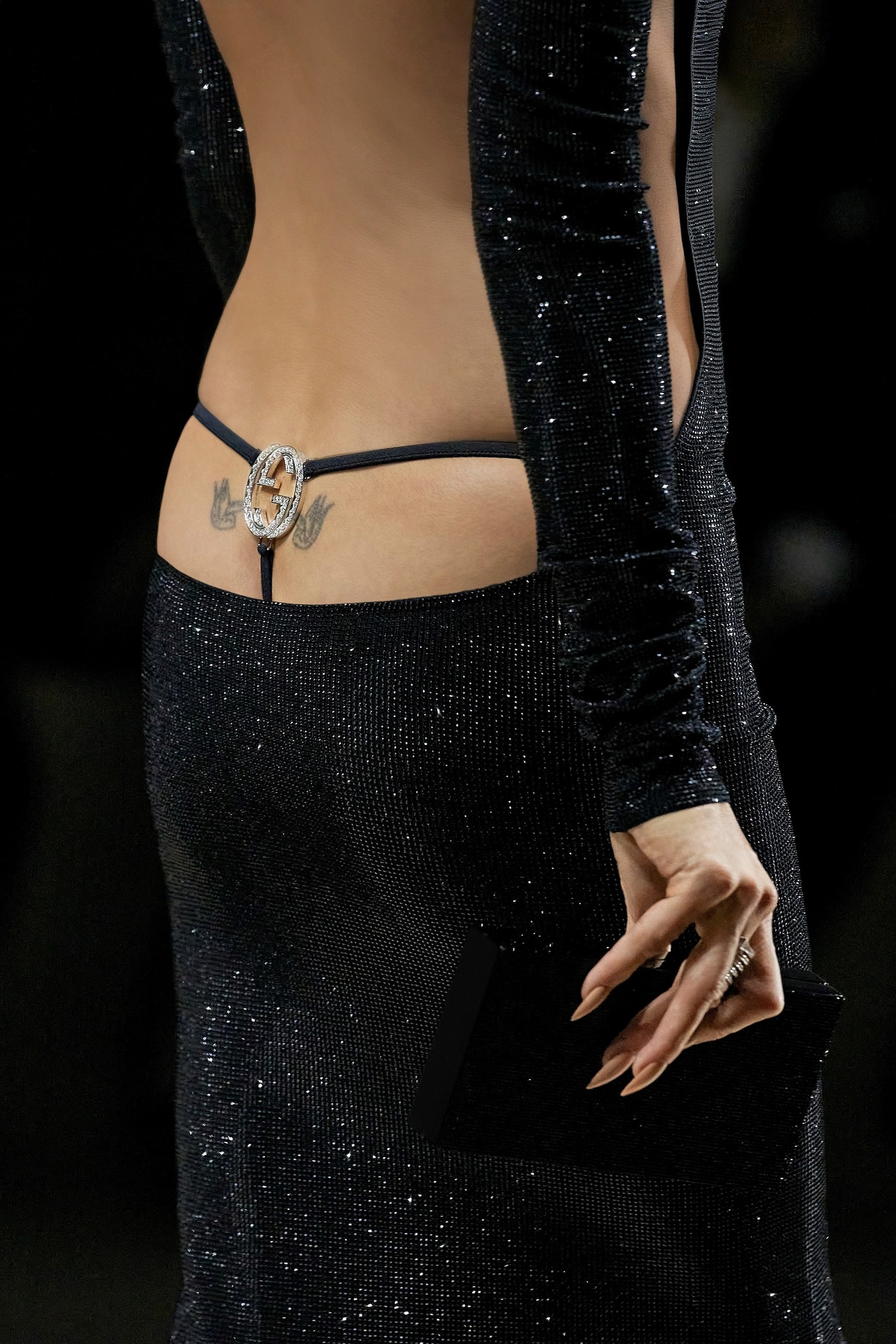
Demna has, arguably, exerted a similar influence over an aesthetic shift across the past decade or so. He’s one of the most influential designers of his time – in a mass sense, potentially the most copied and referenced. So his Gucci was always going to be an event that resonated wider than the clothes on his people’s backs. Or, indeed, not – his show closed with Kate Moss, an avatar of 90s sexuality via first Calvin Klein and later Ford’s Gucci, in a dress with its entire rear scooped out, lumbar dimples on show. A Gucci double-G thong nestled in her coccyx, executed in white gold and multiple carats of diamonds – ironically, just as the bottom fell out of the market for those rocks.
That was the only direct callback to Ford – bar the strip of light through which the models passed – but Demna’s had a reflection of his predecessor’s absolute conviction of vision. And, like Ford, central to this Gucci offering was sex. If Ford’s was about a gloss of sophisticated hedonism, coked-out Halstonettes crouched in jersey on the shag carpet of a John Lautner den, the sexuality of Demna’s Gucci has only the barest slither of that past. It is rooted in the now, in the postmodern erotic digital exchange of OnlyFans subscriptions and burner view-once DMs, headless Sniffies torsos and sildenafil.


That was exactly what you thought of the opening silk jersey dresses and tank tops wrapped tight around peptide-pumped torsos and wriggling pneumatic curves – zero nostalgia, and a mirror of who we are. It was also a striking switch of silhouette for Demna, oligarch of the oversized – he shrank everything close, sculpting clothes to the body like those of the noble marble gods looking on.
Will this shift be as major as Demna’s earlier soupy fabric shapes, his sour-faced models and nihilistic recalibration of fashion? Possibly. To a degree, those reflected a subset of how many people already dressed, disaffected youths whose aesthetic would upend certain societal ideals of beauty. These clothes too reflect a way fashion is already going, and certainly how many people actually dress beyond catwalk archetypes – namely, in Skims, jeggings, clothes engineered plainly to show off the forms beneath them, rather than conceal them. There is a sense that we live in an era where our bodies have become a kind of currency, a means of exchange – less sex sells, more selling sex. That’s the big change from Ford – sex isn’t a way to sell product, it is the product itself. And in effect, the clothes are the packaging, tightly wrapped, attractively bowed, ready to be ripped open.
It’s oddly striking to see a show that actually reflects what a wider culture finds attractive, desirable, rather than the echo chamber of fashion. And that also demonstrates Demna’s understanding of Gucci – it’s a name that, in its global resonance, has become more than just fashion. It’s in song lyrics, they’ve made movies about it. “Gucci is culture,” Demna wrote. Then, Demna did. This was a striking opening salvo, of what Gucci could represent. It will be fascinating to see where it takes us next.
