
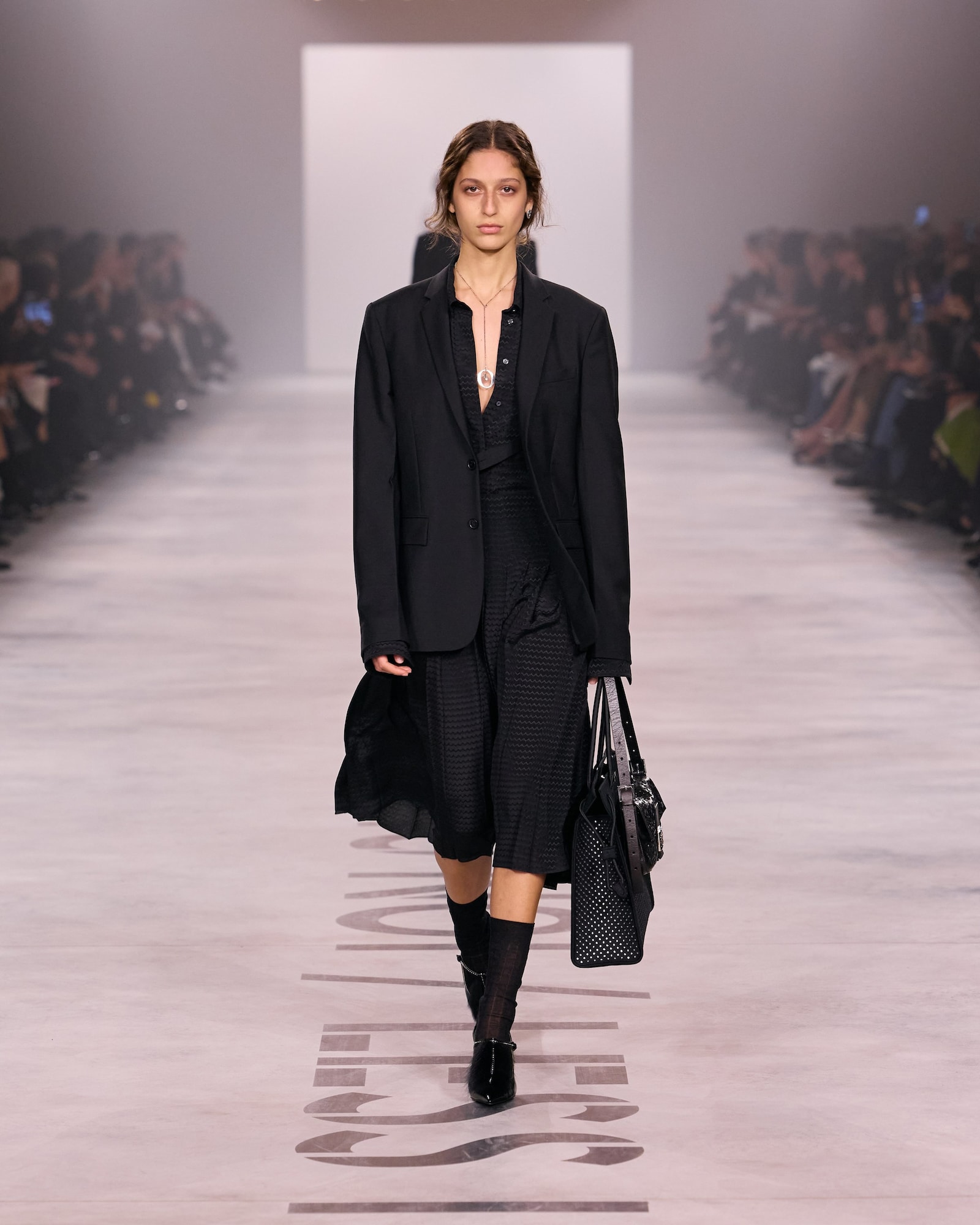
About two years ago, in the summer just before the Paris Olympics, I interviewed Maria Grazia Chiuri in her then-office at Christian Dior. We wound up talking about Fendi, triggered by the (very, very good) French television serialisation of Karl Lagerfeld’s 1970s life starring a stoic Daniel Bruhl in lots of dark glasses, which will hopefully be returning for a second season soon. It’s often forgotten that Chiuri worked with Lagerfeld, at Fendi, for a decade before she began her lauded stint at Valentino. Obviously that wasn’t in the 70s, but the show dredged up her memories, she said. Lagerfeld was a fleeting, visiting presence – her most ready recollections were of the five Fendi sisters, Alda, Anna, Carla, Franca and Paola. “There was no ego. I remember that at the time we spoke all as plural. ‘We think. We did,’” she said. “Community. A conversation.”


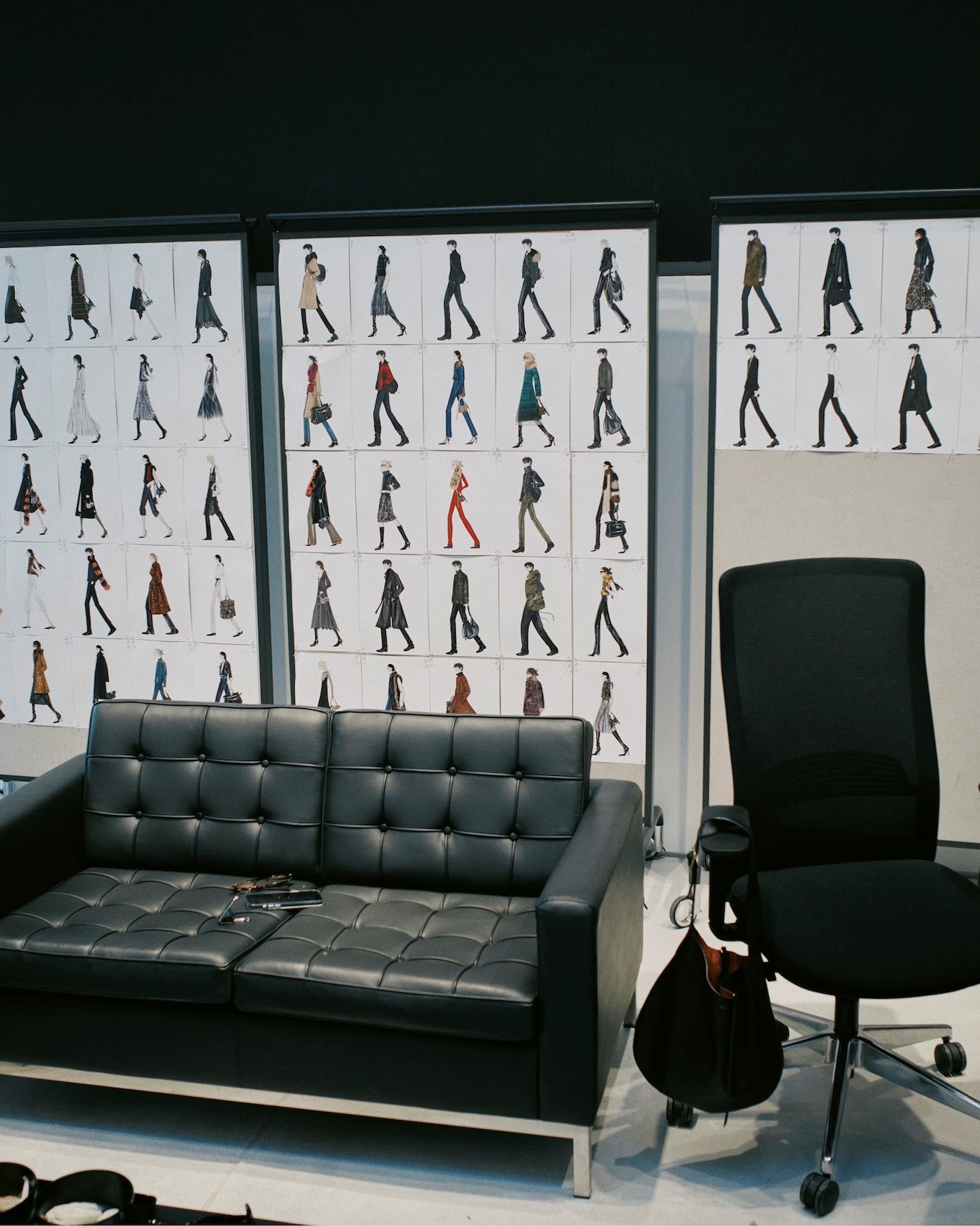
Chiuri has begun her own conversation with Fendi again. In a full-circle moment, 18 or so months after we spoke, she’s returned to the house – Autumn/Winter 2026 marks her debut. Last time, she was helping to oversee accessories, beginning as a 24 year old in 1989. Today, she’s installed in the newly created role of chief creative officer, giving her purview over that entire Roman empire. Fittingly, and it must be said impressively, she’s doing so from her own colosseum, the vast Palazzo della Civiltà Italiana just outside the Eternal City. Thinking back to those ideas of community and conversation, she called her debut collection Less I, More Us – an expression of the collective nature of ateliers and design studio that underpin any fashion undertaking, but also especially evocative of the family at the heart of Fendi.

Returning to Fendi was evidently a deeply evocative experience for Chiuri. “Honestly, I have to say that I was so lucky to start with the Fendi family,” she said. It’s quite a remarkable conversation to have had, before her move back home to Rome was even rumoured. But in hindsight it elucidates her deep-seated affection for the house, how it shaped her, and why she’d naturally wish to return again. “That was really a community way to work together, where everyone – also me, and I was very young at the time – can express an opinion. I could propose something, they were never closed-minded. I think that also, in some way, my activism comes from these five women.” Back in Paris, she paused. Considered. “I only thank them for what they passed to me, and how they gave me the opportunity to express myself, without being scared.”
That was, arguably, a fearless time at Fendi. Alongside Pierpaolo Piccioli, Chiuri worked at the brand for the pivotal decade of the 90s, when Silvia Venturini Fendi invented the Baguette – at that point, probably the most influential handbag since the Chanel 2.55 – and turbo-charged the house from a quirky fur purveyor to global accessory dominance. A majority stake was acquired by a joint venture between LVMH and Prada Group in 1999, the year she left (LVMH became sole owner in 2001).

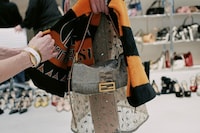
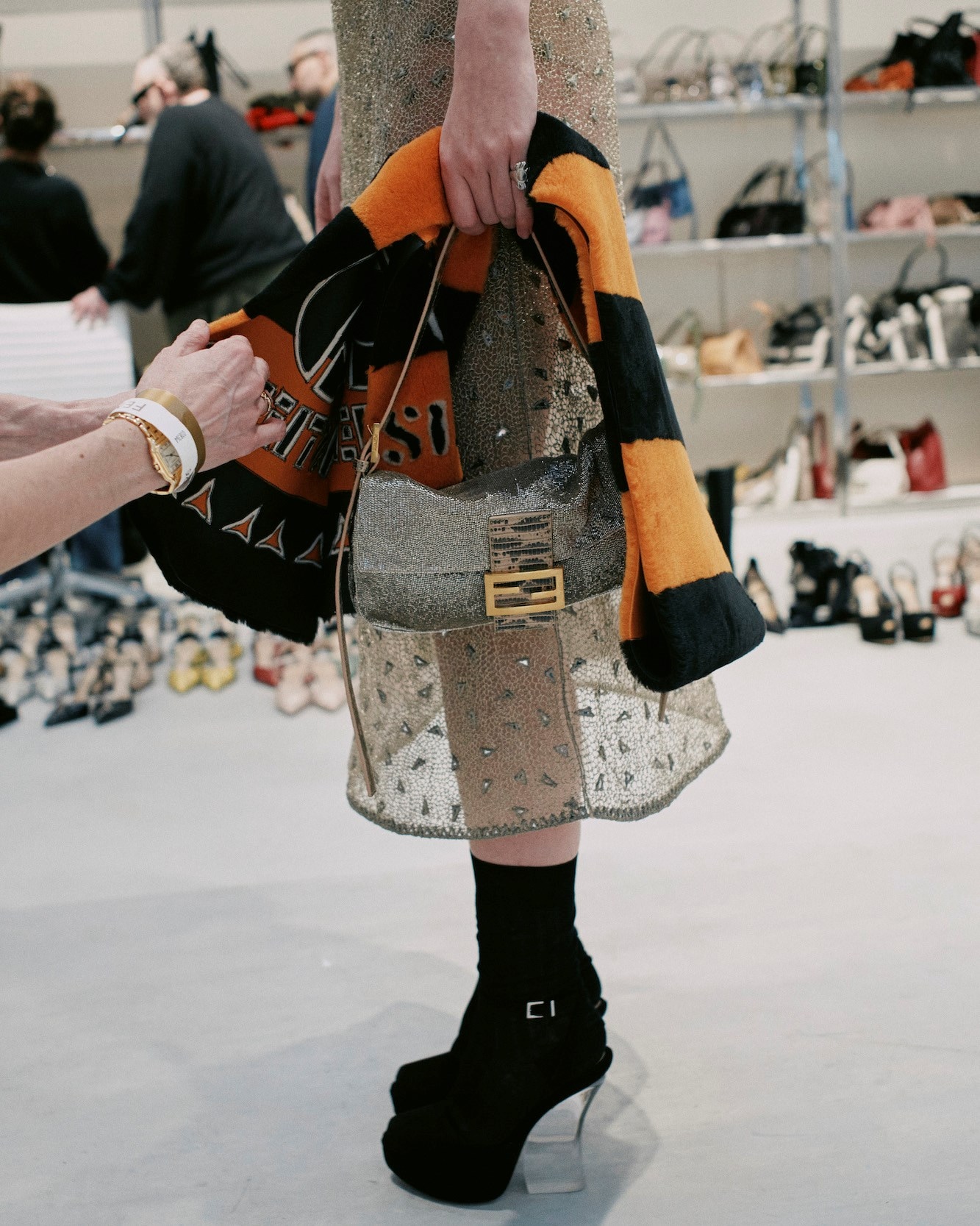
This year is Fendi’s 101st anniversary, which doesn’t readily roll off the tongue. But Chiuri’s collection was, of sorts, a Fendi 101. She started by reconfiguring the logo – standard practice for an incoming creative head. But Chiuri decided to take it back to the original, tweaked by graphic designer Leonardo Sonnoli. There was, of course, the Baguette, satisfyingly retrograded by Chiuri, who added back the twin buckles to the strap that had been styled out to lobster clasps over the years. It was also, as originally, a canvas for explorations of embroideries and craft techniques here, often incongruously paired with utilitarian pieces like boiler suits or cargo shorts, as foils to its preciosity. The neat little collars – sweet in white, sometimes in leather or recycled fur – were more than a nod to Lagerfeld, drawn from one of his 1986 collections. And there were other things, like flashes of that distinct Fendi yellow in knits and on socks, and fur – although Chiuri’s was remade and remodelled from existing garments. The protestors outside didn’t know, nor would they care – it’s a contentious subject. But she expressed Fendi craft also through embroideries that echoed the 1920s, fine laces, and tailoring – for her, and him, Chiuri’s first menswear offerings. There were also a series of soccer-style scarves, inlaid with the number 5 and ‘sisters.’ That was Chiuri’s direct homage to the women who shaped Fendi, and also the women who shaped her.
