
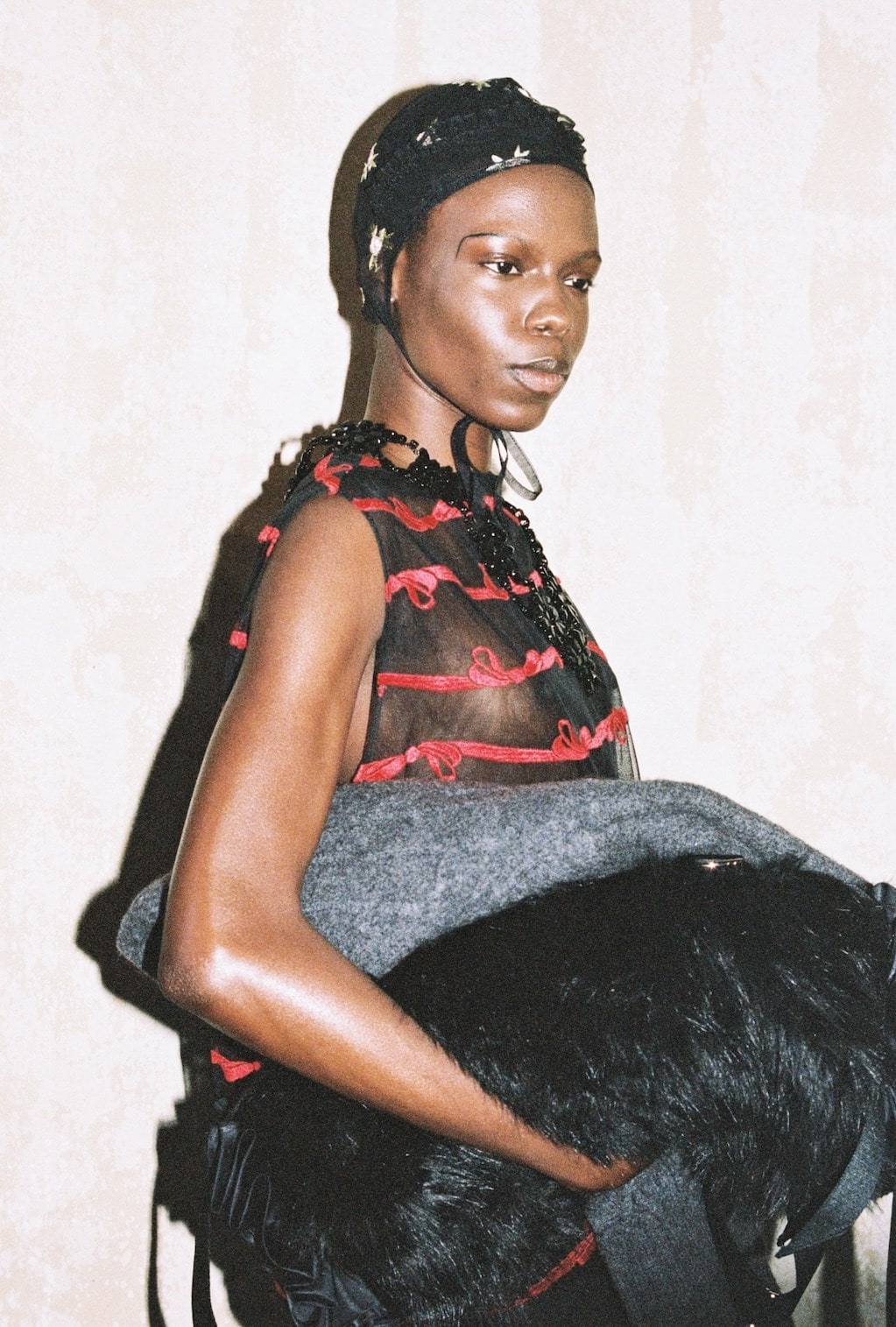
“Agony and ecstasy.” That was Simone Rocha’s astute, concise summary of her Autumn/Winter 2026 collection – fitting for any fashion designer these days, especially in London where it’s always been a struggle to make creative ends meet commercial security. Rocha is more adroit at that than many – her business is robust. Not least because she’s defined who she is and what she stands for, with clothes that are intricately crafted, bold in silhouette, steeped in meaning and nuance. They look great, of course, but there’s plenty deeper.
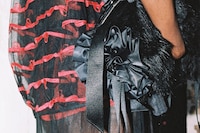
It’s also of her fashion to say that the agony doesn’t come from the clothes themselves. There’s a tenderness to what Rocha creates, a gentleness – her clothes hug their bodies with softly rounded edges, no sharp corners. This time, her collection was cleaved neatly into three separate yet interrelated inspirations, all of which knotted up inextricably with herself and her own identity. An overarching idea was that of Tír na nÓg, the otherworld of Irish mythology, a land of eternal youth. Youth got her thinking about one of her favourite books, Perry Ogden’s photographic essay Pony Kids, documenting late 1990s Dublin youths and the horses they were obsessed with. It means plenty to Rocha – she even had Ogden walk in one of her past shows. And she was growing up in the city at that time, she says, and sporting the same mix of scuzzy sportswear and old-fashioned school uniform tailoring depicted in their pages. And their ponies linked back to mythology – to the white horse Enbarr, a steed that dances across the waves to Tír na nÓg. The third part of the mix was what she calls the “Weird Sisters” – which isn’t her terminology, but one she borrowed from James Joyce’s Ulysses (like you do). He disparagingly used it to refer to the pioneering siblings of WB Yeats, Elizabeth and Lily – educators and publishers who helped shape the Irish arts and crafts movement. But who were weird girls, unmarried and professionally ambitious, and therefore to be sneered at.
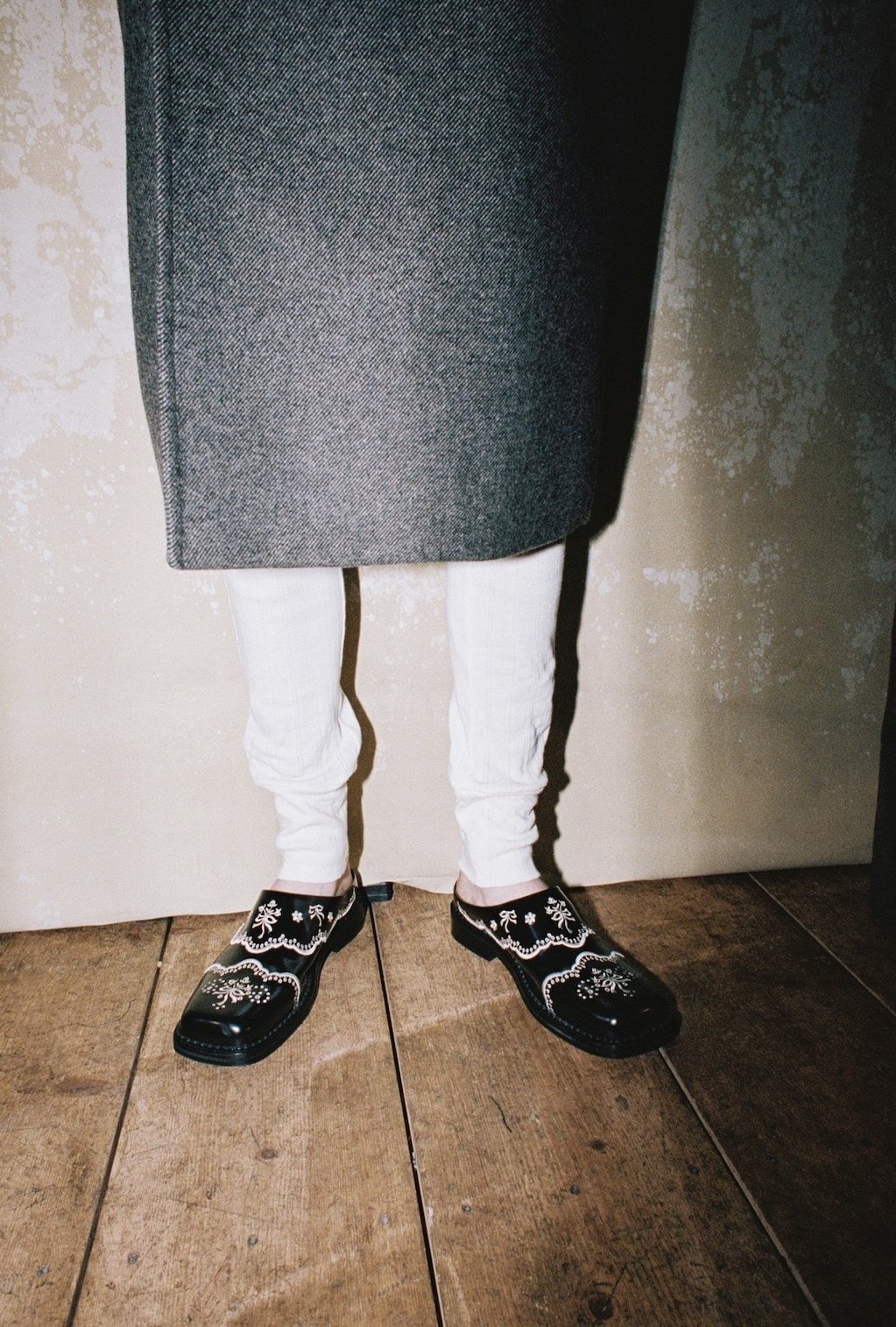
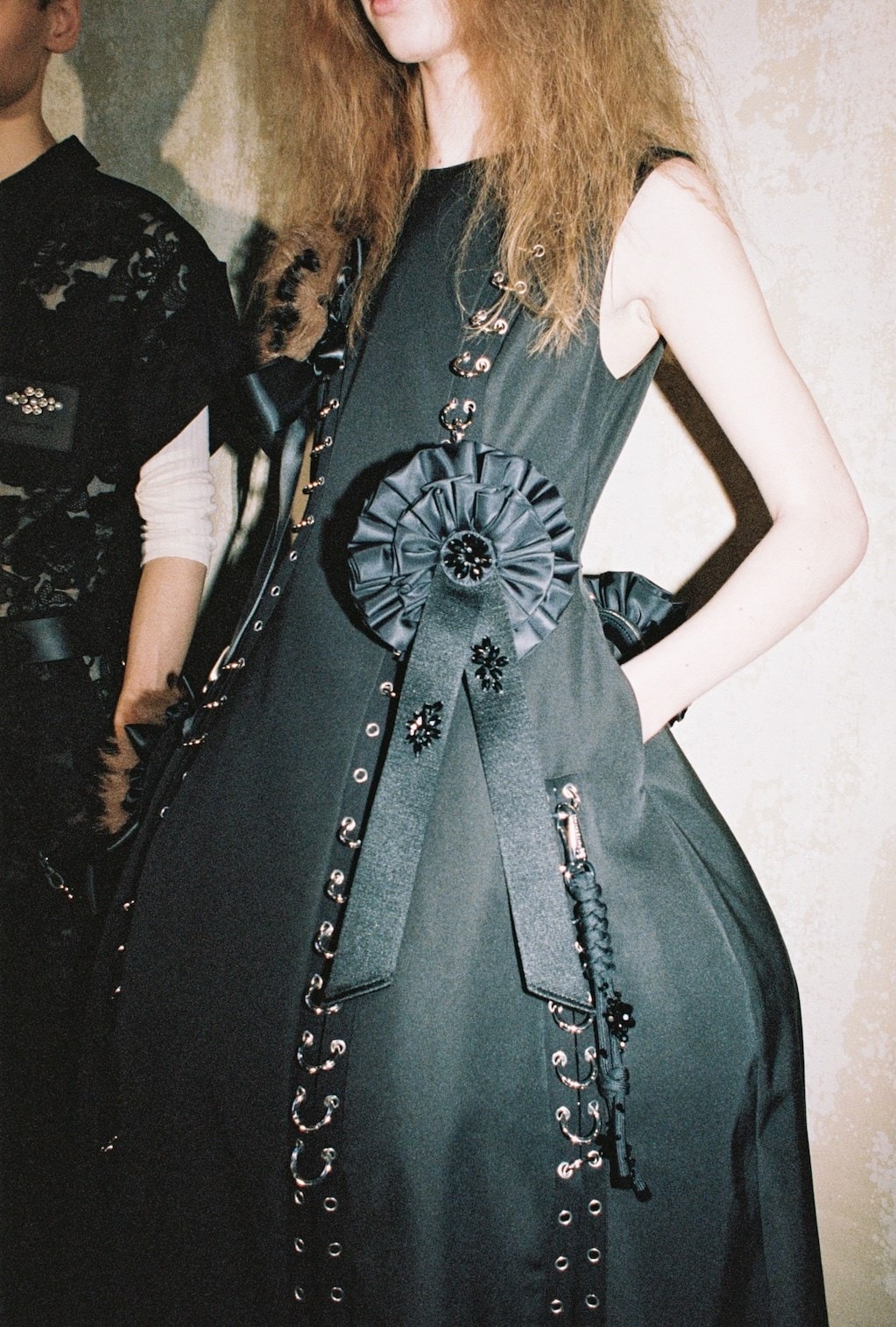
That’s a heady mix – potentially, a heavy one. It’s a lot of history, spanning multiple universes, it seems. Yet it knotted up neatly with a literal bow for Rocha. The first dress, in patched white laces with ribbons streaming in the wind, was a sublimation of Enbarr in fashion form. And later models had squared-off faux fur mules that looked a little like hooves. “I want this whole cast to essentially be chasing her,” Rocha said, laughing slightly. “Looking for this impossible thing.” She was speaking a few days before her show at her studio in east London, models cantering past in dresses pinned with flowing rosettes like prize-winners, apron-strings chopped off and left fluttering, like youth rendered entirely independent.


Rocha made us go on a journey to chase, too – “It’s a bit of a pilgrimage,” she allowed, of the fact she elected to show in north London’s Alexandra Palace – a public space from the 19th-century that originally contained everything from a concert hall to libraries and lecture spaces, as well as a theatre in the round, where Rocha elected to show. She was debating trucking in Irish soil – there’s a myth around Tír na nÓg that Oisin, a returning hero, touches Irish soil and is transformed from eternal youth into an ld and blind man. But impossible wants, impossible needs, impossible clean-up. Rocha, ironically, is nothing if not grounded.
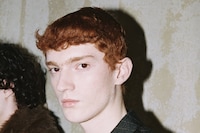
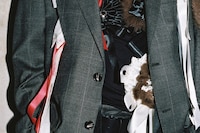
What this mix added up to was a resolutely real show, those mythologies presented not as far-removed fantasies but bedtime stories passed from mothers to their children, and clothes that combined Rocha’s love of romance and ambitious silhouette with down-to-earth, down-at-heel sportswear references. Those actually constituted a major new addition to her repertoire: a collaboration with adidas Originals, that label’s first purely womenswear-focussed offering, spanning apparel, accessories, footwear and even jewellery. Like Ogden’s sitters, Rocha’s girls and boys mixed their three-stripes with all kinds of clothes, under ballgowns, beneath tailoring. Some of the boys sported the semi-shaved hairstyles with a thick, ugly fringe like a pony’s forelock. The weird sisters came through in silhouettes that nodded to Victoriana, chubby round crinolines laced with fat ribbons or pieced with rings, florals printed and hand-embroidered – Lily was an expert at that. A few others were 1920s in flavour, when Joyce first published his book, but their tubular silhouettes seemed to be coming apart at their ribbon-laced seams.

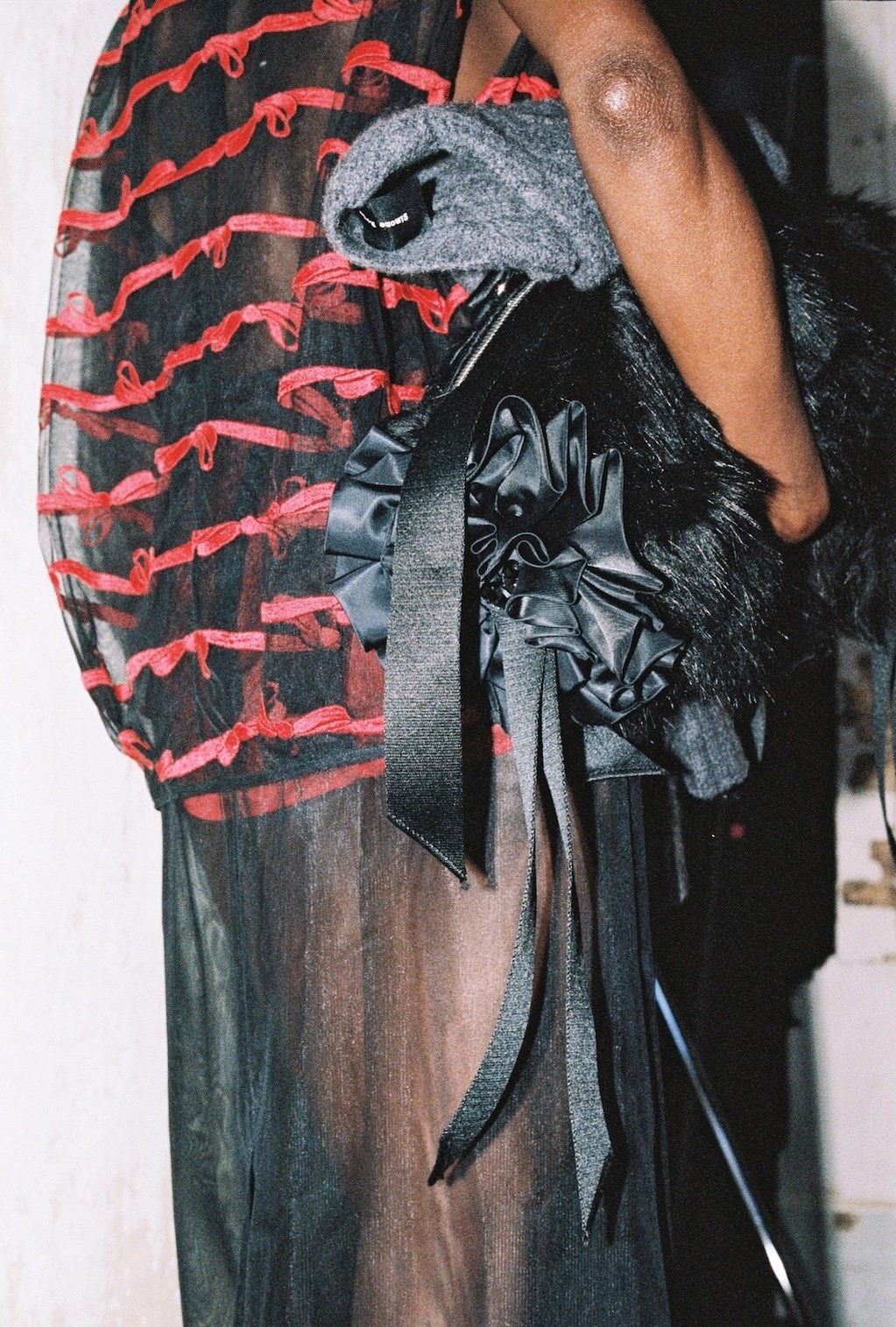

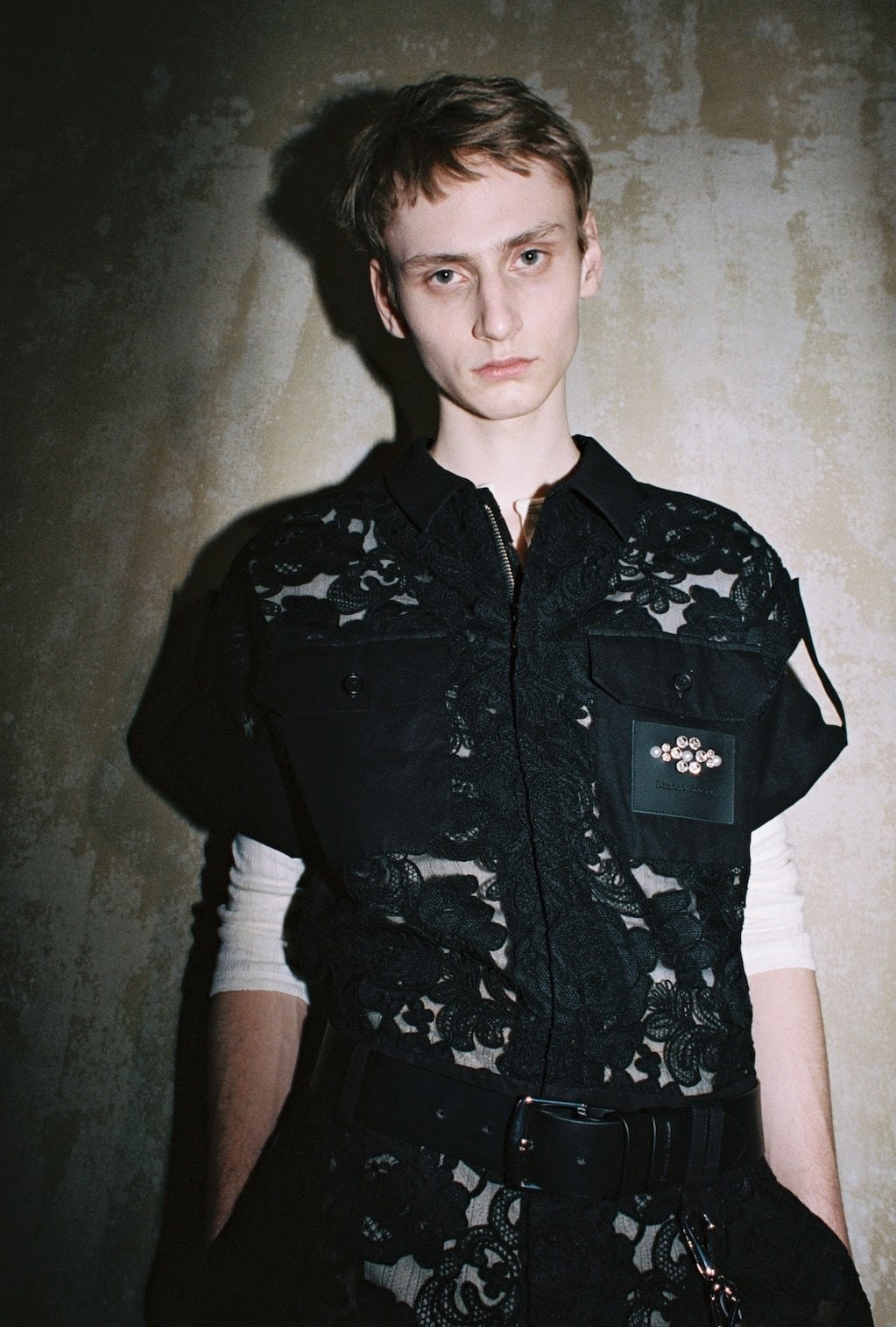
“Extremes and collisions” was what Rocha was interested in – combining the now with the then, masculine and feminine, sportswear with the most formal of ballgowns. Her wools had an antique air, “something lived in, hand-me-down,” she said. In short - like Tír na nÓg – she was interested, as always, in things with a story. “That’s what this show is,” she said. “This cast of girls and boys, a love story. It’s about an impossible want, wanting to have it all. But the reality is that that’s an impossible thing.” Although some may say Rocha does have it all. Certainly, this show was an adroit display of a designer at the height of her powers – and judging by the number of women in panniers and crinolines, and young men in taffeta rugby shirts and ruffles, her followers are willing to pilgrimage to just about wherever she will go, chasing her not-so-impossible dreams with ecstatic lust.
