
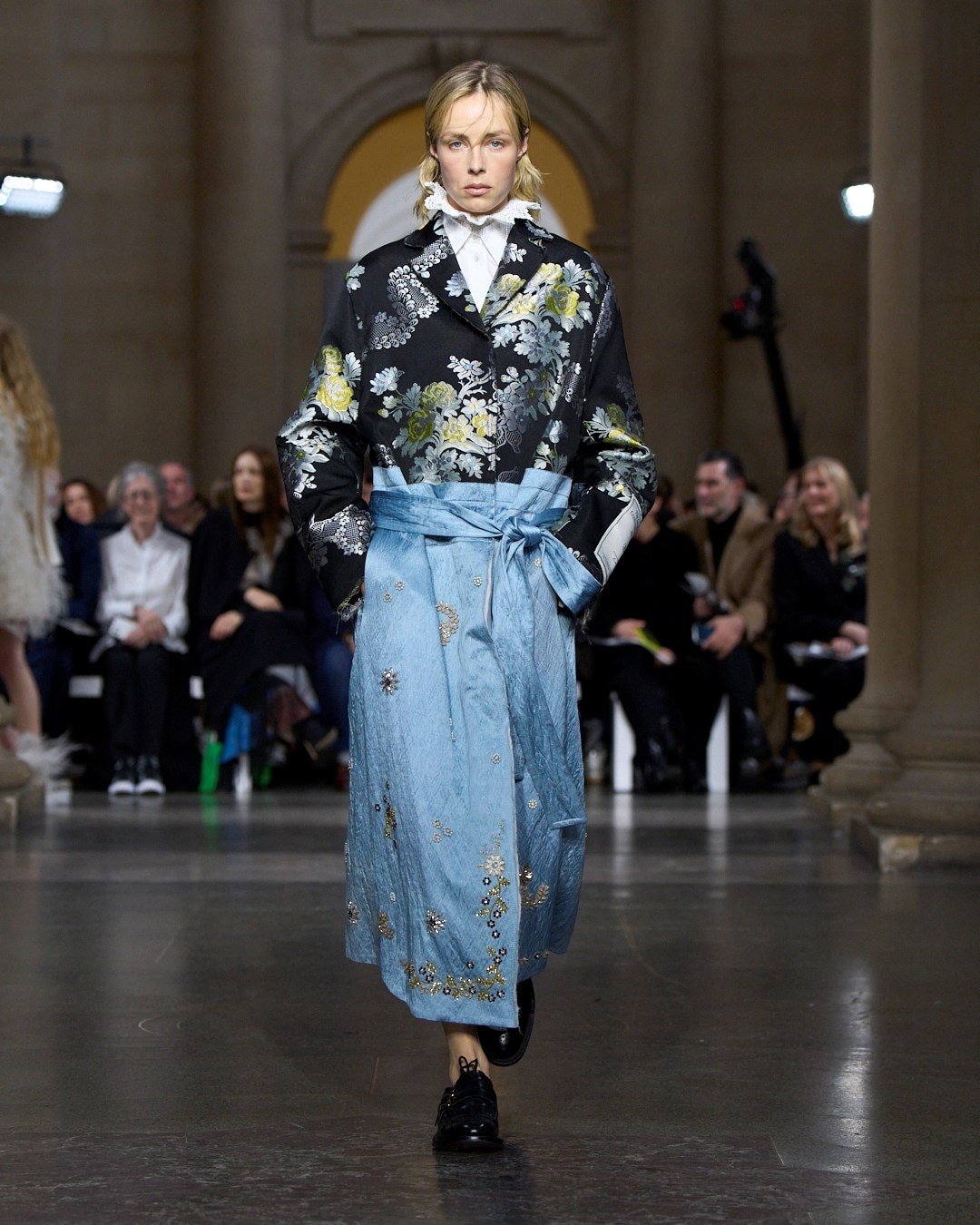
Erdem Moralıoğlu’s studio is haunted by voices of the past. At least, it is this Autumn/Winter 2026 season. That past is his – it is the 20th anniversary of his label, and accordingly he decided to embrace, engage, even embed himself in his own history. Which, in and of itself, is a history of histories – Moralıoğlu’s office is peppered with random 1930s portraits (the ones his husband, the architect Philip Joseph, won’t let him keep in their Bloomsbury home) and old, time-warped issues of Vogue, as well as overflows of books on everything from Merce Cunningham to Alfred Hitchcock.
But not, as far as I could see, much on contemporary stuff. Moralıoğlu is into old-fashioned beauty, in every sense of that descriptor and at all times. Generally, he takes as his inspiration a particular woman – usually, a dead one – and spins his own story around hers. There’s been Margot Fonteyn, Debo, Duchess of Devonshire, Elizabeth II (she was actually alive when Moralıoğlu paid homage), and many more – enough to people some forty shows. He’s obsessed with the lives of others, in a healthy way rather than a peeping Tom type: there’s a good stock of historical biographies on those shelves. There’s a romance to that idea, to reanimating and reimagining these lives lived. And that predominance of portraits is an interesting window into the existence of someone else. If an anniversary is an excuse to look back, Moralıoğlu didn’t really need it.
Yet this time, rather than focusing on a particular woman, Moralıoğlu envisaged a sort of fashion cacophony of all of them at once, like a stylistic séance. “I like the strange exchange of these different voices, talking to one another. An imaginary conversation,” he said in his studio, a few days before his show. “Debo talking to Tina Modotti, Radclyffe Hall talking to Maria Callas.” You can only imagine how some of those exchanges would go – yet the clothes are a souvenir of these meetings, that never actually happened. The Imaginary Conversation is the title Moralıoğlu has given this show, and he’s stitched great big museological-style labels he calls “forensic” stating that all over the place.

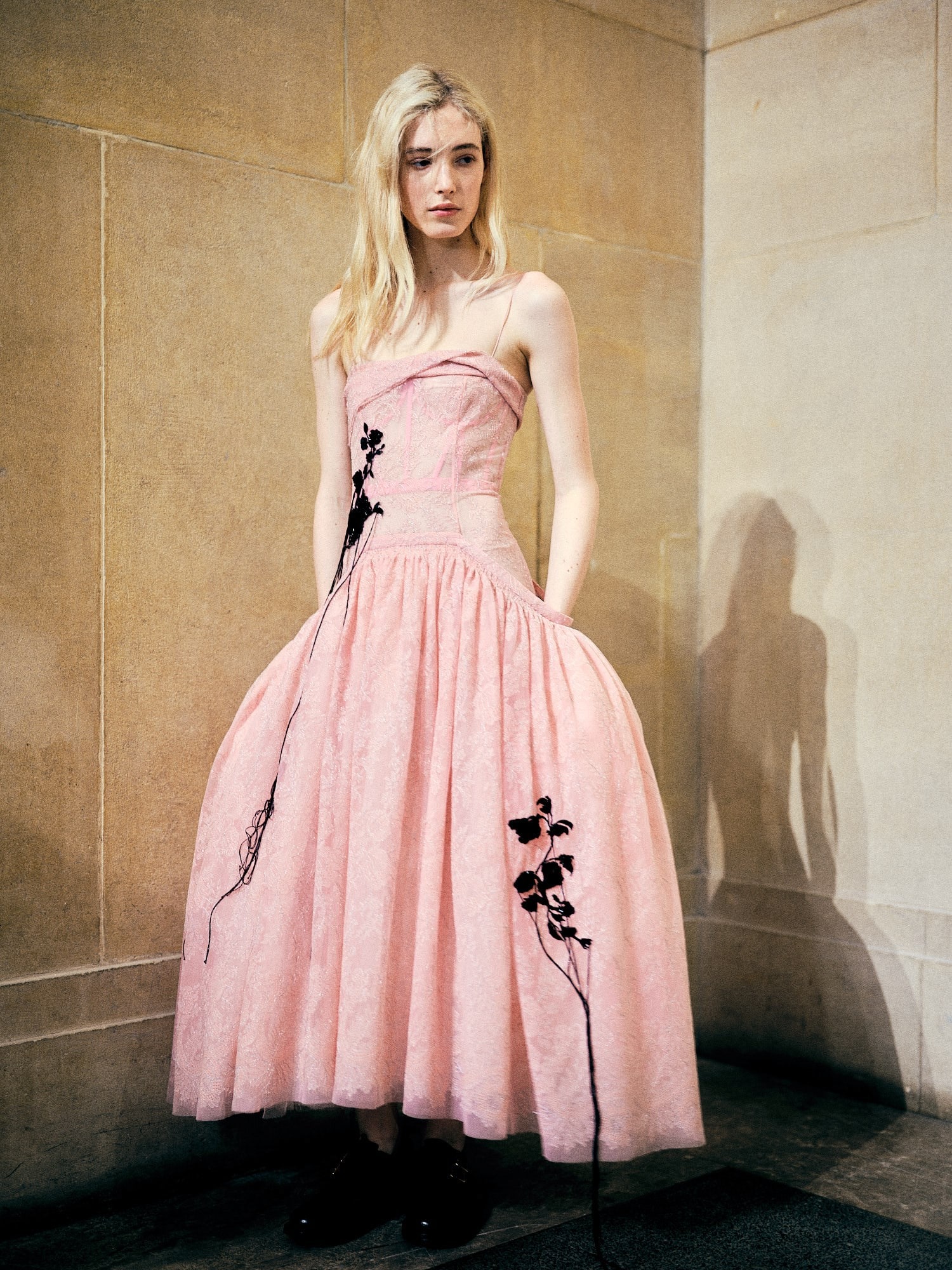

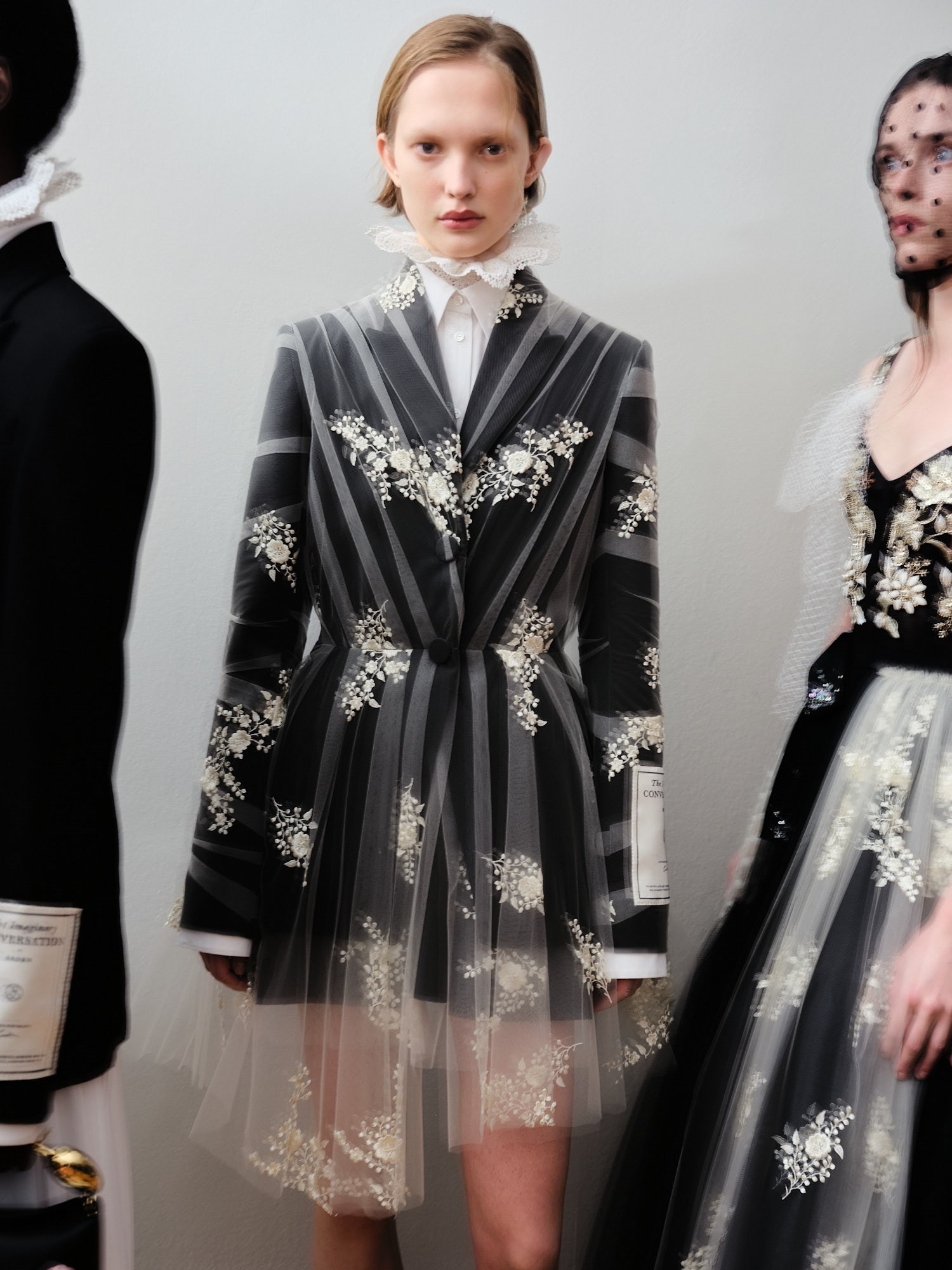
In Moralıoğlu’s studio, the results those labels will be affixed to are still very much works in progress. Dresses are being embroidered, bowed, built. There are wide coats that patch together brocades and Barbour waxed cottons, tailoring veiled in dustcovers of tulle. Part of the stimulus for this latest show, he says, was the process of pulling together a weighty tome with Rizzoli, published last October just after his last show, that featured everything from historical artworks and photography by the likes of Tyler Mitchell and Paul Kooiker, to conversations with Glenn Close (who he had dressed) and Christian Lacroix (who he hadn’t, but who is an idol). “He’s so punk,” said Moralıoğlu, which isn’t a word you expect to hear in that context.
“I like the strange exchange of these different voices, talking to one another. An imaginary conversation” – Erdem Moralıoğlu
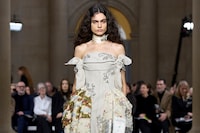
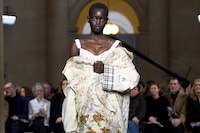
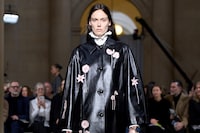
Moralıoğlu isn’t punk – he has no pretensions to be, which is very refreshing in an industry – especially in London – centred around a relentless chasing of the cool. Neatly dressed, and with his signature thick-rimmed glasses, he still has the earnest air of an honours student, especially surrounded by his study library. There’s a studiousness to this collection too, of a fashion. “Maybe it’s the exercise of doing the book,” Moralıoğlu reasons, of the influence behind this collection. “Piecing this thing together.” He pats the fat doorstop of a tome. And the collection also has a pieced sense – the clothes are often scrappy, darned and patched together, assembled from existing fragments, interestingly reflective of changed tastes. They have a sense of history to them. Two dresses in pale primrose and watery Queen Mother periwinkle are made up of embroidery samples from previous shows, combined and over-embroidered again. They may be worn with big duster-y ostrich shoes, as if brushing away the cobwebs of the past. A dress is composed of a redux of his first-ever finale dress in 2006 – it was a bride, Moralıoğlu says, rolling his eyes slightly. “I thought you had to end with a bride.” Here, the pleated skirt has been doubled over, tucked in. There’s an irreverence, even a healthy disrespect for his own past – a couple of fancy ballgowns, one of which graces the cover of his book on Guinevere van Seenus, have been cut off at the waist and are worn as tops with low-slung jeans. Others have been chopped apart and Frankensteined back together at the midriff, like a game of fashion exquisite corpse done big.

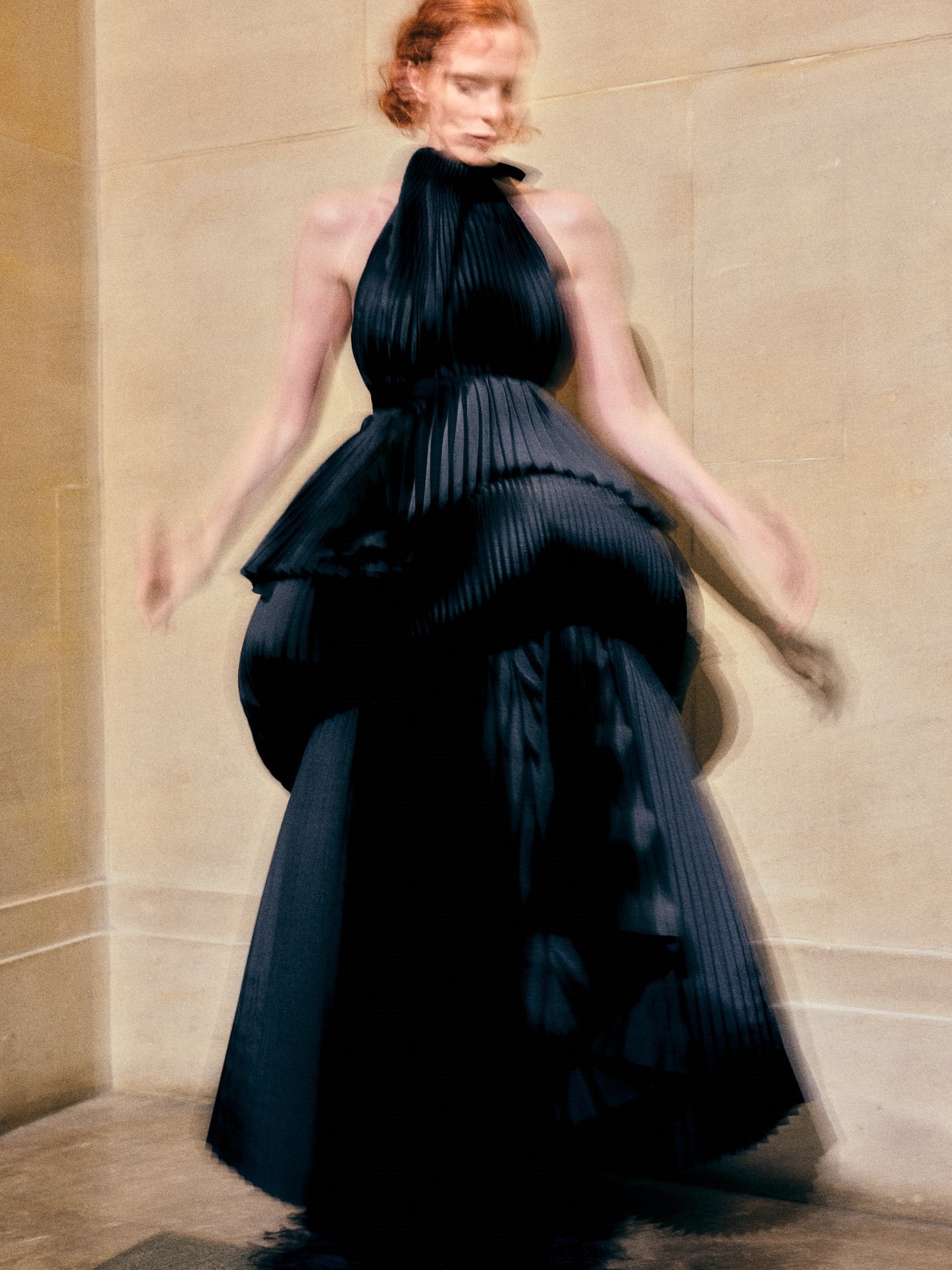

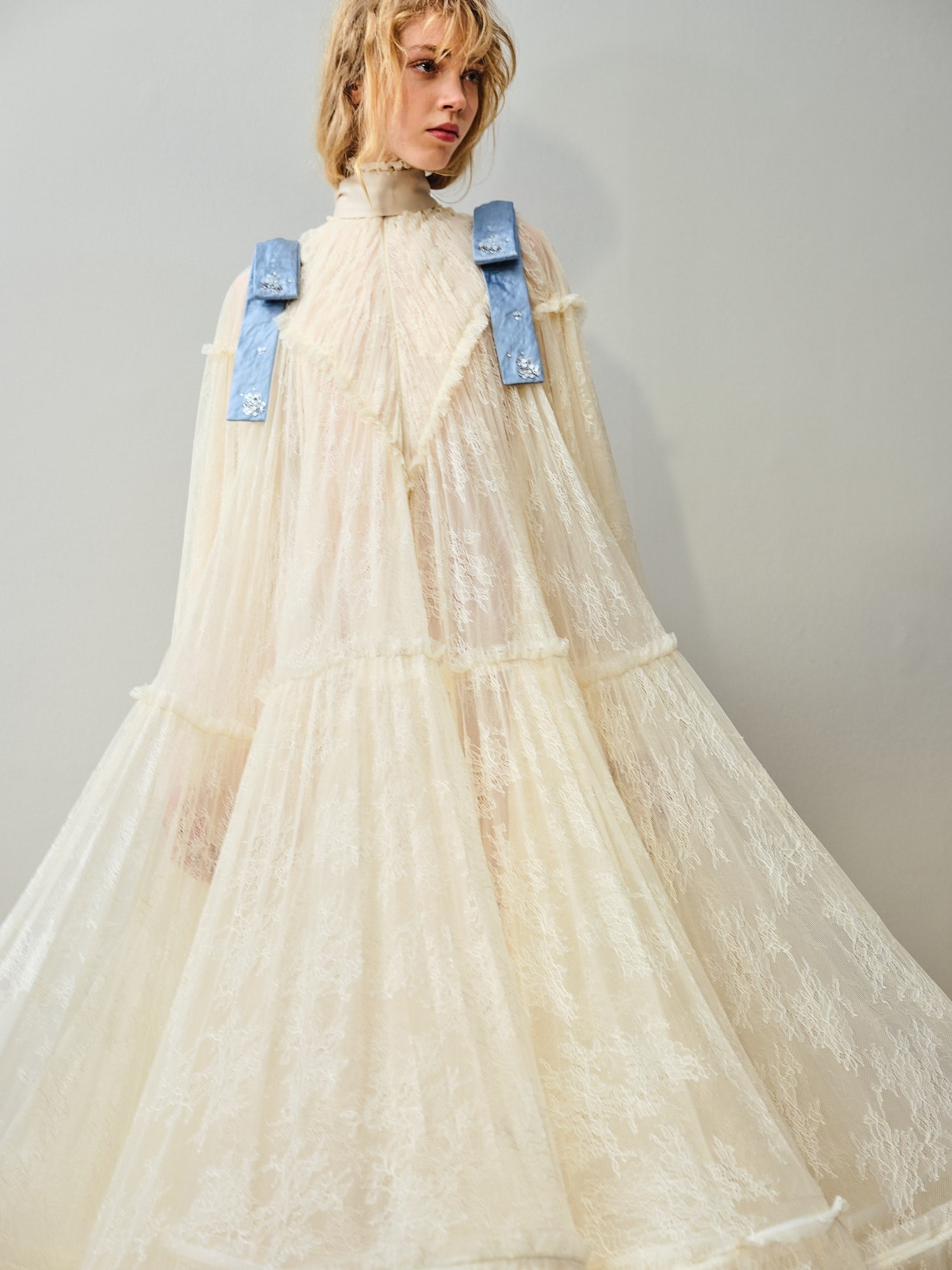
“I think there’s something almost – dare I say it – liberating?” Moralıoğlu words this comment about his rough treatment of his own past as a question, rather than an answer. “There’s something kind of quite freeing.” Indeed, in a world of white-gloved archival reverence, it’s refreshing to see someone chopping it apart in the search of something new rather than material ripe for reissue. “If you’ve developed a language and something that people like, it’s kind of interesting when you can play into it, contradict it,” he says. “We were talking about this idea of using, maybe the colours, I’ll say, of all of these muses and characters. To kind of rip something up, create something different.”
I wondered how the anniversary shaped the show – as it so clearly did. “You know, in a weird way, it’s no different than any other year – because you’re trying to explore different ideas every season,” Moralıoğlu reasons. “I find the word retrospective uncomfortable.”
