
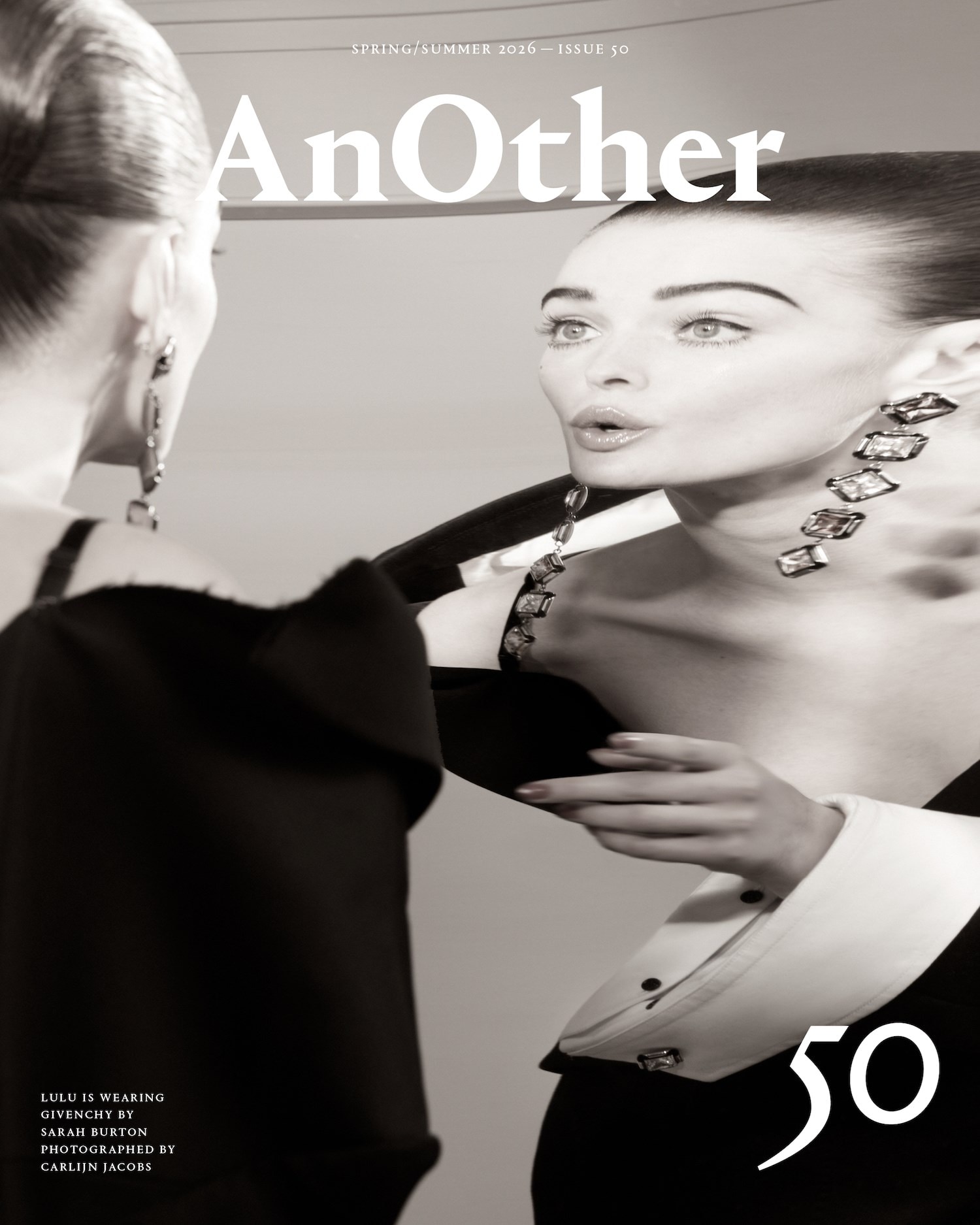
This story is taken from the Spring/Summer 2026 issue of AnOther Magazine:
On a discreet corner of Harley Street, home to Givenchy’s London studio, the sewing machines lined up on a table on the first-floor landing are the only signifier of what lies within. True, the generally medicalised connotations of the location are something of a curve ball – there’s a hair-transplant clinic upstairs – but nothing detracts from the beauty of the bones of the imposing Georgian interior, with its broad marble staircase, clad in ruby red carpet, and with that period’s typically high ceilings. Inside, Sarah Burton’s temporary workplace – her Givenchy is moving to larger premises in King’s Cross later this year – is equally grand: floor-to-ceiling windows, solid oak floors, stucco ornamentation complete with the requisite curlicues of the 18th-century style, and leaded windows.




There’s no disguising the nature of the business here though. A large, sparsely furnished studio space serves as an elegant meeting place but, elsewhere, small, interconnecting rooms filled to the brim with rolls of fabrics, rails of finished clothing, work in progress on dress stands and cutting tables manned (or principally womaned) by sewers, pattern cutters, embroiderers – technicians – are crowded hives of industry in line with the culture of the Paris haute couture ateliers.
Despite intense speculation, Burton, who now works between this studio and the Givenchy headquarters in the French capital, has yet to show an haute couture collection, but the level of attention to detail, the pride in hand-workmanship and emotional weight that carries, the focus on technique and fabrication, are all in her bones. More bones: since she arrived at Givenchy as creative director, more than a year ago now, Burton has stripped it back to its very core, to its sharp, architectural, structurally rigorous roots – to its skeletal beginnings, if you will. It’s a cliché, and she is the first to point that out, but her work at Givenchy to date has mined the foundations upon which that storied French fashion house is built.
If this path is a well-trodden one, the early years of Hubert de Givenchy’s career are nowhere near as well known as, say, that of his 1950s contemporaries Christian Dior and Gabrielle Chanel. Yes, he worked at Schiaparelli. Yes, as a young man he was desperate to make contact with Cristóbal Balenciaga but was turned away at the door – they met later, became close friends and any conversation between them informed the work of both. And, yes, Hubert de Givenchy dressed Audrey Hepburn and many more actors, both onscreen and off, as well as socialites of note for over four decades. He opened his fashion house on Avenue George V, across the street from Balenciaga, at the suggestion of the latter’s founder, in 1959. Prior to that, from its birth in 1952, Maison Givenchy had been located on rue Alfred-de-Vigny and dubbed La Cathédrale by the press in characteristically inflated mid-20th-century haute couture parlance. Later, he would set aside a bedroom in his Cap Ferrat home and have it especially decorated for Bunny Mellon, among his favourite and most loyal clients. It was important for him that the people he dressed felt at ease – at home. For Burton, that is of particular interest too.

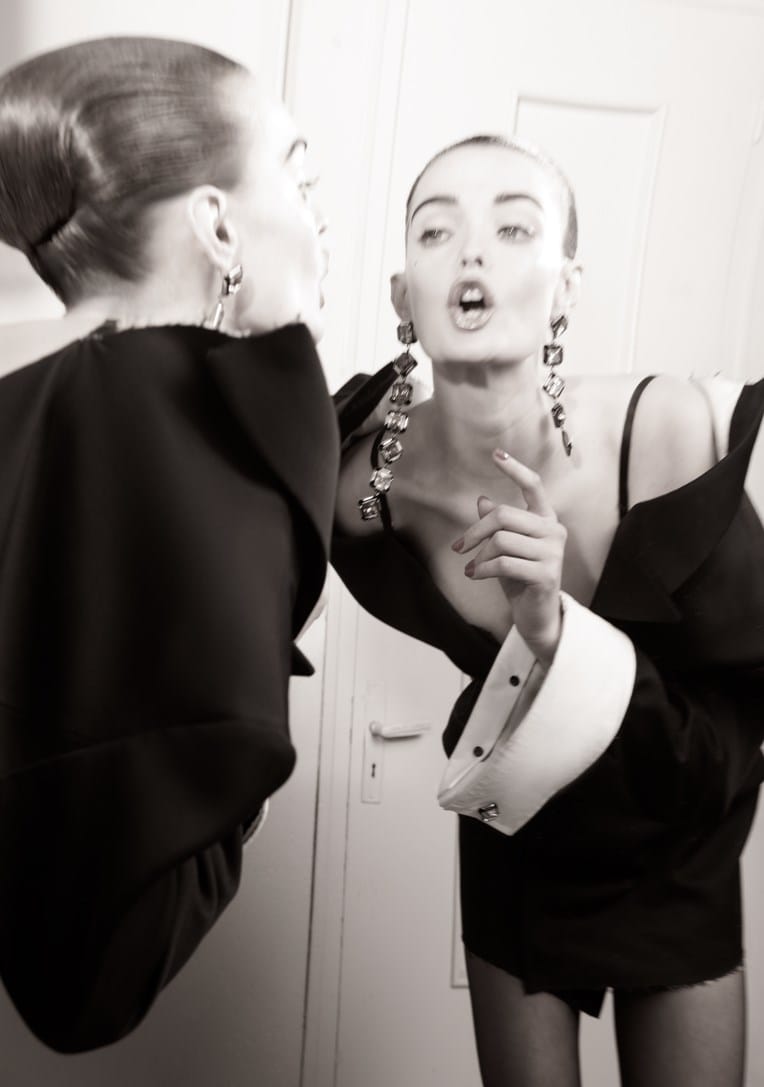

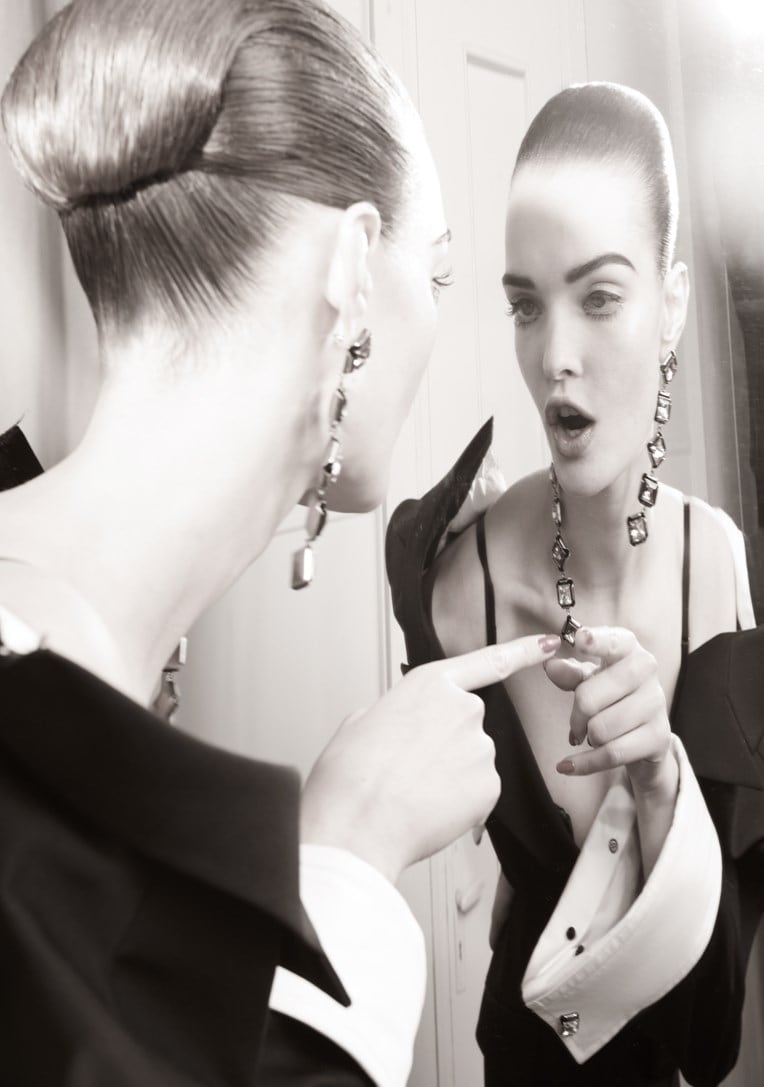
Today, back on Harley Street, and on a table in one corner, are images of the couturier’s first collection. The pieces are principally in black, with accents of white cotton and animal motif (specifically leopard spots) running through. They are minimal to the point of austerity, with a strict silhouette as readily associated with Fifties film noir as it is with the much-lauded fresh, youthful focus on separates and more fluid, lightweight designs, including the frothy-by-comparison Bettina blouse, that Givenchy, in its early days, represented. It is the former that Burton looked to for her own first collection for the house, shown in Paris last March, which, she says, was focused on silhouette, beginning with a fully engineered fishnet bodysuit, slender and lithe, and ending with an explosion of layered canary-yellow silk tulle – overblown – and passing through any number of brilliantly tailored, constructed, deconstructed and reconstructed pieces in between. The white shirt, she says now, is her Bettina blouse (no frills whatsoever) and the sculpted leathers, trouser suits, abbreviated trapeze-line lace and kickback dresses with barely visible webs of seaming, notably at the backs of garments, were all as much a part of her personal handwriting as they were a perfect reboot of what remains a lesser-known though deserving archive.
It is the stuff of fashion folklore that in 2016, building work in the house’s original atelier unearthed a collection of pattern packets relating to that first collection, with fabric swatches tacked to the outside and the name of the client or model they were intended to be worn by. They were found hidden in the walls. Burton has pictures of these too, in isolation and then piled into black bin liners, the less-than-salubrious receptacles in which they were carried to the safety of the Givenchy archive, where they are kept today. Oversized, glossy foulards at the necklines of dresses in Burton’s Givenchy debut, and which appeared again as a motif in her sophomore collection, shown in Paris in October, seem to be a reference to those. “Yes, the bin bags are where the leather scarves in the first collection came from,” Burton confirms. “Although obviously I don’t want them to come across like bin bags.” She laughs.
The comparison between that and Alexander McQueen’s second collection (Autumn/Winter 1993), Taxi Driver, is irresistible. That in its entirety was packed into bin bags after it was shown at the Ritz hotel in London and left outside a bar in Soho, where its designer had gone for a drink on his way home afterwards. They subsequently disappeared, never to be seen again. Burton, for anyone unaware, worked at Alexander McQueen for 27 years, first alongside the designer as his right hand and then, after his death, as creative director. Lee Alexander McQueen, again it is well known, also helmed Givenchy for five years, from 1996 to 2001. Moving back and forth between his London studio and Givenchy in Paris, Burton was at his side.

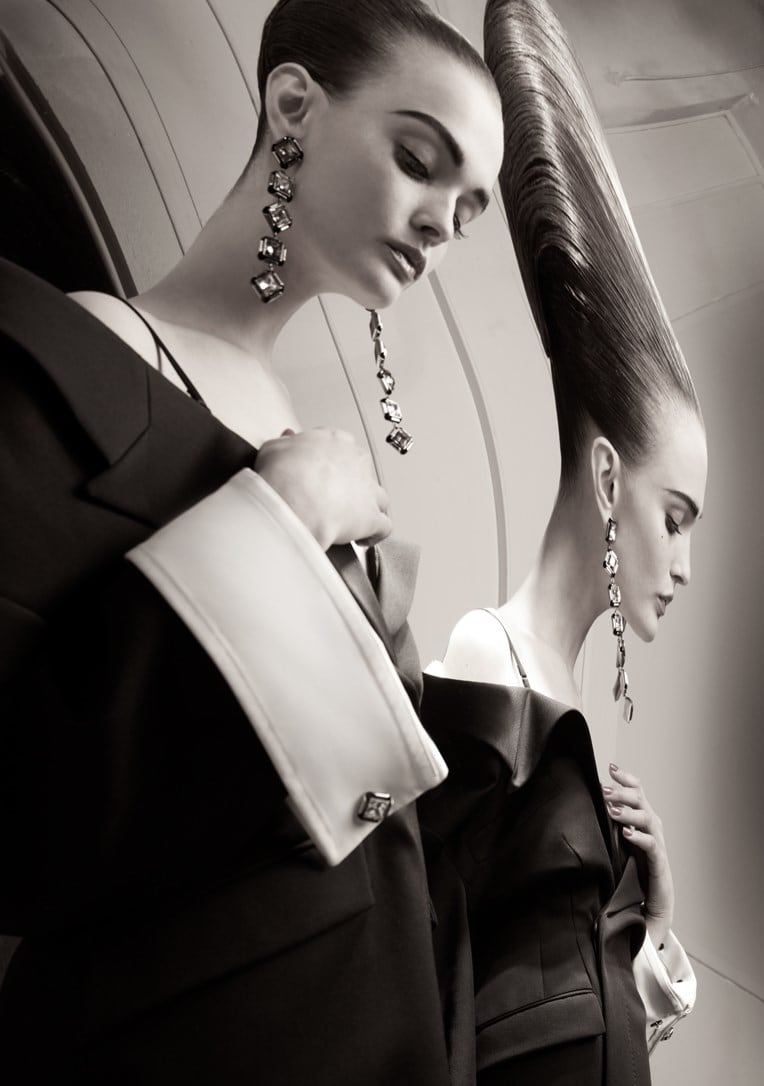

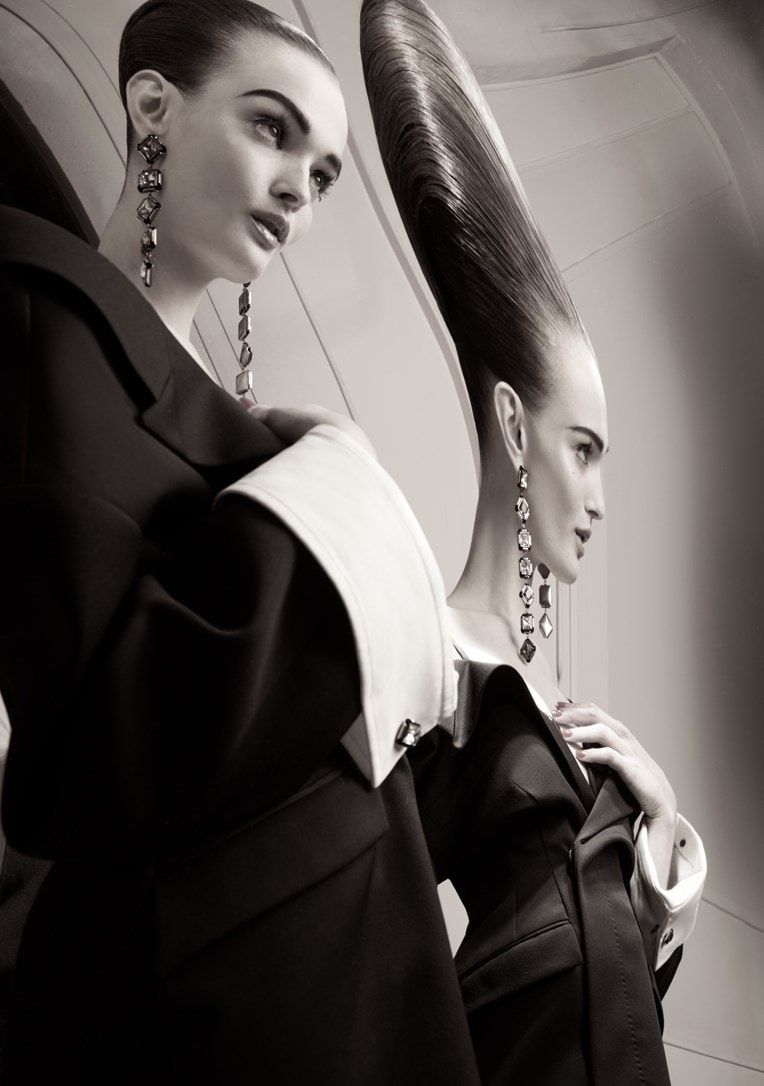
Burton points to a single image of Givenchy’s petites mains crowded into a tiny space, pressing the clothes from Hubert de Givenchy’s debut collection only hours before they were shown. It is nothing if not testimony to the dedication of the people who devote their daylight hours and more to the making of a collection, to the realisation of a couturier’s dream. “This looks like McQueen,” she says, “ironing in the bathroom.”
Over the nearly three decades since she graduated from Central Saint Martins, Sarah Burton has developed a specific way of working. It’s no surprise that when she moved from McQueen many of the most trusted members of her core team followed her; more continue to move there as Givenchy evolves. They have an instinctive understanding of her process – of each other’s processes. “I love my team,” Burton says again and again. It could be her mantra. There is a warmth to her work, an authentic love of her chosen profession as well as for the people she works with, which is palpable. And she is beloved for that in return. Her obsessions are with fashion – and for making things – but her heart lies in forming human relationships, in the interaction between people. That encompasses the people who make the clothes, the people who model the clothes, the people who photograph the clothes, the people, famous and not so famous, who buy and wear the clothes, even stretching so far as the cast of her advertising campaigns. They have so far included the actor Rooney Mara, who she has dressed for years; the musician Paul Simonon, who she has long admired; the stylist Camilla Nickerson, who worked with McQueen in the first decade of the 21st century and who has been with Burton since; the make-up artist Lucia Pieroni; and, most recently, the photographer Annie Leibovitz.
Only connect ... Leibovitz photographed Burton for American Vogue not long after her appointment was announced. “Annie rang me to discuss how she would take my picture,” Burton says. “And I said, ‘I’m on holiday in the Lake District.’ She said, ‘I’ll come and take it there.’ She came and took a picture of me by a tree in the Lake District. I hate having my picture taken but she made me so at ease – she is a wonderful person and it was a lovely experience.” Later Leibovitz photographed a fashion editorial for that same magazine, in which Anne Hathaway wore Burton’s first collection for Givenchy in the halls of the New York Metropolitan and Whitney museums. Going back way further, she also shot the entire Alexander McQueen team, Burton included, for Vogue, in London in the late 1990s – Nickerson styled that story – and a Givenchy ad campaign during McQueen’s tenure there. Since her arrival at Givenchy such deep and long-lasting relationships have seemed as, if not more, important to Sarah Burton than ever before.


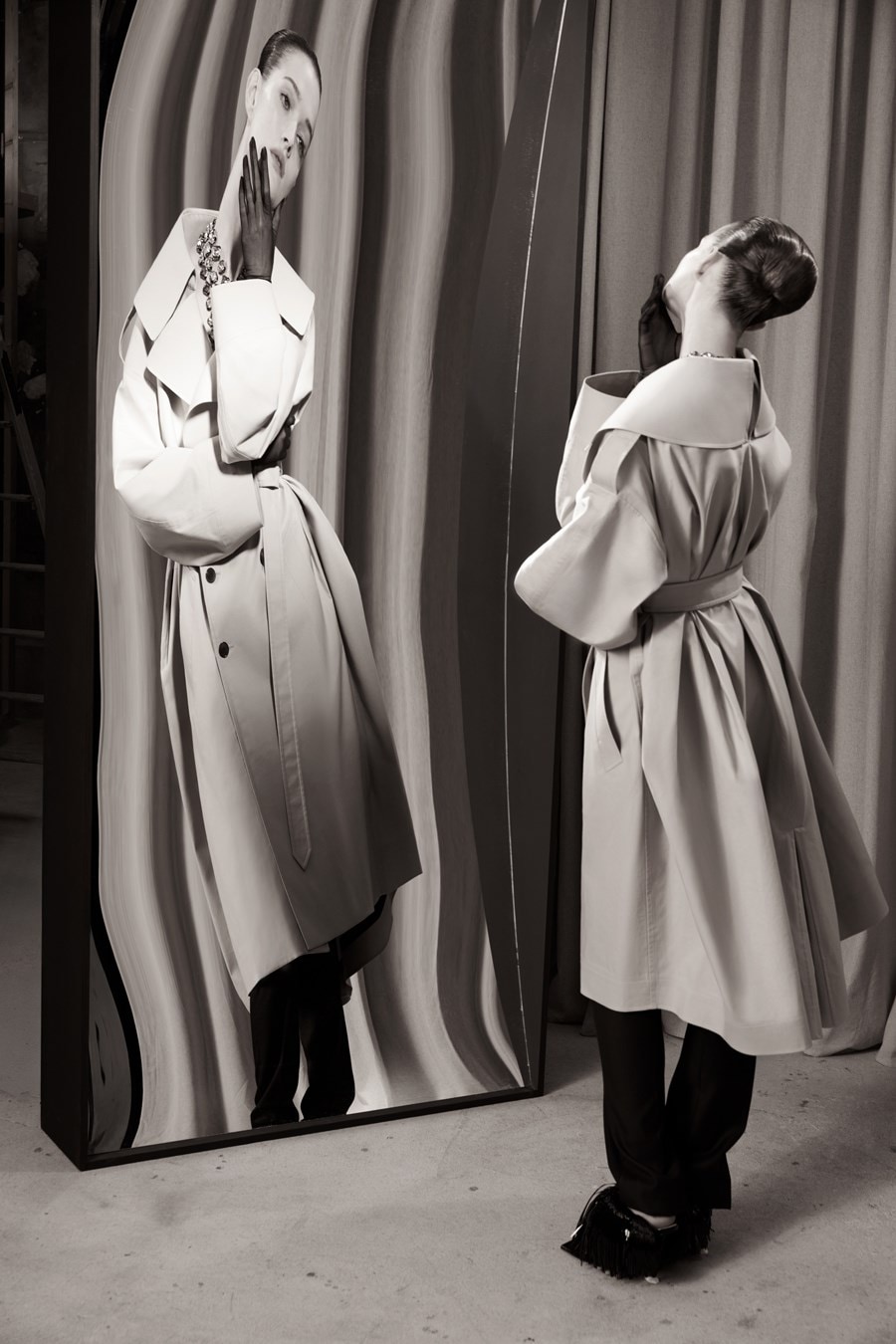
SUSANNAH FRANKEL: It’s been over a year since you arrived at Givenchy. Can we talk about where you started and how the experience has been for you since you got here?
SARAH BURTON: Where do you begin? It could be anywhere. There’s an amazing woman, Laure Aillagon, who is the head of archive [directrice du patrimoine]. Here’s Hubert de Givenchy’s first collection [she points to it on the table]. It’s so beautiful, it looks like Hitchcock. Look. So she has everything, right from the beginning, from this first collection to anything that relates to Hubert de Givenchy – his dogs, say – and his archive. Here’s all the press for the first collection. And this is a picture of a pattern bag. When Givenchy’s first atelier was being renovated, the workmen found these buried in the walls. I was like, “In a cupboard?” And the archivist said, “No, no, in a wall.” The builders said to come and get them. The toiles inside still had pins in them. In the beginning I thought, do I do the collection as pattern pieces, all in calico? But then I looked at the pictures of the finished collection. There’s animal print and, you know, John [Galliano]’s rose is from this collection. Look, here’s Bettina [Graziani, Hubert de Givenchy’s house model and muse, the woman after whom the aforementioned blouse was named] but she looks almost like Julia Nobis. She’s so modern.
SF: So that first collection was literally going right back to the start, to the earliest looks in the Givenchy archive?
SB: Givenchy has been through many different iterations since Hubert de Givenchy retired. For me, it’s obvious that you have to start by going back – you have to go back to go forward. I went to the archive and these pattern bags. The archivist told me that story. It’s a completely true story – I started from there.
SF: And the start was, to your mind, all focused on silhouette.
SB: Yes. I did do big dresses but even they were about a line. It was hard but that’s definitely where the idea came from.
SF: And how about the second show? How was that a progression of the first? It looked to me very clearly like a progression of the first – the tailored suits and dresses, the white shirts, the sack-back dresses, the embroidered fishnet …
SB: For the second show there was a desire to take it somewhere. There’s so much noise around fashion now, and I wanted to ground things, to understand and express what the house is about. There were definitely repetitions of shape and silhouette. But for the second show I took a lot of the construction out. It was lighter, stripped back even further.
SF: Perhaps ‘pure’ is a good word to describe it.
SB: Yes, and it was about not only looking at silhouette but also how to make the clothes. We put a lot of time into that. There’s a single-breasted jacket with one button. We did about ten toiles to get that right. Only because – how do you have a jacket that holds its shape without deconstructing it by hand? We unravelled it, in a way. For the first show everything was very structured, very architectural. Like I’ve said, I really wanted to establish the silhouette. The second show was much lighter. Originally, I was going to embroider the tulle on the naked dresses, but then I felt there was something more pure, almost sporty, about leaving them as they were. And the single-breasted jacket. It’s like nothing, we did it in the men’s tailoring factory. It took a while to get them to take all the stuffing out.
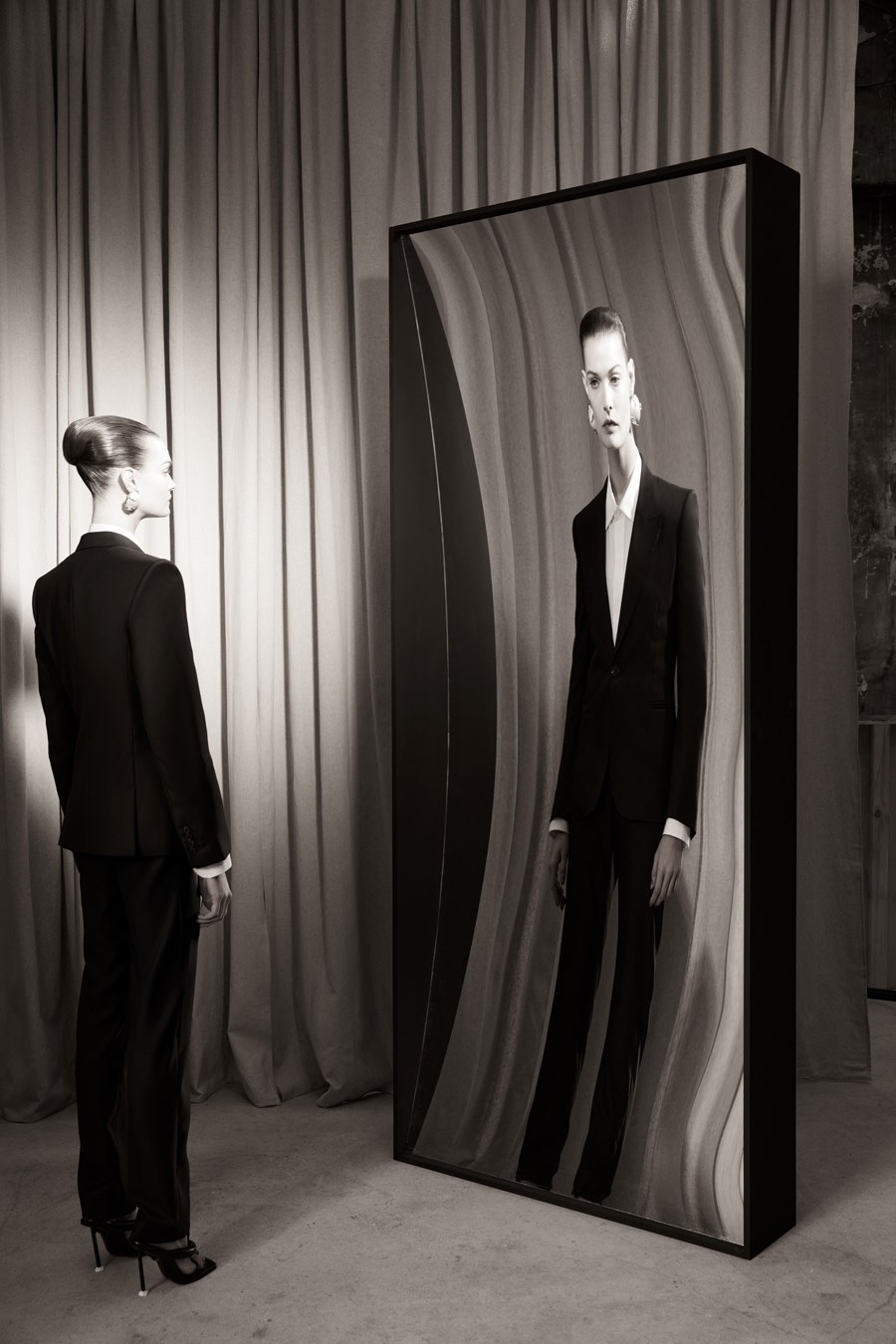
I became so obsessed with these two suits, one double and one single-breasted. How do you take everything away? How do you create the shoulder without it being so stepped up that you feel like it’s wearing you? In a way, it’s easier to make something very hard and constructed. It’s easier to use a stiffer fabric than a single layer of wool mohair, which is what these are. There’s a jacket that Mariacarla [Boscono] wore for the last show that for the first show was in quite a heavy fabric and that was very constructed, in a double crepe, and for this one it was in super-light grain de poudre, a menswear fabric. We made them with a women’s pattern cutter but in the menswear ateliers. That’s the amazing thing about Givenchy. I know we had the atelier at McQueen in London, but we never actually had a tailoring atelier. For Givenchy, in Paris, there’s a men’s atelier, a couture atelier and a women’s atelier. So some of the women’s jackets are made in the men’s atelier. It’s a different hand and that’s quite interesting to see.

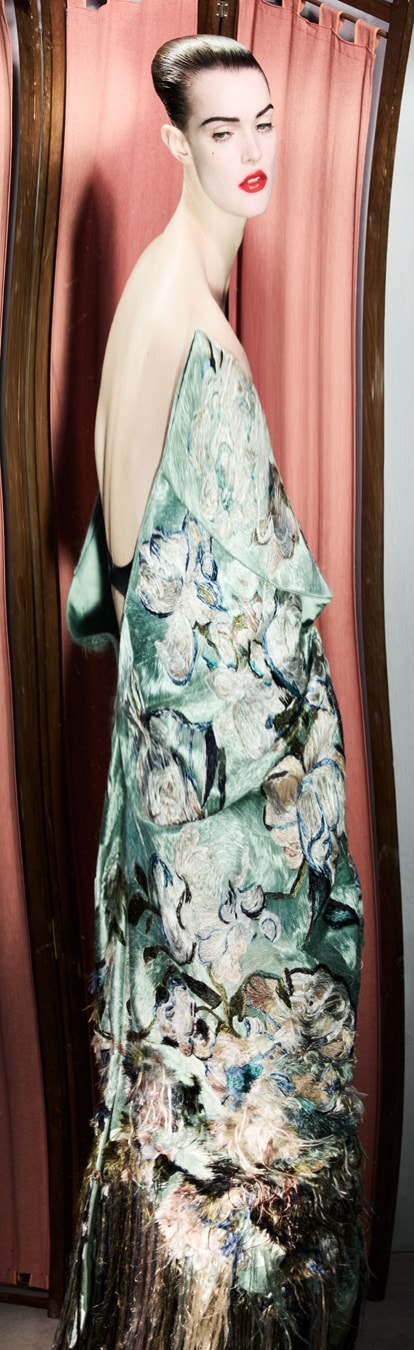

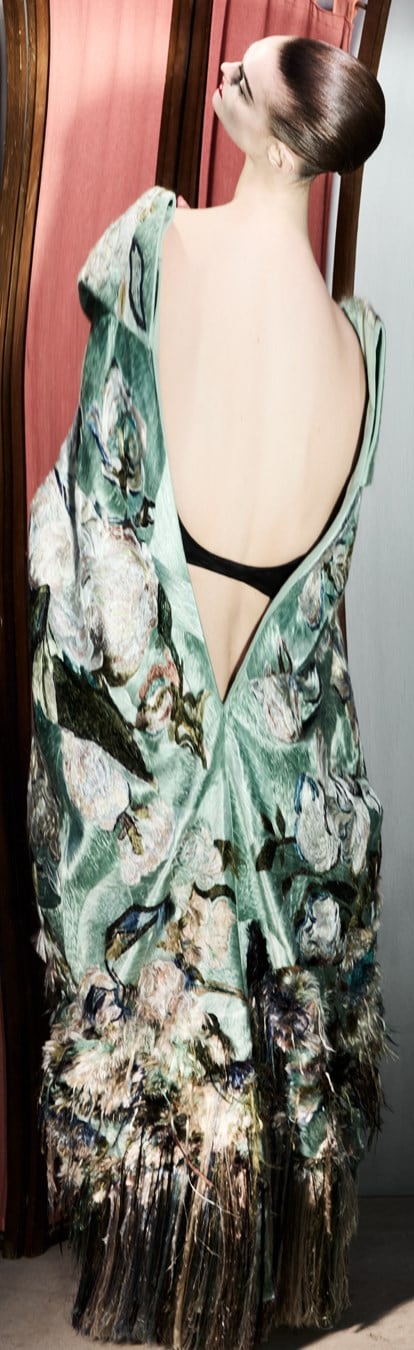
SF: How has your time at Givenchy so far changed your life?
SB: I think when you start something new, after having been somewhere for so long, you think everything will be different but it’s still exactly the same process. I do feel that we got to a different stage at the end of McQueen – the two last collections I did there, they were narrative but not in the same way they once were.
SF: You do still have a story that carries you through – I think it’s part of many people’s creative process to want that – but it is perhaps less literal. It isn’t about travelling somewhere – about an inspiration trip – or referencing a particular place or time.
SB: I think what I also took from the beginning of Givenchy was his relationship with women. Another thing my first two collections have concentrated on is embracing the female body. How do you find a silhouette that holds the body, reveals and celebrates the body in the clothes, without that body ever being constricted by those clothes? Does that make sense? And they were about sexuality too.
SF: How would you say Hubert de Givenchy’s relationships with women were distinctive?
SB: I think he had this relationship with many of his clients where he would be in fittings with them, make clothes for them, talk to them. It was about conversations. And I think what I learnt at the end of McQueen and at the beginning here is the importance of having conversations with the people I dress, not only models but clients and celebrities. I think it’s almost more interesting dressing someone for real life. You learn much more from dressing people for real life than for a catwalk show.
“What I learnt at the end of McQueen and at the beginning here is the importance of having conversations with the people I dress, not only models but clients and celebrities” – Sarah Burton
SF: It’s also more difficult, isn’t it? There’s a sense, in fittings with you, and on the runway too, that people are very happy to be wearing your clothes. They’ve been fitted to them especially and that makes them feel, well, special.
SB: I remember Eva Herzigova saying to me after the last show that she could feel people responding to how she looked when she walked past them. That made me very happy. She is so incredible. I love having that relationship with the women I dress. When they come into the room, we try something on, a dress maybe, and they don’t feel quite right. Then I’ll put them in a suit. It’s never about imposing what I want to say onto people. It’s quite an intimate experience, dressing people, it’s quite an emotional experience. You want them to feel as good as they look. I can sense how people feel in the clothes and how they want to feel at that time. And that may be many different things. It’s complicated. It takes time.
SF: Is that not dressmaking?
SB: It is. And I think that was another thing about Hubert de Givenchy. He wasn’t worried about being a dressmaker. And neither am I. I love making clothes. That’s what I enjoy.

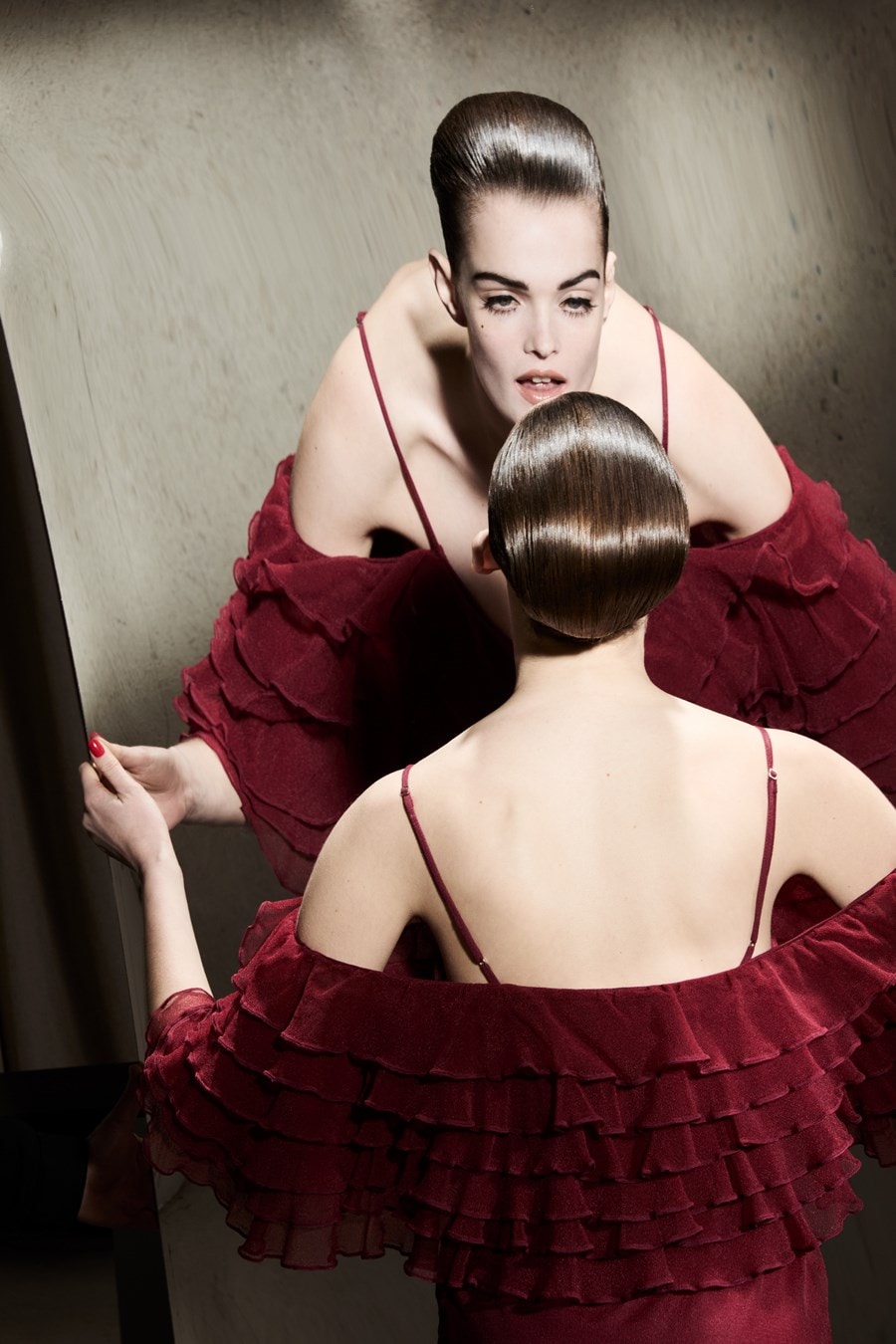
SF: Azzedine Alaïa was a dressmaker and proud of it. Maybe in the Nineties that idea became almost like an insult. I remember Karl Lagerfeld once saying to me, “I’m not a dressmaker, I don’t go to client fittings.” There was the notion that the client couldn’t overly change a design, shorten a dress, reduce a shoulder, without it somehow being sullied by their intervention.
SB: I love their intervention. If someone walks and they don’t feel like the heel is quite right, or that anything at all should be changed, I will look at it. I love the fact that it is a dialogue. And I love making clothes for all types of women and for all different occasions. I think a lot of designers are asked, “Who is your woman?”
SF: Yes. I’m about to ask you that question.
SB: I don’t think there is a woman. I dress lots of different women – and men. Women are complicated. And men are complicated. You want to feel different things, at different times in your life, at different moments in your life. That, in the end, is the challenge – to dress different women, to address different emotions.
SF: What was the attraction to Givenchy and what is the difference between Givenchy aesthetically and Alexander McQueen?
SB: The great thing about McQueen was that you had this huge vocabulary. You could do anything – denim, tailoring, couture. Lee established this huge vocabulary of experimentation. The collections were huge. It was like an education in beautiful shows and beautiful clothes. There was the couture dress, the tailored jacket, the bumster, the jean. What appealed about Givenchy was that it wasn’t pinned to so many codes. Of course there was a dress, there was sharp tailoring, there was an element of architecture, an element of couture. But I feel that, really, with Givenchy, no one really understands its birth. So it was quite nice to go back to that. You know, he was 25 [when he launched his label], really young, he used simple fabrics. I know he was from a rich background but … It’s nice to go back to the purity of something when it was conceived. You know, that first collection when you begin, you have a clean slate.
SF: There is a current debate about heritage – and legacy – and how that might somehow be a burden, which, I guess, is a complicated conversation for you because of your time at McQueen. I’m sensing perhaps that your approach to Givenchy may be lighter, certainly less emotional. Is that true?
SB: Yes. But why would you want to throw things away? Remember, Lee is also in the Givenchy archive. I’ve said that, when I started, I looked at all of Hubert de Givenchy’s very early work. I also looked at John [Galliano] and I looked at Lee. I knew Lee’s Givenchy. There was something familiar to it. I didn’t arrive and feel it was alien. I arrived and it was a bit like being at home but in a different place. I pulled out the jackets and the beautiful couture dresses. They were part of the history of who Lee was and of course we referenced them at McQueen. You can see, in the McQueen archive, where he’s learnt certain techniques of embroidery and corsetry at Givenchy. You can see what he was developing then and how it fed into McQueen. Some of the corsetry he did at Givenchy was incredible and I’d never really seen it before now. It was never honestly that the design at Givenchy influenced McQueen – it was the other way around. But some of the ways things were constructed, some of the bones there were familiar. Which was very nice.

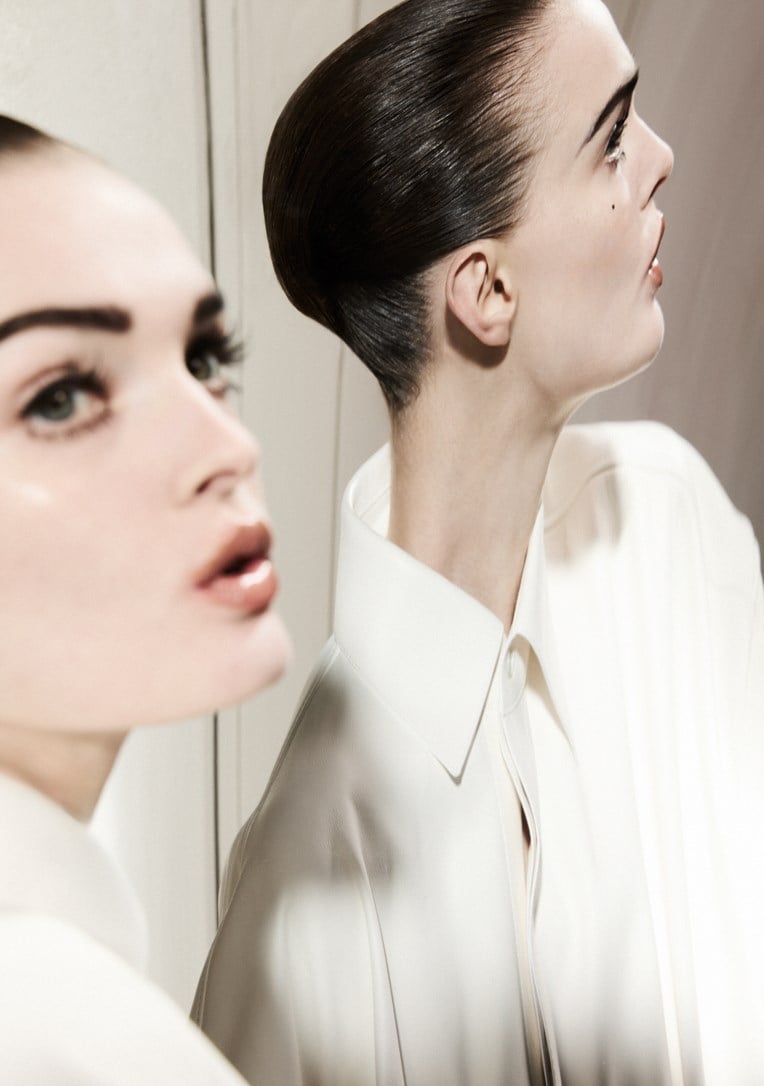

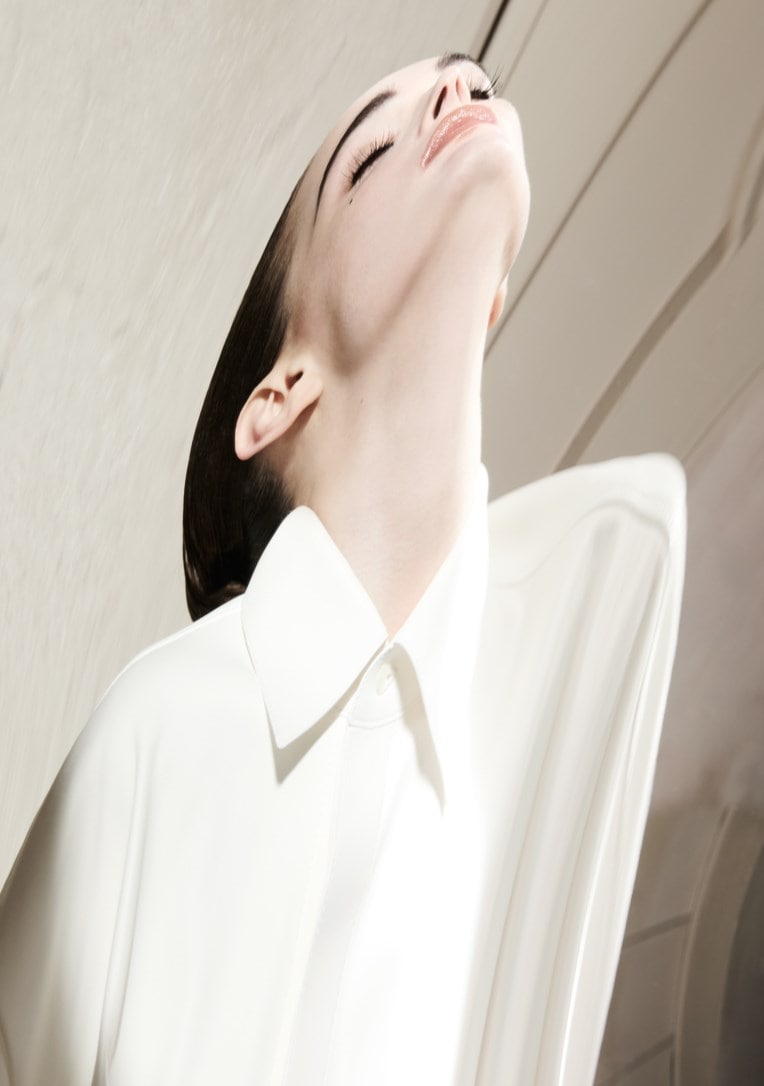
SF: I remember when you first took over as creative director at McQueen, everyone talked about your extraordinary attention to – and even obsession with – surface embellishment. At Givenchy you have taken most of that away.
SB: Wait till you see the next show [Laughs]. I think there’s a fear of things not being enough sometimes, so you add layers of embellishment, but actually it’s really nice not to do that. Firstly, you can see the woman wearing the clothes more clearly and, second, if anyone did think, “Oh, where’s the rich embellishment?”, there’s always time to do that.
SF: You can add but you can’t take away. So, in a world where you have so many different names in fashion, those names have to mean something. And for you, the name Givenchy means structure, silhouette and a relationship with the people you dress.
SB: Yes. It’s exactly that.
“You want to feel different things, at different times in your life, at different moments in your life. That, in the end, is the challenge – to dress different women, to address different emotions” – Sarah Burton
SF: You have always taken great pleasure in making things. For all the talk about stripping back at Givenchy there have been more elaborate pieces among the more apparently minimal designs.
SB: The big coat at the end of the Spring/Summer collection has 97 embroidered threads in it. That’s couture. And just like I love to have conversations with the people who wear my clothes, I love the dialogue between the couture and ready-to-wear pieces in the show. I like that you see an incredibly elaborate couture piece next to a sharp, structured suit. When people come in for fittings – clients, celebrities, models – it is like couture. It always has been, at Givenchy and at McQueen. I don’t have rails and rails of clothes that we put together before the show. As you know, Lee never had that either. We design the looks for specific women.
SF: I’ve seen you, in the early hours of the morning on the day of the show, adjusting a lapel, loosening or tightening a waist, lengthening a pair of trousers, to make sure everything is perfect. You’ve always done that. Where do you think the instinct to do that, to perfect things, comes from? It seems it makes you genuinely happy.
SB: I love it. I’ve always loved fittings. That’s when everything comes alive. Sometimes I think I’m too obsessed with it. I love the fact that just by taking out a shoulder everything changes. The first thing I did when I arrived at Givenchy was take the stuffing out of the tailoring. I opened everything up and took everything out to understand how things were built. I said, “Let’s look at the jackets.” I cut them open because I wanted to see how they were made, whether they were fused, how they were constructed. Is it half-canvased? Is it canvased by hand? So, yes, that’s my obsession.

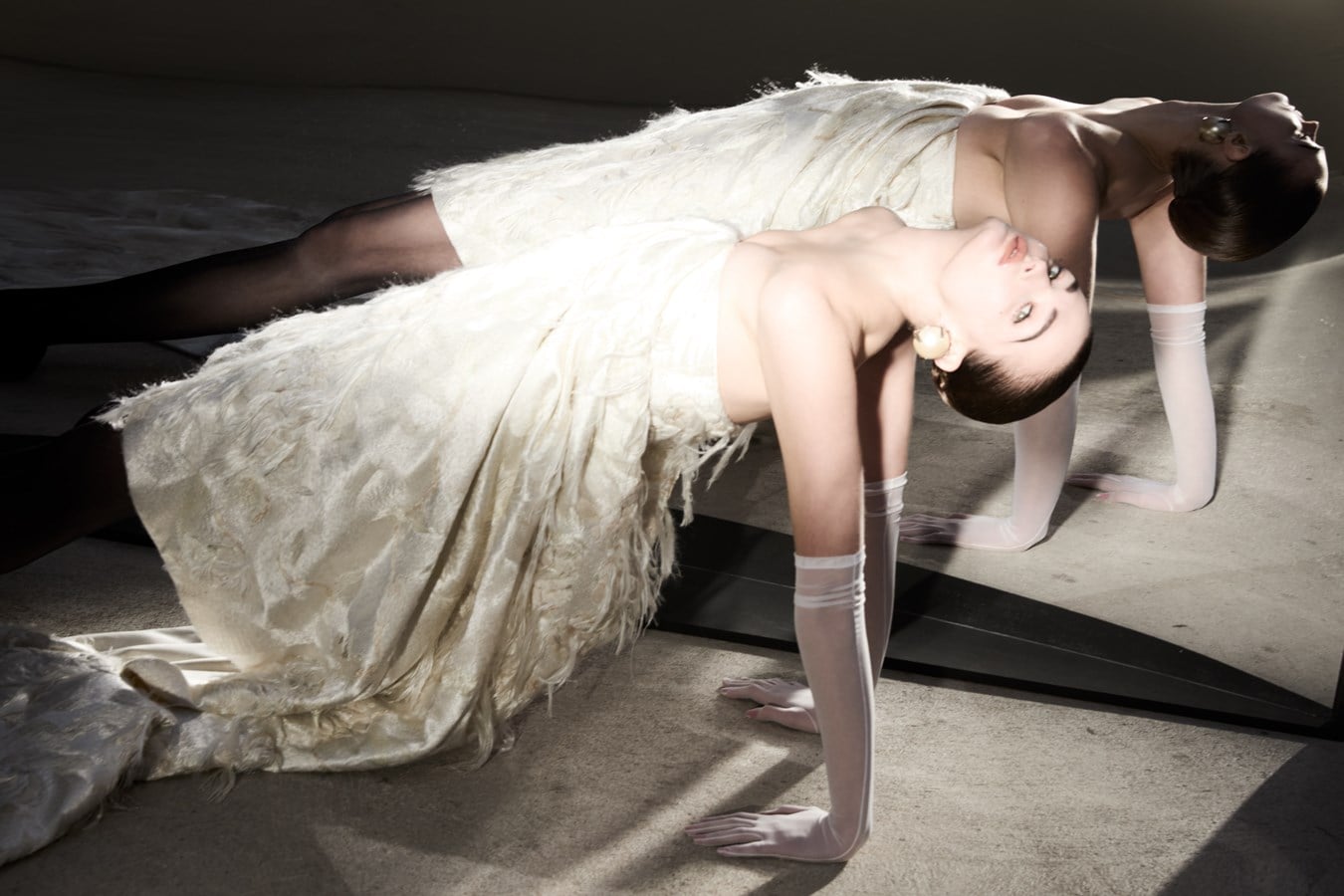
SF: Where does that need to make and perfect things come from, do you think?
SB: I never ever sit still. I love making things. I love drawing things. But I think … I don’t know. Sometimes I think it’s about control.
SF: How do you find working in Paris? Do you sense a big difference between being there and being in London, where you have worked for most of your career?
SB: There’s a big difference between London and Paris. Paris is fashion, really. There are actually two Givenchy buildings on Avenue George V. There’s the original building, where we did the first show, and when you are in that original building you completely understand … They have the grand salon where the fittings were done and the floor above where Lee used to work. When I arrived all these walls had been put up on that floor. I didn’t quite recognise it. It was kind of like offices, so I took them all down. Then, there’s another building across the road that is more modern, and that’s where I work. I knocked all the walls down there as well.
SF: The same thing you did with the jackets. You’re like a demolition woman.
SB: I like everything to be open-plan and for everyone to be able to talk to each other. I am in no way being disrespectful – quite the opposite. I was taking it back to how it was before, to what it was.
SF: I think perhaps that is something about you, you’ve always been extremely respectful in a world where not everyone is like that. You are respectful to legacy, to your team, to the people you dress. Perhaps the secret is to find the balance between saying something new and being respectful of what came before.
SB: Yes. How do you say something new without destroying what came before it. I do think it comes down to the people. To the teams we work with. On my first day, walking in to Givenchy with Sidney Toledano, [the senior adviser to the chairman and chief executive of LVMH], we went to all the ateliers to see the people who make the clothes, the hands that make the clothes.
SF: This whole idea of the teams, the hands, dressing people to show them at their most at ease, confident and beautiful is romantic. You’re romantic.
SB: I am romantic. I feel like, in this role, I’d like to celebrate the people I’m working with. There are so many amazing people in this industry and I wanted to celebrate the people who make it happen, from the tailors and seamstresses in the ateliers to my team and the many people we are so happy and fortunate to dress. That’s what the shows are about, the clothes are about, the campaigns are about. Maybe there just aren’t so many clothes in the world that make people feel fabulous, and if I can do that … In the end, what’s the point in doing this job unless you are true to yourself and to the people you work with? What’s the point of doing this job unless you’re doing your best and having the best time while you’re doing it?

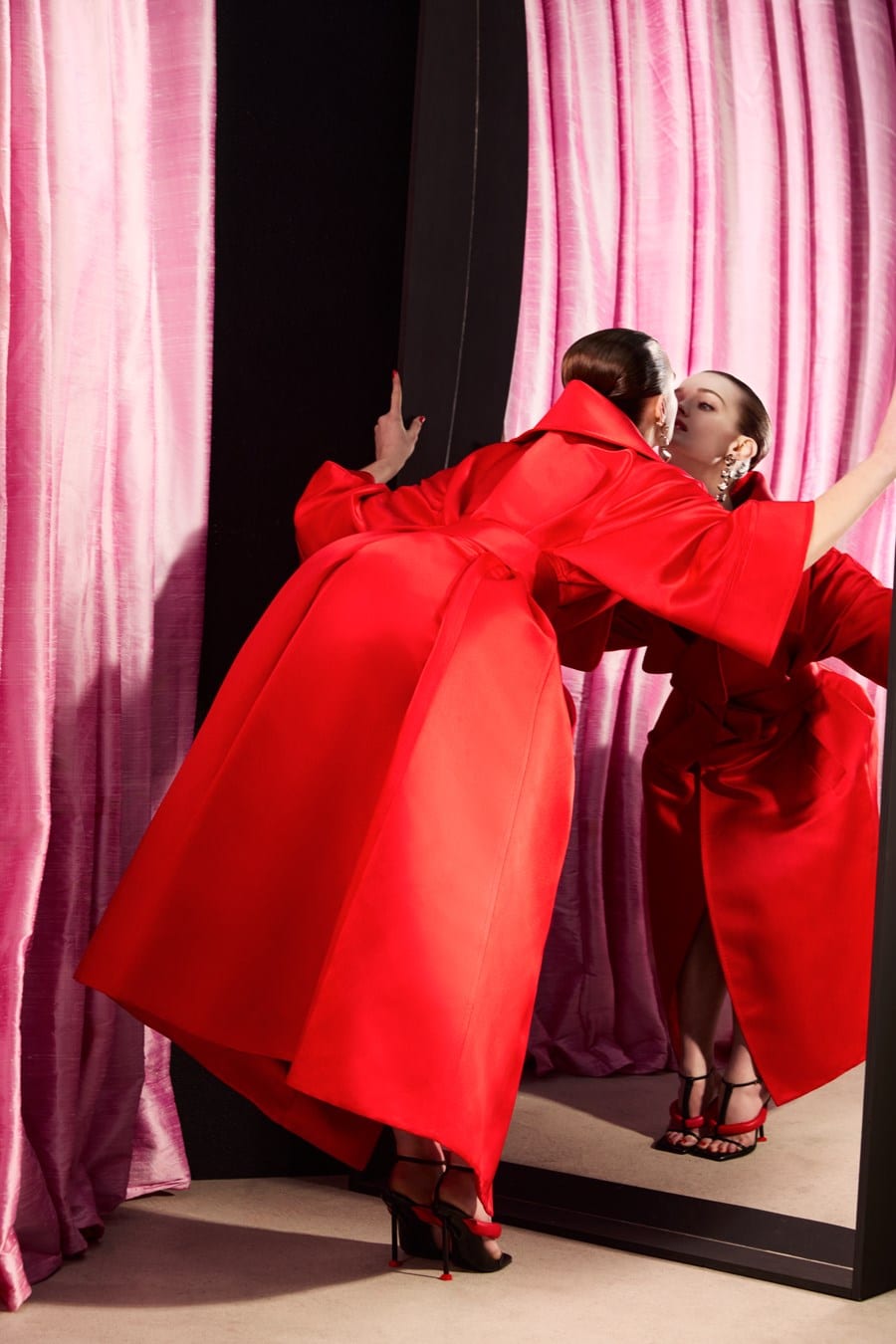

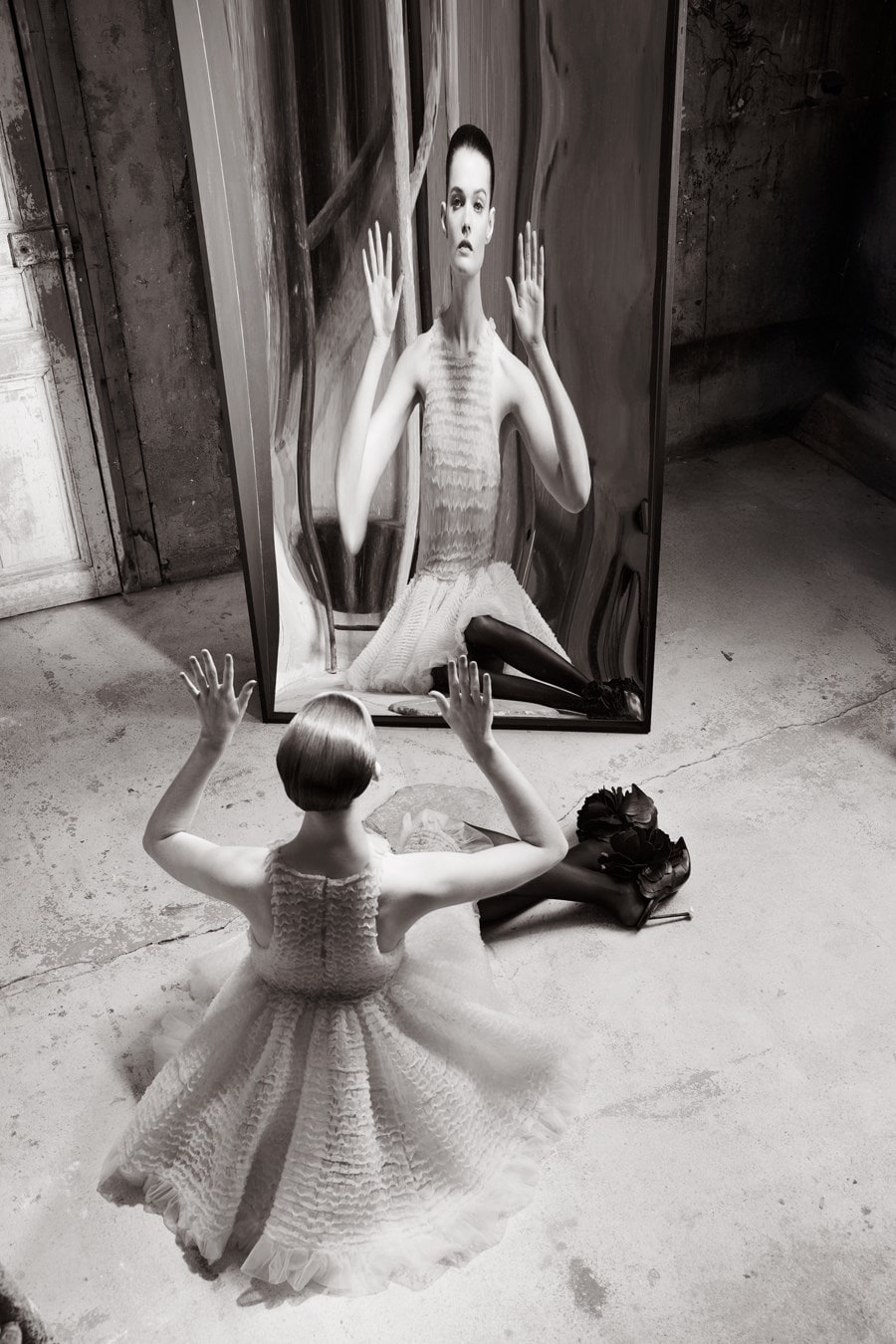
Hair: Laurent Philippon at Bryant Artists. Manicure: Beatrice Eni at ASG Paris using MANUCURIST. Set design: Hella Keck at Webber. Casting: Mischa Notcutt for 11Casting at Drive Represents. Model: Lulu Tenney at Lumien Creative. Digital tech: Enea Arienti. Photographic assistants: Stan Rey-Grange and Bennacer Kader. Styling assistant: Precious Greham. Hair assistant: Yuri Kato. Make-up assistant: Jay Kwan. Set-design assistants: Nikki Lavollay and Romain Lecornu. Production: REPRO. Executive producer: Rachael Evans. Producer: Clara Perrotte. Production assistants: Gillian Bourgeois and Sophia Abdellaoui
This story features in the Spring/Summer 2026 issue, marking 25 years of AnOther Magazine, on sale internationally on 12 March 2026.
