
What is Calvin Klein? Everyone seems to have an idea in their head, but it’s ferociously hard to nail down on paper. For Raf Simons, Klein was a framework to talk about ideas of American identity, a cultural framework to explore Andy Warhol and horror movies and prairie barns filled with popcorn, as well as logo-ed underwear and snug denims. The creative directors before him cleaved Klein into two distinct halves: for Francisco Costa’s womenswear, cerebral minimalism; for Italo Zucchelli’s menswear, a throbbing masculine sexuality. Clean, versus dirty. Even Calvin Klein himself didn’t really know what Calvin Klein was, or maybe even who – switching between Studio 54 party boy and devoted husband and father, his early fashion sense was gleaned, largely, from Halston and Yves Saint Laurent. Even his famous jeans were inspired by those first created by Gloria Vanderbilt, licensed under her name. Sorry to prick the balloon of that myth.
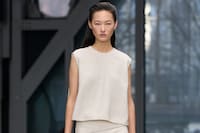
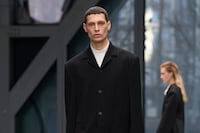
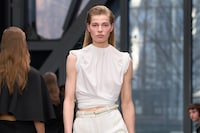
What I’m saying is, Calvin isn’t quite as simple to figure out as you may initially think. Veronica Leoni is finding her path through the minefield of Klein archetypes, the cold and the hot, the stripped back and the stripped off. Generally speaking, Leoni is interested in making clothes, rather than images, meaning she hasn’t really dealt with the infamous sexy side of the brand, the one that got the brand boycotted and even banned and made the name ‘Calvin’ synonymous with a bulging groin, generally several metres in girth and splayed across various New York billboards. “Mainstream perception is all about underwear,” Leoni said, backstage, after her Autumn/Winter 2026 collection. She almost sighed. What she means is: those images are indelible. The clothes? They’re not so remembered.

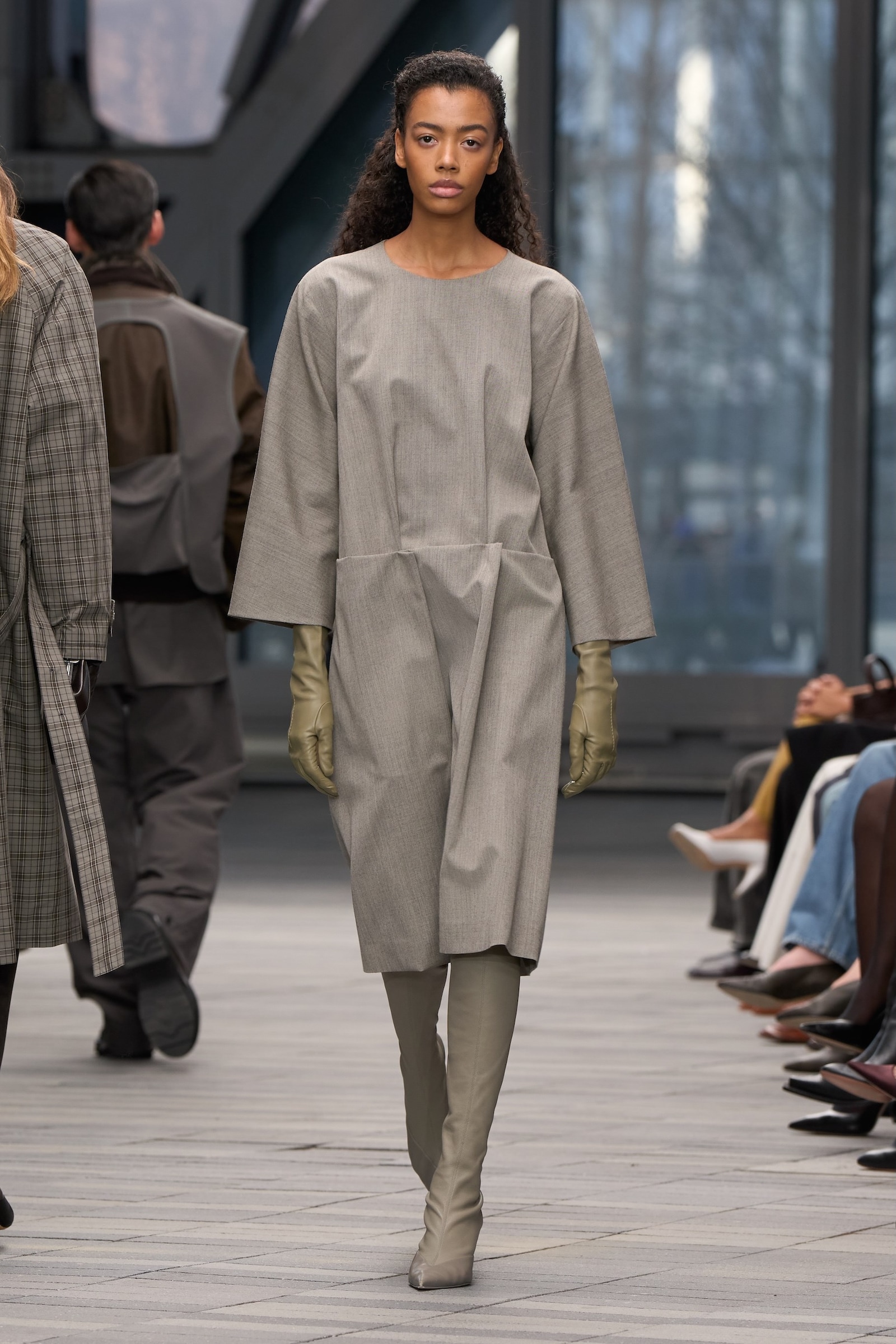

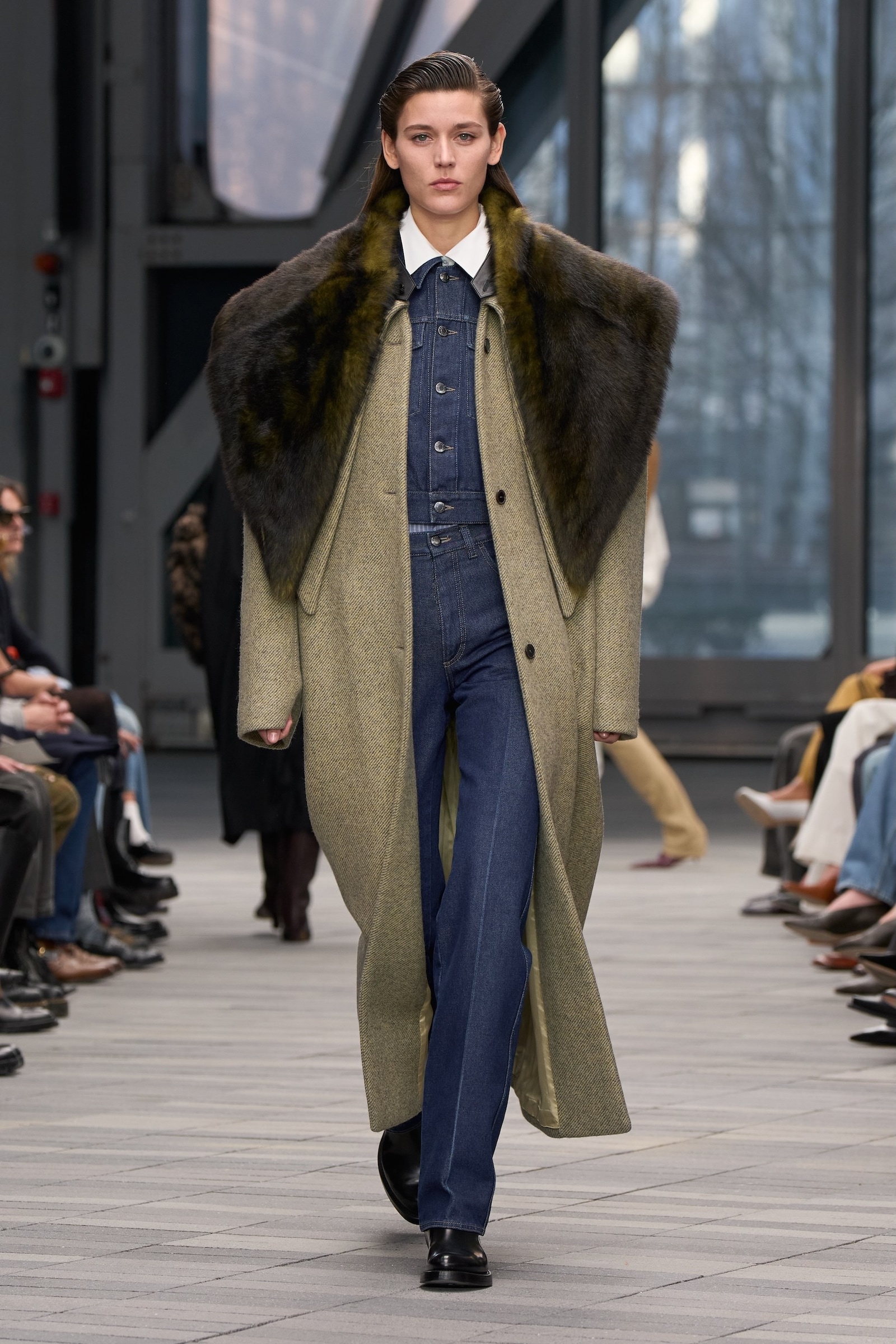
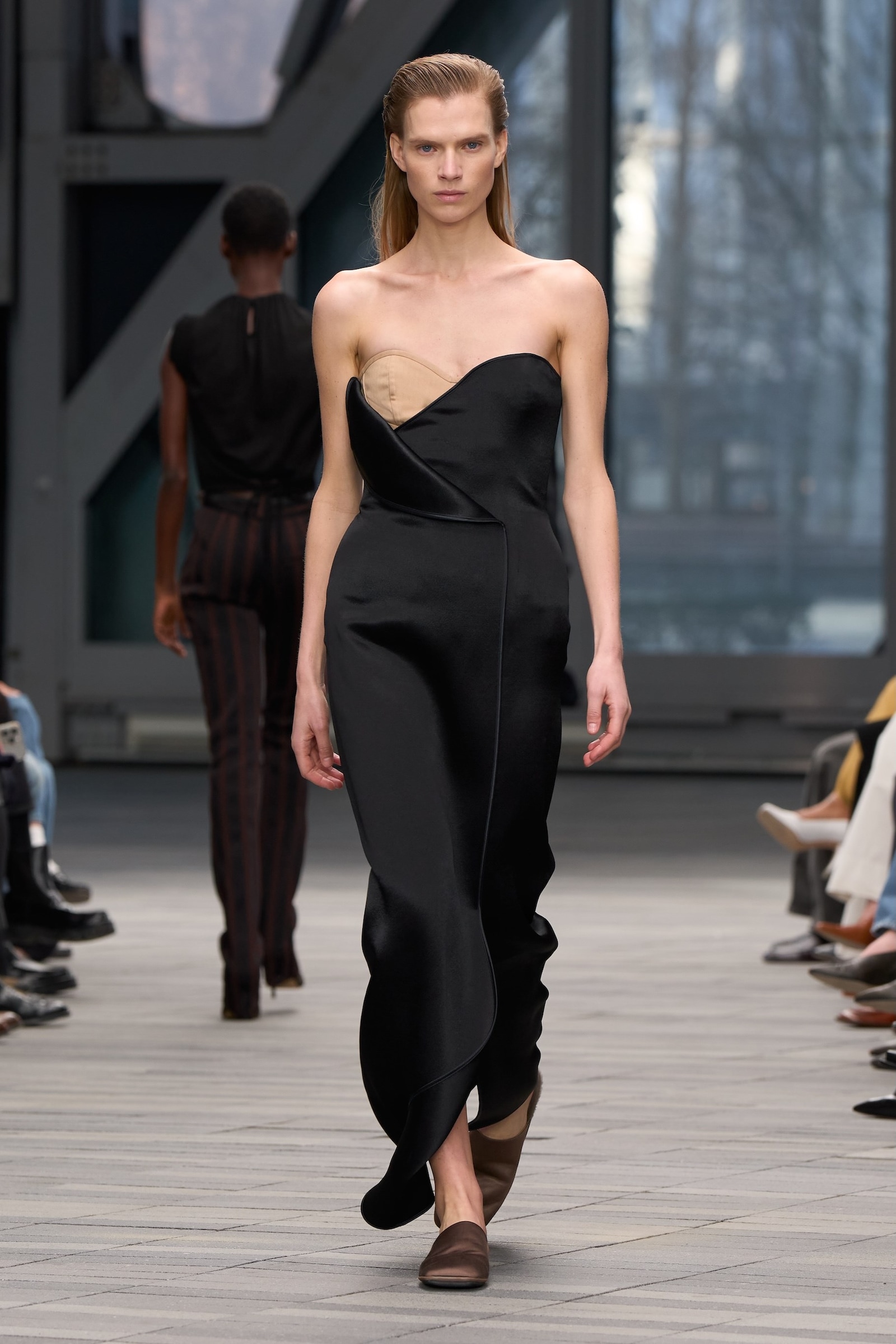
“We cannot be without the underwear, we cannot be without the denim,” Leoni said. And both were present in this collection – the jeans based on a 1976 pair (designed before Klein launched his full licensed assault in 1977), the underwear worn as outerwear, long-johns under doubled-up trench coats. “The cult of the body” was a feeling that Leoni was interested in exploring – evident in those body pieces and a sequence of fitted tailoring with sleeves sheared off, revealing muscular arms. Maybe it says something about sex-starved catwalks of late that that simple gesture had a frisson of eroticism, as did tailoring ripped open in black and knotted back together with white cotton, like undergarments tantalisingly on show. Another black dress seemed to have slipped down to reveal fleshy underpinnings, a brassiere breast laid bare (ish).
Leoni wanted to get “straight to the point” with this collection – to abandon metaphors. But her style – literally, and philosophically – is layered and complex. The simplest pieces in this show were the ones that spoke the loudest – the jeans, the underwear, those sleeveless suits, a white tank-top, a black slip-dress glistening like wet tarmac with beads but entirely simple in silhouette. The other pieces – shearling-collared leather bombers, easy coats – could stay in the showroom to bulk out the commercial offering. Leoni has demonstrated that she can make Klein clothes, but what will be intriguing is to allow her to edit those down and really craft a Calvin image. Less means more.
