

Stuart Vevers has just welcomed his third child, nine days before his Autumn/Winter 2026 Coach collection was due to debut. Indeed, so close was the due date that Todd Kahn, the company’s CEO, asked if Vevers was sure he wanted to proceed with the show. He obviously did.






There wasn’t kidswear in this show, but for Vevers his other two, slightly older children played a pivotal role. The wonderment of his five-year-old kids watching The Wizard of Oz for the first time was a trigger for this show – most evident in outfits switching from sepia-dulled monochrome to chromatic brights. Example? Beaten-up black denim shorts, an inky cotton shirt and grey tie, followed by its mirror opposite in – fittingly – red, white and blue jeans.
That film came out in 1939, transporting audiences – much like Dorothy – from the drabness of the Depression to a Technicolor otherworld. Is it too pointed to compare that to circa right now, when times are tough, economies are down and doom is slightly swirling all around? There was a similarity of silhouette between then and now, a pronounced waist and longer skirt lengths swirling – sometimes in fine lining silks, as if requisitioned from vintage pieces and frugally reworked. Battered baseball jerseys and chewed-up, dogeared sneakers leapt forward to 1990s grunge – then again, that was another moment of hardship, too.


In both eras, there were bouts of escapism – Hollywood fantasies in the 30s, the glamour of the supermodels in the 90s. Maybe we want to be able to dream a bit right now, too? Vevers seems to have sensed that – and, like cinema in Hollywood’s Golden Age, he sees Coach as something democratic and accessible. It’s important, he says, that he shows what he’s going to sell.
Indeed, Vevers’ Coach collections aren’t fantasies – there’s a resolute actuality to them, and most pieces end up in stores. Many of the models this time clutched versions of the kiss-lock clutches that he’s taken from grandmotherly hand-me-down to must-have, both male and female. And in a further reflection of future proofing – or, at least, forward-thinking consideration – he’s upped the ante with recycling and upcycling. The denim – central to the show, as it would be to any collection about America – was all post-consumer. There’s also a Coach recycling programme, (Re)Loved, that allows customers to exchange old bags for credit in-store, literally putting money where their mouth is.

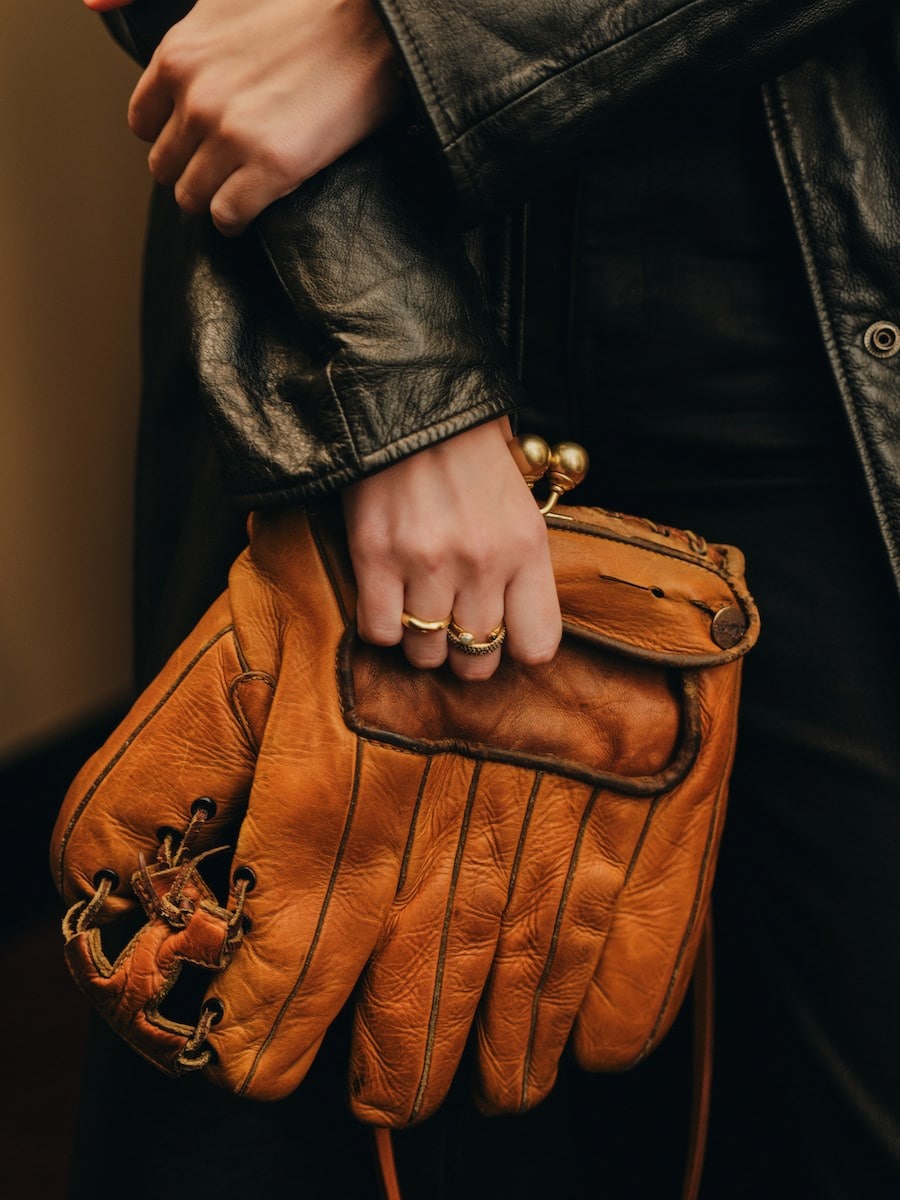


So, there’s a genuine backbone to this idea, meaning that it could also be a simple stylistic exercise, a fashion gesture. I don’t think the reconstituted metallic hooks and lobster-claws Vevers used to clasp beaten-up sneakers, fastenings drawn from the Coach archives and formerly used by the brand’s revolutionary 60s designer Bonnie Cashin, were actually prised off old bags handed over at Coach counters. No matter. They still looked great, so who’s questioning? Let’s just dream a bit.
