
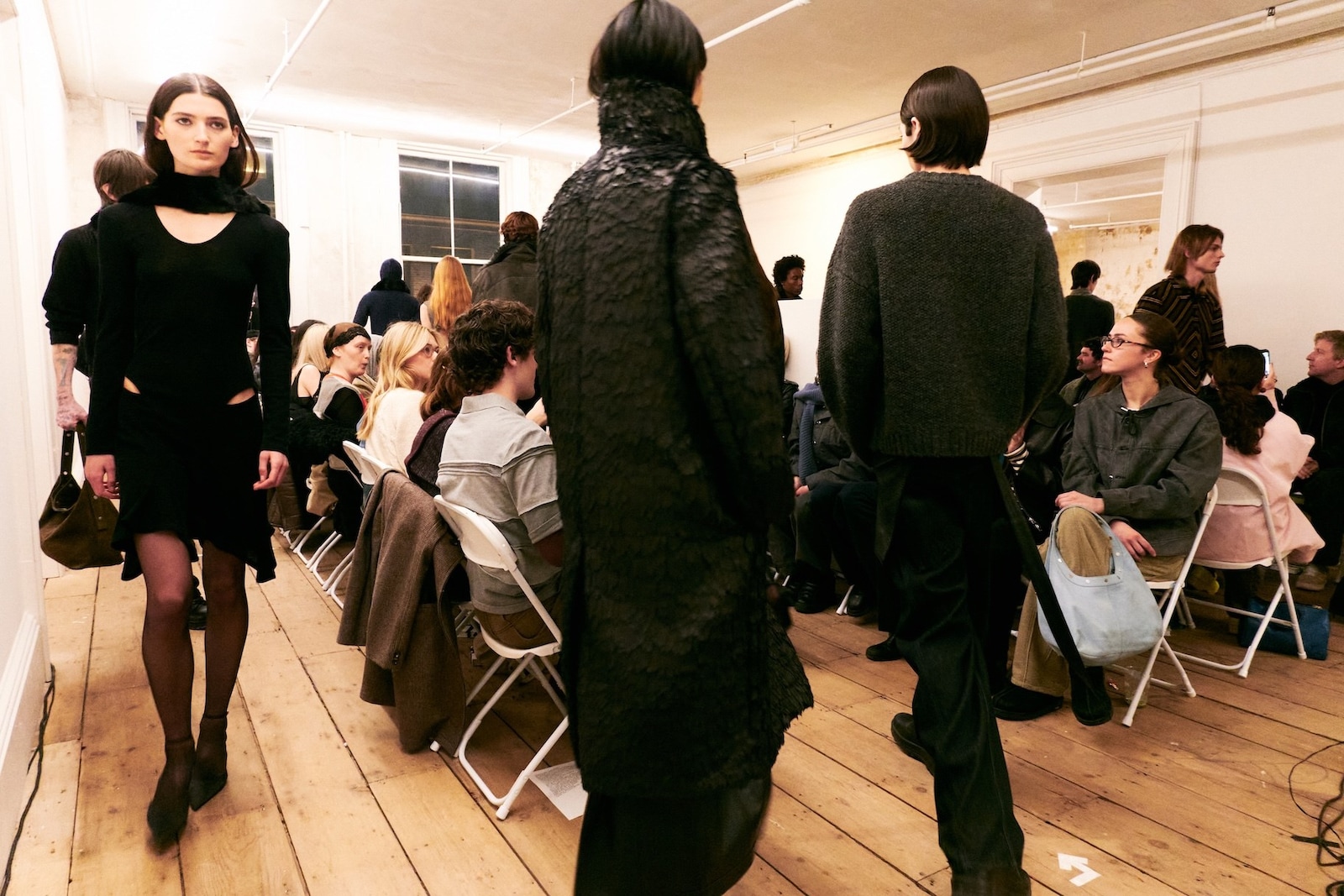
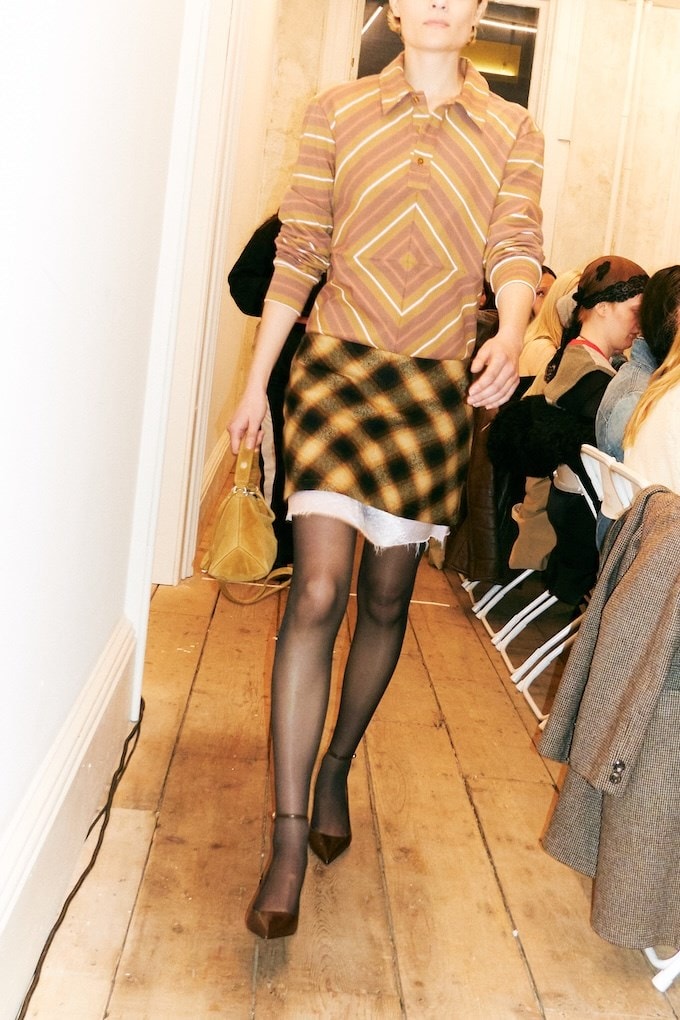
I totally missed that, about midway through the Autumn/Winter 2026 Eckhaus Latta show, Louisa Jacobson of the HBO series The Gilded Age – one of my favourite television programmes, ever – marched out as a model. Maybe that’s because any other designer would’ve dressed her in some kind of corset or bustle, or at least a gesture towards the show that has made her a household face. Mike Eckhaus and Zoe Latta, by contrast, made her look like just about any other girl in New York, dressed in a striped polo shirt, short skirt, with a good bag.
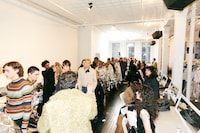
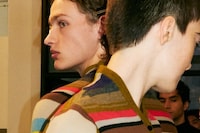
But actually she didn’t: she looked like an idealised version, hair scraped back, in a striped polo tee, checked skirt riding a little too short, letting her slip show under. The idealised other girl in New York, for most of us, takes two forms – Carolyn Bessette Kennedy, who it seems no one can shut up about this season, and Chloë Sevigny, who it seems no one has been able to shut up about for 30 years. I don’t know if Eckhaus and Latta have been looking at them specifically, but their ideology shaped this look, and the collection more widely. Look up Sevigny in the 1996 Miu Miu advertising campaign, and tell me Jacobson isn’t her dead-ringer three decades on.
That isn’t a criticism. It’s the highest of compliments. Because Eckhaus and Latta can take the most hackneyed and over-masticated reference and not only make it entirely their own, but make a new taste cling to it, altering our perception in a lasting way. It’s a skill remarkably few designers have. What even fewer designers also have is a sense of conviction about their own output, a true reason and purpose to why they design clothes. A point, plainly.

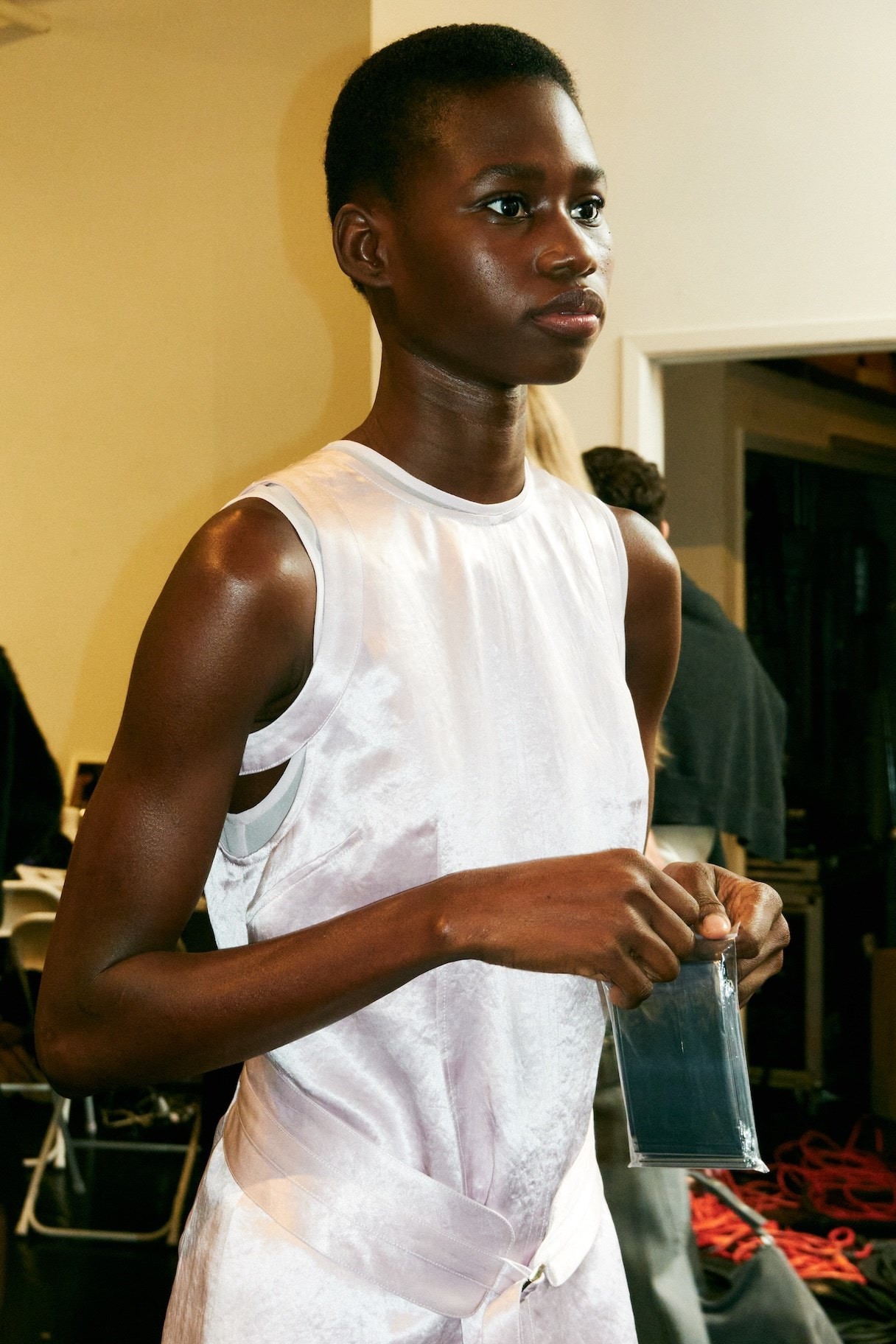

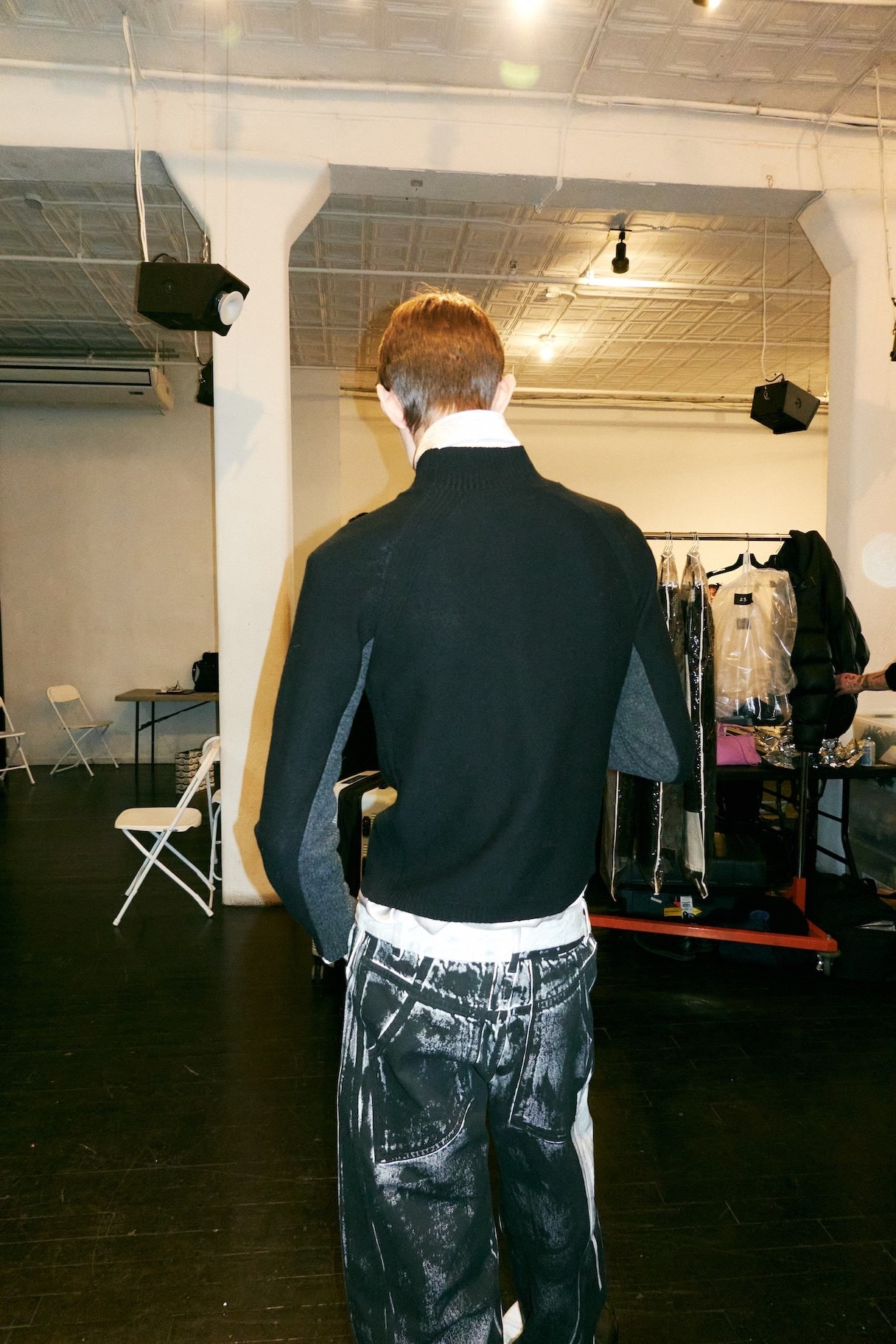
There are a hell of a lot of clothes that seem to serve no real objective other than to clutter up store rails, unsold, and maybe make pretty pictures. By contrast, what Eckhaus and Latta design seems innately considered, perhaps with the necessary economy and forethought of designers with plenty to use, who can’t just pump stuff out. They ask themselves questions like – does this look good? Will anyone actually want to buy this? They seem facile, but you wish more designers posed them more often. We’d end up with better things.
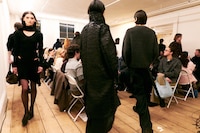
This is Eckhaus Latta’s fifteenth year in business. Over that time, they’ve made a quiet, succinct, surreptitiously seductive world that deserves way more attention. But maybe they don’t want that. Eckhaus Latta don’t make loud clothes – even their celebrities are, generally, off-kilter famous people but not that famous, or famous within a certain sphere. It feels dumb and reductive to talk about uptown and downtown in New York fashion anymore but there’s a validity to that label here, given that they show just below Canal Street in a literal bare-bones, floorboarded space where every trudge of the model makes the ground creak.

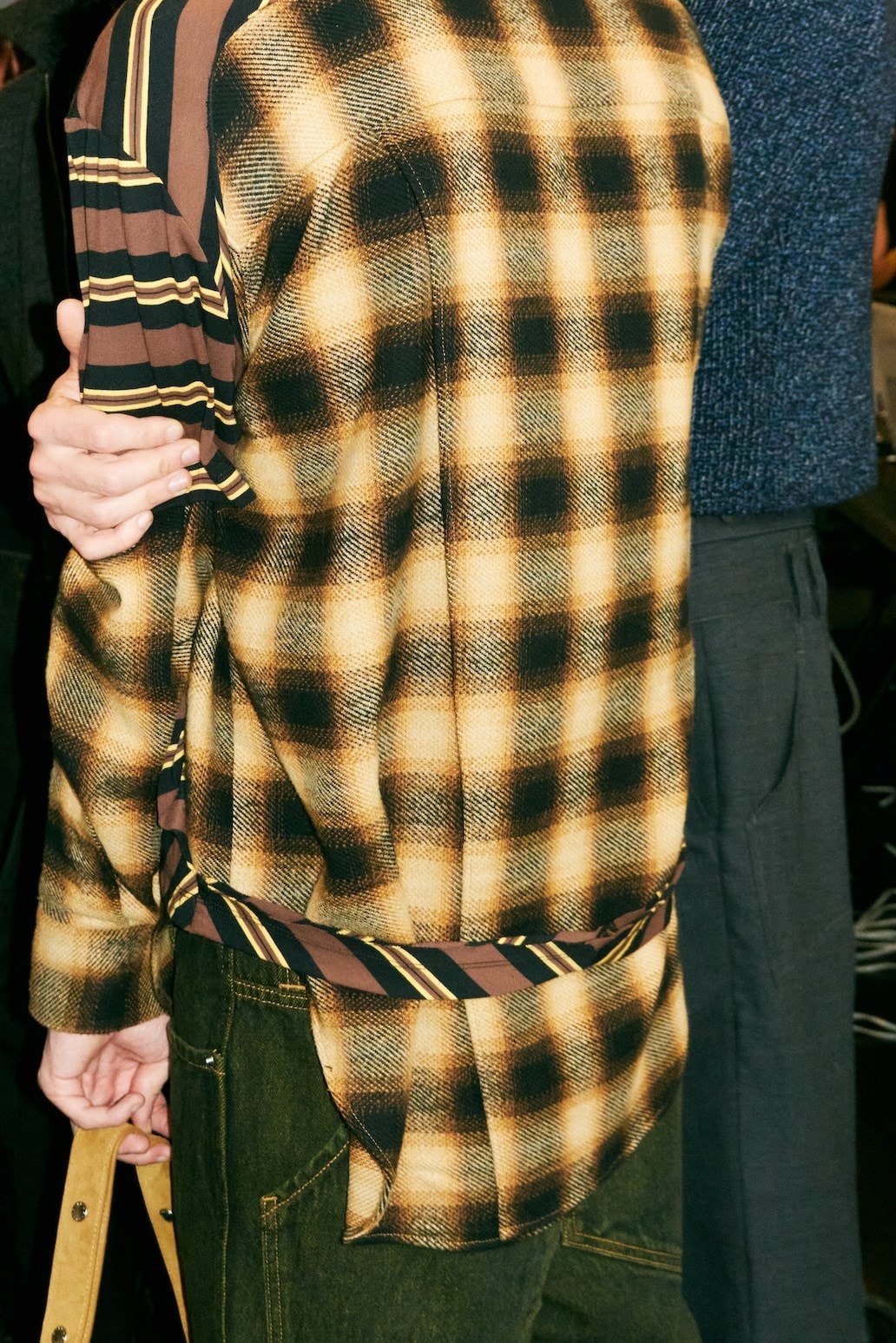

That said, there’s a universality to their clothes. Eckhaus and Latta consider the body, which is, oddly, an incredibly rare quality in fashion. There’s a sense of dynamic energy and an urgent, sly sexuality to what they make. Lots of linings ranging out; flyaway aprons, spaghetti-tied at the front, threaten to come undone; go-faster winking strips of skin at the hips of flared short dresses; jeans with detached waistbands, or buttoned to shorts like chaps in a way that could look silly but ends up looking hot. One top seemed the bastard offspring of an unholy union between a lumberjack shirt and a striped T-shirt, fragments of each embedded in the other. Knit dresses with folded tops had a big, sexy hole chewed out of the backside. They also just make their models look great, which is an underrated skill.
Reality, in fashion, is a wantonly used term. It’s usually hinted at by clothes with a banality or overt gestures to practicality – pockets galore! Eckhaus Latta’s last look was a narrow fur coat over a hammered satin skirt bottomed with what looked like a flap of black cheesecloth. Like the rest of the collection, it was eminently, actually real – and, to prove the point, the models wound their way down the stairs with the audience as we left, and walked out onto the street. Then, they vanished. They looked like everyone else, even a television star. How great is that?
