
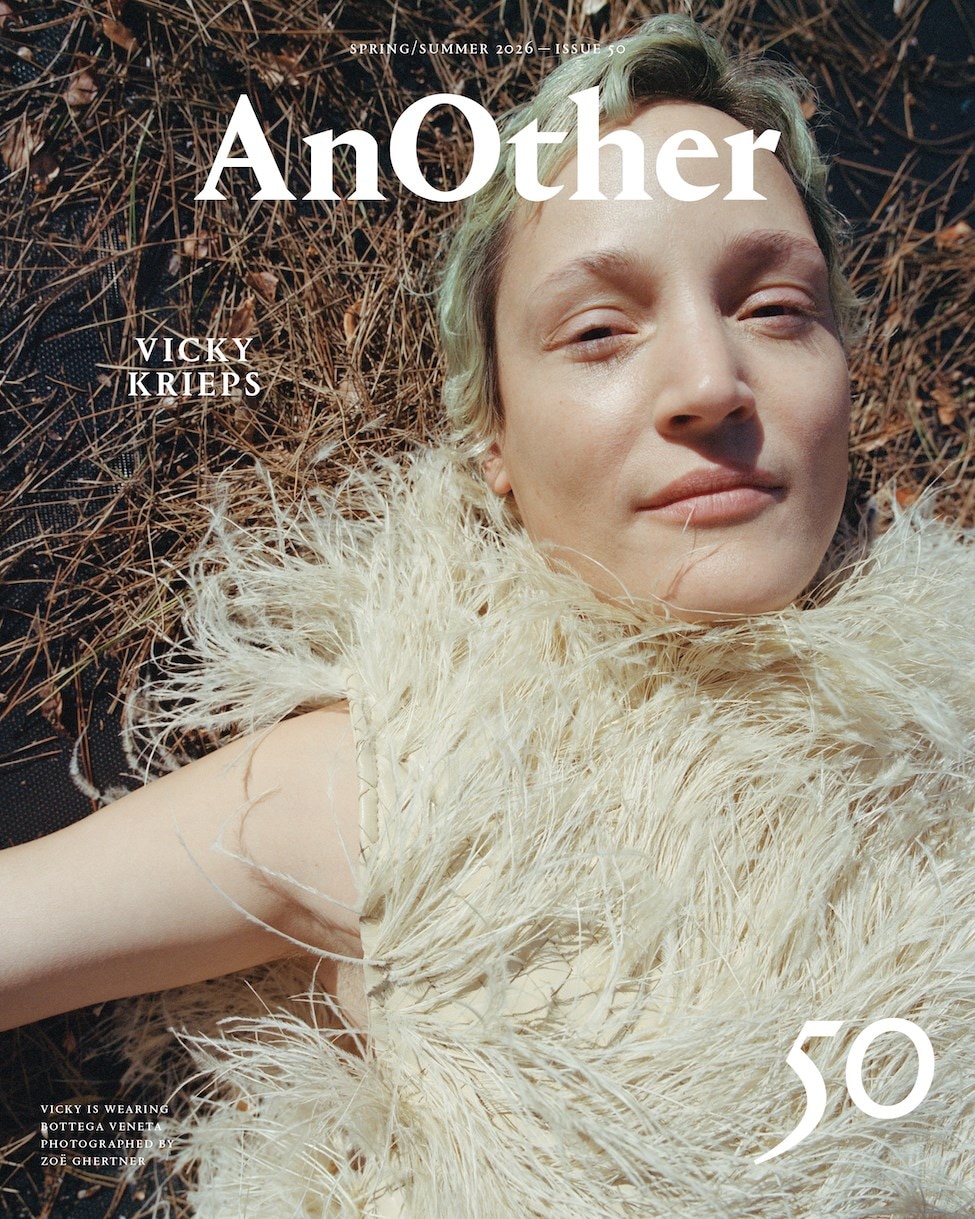
This story is taken from the Spring/Summer 2026 issue of AnOther Magazine:
Sunset Gower Studios originated as a rickety patchwork of outdoor stages amid Hollywood’s turn-of-the-century orange groves.
Later, during the reign of the tyrannical Columbia Pictures mogul Harry Cohn, Humphrey Bogart, Cary Grant and Rita Hayworth drove to set through its art deco gate – Hayworth sunbathed nude on its roof. The fabled lot on Sunset Boulevard is still in the dream-factory business today and it’s Vicky Krieps who is shooting long, nocturnal hours there for a new production based on a grisly double homicide that rocked the damp green town of Fall River, Massachusetts, in 1892. That year, in a narrow clapboard house lined in fussy floral wallpaper, 32-year-old Lizzie Borden blew a fuse one airless summer day and hacked her father and stepmother to death with an axe. Allegedly. Borden was tried and acquitted, leaving a murky locked-door mystery that has since inspired a rock opera, zombie novels, ghoulish playground rhymes and now the fourth series of Ryan Murphy’s Monster, starring Ella Beatty as Lizzie and Krieps as her Irish maid, Bridget Sullivan – the ambiguous relationship between the pair has been a wellspring of gossip since the 19th century. In the ebb and flow of historical revision, Borden has resurfaced as a proto-feminist nursing a deep well of rage in a household where one wealthy old man owned all the women “by either marriage, birth or contract”, as the author Angela Carter put it. The murder weapon, meanwhile, has become a glinting symbol for slaying the patriarchy – and few actors have taken as much pleasure from that as Krieps. “When Ryan said, ‘I have a punk lesbian feminist empowerment story for you,’ of course I was on board,” she says, sipping water from a flask with a tiny axe pendant affixed to it, courtesy of a black-humoured member of the crew.


Krieps’s hair is an un-Victorian mint green today, and she has swapped last night’s maid’s apron for a rainbow-coloured sweater and jeans. We’re a short drive from the studio, up the switchback streets of Beachwood Canyon, in the home of an actor friend that Krieps is staying with while she shoots the series. The house – more of a castle, really, with a wood-panelled lift, Spanish-revival towers and a speakeasy past – sits on an outcrop beneath the Hollywood sign. Krieps has set a pasta sauce going on the stove for lunch and we’re drinking coffee in a garden bordered by citrus trees with limes the size of grapefruit. There’s a lop-eared dog, a long, rectangular pool and views across the Los Angeles ozone to the edge of the continent. A dark-haired woman playing on the grass with her son turns out to be the Norwegian actor Renate Reinsve, in town for the LA premiere of Joachim Trier’s Sentimental Value. It’s an unhurried, convivial scene and Krieps seems far less jangled by the city’s snakes and ladders than she was the first time she arrived, in 2017.
“If you’re a sensitive person and you go to LA, it feels like every single light in the city is cutting your skin,” she told the press about that moment. She had been dropped into the eye of an unrelenting Oscar campaign for Paul Thomas Anderson’s macabre riddle Phantom Thread – Krieps’s Hollywood debut and, at the time, hailed as her exalted co-star Daniel Day-Lewis’s final role. It was a cacophonous and unsettling first encounter with fame, accompanied by advice to avoid personal subjects in interviews, stop moving her hands when she spoke – build scaffolding to protect against her newfound visibility. But Krieps’s art depends on the opposite: on her ability not to wear any armour at all. “Being, not acting,” she calls it, a way of revealing her characters raw-boned and radically unmediated. Where many actors talk of building, Krieps prefers to strip away – she describes it as “like taking off skin after skin”. And while she will do her preparation, whether that’s learning Hungarian or ice swimming in the Danube, she arrives on set without a guidebook, a high-wire act that allows something unvarnished and surprising to emerge.
“I have to make sure I’m coming from a place of truth, which is hard in this business,” she says. “But early on I realised the less disciplined I am, the more something happens I could never have dreamt of. So I have no discipline, I’m total chaos. Where all my energy goes is to remind myself to be present without any calculation. Even now, I’m checking with myself – ‘Am I really present here, right now? OK, I can continue.’”

That dedicated openness makes Krieps a kind of litmus paper onscreen. It’s there in her spontaneous blush in Phantom Thread when the humble waitress Alma first encounters the domineering couturier Reynolds Woodcock in a Yorkshire seaside tearoom, stumbling straight into a sideboard at the electric shock of the charge. Or in Alma’s explosion over a rejected plate of asparagus (too buttery for the House of Woodcock), directed not only at the cantankerous dressmaker, with his lapsang tea and precise triangles of toast, but also at the methods of the actor playing him (more on that later). It’s a finely tuned intuition that leads Krieps, and us, into entirely unexpected places onscreen – as when she jumped, unscripted, out of a ground-floor window as cameras rolled in Marie Kreutzer’s Corsage, a subversive dismantling of the chocolate-box image of Empress Elisabeth of Austria, known as Sisi, who was stabbed through the heart by an Italian anarchist beside Lake Geneva. Sisi’s exasperated leap into thin air felt exactly right for the rebellious, vain Mitteleuropean monarch, trapped in a starched, joyless court as she confronts the bell toll of her 40th birthday. With her diet of thinly sliced oranges to maintain an 18-inch waist, and a much larger appetite for extramarital affairs, pink Sobranies and the newfangled drug heroin, Sisi gives the finger to the camera and whips off her bedsheets naked to spark a flint of lust from her subzero Habsburg husband. Krieps took home the Un Certain Regard award at Cannes in 2022 for the mischief and daring of that performance.
“I have no discipline. I’m total chaos. All my energy goes into reminding myself to be present without any calculation” – Vicky Krieps
But back in 2017, locating those mercurial impulses amid Phantom Thread’s acclaim was “like trying to grow a flower in Times Square”, she said. And so, Krieps took a risk few actors do when Hollywood rolls out its carpet: she decided not to be rushed. Instead, she accepted an invitation from the arthouse auteur Mia Hansen-Løve and travelled to a rugged island in the Baltic Sea to shoot the elliptical psychological study Bergman Island. The role Krieps played in that – as a filmmaker ensnared in creative and romantic quicksand – mirrored some of the existential debates she was having with herself about the kind of life she wanted, post the career accelerant of Anderson’s haute-couture masterpiece. The actor’s work in the years since has articulated her full-bodied answer to that flashpoint in her life: now 42, she has ranged freely across eras, languages (she speaks four), budgets and continents, giving voice to characters who too often lack one onscreen. Her spectrum of contradictory, unorthodox women, confronting moments of flux or unrest, plant their roots deep and reject tidy unities. She has blown the dust off historical firecrackers ranging from Jenny von Westphalen, Karl Marx’s renegade companion through poverty and exile, to the Nobel-prize-winning poet Ingeborg Bachmann, whose eviscerating portrayals of female consciousness were cut short by a tragic accident. Krieps has been unafraid to embody compromised and knotty villains too, seemingly beyond all salvation – a racist US border patrol officer who murders a migrant in cold blood, and the Nazi “Bitch of Buchenwald”, Ilse Koch, a perpetrator of sadistic horrors. The latter was her first collaboration with Murphy, and the disquieting kernel of humanity she buried in that portrayal itched mercilessly at viewers’ consciences. “It was showing the evil in us, in everyday life,” she says. “The idea that the monster is the other – that’s where humans usually go wrong, when we think we’re the good guys and stop questioning ourselves.”
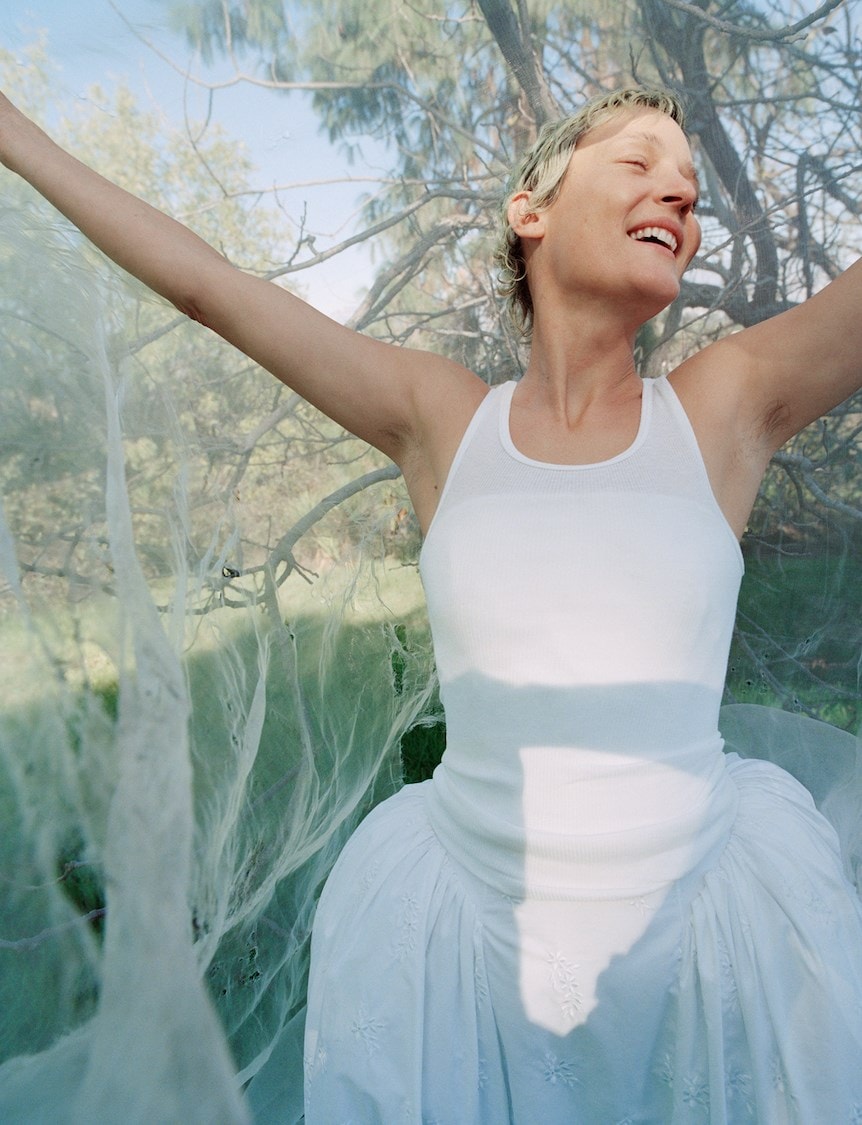
 in cotton broderie anglaise by SIMONE ROCHA)
That self-interrogation is the bedrock of Krieps’s process, her method of chiselling away at well-worn tropes. “I fight to take good care about every word,” she says, “I’m always asking, ‘Would women really say that?’” Playing a frontierswoman pouring bourbon for the ragged pioneers of a tumbleweed Nevada town in Viggo Mortensen’s The Dead Don’t Hurt, she refused to show the twitch of a smile during a climactic reunion when her years-gone lover returns. “Why would I smile?” she says evenly. By robbing the scene of the emotional fireworks we’ve been trained to expect, Krieps delivered the film’s strangest and most wrenching scene – Mortensen later compared her to Meryl Streep. “I’m not changing lines because I think I know better,” she says. “It’s more intuitive. Because my question is always, what is this actually about? And usually things in life are about the ‘why’. That leads me to revisit the words and find out what is under the words.”
At the Venice Film Festival last year, she described her stance as “doing a John and Yoko sit-in within the industry” – her peaceful resistance to convention. On the Lido her hair was short and bubble-gum pink, and she was premiering a film by another figure with uncompromising arthouse credentials, Jim Jarmusch – a director born of New York’s scrappy Eighties downtown scene who has steadfastly chosen independence over a studio paycheque. His wise, bittersweet triptych Father Mother Sister Brother dwells in the messy, unresolved relationships between parents and their grown-up children – the badly set fractures, off-kilter power dynamics and bonds that persist among those who share our DNA. Krieps appears in the central chapter as the jumpy, free-spirited daughter of an emotionally brittle mother (Charlotte Rampling) and sibling to a studious older sister (Cate Blanchett). Meeting for an annual tradition of tea and miniature iced cakes that is dreaded by all three, the clenched conversation short-circuits as each plays the ill-fitting roles that family lore requires while more truthful realities move like quicksilver beneath the surface. Krieps’s character, for one, hasn’t told her family she is gay and pretends the girlfriend who drops her off is an Uber driver; her mother’s bestselling books, meanwhile – Reckless Moonlight, An Unfaithful Tomorrow – suggest a side of her personality unrevealed to her daughters, if not her readers. Variations and echoes pinball between the film’s three sections – the first featuring a rough-hewn and unreliable Tom Waits running misdirection on his much straighter offspring, the last centring on orphaned Parisian twins played by Indya Moore and Luka Sabbat.
“It’s anti-action. It doesn’t have any drama, really – no violence, no sex, no nudity, no agenda,” Jarmusch told me at Venice, three days before he picked up the Golden Lion for it. He wrote the wayward-daughter role with Krieps in mind – a little presumptuous, he admitted – but he was correct in detecting a kinship. Father Mother is minutely observed, attuning its audience to the tension between what’s left unsaid and what is spoken aloud – and Krieps has deepened the possibilities of silence more than any actor working today. Her facility for stillness feels like a rejection of the overexplanation we’re increasingly subjected to onscreen. “I do not want to have every tiny thing explained,” she says. “I’m told it’s ‘for the audience’, but to me that’s the biggest lie. So Jim and I understood each other.”
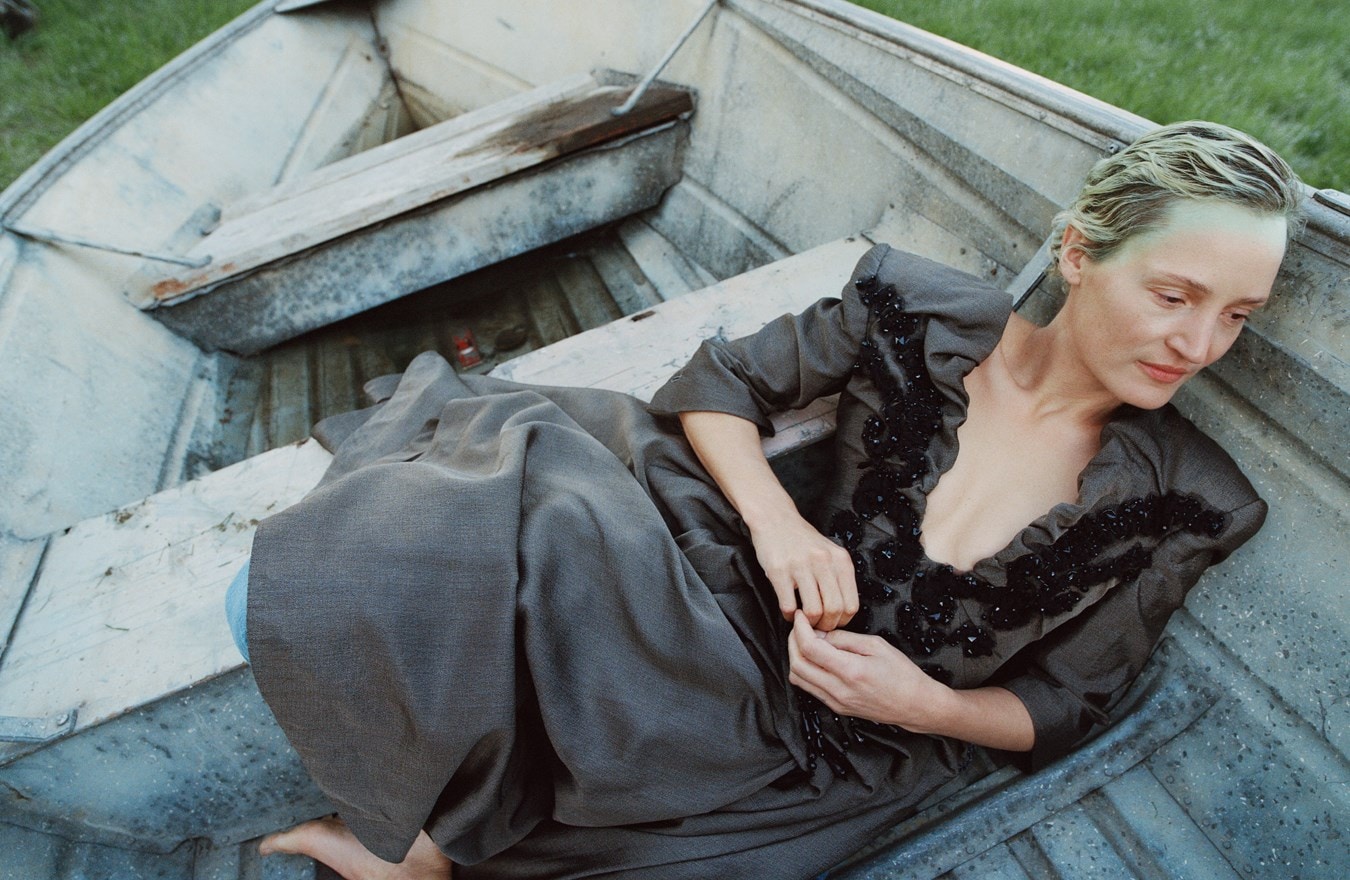
 in cotton by LEVI’S)
For Krieps, their collaboration was the culmination of a lightning bolt she experienced as a teenager watching Jarmusch’s laconic 1984 feature, Stranger Than Paradise – a shoestring black and white road movie that meanders through Reagan-era America, from the trash-strewn Lower East Side of New York to the shabbier reaches of the Florida coast. She remembers being riveted by one of the film’s three ramshackle leads, Eszter Balint, a 16-year-old who lived next door to the Chelsea Hotel and was cast by Jarmusch as a sardonic Hungarian who shoplifts cartons of Winstons in a men’s winter coat.
“I remember being stunned by this woman who blasts Screamin’ Jay Hawkins from a portable cassette player,” Krieps says. “That image spoke to me in a way I can’t even describe. To know that there were people who could send this out into the world … and the way Eszter looked – dark hair and slightly androgynous, which I always felt closer to than hyper-feminine women. To me, this movie was freedom. As a child, I suffered from this feeling of being stuck in a weird theatrical play with all these absurd rules. Jim let me know that there was a way to escape, to live it differently.”
“Jim [Jarmusch] let me know that there was a way to escape, to live it differently” – Vicky Krieps
Krieps has described her childhood growing up in tiny, landlocked Luxembourg as “chaotic”. The youngest of three siblings – she has an older twin brother and sister – she was born to an artistic mother and a father who worked in the film-distribution business. “I say chaos, because my parents are so different, and for some reason they’ve been attracted to each other since they were 18 – but they fight a lot,” she says. “My role was the mender, the counsellor, the peacemaker – to be all right and happy.”
The family lived in the commune of Hesperange, beside a ruined 13th-century castle with a history of warring Burgundians and Austrian Habsburgs. She was a nature-loving child (“I still like to go out and speak to the trees”) and her self-reliance manifested early: Krieps’s first memory is of stepping into the snow aged three and making for the horizon. “That’s who I am. I was always OK on my own. At three years old I was ready to go and see what’s over the next hill,” she says. “I was always inside my head as a child, dreaming of something else. Even today in the shower, I couldn’t just take a shower because there’s a part of me that’s dreaming of life and death and water – where did the water come from, where is it flowing to?”

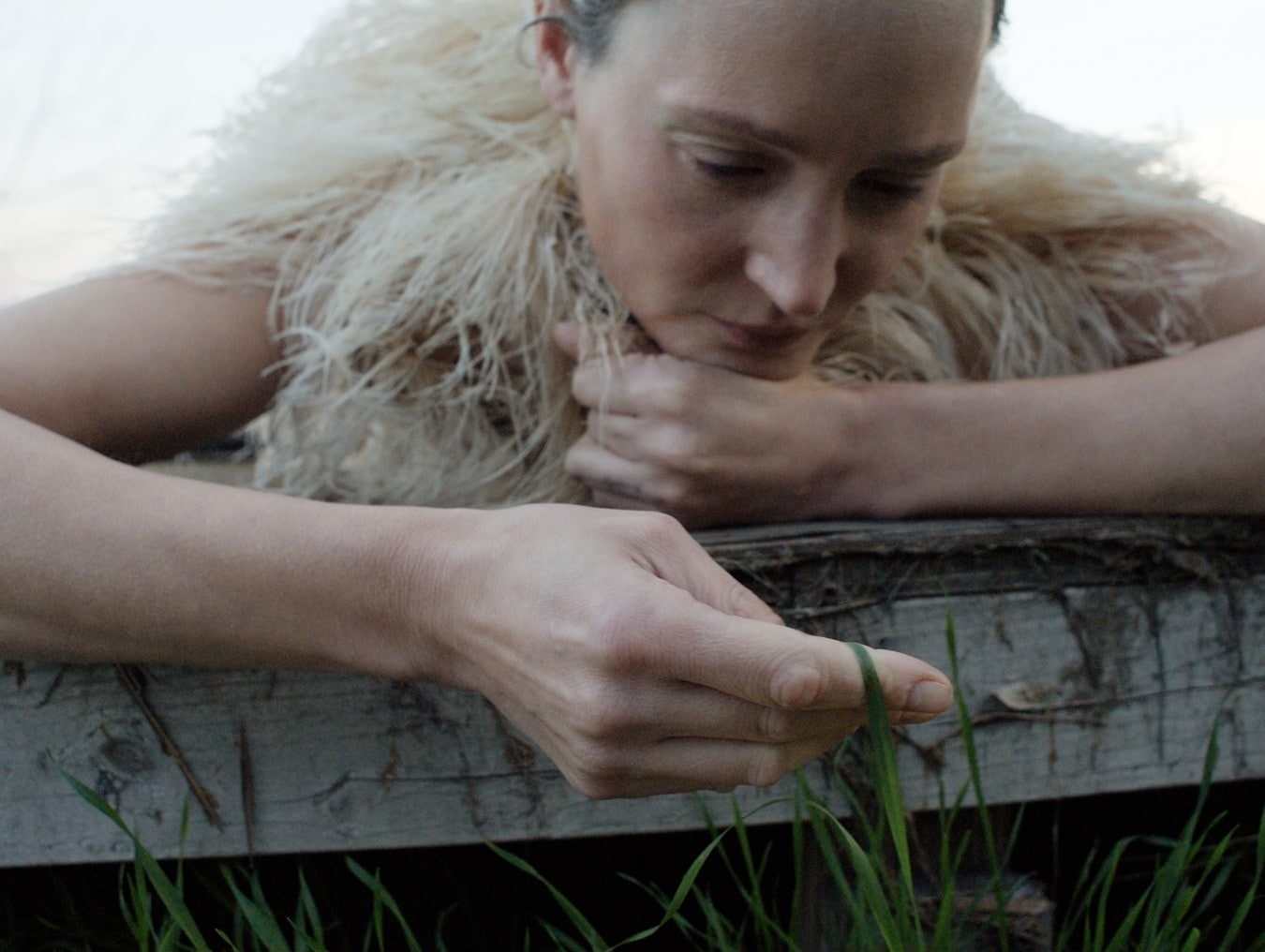
Jean Cocteau’s fantastical 1946 film, La Belle et la Bête, gave flight to those nascent reveries at the age of eight – specifically the moment Belle runs through a haunted castle as disembodied arms extend from the walls holding wax-dripping candelabras. “That’s when I became a cinephile,” Krieps says. “I did not want to be the actress at all. I mean, she’s mainly lying around. It was these glowing arms that I remember, and the fabric of the blankets – the world of it.” As a teenager she took drama classes, discovered the decadent cursed poets (“saying the names Rimbaud and Verlaine now is like saying the name of past lovers”) and made homemade horrors with her friends – they sourced the blood from a local farmer. Around the same time, her sister, now an artist, began regularly photographing Krieps, long before that became a part of Krieps’s promotional duties. “The weirder the better,” she wrote last year on Instagram. “Me hanging off trees, lying around trash cans of my city or curled up on the roadside.”
For a time, though, she assumed she would go into law – possibly because the Krieps family name has a certain seditious pedigree in Luxembourg. Her grandfather Robert Krieps was a member of the wartime resistance and imprisoned in Dachau as a young man. He later became the president of the Luxembourg Socialist Workers’ Party and campaigned successfully to abolish the death penalty. Accounts of the late politician paint a figure it’s hard not to warm to: “Robert Krieps reportedly almost came to blows with France’s Jean-Marie Le Pen … ” wrote the Luxembourg Times, describing a fracas that broke out in the European Parliament cafeteria in 1990 when Krieps took exception to the far-right leader’s boycotting of a speech by Nelson Mandela. Krieps junior also learnt the art of speaking one’s mind – at her school graduation she took the mic from her teacher: “Thank you for giving me a diploma. You have given me proof that I know how to learn off by heart, that I know how to copy and how to shut my mouth,” she said, and made the papers.
But when she left her diminutive country for a year’s voluntary work in South Africa, an alternative future swam into view. “I went completely naive and it changed me for ever. It was something about human existence – that not everything is what you think it is. Because I was coming from a wealthy country that was not necessarily happy and encountering people who were happy yet had every reason to cry.” On her return she applied to Zurich University of the Arts. “I had one monologue and chose the school because it had a lake – there was no calculation. I didn’t dare believe – no one famous is from Luxembourg. I was very shy and didn’t think I was the girl you put in a movie. I just had this huge longing.”

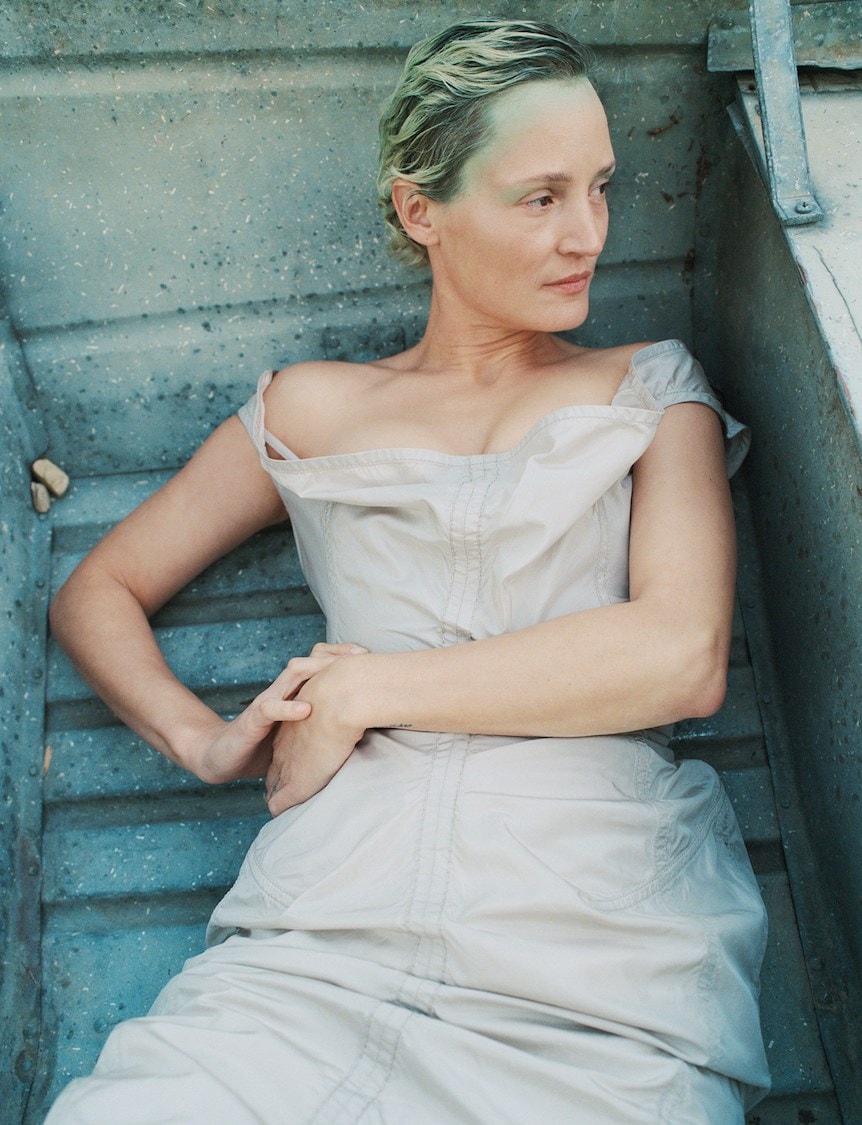
In her final year she wrote and directed her first play, Kopf Ab (Off with Your Head), which imagined a world where the sentences that make up conversation are numbered, bought and sold. It starred her mother, who was instructed to eat a clementine and slowly drop its peel around the stage. “That play was supposed to be a fuck you to my school, but they liked it,” Krieps says. It resulted in an invite from the Theater an der Parkaue in Berlin to write and direct, and the German capital has been her base ever since. She found an apartment, sent out her CV (skills listed included accordion playing and fencing) and began winning small parts on stage and screen. “And then I got pregnant and thought, ‘I’m happy to see where this goes.’ It was a very un-grown-up way to think. Someone told me that if I had a child my career would be over – I was 25 and wanted to prove them wrong.” She lost her first leading role because of the impending birth. “But either I was lucky or talented, because if I went to a casting I usually got the part. It really was magic. I was told to network, have good pictures taken, wear a nice dress to the Berlinale, shake hands. At that time it made me feel sick to my stomach and so angry. I said, ‘Either someone will find me through my work or I’ll do something else.’ I had a small child and couldn’t play that game.”
“I fight to take good care about every word. I’m always asking, ‘Would women really say that?’” – Vicky Krieps
Among the small parts she won was as an intelligence agent in Anton Corbijn’s flinty-skied, Hamburg-set John le Carré adaptation A Most Wanted Man (2014), devastating both for its jaundiced eye on state espionage and for being Philip Seymour Hoffman’s final role, as a dishevelled spy disillusioned beyond hope by humanity’s rotten core. Hoffman, of course, was a longtime collaborator of Paul Thomas Anderson, but Krieps says he couldn’t have seen her in the film – Anderson found it too upsetting a watch. Instead, it was a little-known German indie that premiered the same year, about an obsessive-compulsive hotel maid’s relationship with a bottle-blonde dominatrix that got his attention. In Ingo Haeb’s strange voyeuristic fable The Chambermaid Lynn, Krieps’s character spends her days cleaning a flock-wallpapered hotel, taking advantage of her access to guests’ lives and peccadilloes to investigate a world whose social mores strike her as a foreign language. She tries on lace nighties and rifles through toiletries, then graduates to hiding under beds, observing an array of esoteric behaviours from floor level until, one night, a sex worker’s BDSM routine shifts her from vicarious bystander to engaged participant. “That film was the first time I trusted my intuition,” Krieps says. It won awards at a Montreal film festival and then managed a single week on iTunes, where Anderson clicked on it as he was casting Phantom Thread. As the closing credits rolled, he added Krieps, then in her early thirties, to his list of potential Almas.
“I was no way on the original list of people to cast,” she says. “Even in Germany, I wasn’t someone people knew.” Krieps is not, she admits, a thorough reader of emails. When her agent sent her Anderson’s script, she misread that it was for a London-based student film – she had already put herself on tape when she realised the director happened to be six-times Oscar nominated. “So I wrote my own story. So many famous people either had famous or rich parents, or modelling careers. I remember being super-depressed. I thought it must be true that you can make your career out of your art. I was laughed at and told I was so naive.”

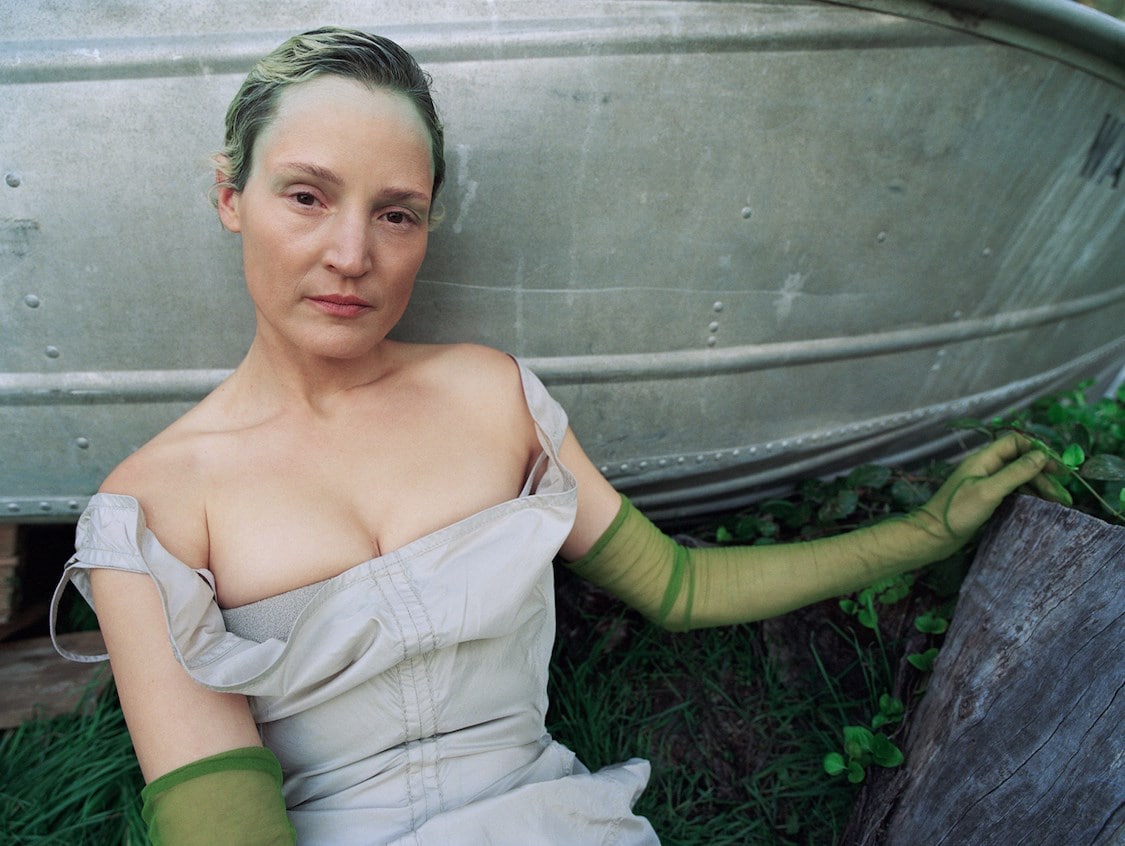
Dressed in French bobbin lace as Phantom Thread’s émigré muse, Krieps had an immaculate stage to show all she was capable of – she describes the film’s scenes as “slides from which to take off”. True to form, Day-Lewis arrived on set with almost a year’s training in pinning, stitching and draping, having apprenticed in New York City Ballet’s costume department and recreated a Balenciaga sheath dress from scratch. Krieps wasn’t allowed to meet him until their first scene, to preserve the freshness of that coup de foudre encounter. Day-Lewis’s methods, undeniably fruitful, required some tiptoeing around on the part of his fellow actors. “In the scene where I make asparagus for Reynolds, suddenly it broke out of me,” Krieps remembers. “It was basically Reynolds being an asshole and me feeling bad again. So I said, ‘Stop that.’ He goes, ‘What?’ It wasn’t in the script. I said, ‘Stop playing this stupid game.’ But the stupid game was everything – it was Reynolds, but it was also Daniel being a method actor. In the past I had trouble speaking about this – I was scared someone would think I’m claiming my authorship. But I think we can, as humans in life and as actors on set, dare to speak of what’s really going on. I was facing important people, all much older and more experienced than me. Who was I to question their words? But I’m so happy I dared. I talk about it today because of this German word, ansteckend – which is like when you pass on a virus. I want other people to say, ‘Yes, I have the right to follow my intuition.’”
That drive to break old circuits has brought her recently into the orbit of the French literary provocateur Constance Debré, an out-of-the-ordinary thinker who has anatomised rebellion and desire in the female experience. The 2025 adaptation of her visceral, unsparing book of autofiction Love Me Tender (published in English by Chris Kraus and Hedi El Kholti’s Semiotext(e)) is an insurgent meditation on motherhood and the price extracted by society for rejecting its conventions. Krieps plays Debré’s double, a high-paid criminal defence lawyer who leaves her husband and quits her job to pursue life as a lesbian, to swim, smoke and write books in taut, urgent prose as lean as her new life. “I was hit with the honesty in these words,” Krieps says. “It’s about so many things that you feel as a woman or as a mother that you’re not supposed to say.” Locked in a custody battle over her eight-year-old son, her character rents cell-like sublets, steals groceries from Franprix and pares down her life to “two pairs of jeans, three T-shirts, an old leather jacket and my old Rolex, just for a laugh, a single espresso to go, a baguette, a packet of cigarettes, my swimming pool pass”, as Debré puts it. Another unnecessary ornament from her previous life: her hair, which is razored away. “I always wanted to shave my head,” Krieps says. “And I love that it doesn’t happen on camera, because in cinema it’s often, ‘Look at how courageous this actress is.’ When they did it, I was told to bring a friend. I thought, why is everyone so solemn? And then as they began shaving it off, I started crying. It takes you back to how you were as a baby. It’s like, ‘Oh, hello! It’s you.’”
She says her saw-toothed, magnetic performance – from the stomach drop of her loss of custody to the distressing supervised visits with her son that her character endures – took a toll. “All of my films seem to be difficult – so maybe that’s what I’m looking for. But this has been my most challenging. When I act, I’m a vessel – I let whatever wants to go through, go through. But in this case, it was an honesty that you can see sometimes in the eyes of a homeless person. Which seems like a weird comparison, but some people who step outside of society have a very clear view on us. It’s this look of a prophet that’s almost too much to take. There’s a level of truth where you can burn yourself. Opening myself to this became quite painful, because I couldn’t live my relationship or refer to my friends the same. I was on this train that only knew one direction – ahead.”

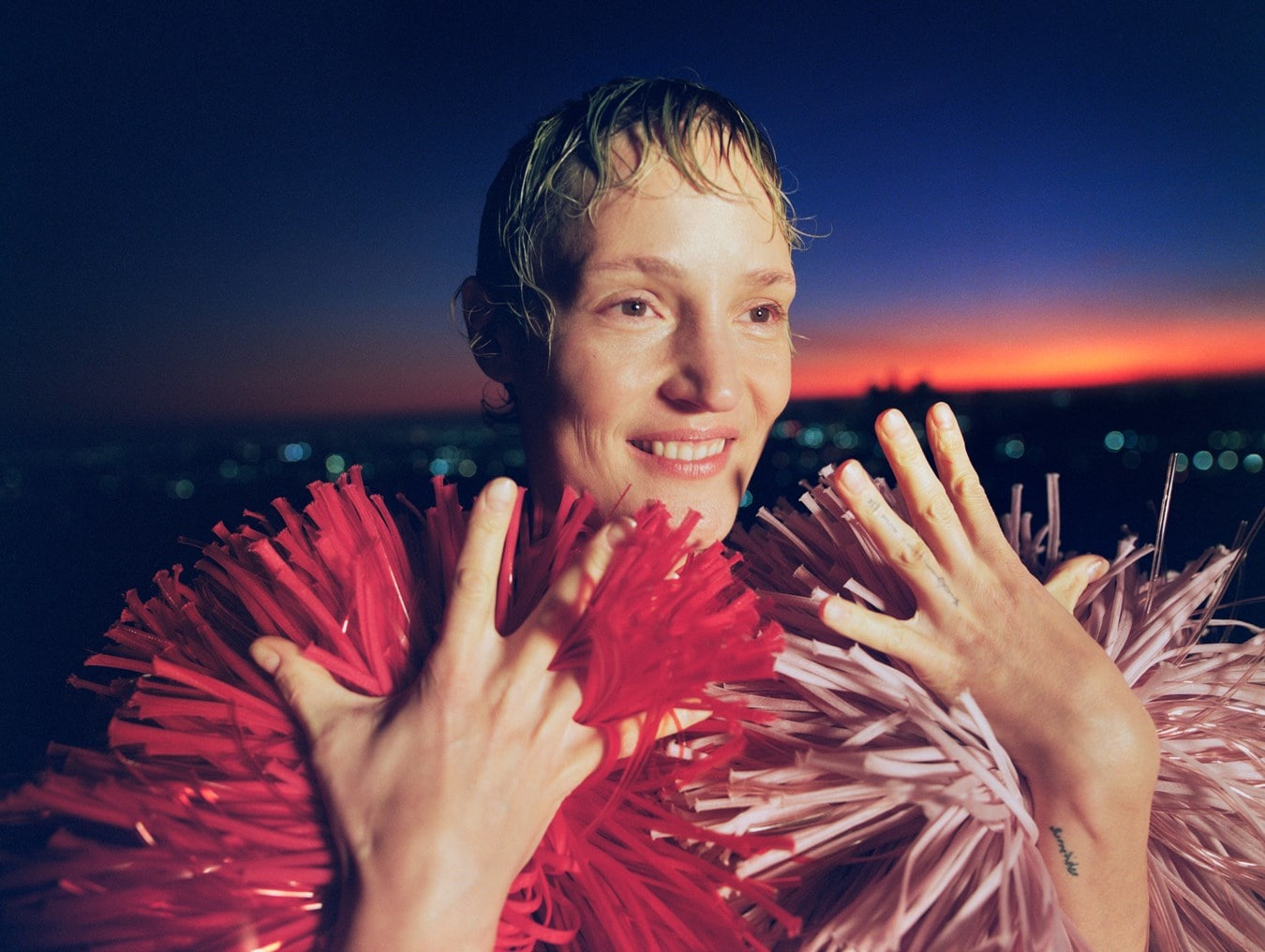
Ever since the hothouse months shooting Phantom Thread in a London townhouse, Krieps has used music as a way to exorcise her characters when filming wraps – she composes each a song to send them on their way. Today she has an album’s worth: her composition for the anguish-ridden Jill in the New Zealand ghost story Went Up the Hill (2024) became the film’s spectral closing theme, and the song she wrote for her terminally ill Hélène in 2022’s More Than Ever joined tracks written by the Oscar-winning Icelandic composer Hildur Gudnaðóttir. In that film, as her character resolves to die amid the breath-catching beauty of a Nordic archipelago rather than hooked to a mess of hospital wires, she is told, “That’s just not how it’s done.” It’s a statement both Krieps and her characters revel in cross-examining, in ways large and small. “I question the system even with the tiniest things. If I can wear my sneakers to events, I do, and I know people notice it. I’m curious if one day the business will tell me I’m not invited any more because I interrupt things. But I think that’s why I’m able to do LA now and not before,” she says, gesturing to the restless, sprawling city below us. “Because I do it my way. No one telling me anything about my job, or how I look, or if I’m successful or not will ever interrupt my natural flow. On weekends I go dancing, go to the ocean, to the mountains … After we finish here, I’m going rope climbing with a friend from the VFX crew. It’s making sure that my work is not everything.”
“I remember being super-depressed. I thought it must be true that you can make your career out of your art. I was laughed at and told I was so naive” – Vicky Krieps
In a few days’ time her husband, Lazaros Gounaridis, will join her – they were married last year with her two children beside them on a patch of beach near his parents’ holiday home in northern Greece; Krieps wore a dress covered with roses by Andreas Kronthaler for Vivienne Westwood. The couple met during the sun-bleached shoot for Hot Milk (based on Deborah Levy’s novel), in which the actor plays a loose-limbed bohemian with an unconscionable trauma behind the smooth planes of her face. Her untethered, polyamorous existence is the liberating catalyst for the film’s protagonist, and the two begin a languorous affair. Krieps’s romantic life was upended in parallel when she encountered Gounaridis among the film crew. “Now that you know me, you can guess the wedding was extremely improvised,” she says with a laugh. “Quite chaotic, I have to say. But it was like I had paid the most expensive wedding planner because it magically fell into place – even dolphins turned up.”
If her family life has coalesced, Krieps has also gathered a growing circle of filmmaking accomplices who share her undimmed belief in cinema. A decade after her first encounter with stardom, she has carved a textured, idiosyncratic career dedicated to exploring the human condition. “I have spent my life trying to find my people – people like Jim Jarmusch. And then these collaborations go onscreen to the audience, which is another beautiful family,” she says. “Cinema is a place where we can still show emotions and feelings the way they are. Very often it feels like someone takes me in their arms and says, ‘It’s OK, I’ve been there.’ Even if you go in with your weird fantasies, you can feel you’re not the only one.” That ability to connect, the way Jarmusch’s singular vision of shared alienation threw a lifeline to her teenage self years ago, is entirely the point for her. “One hundred per cent that’s the thrill of acting for me,” she says. “Because I know that most of us on this planet are good, and that usually we become bad if someone messes with us. So what I love is the idea of connecting as many of the good ones as I can. I know it’s possible. I know there are more of us – I know I’m not alone.”

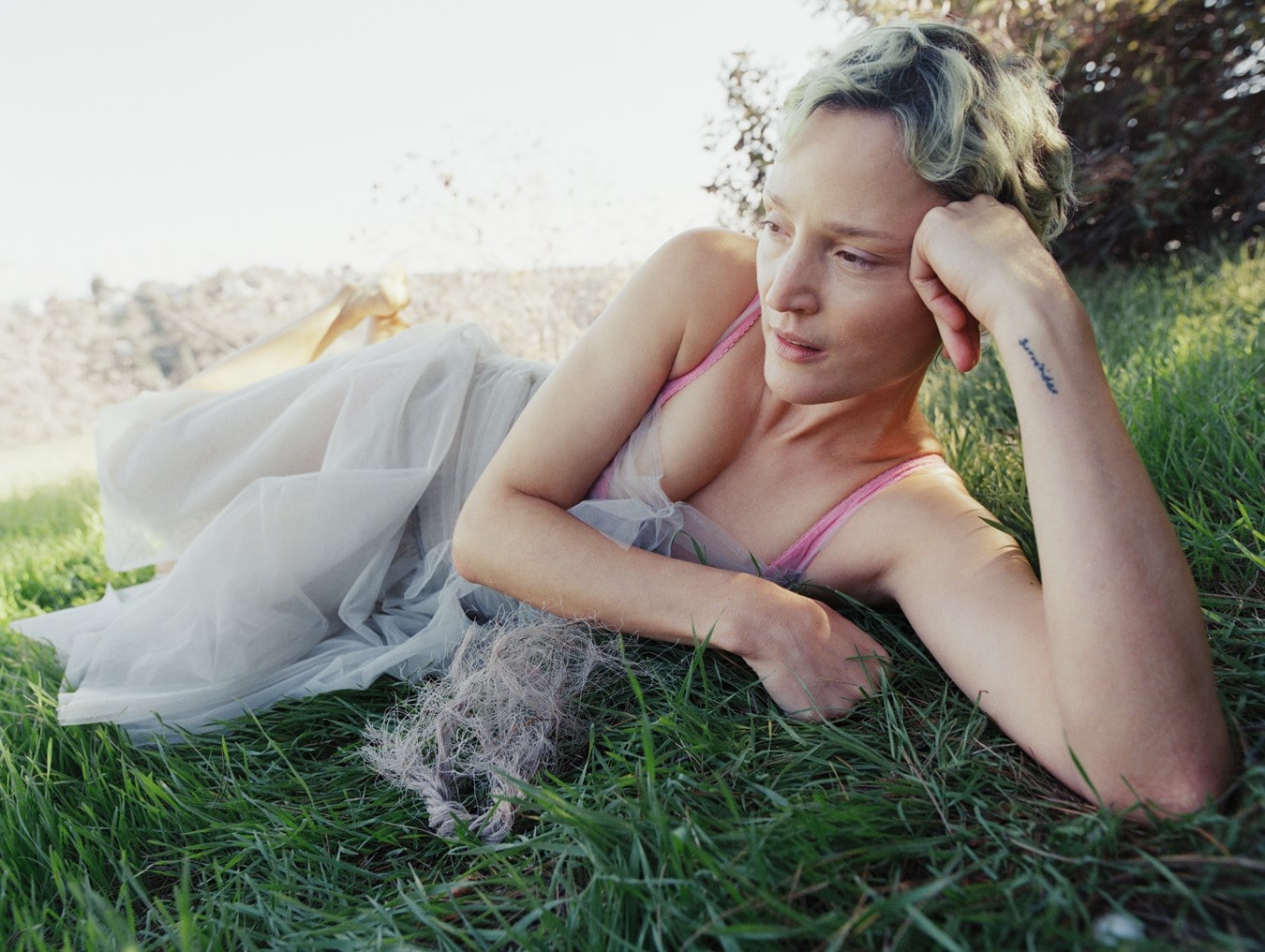
Casting: Greg Krelenstein. Hair: Holli Smith at Art Partner using ORIBE. Make-up: Thomas de Kluyver at Art Partner using CHARLOTTE TILBURY. Manicure: Shigeko Taylor at Star Touch Agency using BIO SCULPTURE. Set design: Patience Harding at New School Represents. Photographic assistants: Lucho Ramirez and Bailey Beckstead. Styling assistants: Precious Greham and Karen Gonzalez. Tailor: Marko Guillén at 7th Bone Tailoring. Hair assistant: Kelsie Daily. Make-up assistant: Anna Kato. Set-design assistants: Caroline Jackson, Niamh Hannigan, Josh Puklavetz and Emahn X Ray. Production: Connect the Dots. Executive producer: Wes Olson. Producer: Jane Oh. Production manager: Nicole Morra. Production assistants: Daniel Morrison, Danielle Rouleau and Tchad Cousins. Post-production: Studio RM. Special thanks to Nevermind Agency
This story features in the Spring/Summer 2026 issue, marking 25 years of AnOther Magazine, on sale internationally on 12 March 2026.
