
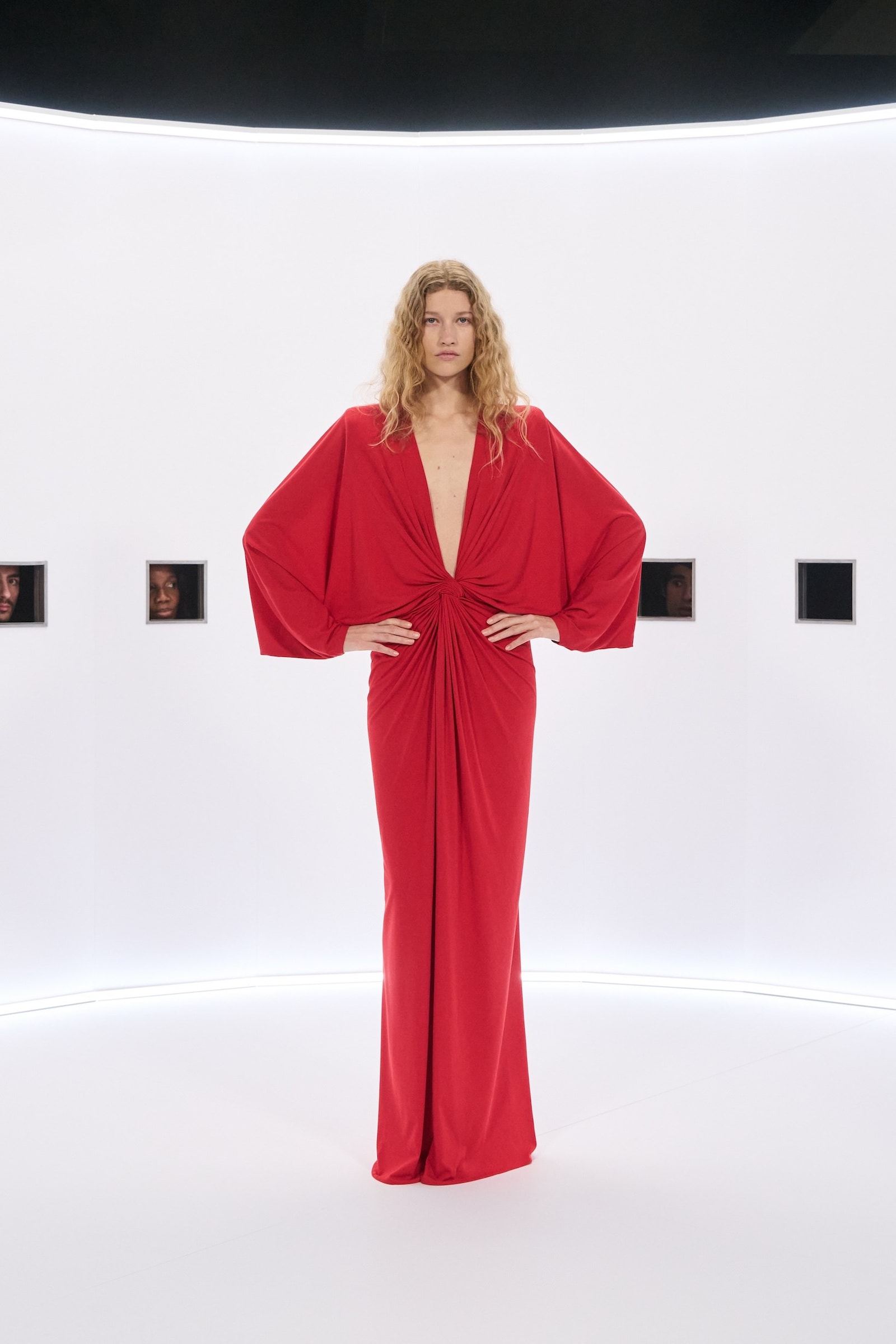
The haute couture is a splendid paradox. The same garments can be perceived as expressive of utmost intimacy or absolute spectacle, an innately private pleasure or a public declaration – of aesthetics, value systems, even just largesse. Generally, a couture house pitches itself on one side of those great divides, but Alessandro Michele decided to embrace those contradictions, staging his Valentino show as a remarkable, provocative, multi-angled address of all couture is, was and could be, all at once. It was a fashion show unlike maybe any other.
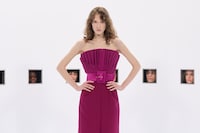
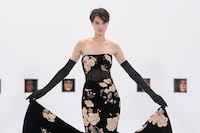
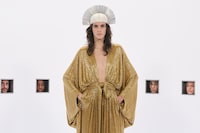
Here’s the scene: 26 alphabetically-annotated cylinders, each one studded with a dozen or so metal-slatted peepholes, crouching stool alongside, like an especially chic twitcher’s den. The music ramped up, the hatches were wordlessly slid open by a white-gloved butler, and the audience stared in to see the show. The notion was borrowed – it’s officially a Kaiserpanorama which, as its name suggests, is a bygone relic of the 19th century, arguably like haute couture itself. You peered in and whirling glass slides invented three-dimensional figures. Michele repurposed it as an haute couture peep show, staring in at live models camping and vamping in his Valentino clothes. One left, others followed.
“People in fashion are voyeurs,” said Michele, after the show. True enough, fashion is about looking – it’s obsessed with it actually, in our hyper-visual age – but despite so much looking, how much do we really see? That’s what Michele wanted to do, hijacking our attention entirely and training it on his clothes with a remarkable intensity. “We need to go back to really look at things,” he said. “Look at the fabric, look at the embroidery, look at the magic. I was trying to oblige people to stop, to look.” Indeed, you couldn’t tear yourself away. It was an ingenious conceit.

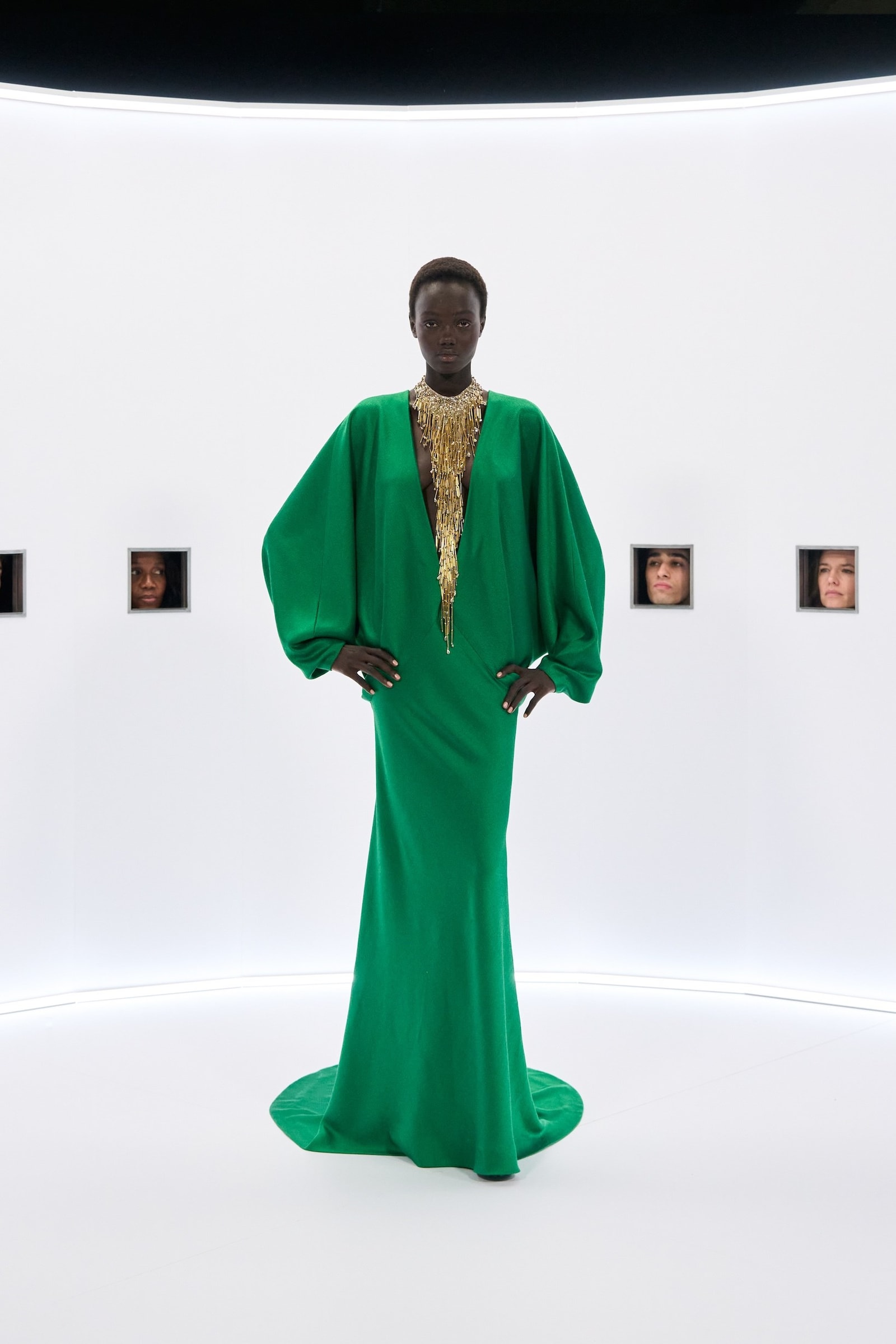

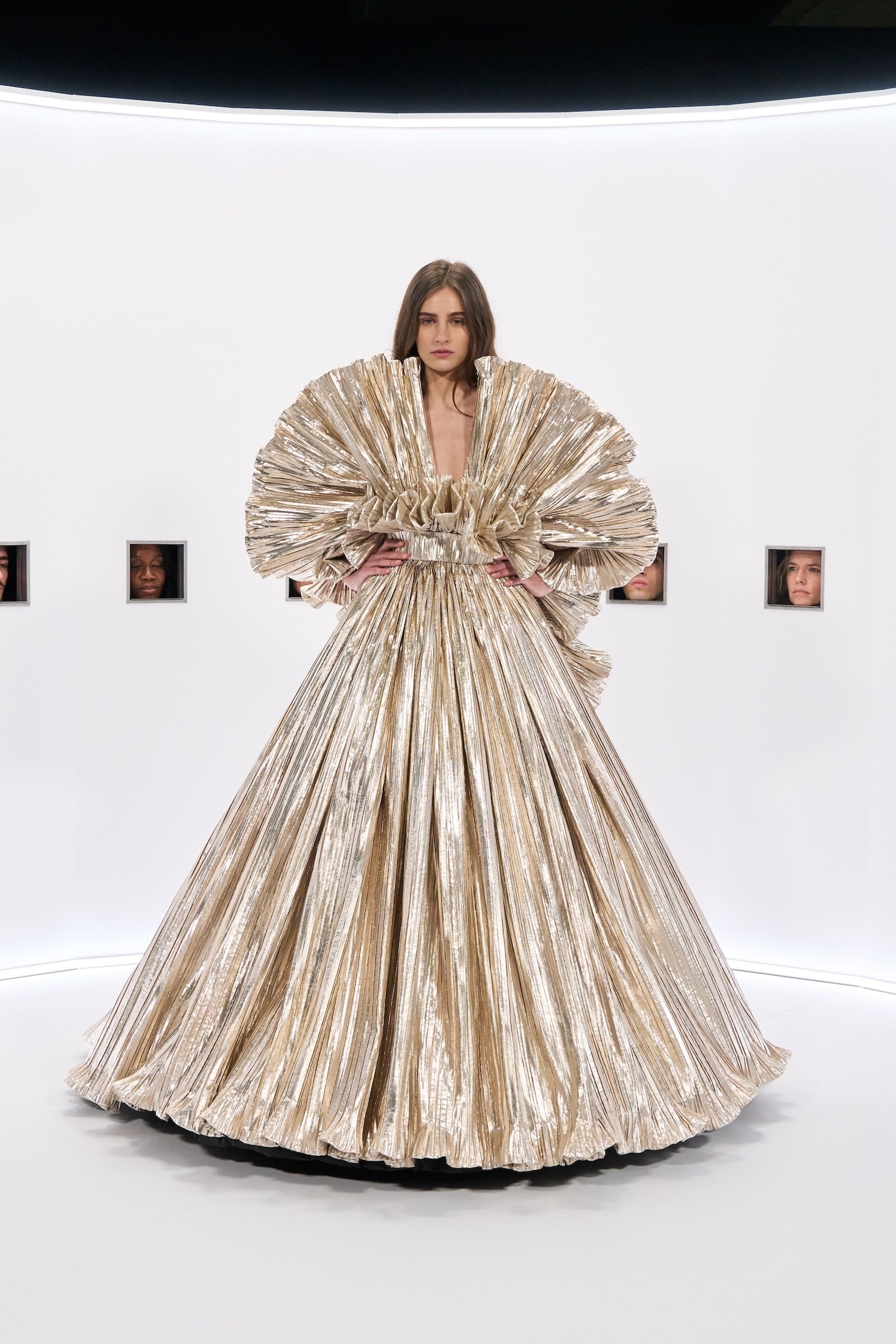
The clothes were also glorious – they entirely warranted our intense focus. Some were, themselves, intense, rising waves of ruffles engulfing models, pleated lamé fanning out around bodies, slithering showgirl outfits throwbacks to the 1920s, to movies that entranced a young Valentino to aspire to dress movie stars and that, for Michele, connect to his mother, who worked at the Cinecittà Studios in Rome when he was a boy. But there were simpler suits scrolled with top-stitching in icy lapis or primrose, and slithery jersey dresses, and embroideries on velvet that were throwbacks to the Valentino glory days of the 80s, when the founder dressed moneyed women with cultured, cultivated tastes who wanted to look, politely, loaded. The riches he in turn earned from the latent power of that vision of elegance enabled Valentino to get ahold of everything he’d ever dreamed of – from a palazzo to a Goya. They’re costly, of course, yet their acquisition was not part of a display of his own dazzling wealth, but part of a ceaseless quest for beauty.
Some saw the staging of this show not as a glorification of the beautiful, but the objectification of women, the models preening like performers in live sex shows for their wordless, faceless onlookers. Look again. It reminded me of the panopticon, an 18th-century prison design where a circular ring of cells allowed one guard to observe all inmates. The models wielded the power in that interpretation, the audience their prisoners, faces glued to our windows, unable to escape beauty. At least, until the show was over.
There was also something of these spaces resembling altars, which for Michele connected innately to Valentino Garavani, to his near-religious pursuit of perfection. He died nine days before Michele staged this spectacle in his name. “Fashion, especially couture, is able to make idols,” Michele reasoned. “And Valentino especially was obsessed with idols. Women as goddesses.” In a sense, this was his tribute to Valentino’s visions of women and beauty, and to his ateliers, his adoration of workmanship – ‘craft’ isn’t the kind of word you’d imagine Mr Valentino using.
How did Michele feel about Valentino – the man, not the house? “I was thinking we chose the same beautiful job,” he mused, philosophical. Beauty is a word they both like to use. “It’s something that makes him forever alive. Now, he’s a mythology.” Michele’s the keeper of his flame.
