Lead ImageComme des Garçons Homme Plus Autumn/Winter 2026Courtesy of Comme des Garçons
“Love me, please love me.” It’s not a refrain you anticipate hearing at a Comme des Garçons show, Rei Kawakubo perhaps being one of the most unloveable designers working in fashion right now. Now, that’s distinct from “least loved”. Kawakubo is adored, but as a self-declared and much-demonstrated punk, she makes no overtures or compromises to engender universal affection with her clothes. They’re difficult, obstinate, unreasonable in their undeniable genius. Kawakubo doesn’t need to be loved. Punks, as the old adage goes, just want to be hated.
But yes, it was that 1966 Michel Polnareff track playing at high reverb, alongside other crooning love songs, that bounced around the Autumn/Winter 2026 Comme des Garçons menswear show. Kawakubo wasn’t thinking about attraction, but about positivity, which has been a somewhat understandable undercurrent of this season of shows. “Let’s get out of the black hole,” was Kawakubo’s gnomic statement that accompanied these clothes. And of course that’s what the world sometimes feels like right now.
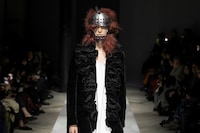
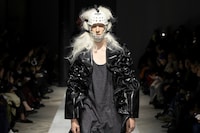
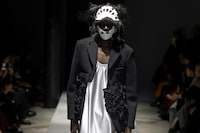
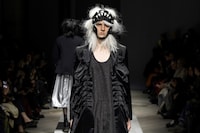
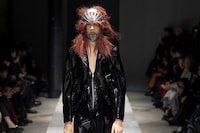
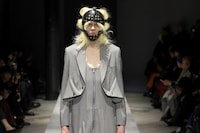
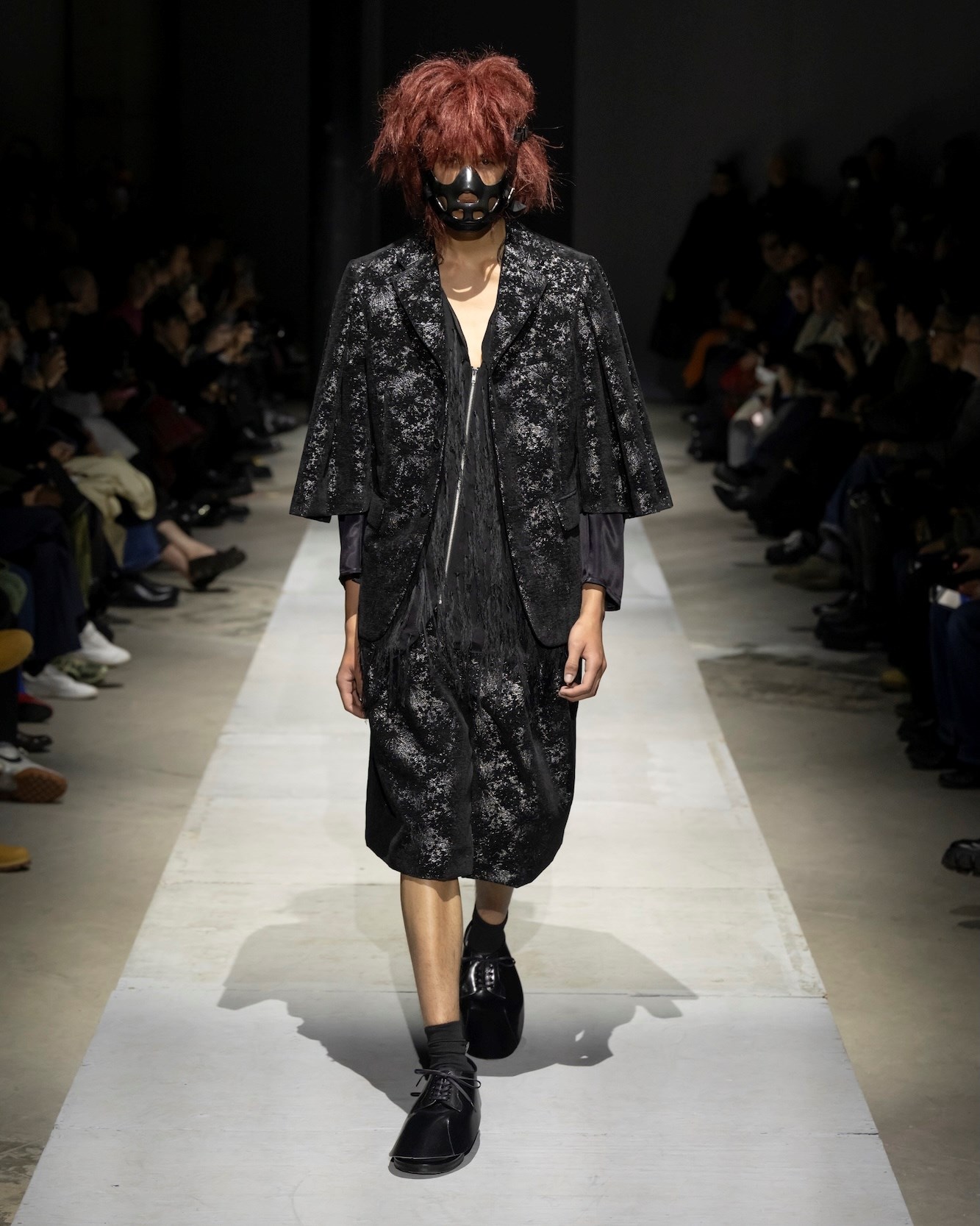
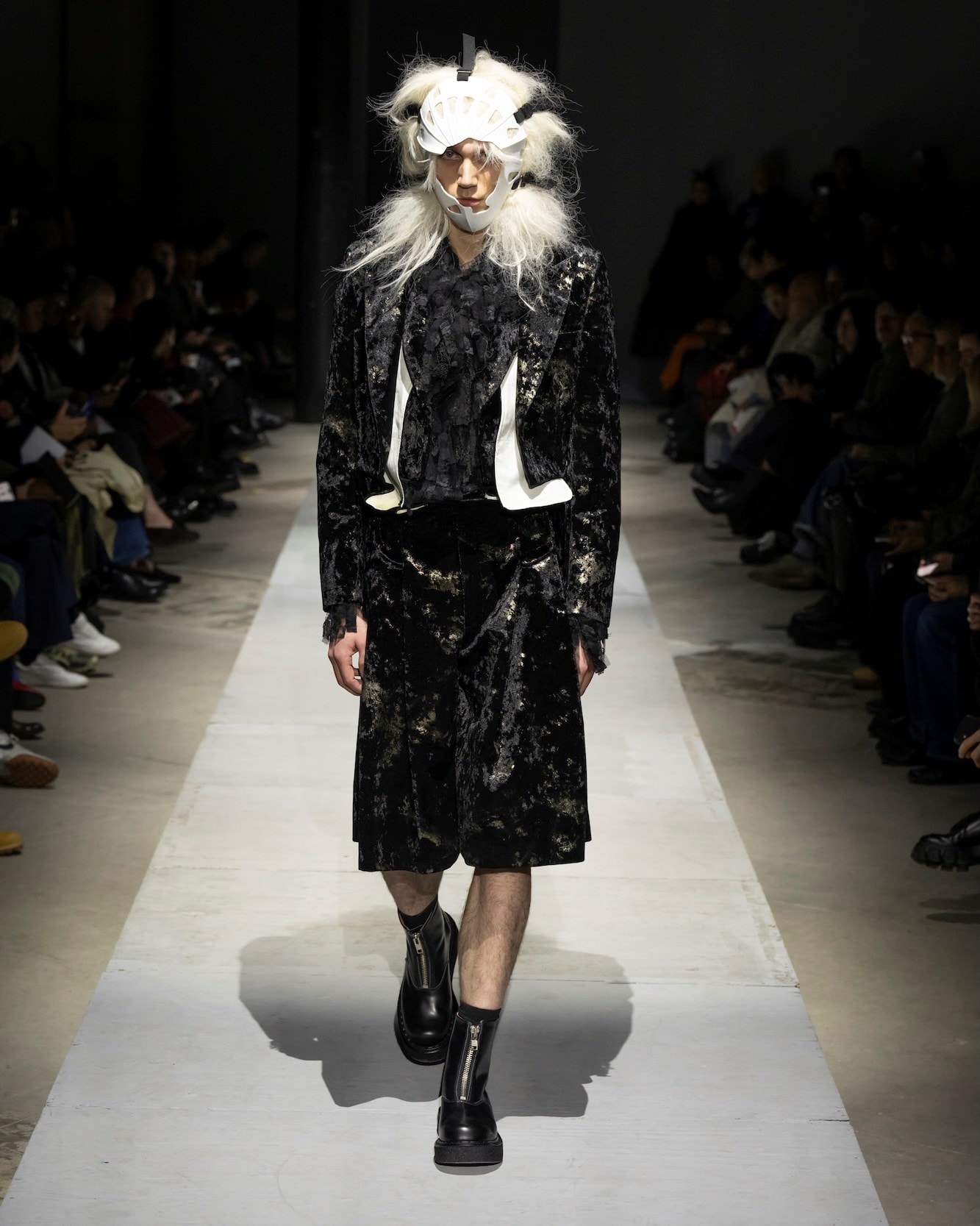
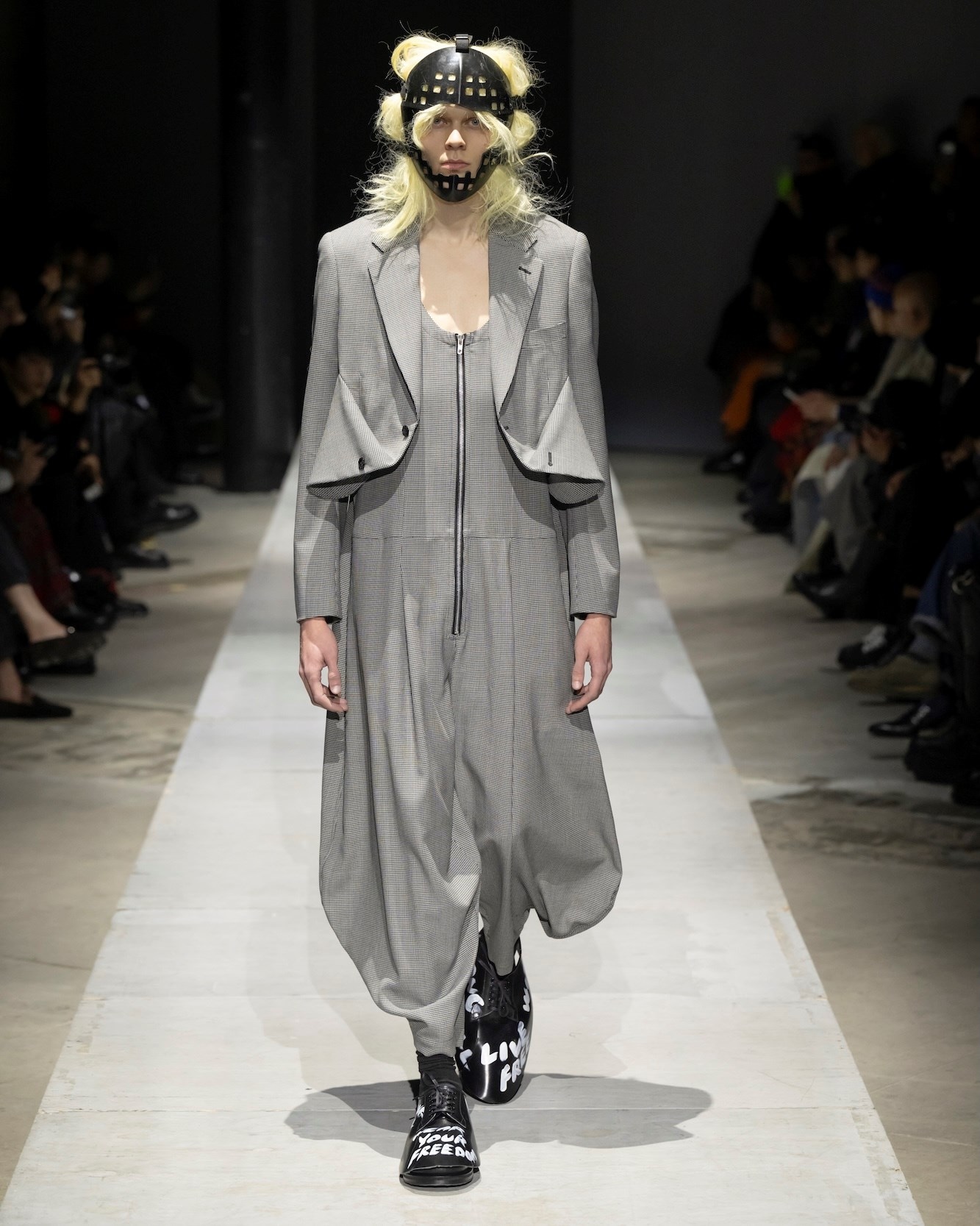
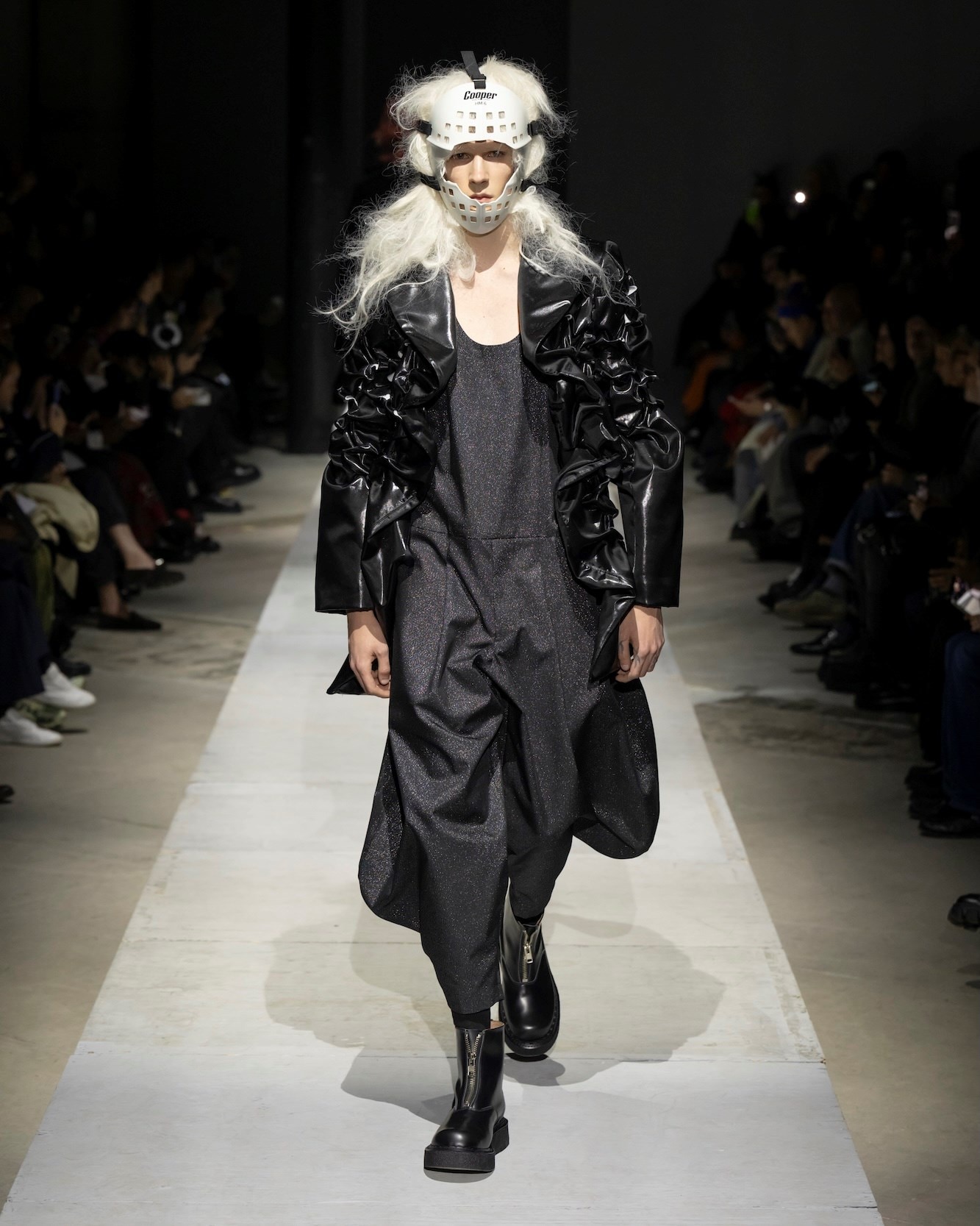
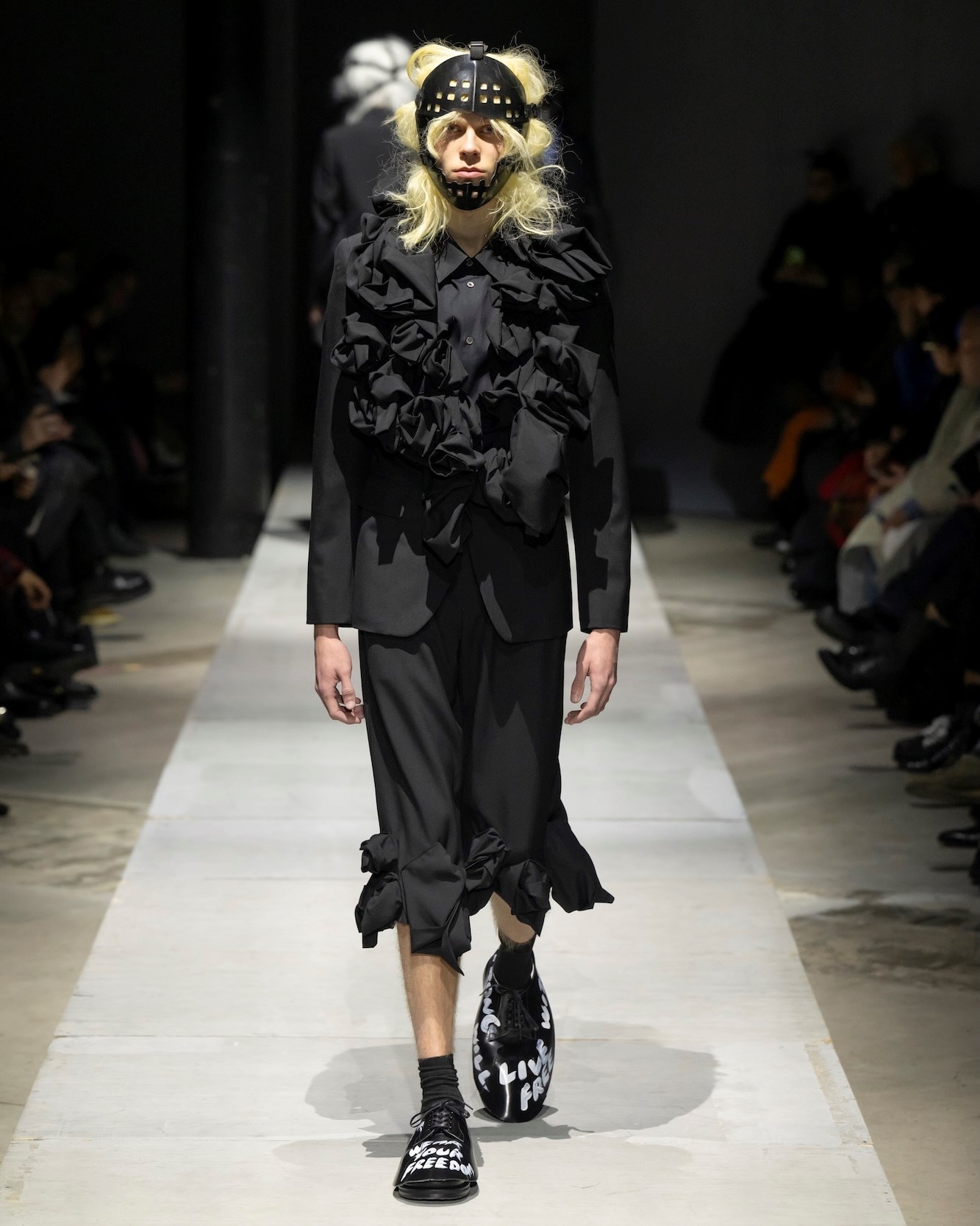
So Kawakubo reinforced her men. The most overt expression was the rigid masks by Shin Murayama, part American football helmet, part Hannibal Lecter face cage – either to repel outside forces, or muzzle the monster within. And the clothes too had a feel of self-preservation, a trench fused into an impenetrable dress with crossing buttoned panels over the chest, contrasting with the vulnerability of sliced-out panels, chinks in their sartorial armours opening on fragile lace or bared flesh. Hipbones were on show; a lump taken out of a back, as if leaving your flank wide open to attack.
Comme des Garçons Homme Plus Autumn/Winter 2026Courtesy of Comme des Garçons
Comme des Garçons Homme Plus Autumn/Winter 2026Courtesy of Comme des Garçons
These are ideas that have been resurfacing with some insistence at a handful of the most influential and meaning shows this season: Prada coats tight and buttoned-up, Rick Owens making daywear out of Kevlar, for God’s sake. But it isn’t about trendiness, rather these designers’ reactive response to the moment around them. That’s something Kawakubo has always had an intuitive sense for. Her clothes may often look unreal, but the ideas within are always an echo of our wider cultural conditions, whether wilful antidote or twisted mirror.
Clothing-wise, the collection coiled tailoring in every form, sometimes double-layered, bubbling and ruched, the masses of fabric creating impregnable carapaces around the body. Underfoot were shoes scrawled with slogans, uncharacteristically direct expressions of Kawakubo’s creative approaches: Live Free, Strong Will, Wear Your Freedom, My Energy Comes From Freedom. Were these ideas being trampled underfoot, or the foundation of her looks of resistance? They could be both.
Comme des Garçons Homme Plus Autumn/Winter 2026Courtesy of Comme des Garçons
Comme des Garçons Homme Plus Autumn/Winter 2026Courtesy of Comme des Garçons
In the end, Kawakubo got us out of our black hole – her looks came out in pure white, like the bridal gowns that will, presumably, close a few of the haute couture shows next week. They were something to truly love.