
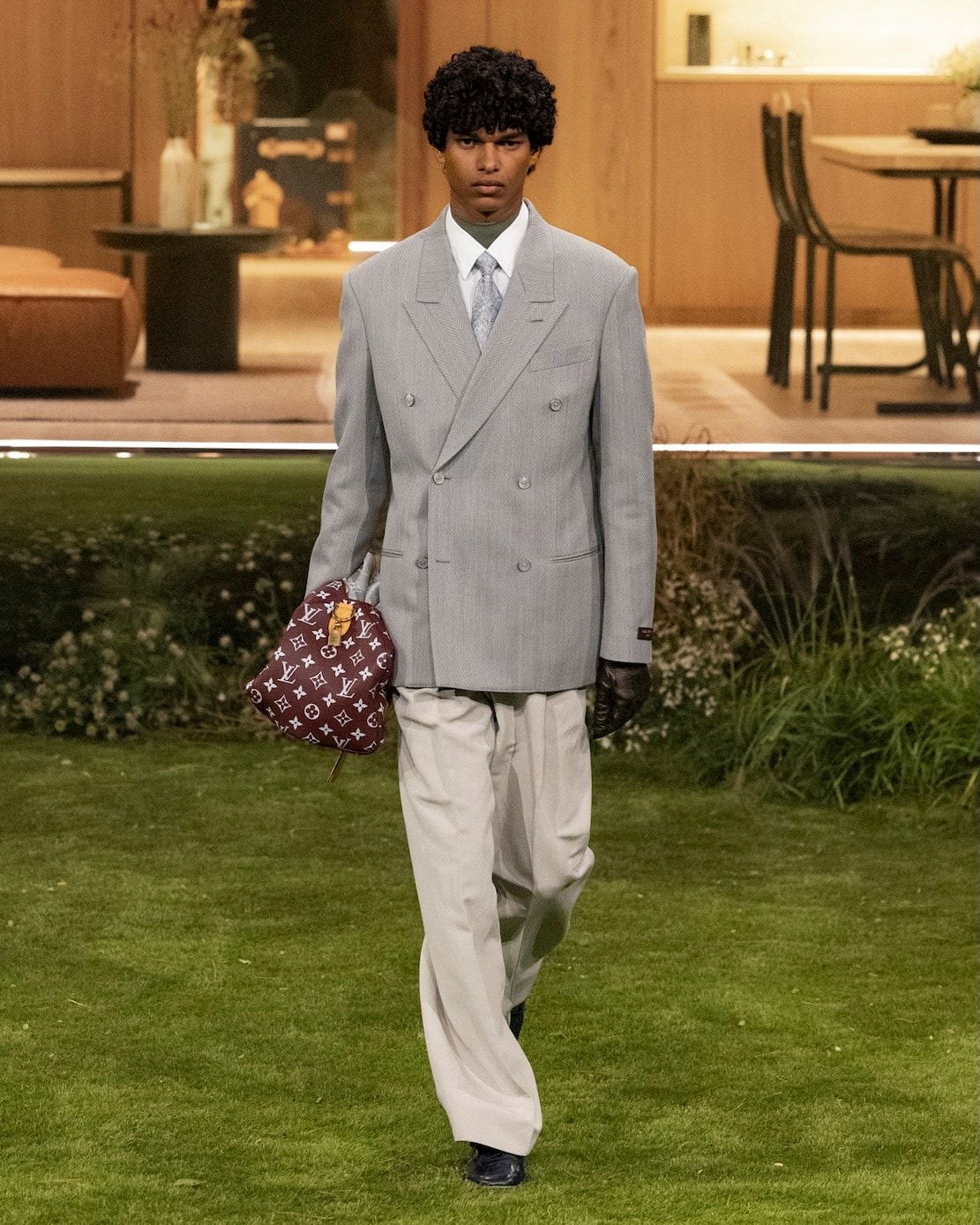
Pharrell Williams has grand designs for Louis Vuitton – and not just for your back. His Autumn/Winter 2026 show took place around an ergonomic wood and moulded glass edifice he named the Drophaus, presumably so-called because you can bung it anywhere and it’s ready to go, like a pop-up Glastonbury tent but far more glamorous (and, indeed, expensive). Louis Vuitton is about travel, so the show took place in a gargantuan wooden freight crate air-lifted into the grounds of the Fondation Louis Vuitton in the Bois de Boulogne, as if containing an especially impressive work of art, we – the people – huddled like mere polystyrene packing-nuggets.
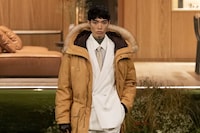
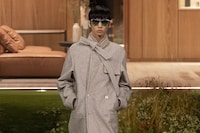
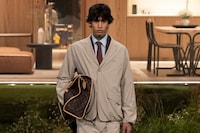
Inside our crate, however, was pretty deluxe and delightful. William’s pod-like, Le Corbusier-ean “machine for living in” sat in its own Louis Vuitton petit jardin (specially-scented by house master parfumier Jacques Cavallier Belletrud). The glass house was populated by furniture, designed by Williams too, and, of course, open-plan wardrobes full of his Vuitton clothes. What a dream house. Vuitton is one of those too – probably the most valuable luxury house on the planet. Its success gives a designer license to explore their creativity. Much of that success, frankly, can be traced to the seemingly indefatigable demand for Vuitton’s bags, in particular its Monogram, which, unless you were shot into space sometime in the past six months, you’ll realise are celebrating 130 years. That’s possibly what prompted Williams to call his show Timeless, and while ostensibly an imagining of a future, it also reimagined much of that storied house classic.
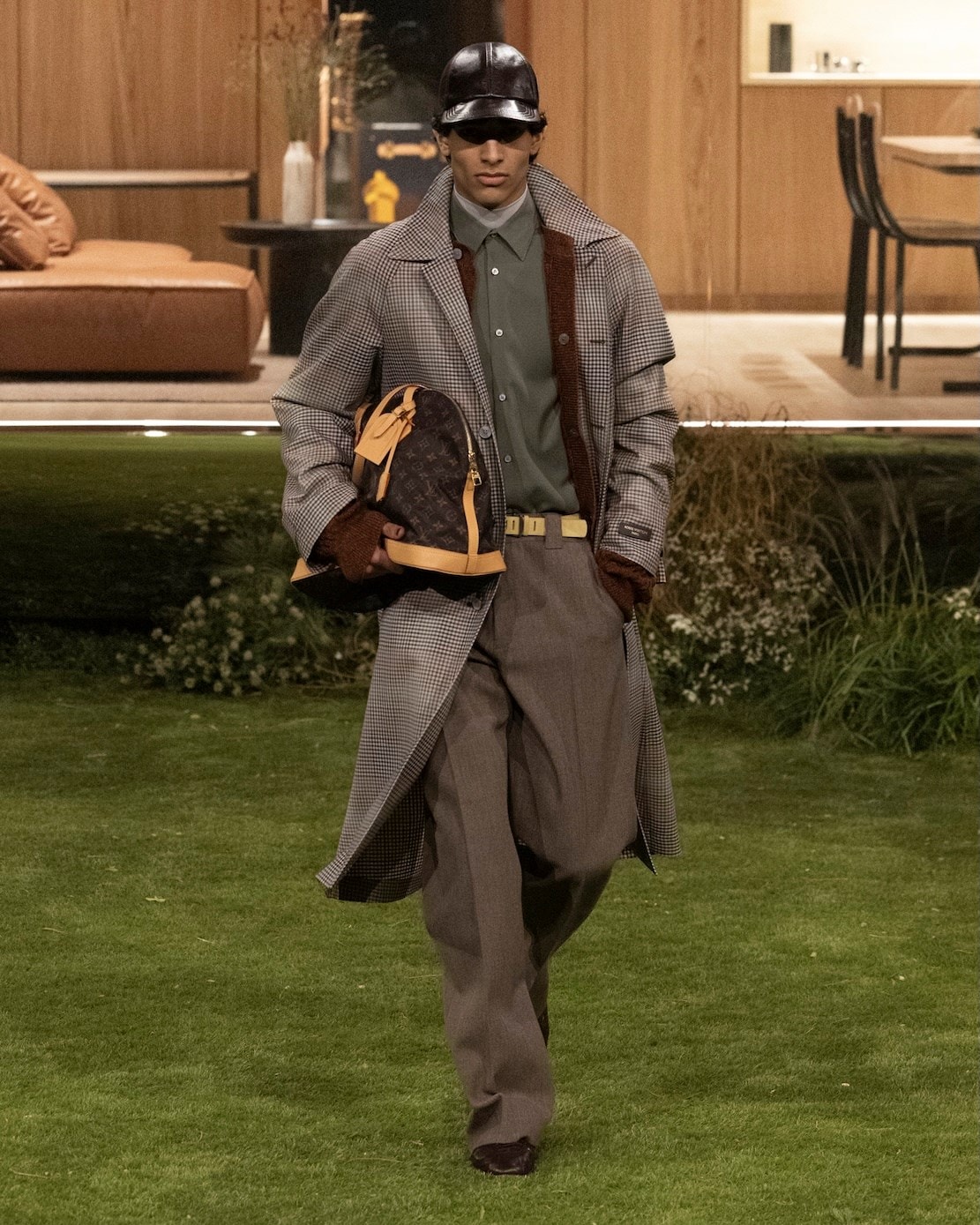
That’s a good thing. When fashion thinks too much about the future it runs the risk of shooting off into space and looking, well, alienating. Like the omnipresent Monogram, Williams’ forms here were familiar but reinvigorated through material treatments, fabrics that were actually light-reflective but resembled houndstooth or herringbone tweeds, creased and crumpled-up textiles woven with aluminium fibres, thermo-adaptive silks that also repelled water. The clothes they were fashioned into, however, resembled everyday garb rather than a sci-fi futurism – in the same way that Vuitton’s new bags, woven with silk and nylon to resist rain, were demarcated with Monogram like LV of old.


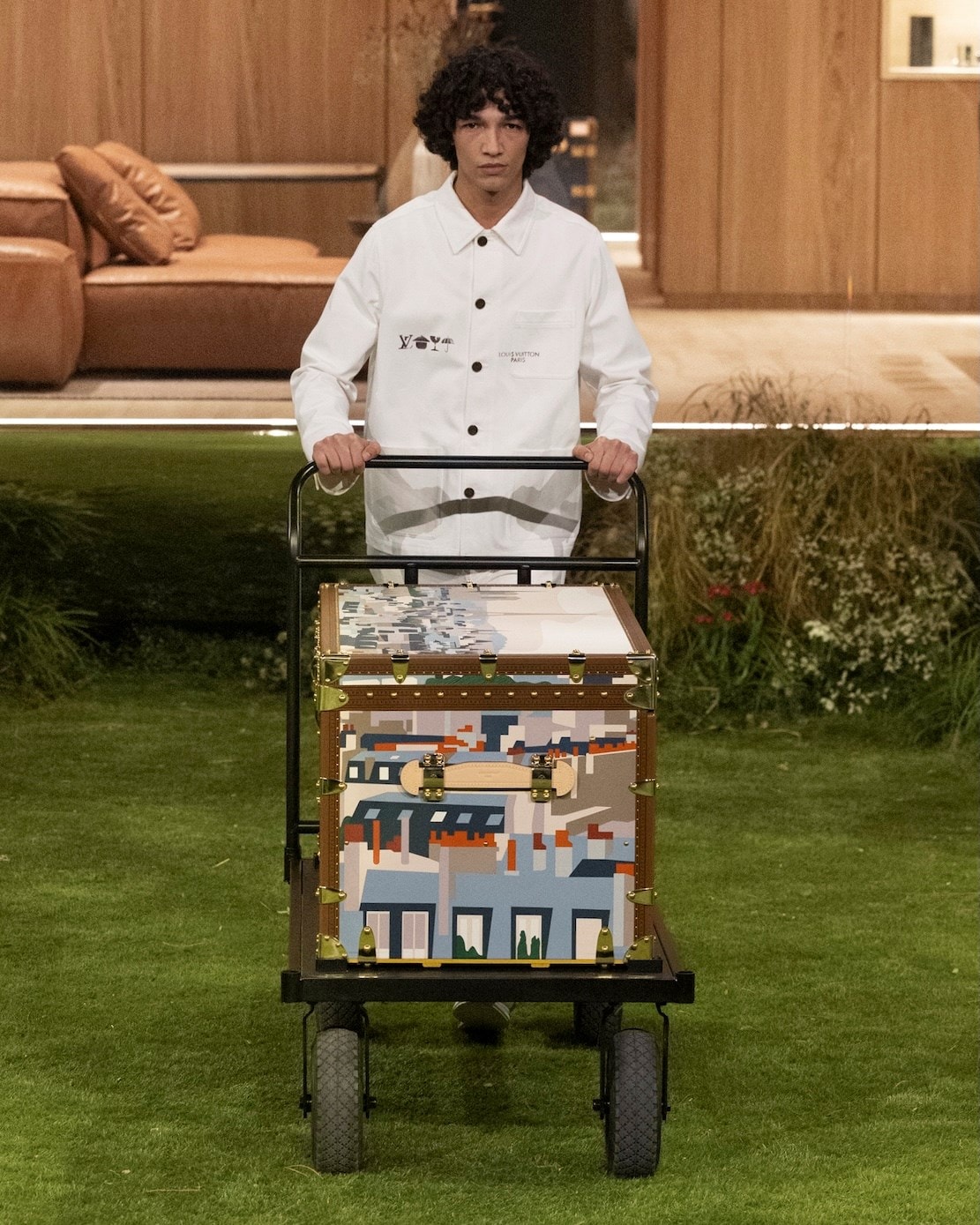
There were also a few throwbacks to the grand old days – Williams had a fetish for making Vuitton trunks, wheeled around his venues on surveys as toted emblems of the label’s superlative craftsmanship. This time, they were executed in hand-painted glass, one replicating the stained glass windows of the Vuitton family’s former home in Asnières, another couple in glass views of Paris, and a few in leather marquetry. Who travels with a trunk nowadays? No one – especially not a glass one, but these exceptional objets have a distinct appeal to modern consumers – and, indeed, will probably wind up in museums in the future. Or in homes today, as especially chic occasional tables.
Was there a timelessness to this collection? Yes – filled with crocodile and vicuña and cashmere and silk, it had an eternality to its proposition, something sitting outside of fashion. After a few debut seasons intersecting his Vuitton menswear with fashion, it seems Williams has decided to align it with luxury. It’s a canny idea. And the clothes fit. You can imagine buying and loving these for a long time – 130 years may be a stretch, but not impossible.
