
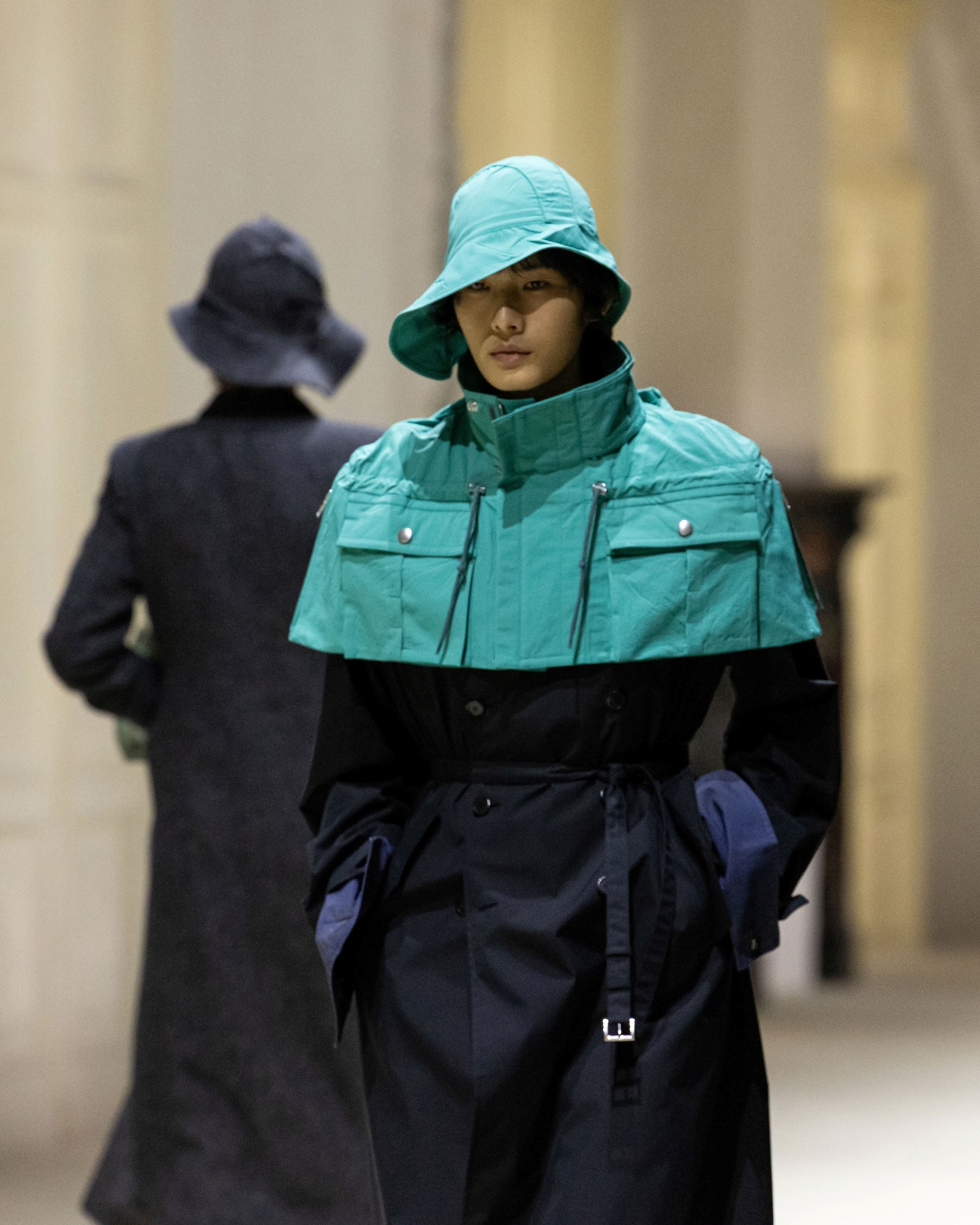
This season, the Deposito of the Fondazione Prada was built up, then stripped back. Clinging to the edges of the space were vestiges of a life lived: fireplaces, lintels, wainscoting and boiserie hanging in mid-air, as if half-a-dozen bourgeoise apartments had been blasted out. We sat within the void they created, and waited. It raised plenty of ideas around what Miuccia Prada and Raf Simons were going to show for their Autumn/Winter 2026 Prada menswear show – ideas of sifting through layers of history, grasping at details, but decontextualising and recontextualising them, to create something boldly new.
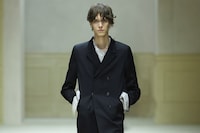
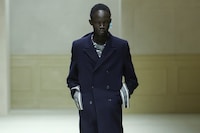
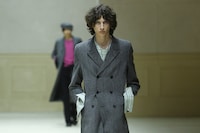
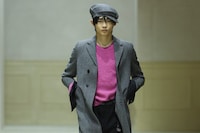
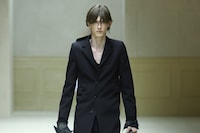
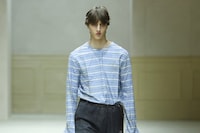
That’s in retrospect, of course, having seen clothes that seemed to shift between eras, reminders and remainders of the past caught against a body in motion – a hat pressed to a shoulder, cuffs sliding out of sleeves, a jewelled cufflink displaced to an ear – in a pin-thin silhouette that felt dynamically new. In actual fact, there was plenty of antecedent to its shape – the lean lines of the 1790s, the attenuated fin de siècle shapes of Egon Schiele in the 1910s, the paucity of the silhouettes of the 1930s. Anything to connect those disparate time periods? Political revolution, global economic upheavals, looming war. Sound familiar?
“Uncomfortable is the perfect word, for me, for the psychology of this moment in time,” Miuccia Prada said, connecting the back-then with the right-now. “How can we imagine the future, in this moment of extreme change? This collection is a search for beauty, for elegance and meaning.” They titled their show not Past and Present but, rather, Before and Next – glancing back, in order to look beyond our today. “We questioned what should remain, from the past – and what can you build, from what you learn?” said Raf Simons. “In an uncertain moment, I like when someone can make ideas very precise and clear – this is an idea I find reassuring, comforting.”

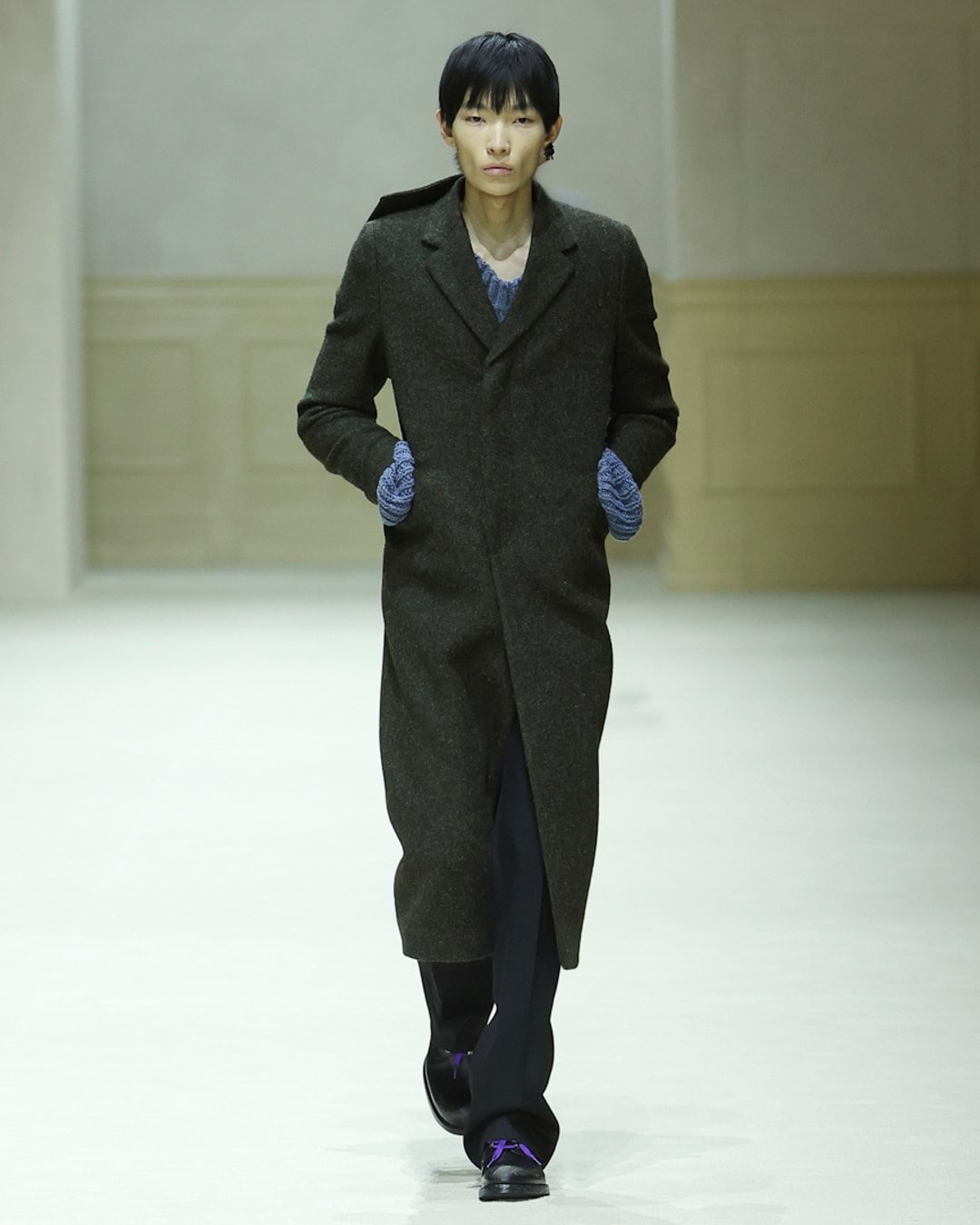

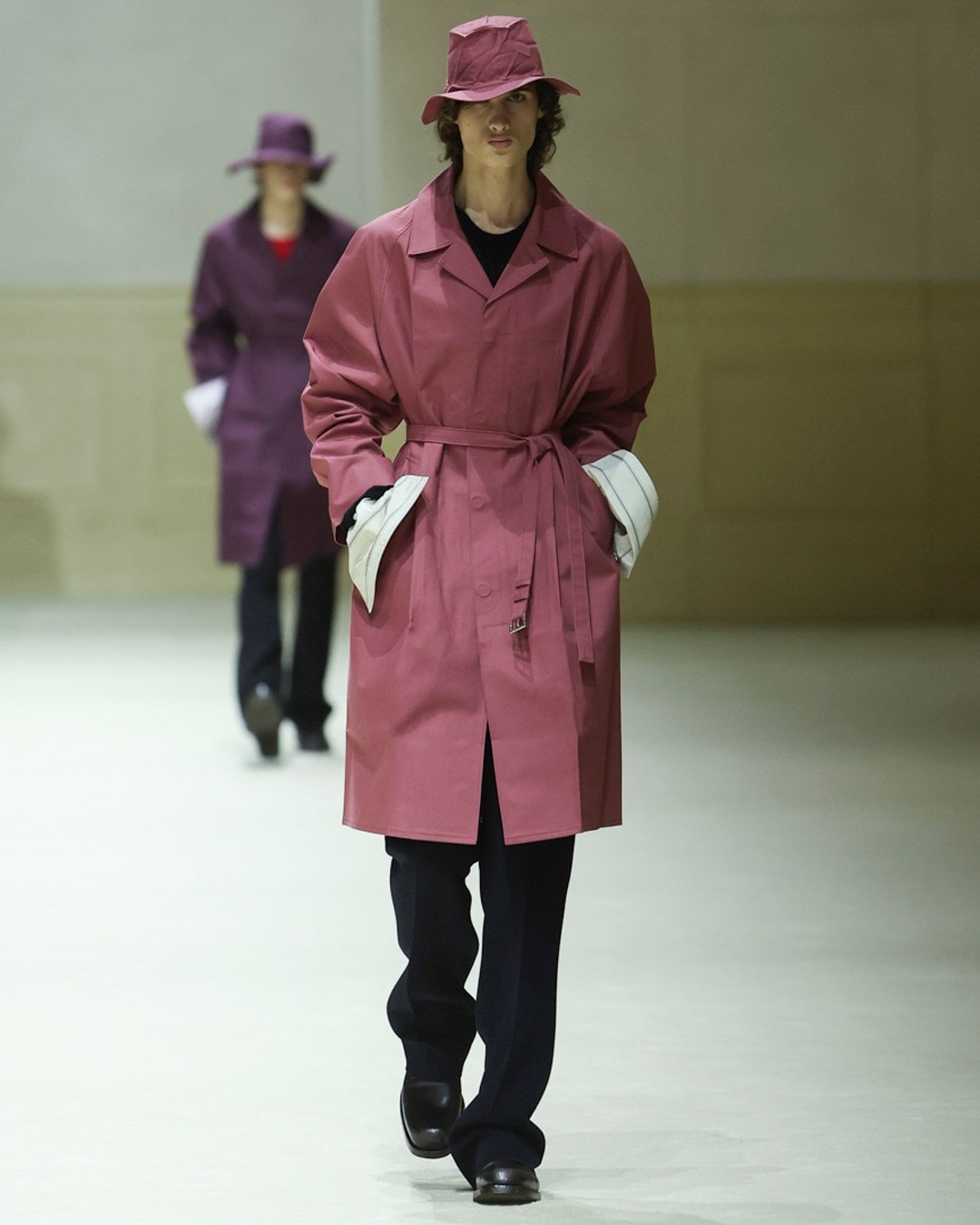
The precision came in that silhouette, of course – tugged in at the shoulders, tight enough to show the swell of an arm at the head of the sleeve, shoulder-blades rippling under narrow jackets and coats as the models shifted. Like the show space, all their structure was pulled out and radically reduced. They were about as far from athleisure as it’s imaginable to be – yet there’s a psychological comfort in swaddling yourself tight, too. A couple were cut in glove-fine leather, unlined and truly like a second skin, so supple you could see the cable of the knits beneath. Meanwhile, contrary to popular online belief immediately prior, there were plenty of wider fits, in roomy car-coats, belted jackets reminiscent of vintage skiwear, and down padding. Interrupting the flow of the show, they served to disrupt, useful tools to ensure your eyes never quite got used to those Slenderman lines. Each time they re-emerged, you felt a jolt.
That said, the overriding impression of these clothes was, as Miuccia Prada stated, their elegance. “You need attention, work, seriousness, culture, care,” she said – which resulted in all that tailoring, paired with shirts that were, paradoxically, shorn of collars and treated like T-shirts. There was romance, too, when those hats were slanted rakishly across foreheads, those trailing cuffs marked with stains and streaks like purity marred by the passing of time.
The fascination with history, for both Prada and Simons, has never been about retrospective reference, superficial styling. It’s about human experience, about lives. That’s why Miuccia Prada wears antique jewellery, and where Simons’ references to youth cults and music come from. Both have an emotional resonance. And here, after a long absence, those nods to the past were transformed, reengineered to be new.
Archaeology was a fascinating notion, a word Simons threw out backstage. It reshaped your perception of that show décor too, not as evidence of destruction but rather discovery, or curiosity – uncovering treasures. A positive. It was there in the clothes too, provoking a fascination with what may sit under their taut surfaces. Inviting investigation, instigating thought. And of course, what better way to get under them than to get inside them? This is what clothes are all about, after all.
Or rather, as Simons simply said: “My hope and also my belief is that people can like what we create.”
