
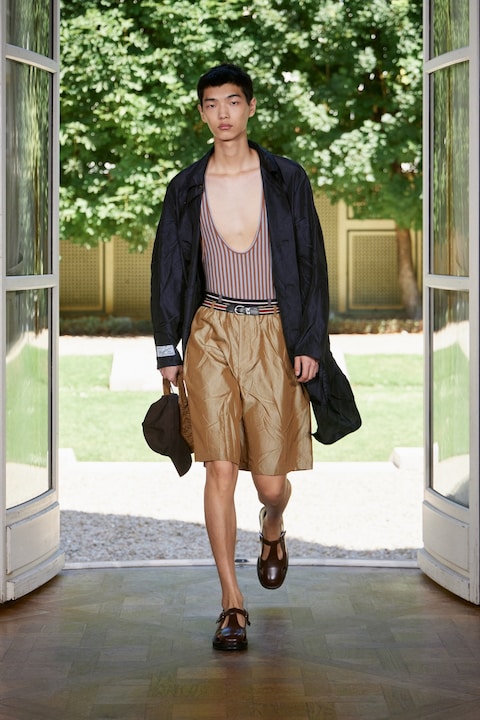
As Wooyoungmi opens a new flagship in Seoul, Madame Woo talks about masculinity, androgyny and setting an aesthetic standard for young Korean men today
On a bright October afternoon in Seoul’s Gwangjin district, Madame Woo – the chief executive of the Solid Corporation, a fashion house that owns the two labels Solid Homme and Wooyoungmi – is arriving at a temple. Tucked away in a tranquil pine forest on Achasan Mountain, just north of the Han River, this is one of Seoul’s most beautiful Buddhist worship sites, the abundant nature of the surrounding woods offering a peaceful enclave away from the hustle and bustle of city life in Seoul. Located a short drive from the brand’s headquarters, it is said that Madame Woo chose the office’s location thanks to its proximity to the temple. She is a devout Buddhist, and worships there every day.
This element of spirituality crops up again at the opening of Wooyoungmi’s new Seoul flagship store in Itaewon, a neighbourhood known for its dining and nightlife scene, and a growing number of boutiques. The event kicks off with a procession led by a small group of traditional male Korean dancers chanting, dancing and beating drums, leading guests to the top floor for a gosa, a traditional Korean ritual to bring good fortune to new ventures. Various guests pay their respects, bowing at a central altar piled high with symbolic offerings: fresh fruits, rice cakes (tteok), and a boiled pig’s head with money tucked neatly into its snout.

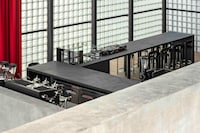
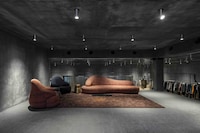

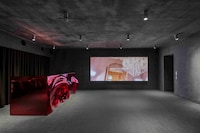
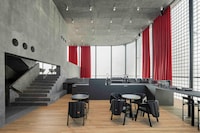
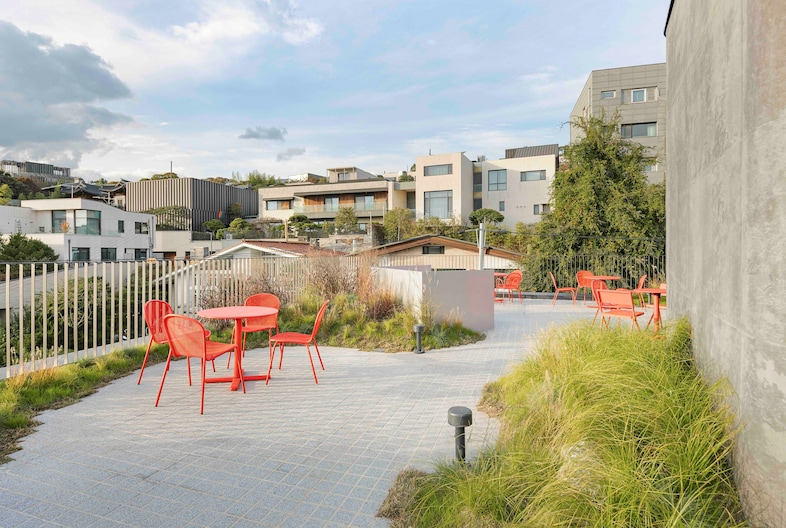
Spread across four floors, this striking concrete structure – with wrap-around, curved walls of glass brick – is designed by the Swiss architecture firm Stocker Lee Architetti, housing Wooyoungmi’s menswear, womenswear, a cafe on the top floor (elevated retail experiences in Seoul often feature in-store cafes), and a landscaped roof garden with sweeping views of the surrounding neighbourhood.
There are also large-scale bodily pieces of furniture designed by Madame Woo in collaboration with artist Dongwook Choi, including a striking red shopping till carved in the shape of an ear, highlighting the “need to listen to others“. Red is an important colour to Madame Woo, used throughout store interiors and packaging, and on the exterior of the brand’s six storey office, which is wrapped in red louvre cladding. Her fixation on the colour stems from the traditional Korean fortune-telling system of saju, a method for analysing a person’s life path using their exact birth date and time, relating to the elements (wood, fire, earth, metal and water) and the zodiac. “I have always felt like I needed more fire in my life,” says Madame Woo. “That’s why I chose the colour red.”

The Korean Wave (Hallyu)
Korean culture is having an unprecedented moment in the global spotlight. Thanks to the stratospheric success of Netflix’s hit show Squid Game, Bong Joon Ho’s Oscar-winning class fable, Parasite, and the rise of K-pop bands like BTS and Blackpink, the Korean Wave (Hallyu) is ubiquitous. Fashion, says Madame Woo, is a big part of South Korea’s cultural appeal. “Korean men are known to be very stylish, and perhaps our brands have contributed to that,” she says. “People have said that Solid Homme and Wooyoungmi have set an aesthetic standard for young Korean men.”
Born in Seoul to an architect father and an art and piano teacher mother, Madame Woo studied fashion design at Sung Kyun Kwan University in Seoul. She launched her first menswear label, Solid Homme, in 1998, followed by her namesake brand Wooyoungmi in 2002. The two brands have very different sensibilities; Solid Homme offers classic, tailored menswear, while Wooyoungmi is more androgynous and experimental. “When I launched Solid Homme, I was envisioning an ideal man from the perspective of the women of those times – a superman who would protect his lady,” says Madame Woo. “Having gotten older, I have a broader understanding of men and their vulnerabilities. Sometimes they cry when they’re sad, and they want pretty things, just like women. The Wooyoungmi man has a freer spirit – he’s more bohemian, androgynous, romantic and elegant. It’s a very different masculinity that I’ve created.”
Madame Woo’s own personal style is androgynous, with her hair cropped boyishly short. When we meet, she cuts a striking figure in sunglasses, maroon trousers printed with David Bowie’s face – the ultimate androgynous style icon – heeled leather Camper loafers and a grey overcoat. “Although I’m biologically a woman, I’m sort of in between the two genders,” she explains. “There’s this genderless look that I aspire to.” A broader sense of liminality also translates into her designs. “From a Western perspective, I’m not so Western. From an Eastern perspective, I’m not so Eastern. I am in between classic and very modern. And that’s where I find my identity, in between places.”

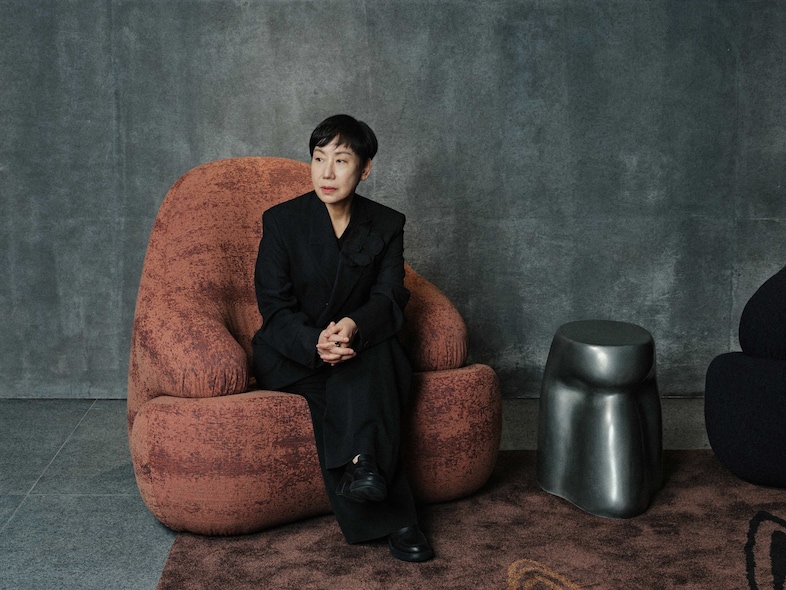
Madame Woo’s main inspiration for Wooyoungmi was her father, a man she has mixed feelings about. “Although he did not really take care of his family, he was very stylish and ahead of his time,” she recalls. “As a child, sometimes I hated him, but I learned a lot from his lifestyle. When I was working on the design for Wooyoungmi, I realised I was thinking of my father all along.”
In 2003, Wooyoungmi became the first Korean label to show at Paris Fashion Week, putting Korean fashion on the global stage (the brand has two physical stores there). “When I entered the Parisian market, I felt like I was on a test ground,” says Madame Woo. “It served as a stick that would push me and upgrade my designs.” As she has gotten older, the designer has learned to see her Korean heritage as a strength, not a weakness. “As a young designer, I had this sense of inferiority to Western design. But over time, with the experience that I’ve accumulated, I’ve been able to overcome that. And now I feel like the Korean DNA in me is emerging and really exuding itself.”
