
This story is taken from the Autumn/Winter 2025 issue of AnOther Magazine:
The ever resourceful and wildly resilient designers who call London home are finding new ways to do things amid a looming global financial crisis. At London Fashion Week Autumn/Winter 2025, which took place across a wind-swept long weekend back in February [2025], a number of them decided to sit out the conventional show format, save the extensive budget it takes to send a collection down the runway and instead invite the international press into their studios and showrooms.
Among them was Feben, who, like her label, simply goes by that mononym. The rising designer took over an enclave of her PR agency’s central London office, where editors had the opportunity to get up close and personal with the clothes, running the fabrics through their fingers and dissecting the construction methods.






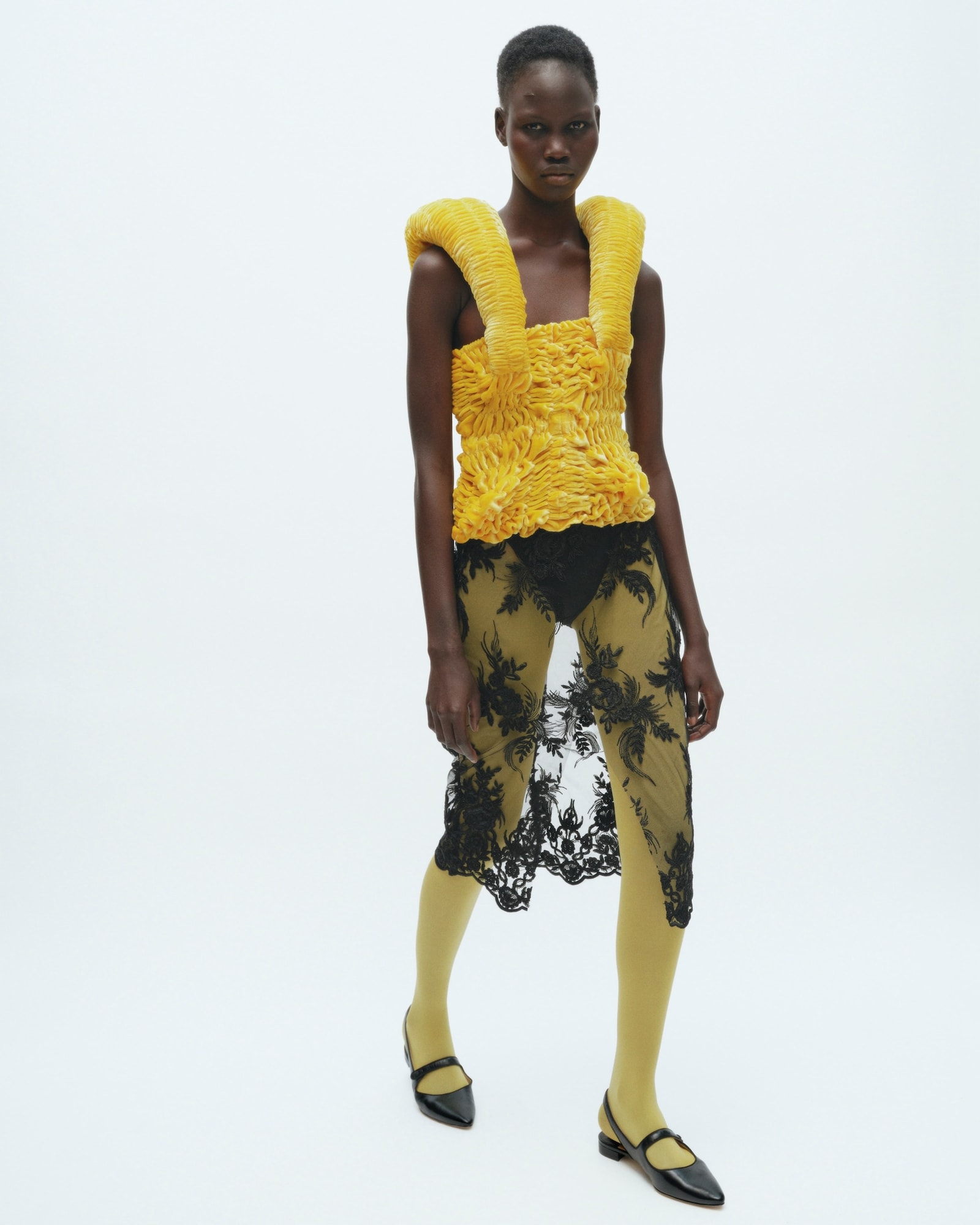
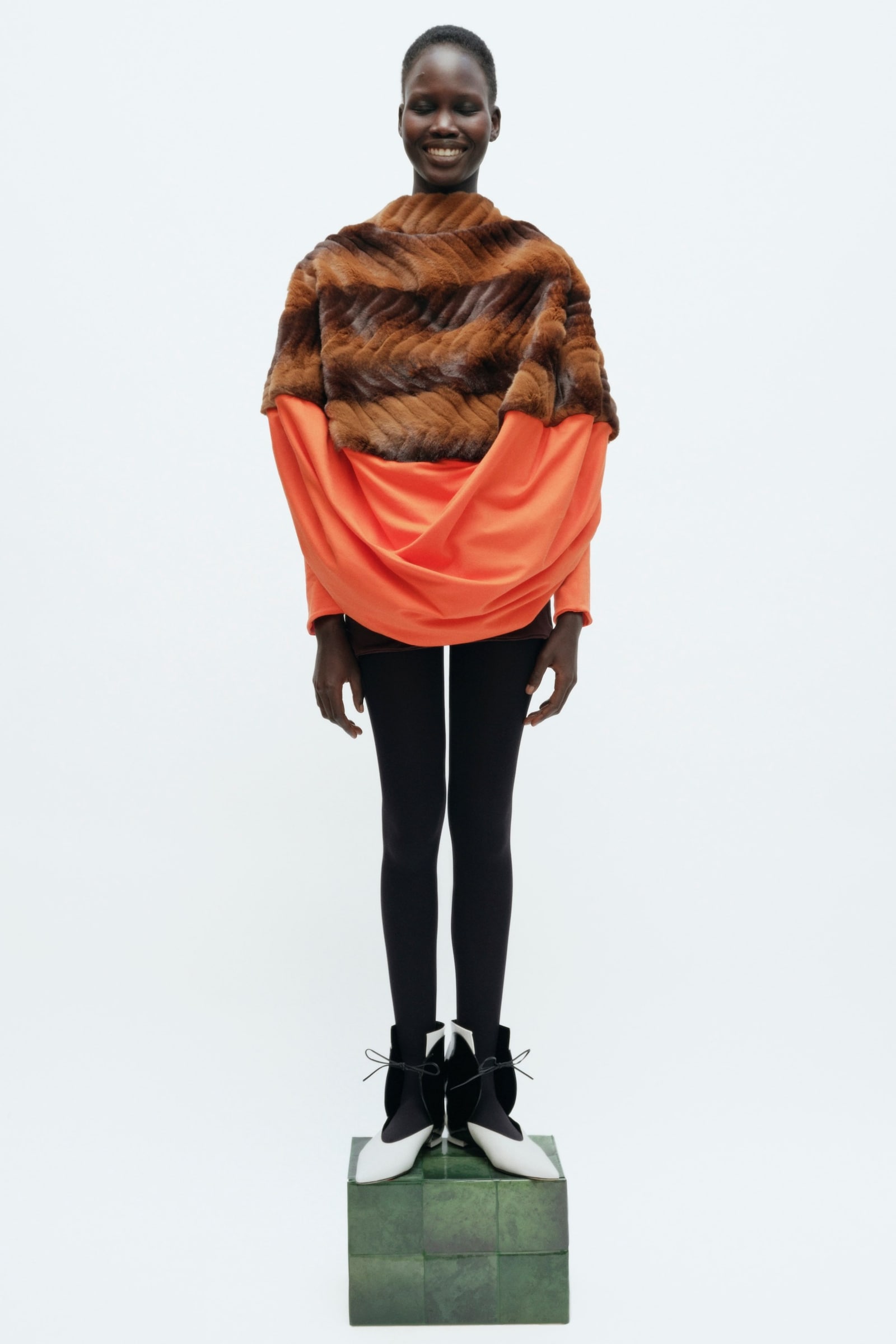
It was a perfect season to do things this way: the latest collection was more dynamic than ever, with Feben crafting garments that can be modified to the wearer’s liking – whether they be trousers worn low on the hip or waist-high, or hand-painted tops with interchangeable straps and adaptable sleeves. Thus she opened her world up to new fans, creating something for just about everyone without diluting her vision.
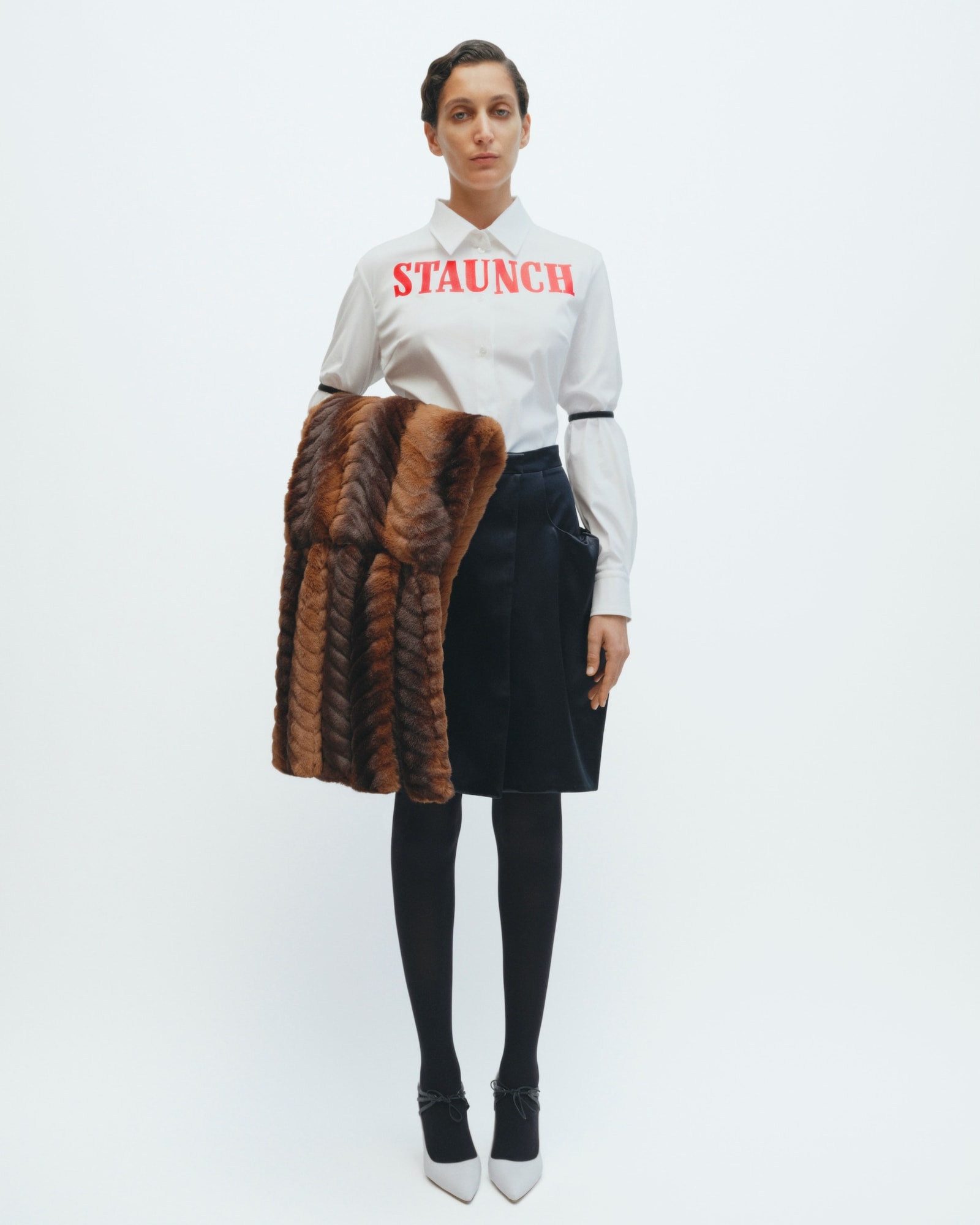
The whole thing appeared under the name Staunch, a word that struck and stuck with Feben through her frequent rewatches of Albert and David Maysles’ 1975 masterpiece, Grey Gardens. For the uninitiated, the documentary chronicles the eccentric lives of Edie Bouvier Beale and her mother, Edith – or Little Edie and Big Edie – who were once part of New York’s high society but in their later years ran out of money and lived out their days in a decaying, raccoon-infested house on Long Island. Little Edie is particularly resourceful with her fashions, teaming moth-eaten fur coats that whisper of her formerly glamorous life with bits and pieces found around the home – in one scene she whips a skirt around her neck and shows off her new “cape” for the camera.


“This is what’s most important to me and what I do, being able to give back” – Feben
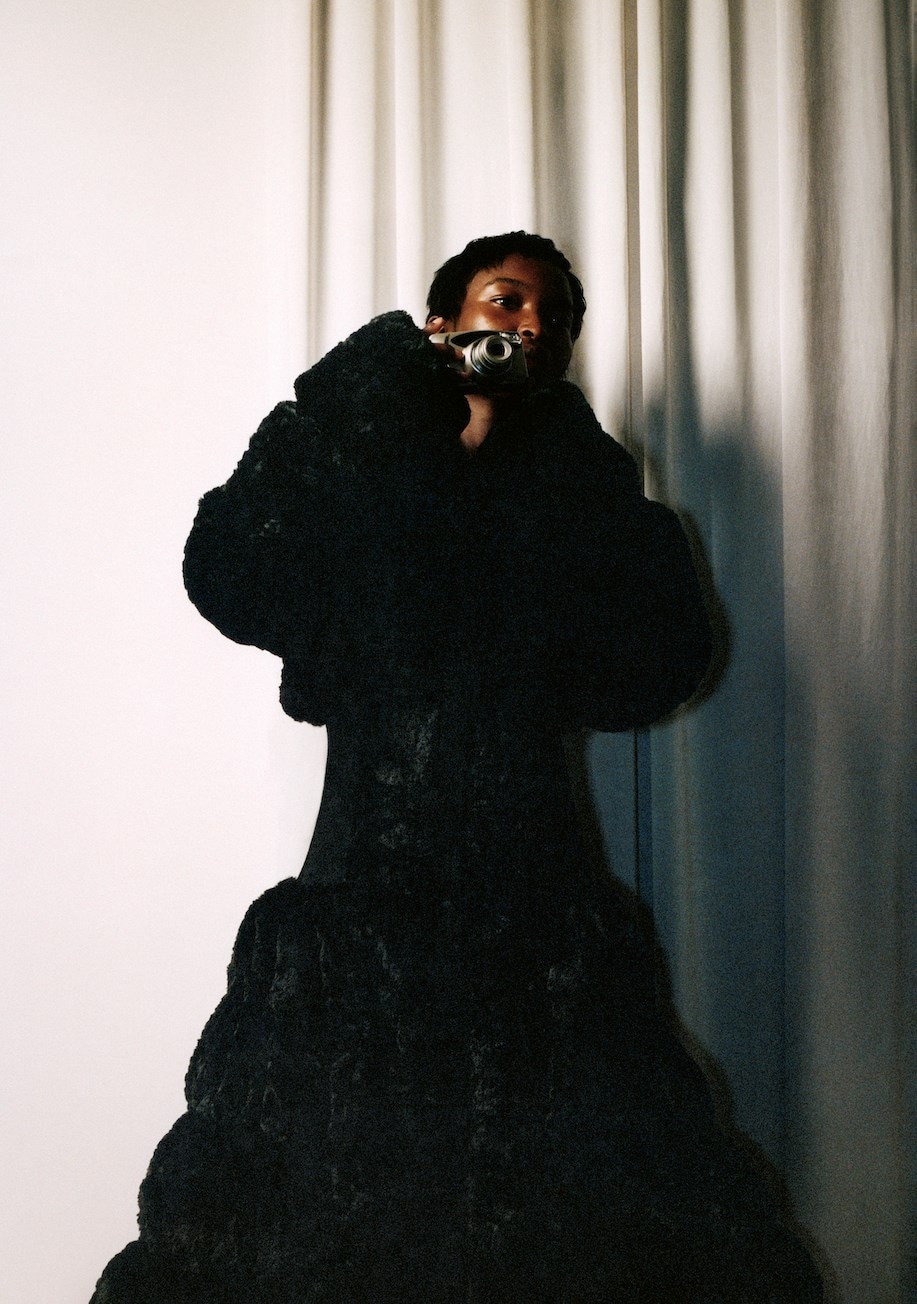
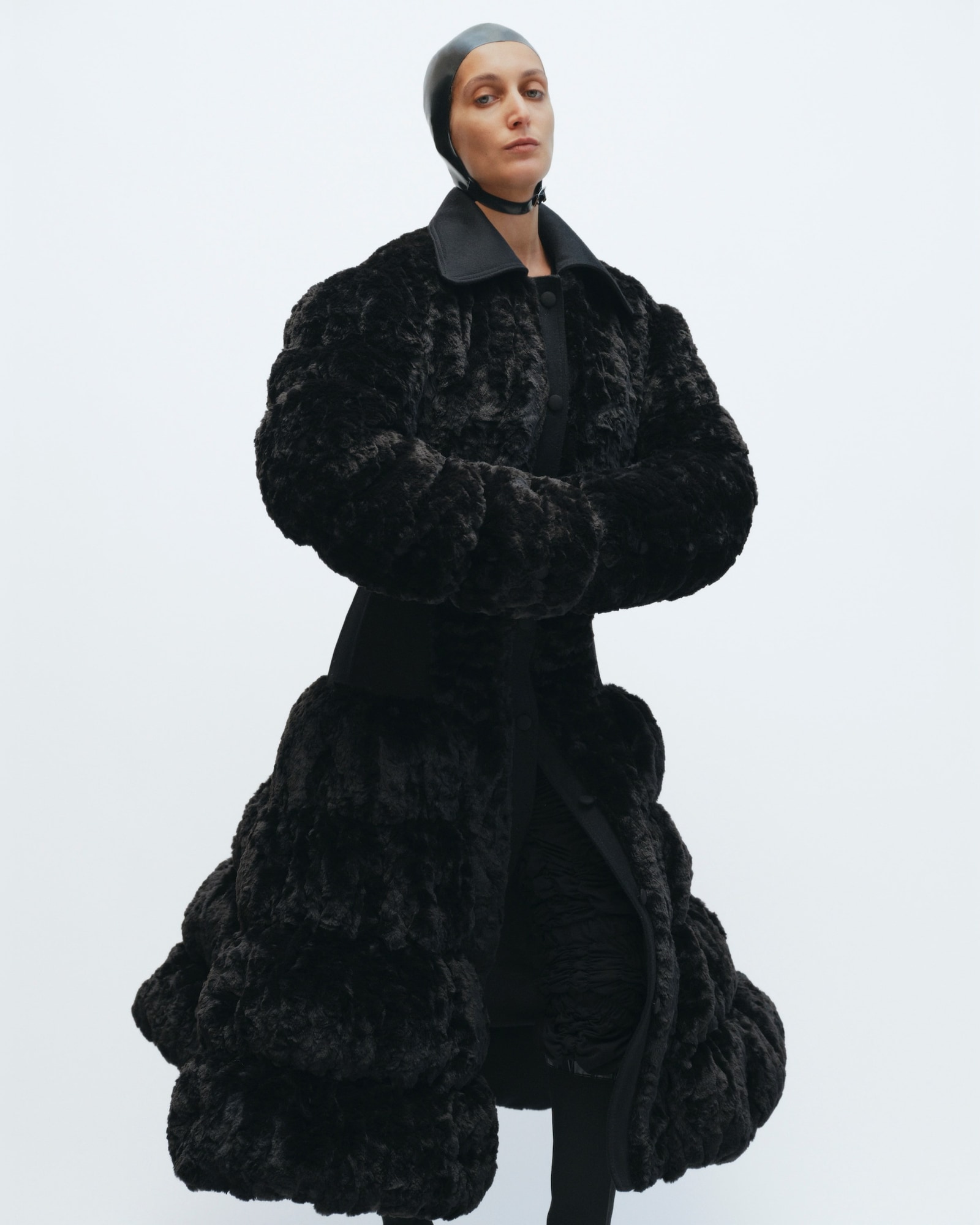
Perhaps most literally within Feben’s collection, the Grey Gardens influence comes through in a standout faux-fur coat. The statement style recalls Little Edie’s outlandish silhouettes, its graduated tiers hitting the floor and trailing out behind the wearer in a dramatic fashion. It’s a powerful shape – not for shrinking violets.
“I wanted to recreate that iconic cover image from the film but give it my own take,” Feben, 35, explains. “I worked with faux fur, for obvious reasons, and we created more texture by adding volume in some areas and gathering it up in others. The waist is corseted and crafted from wool. I think it gives it a cleaner, more contemporary feel, but I love how in-your-face it still is.” The coat is further evidence of Feben’s masterful use of texture. Her classic ruched Twist style is now a signature: achieved using a shirred, elastic thread, it appears throughout her growing archive.
Despite Staunch’s playful nature, it’s not without its complexities. Little Edie’s resilience and outlook on life, despite the hardships she faced, also resonated with Feben. “She’s so radical in her own way and so steadfast in her loyalty to her mother,” she says. “It made me think about my relationship with my own mum and those difficult feelings of being trapped.” It’s the kind of thing most teenagers and young adults go through, but for Feben there was an additional element of displacement.


Her mother fled Ethiopia in the early 1990s, around the time the civil war ended, and the first two years of Feben’s life were spent in a refugee camp in North Korea before she and her mother relocated to Sweden, where she grew up. “My mum didn’t speak the language, so expressed herself through clothes,” Feben recalls, “and I got into fashion as a way to fit in. It wasn’t necessarily about being fashionable. I just wanted the things my friends had that I could never afford.”
She eventually left Sweden behind for a brief stint in Sydney (“I was young and in love”), before London called. On arrival, she enrolled on Central Saint Martins’ MA course with the support of an Isabella Blow scholarship and began developing the textures and silhouettes for which she’s now known. “I came here with something like 70 quid and I’m still here 15 years later,” she says. “It’s not easy to run a brand right now, but I take each day as it comes. I think I’d go insane otherwise.”
After graduating in 2020, Feben first worked on a presentation for the London Fashion Week schedule with the stylist and former Dazed editor-in-chief IB Kamara and later joined the line-up with a series of catwalk shows. In a landscape largely devoid of models beyond sample size, Feben was commended for her casting. Showing her designs on a range of different body shapes remains important to her.
“If you’re trying to be a good designer, you should be able to design for different body types” – Feben
“If you’re trying to be a good designer, you should be able to design for different body types,” she says. “What I do find hard, though, is how emerging brands are being compared to big luxury houses and expected to do the heavy lifting on things like that. We don’t have the same access or resources behind us. But it’s important to me to try.”
Feben has her tactics for staying sane and grounded in her practice. As with many other emerging designers, collaborations with sportswear brands allow her the space to continue experimenting with her ready-to-wear line and the way she presents her clothes to the world. A life-drawing class, held at a church in Dalston in late 2024, is emblematic of this: for the event, which took place during a grey December afternoon, Feben invited members of her community to sketch recent pieces from her collections while candles flickered, classical music played softly and Ethiopian coffee was passed around. It was a unique and intimate way to consider the clothes and textures that underpin her work, and mirrored the kind of warmth that comes with stepping into her pieces. In the same way guests considered the curves of the life models’ bodies when putting charcoal to paper, Feben plays close attention to what women want from what they wear.
That attention extends to her support for the east London-based non-profit Sistah Space (with which, along with Puma, the life drawing workshop was organised in partnership). From the very off, Feben has donated time and money to the grassroots charity and offered it her growing platform to highlight its work. Sistah Space is dedicated to offering women of African and Caribbean heritage help in the face of domestic violence, and many of its team members have been present at Feben’s runway shows across the years. “This is what’s most important to me and what I do,” she says, “being able to give back.”
This story features in the Autumn/Winter 2025 issue of AnOther Magazine, which is on sale now.
