
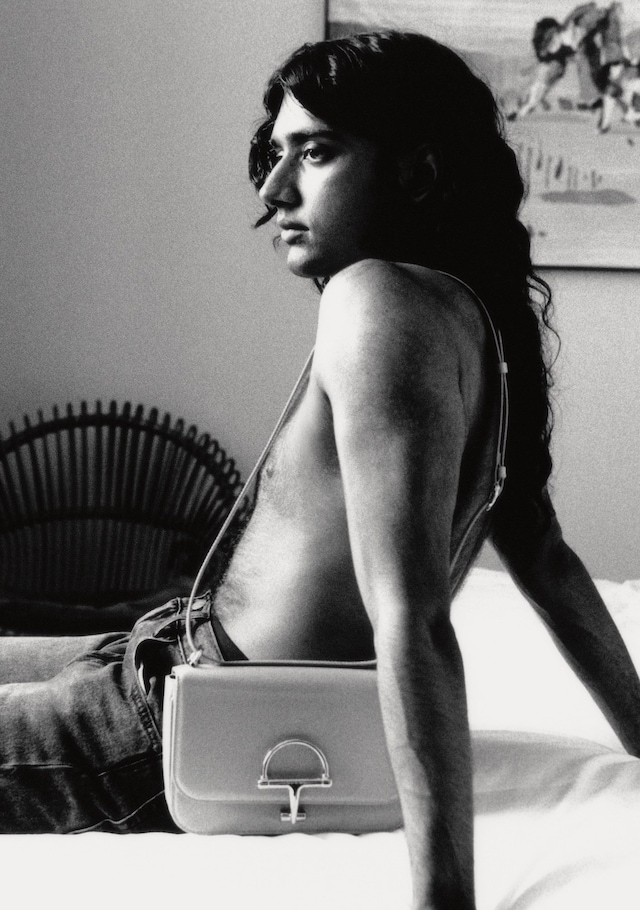
First emerging on a soft leather loafer in 1953, the horsebit detail remains central at Gucci today. For his fresh gallop at the house, Demna translated that detail to the pockets of jeans, too
Gucci first put a horsebit – the metal mullen that chomps into a horse’s mouth to allow the rider to control its direction – on a soft leather loafer in 1953. It was, by then, a non-essential bit of tack, a nod to an equestrian tradition in leather making that allied the brand with European aristocracy, even if everyone was driving cars by then. That was also the first year Gucci expanded outside of Italy, opening a store in New York City and beginning to export an idea of innate Italianness, itself central to new creative director Demna’s fresh gallop at Gucci, unveiled last month with a collection dedicated to the notion of La Famiglia. So, equestrianism and Italianism became quickly knotted up in Gucci’s popular identity, the horsebit first migrating to a bag in 1955 (for his unofficial debut collection, Demna translated that detail to jeans pockets, too). A remix of those well-trod ideas, the Gucci Siena bag – named after the city in Tuscany, a region synonymous with leathercraft and the province where Gucci first opened shop in 1921 – the bag sports a blown-up scale half-horsebit clasp, which was first introduced in the 1970s. Here, the practical becomes decorative, the utilitarian metal clasp resembling jewellery for the bag. A new addition to the Gucci family, indeed.
The Gucci Siena small shoulder bag comes in ivory, black, light grey, Rosso Ancora and green leather and is available now.
