
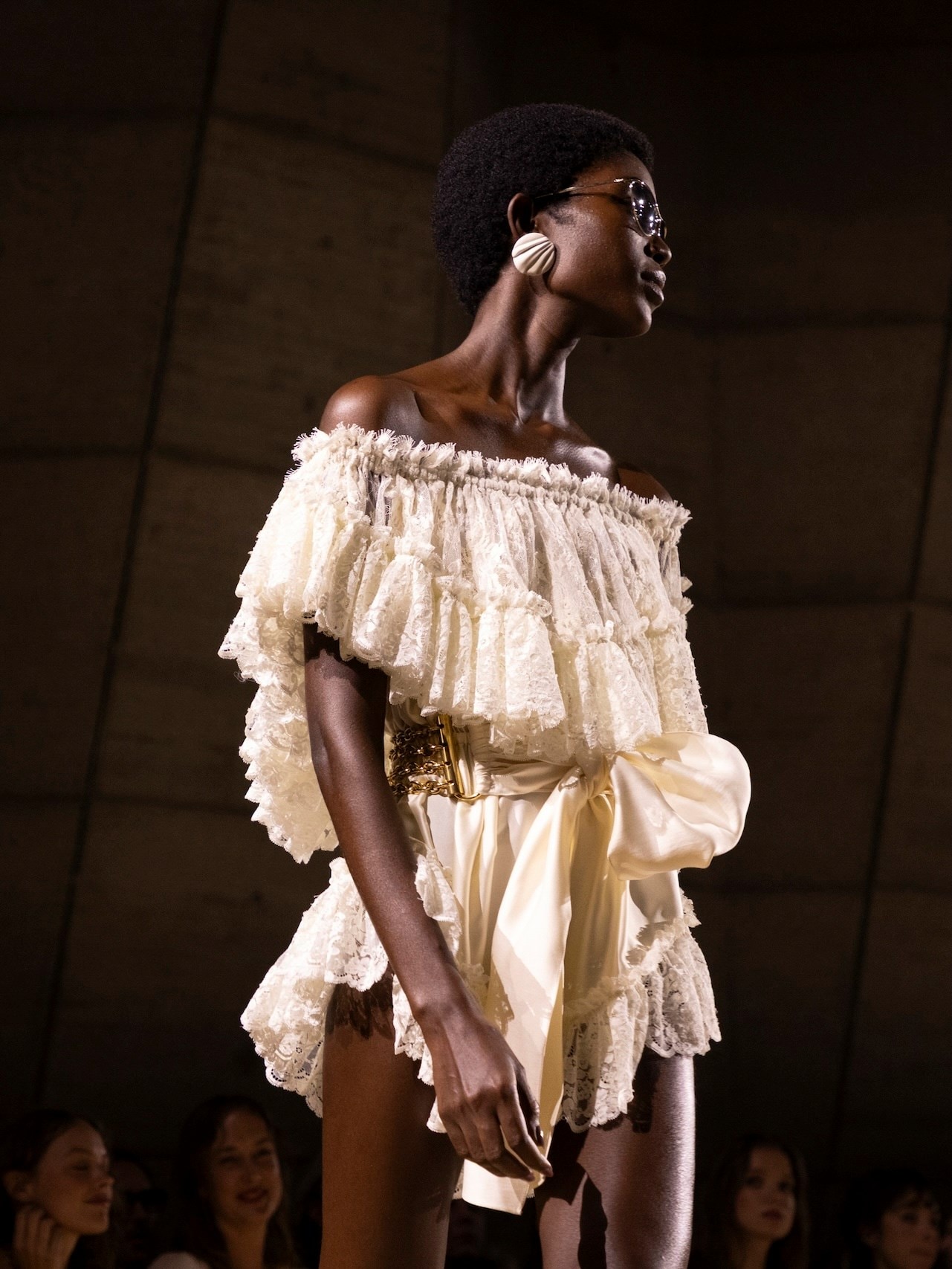
There’s something about couture that’s been bubbling around this Spring/Summer 2026 season. Perhaps it’s a return to elegance – a word first used by Miuccia Prada and Raf Simons at their Prada show, that seems to have only gained relevance and resonance as the season progressed, a season of histories made and echoes, a season of rich fabrics, complex shapes – and opera gloves, lots of those. Plus, there is of course a slew of couture houses being revamped and revived, with much ado about their backgrounds. It’s inevitably in the air.
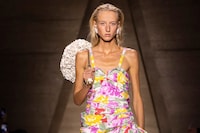
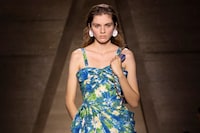
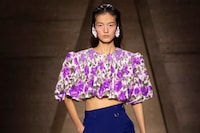
Chloé, however, is the rare Parisian fashion house without a couture heritage – it was established as “luxury prêt-à-porter” set up in a maid's room above the founder Gaby Aghion’s Parisian apartment, about as far away from a couture salon as you could be. But, with those cultural headwinds, Chemena Kamali decided to contradict Chloé, just a little, and fill her collection with riffs on and references to the sphere of couture – “what the idea of couture could mean in the Chloé context,” she said. “A paradox.”
Kamali referenced couture lightly, playfully – very much in the Chloé tradition, twisting “something that is not part of its core DNA” to give it a Chloé handwriting. It wasn’t full out pastiche, but there was a sense of wit in the way Kamali combined different pieces and reference points, redrawing precious brocades as scribbly prints, say, and splashing them over cotton, draped around the body like precious taffeta normally would be. They felt like a pretty big shift.

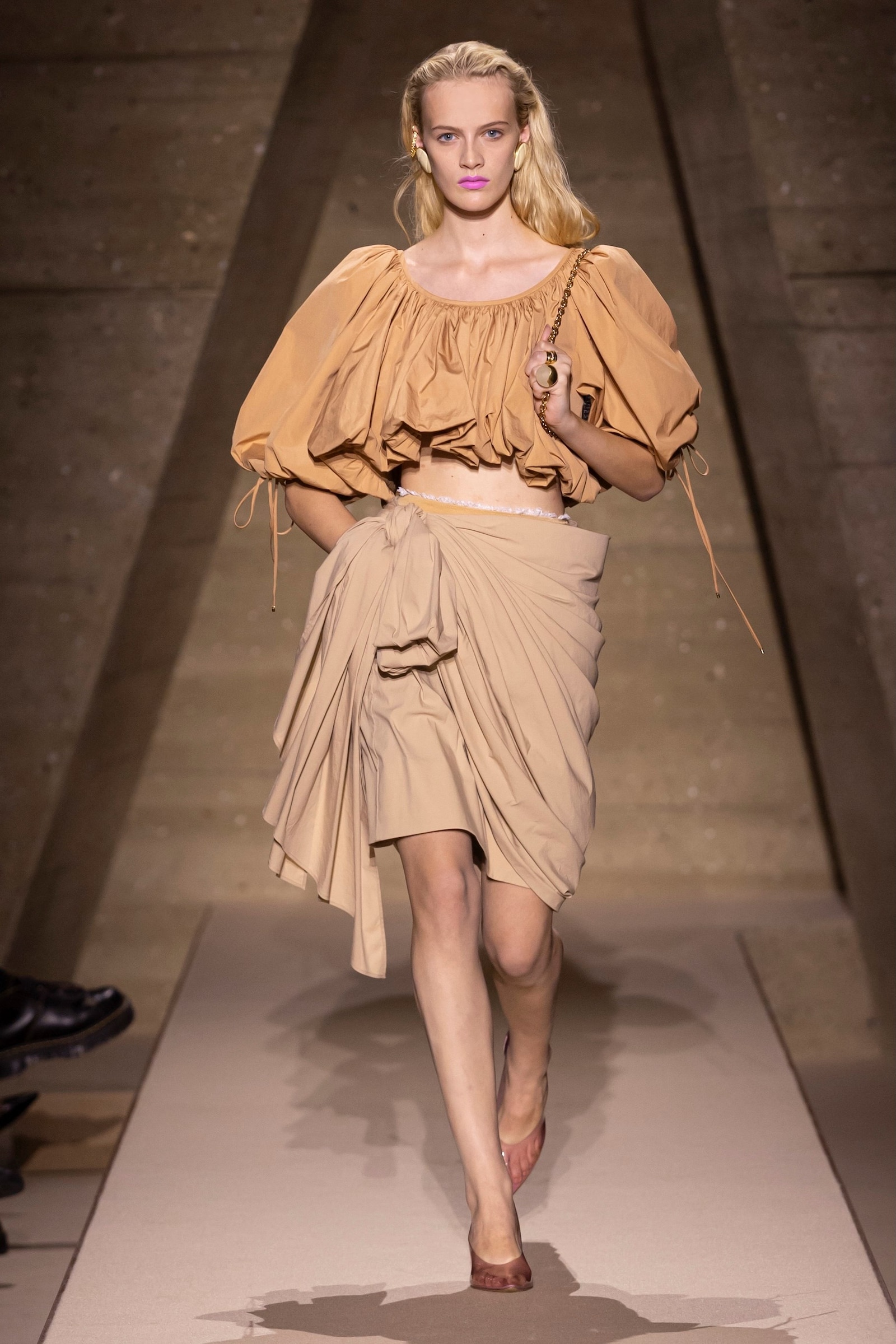

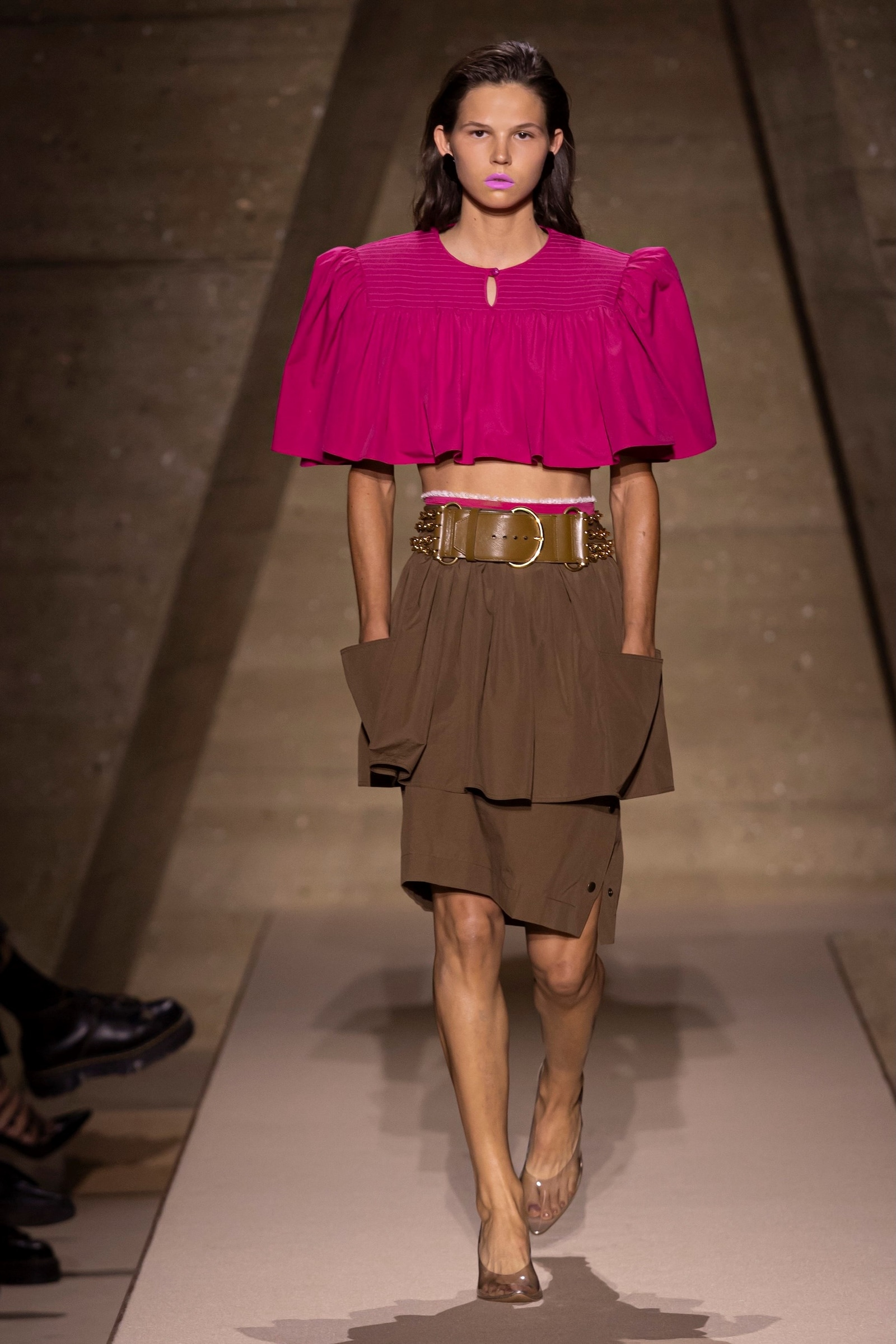
But they also link back. The late 1970s and early 1980s were a boom time for Chloé, led by Lagerfeld, when its clothes achieved couture levels of finish and cut (Lagerfeld even took some of Chloé’s expert chefs d’atelier with him when he shifted across to Chanel full time in 1983). That’s a period Kamali has always been fascinated with – before her very first collection, when I visited her at Chloé’s headquarters in the 8th arrondissement, catwalk shoots of Lagerfeld’s broad shoulders and swirling coats were all over the place, setting the mood. They’ve since become Chloé signature, again, contrasted with nods to fetish pieces from the early-Aughts resonating with generations who only recall them from the cradle. This season, there were bubbly volumes and ruched cocktail dresses that threw back some 40 years, while ledge-shouldered, skinny-torsoed tailored jackets, swathed at the hip, were worn over narrow jeans in sweetly coloured denims that seemed a mash up of both golden eras. And there was a floral T-shirt, scooped low and buttoned like a Henley, whose shape threw back consciously to that famous banana top from Phoebe Philo’s Spring/Summer 2004 collection.
Kamali’s Chloé isn’t as well-behaved as its predecessors, who often politely stayed in the well-trod lane of 70s bohemian rhapsodies of chiffon and lace, high-waisted flares and crafty leanings. Which is fine – and saleable – but doesn’t exactly excite. Frankly, if I see another pair of wooden-soled Chloé clogs, I’ll smash myself over the head with them. Which is why what Kamali is doing is clever – she’s breaking out of Chloé’s mould and proposing something that feels new, different.
Maybe you wouldn’t immediately think Chloé when you see those ruched and printed party dresses – then again, the swaggering shoulders have quickly become synonymous with the label (and are influencing other brands too). Wider than a look, Kamali cited a feel for these Chloé clothes – spontaneous and instinctive were words she used. And maybe what she’s doing is defining a character, or an attitude, rather than sticking to design by rote. This collection wasn’t what we expect of Chloé – but it was entirely in its spirit. And in a season of change, it moved Chloé on, and kept up with the crowd.
