
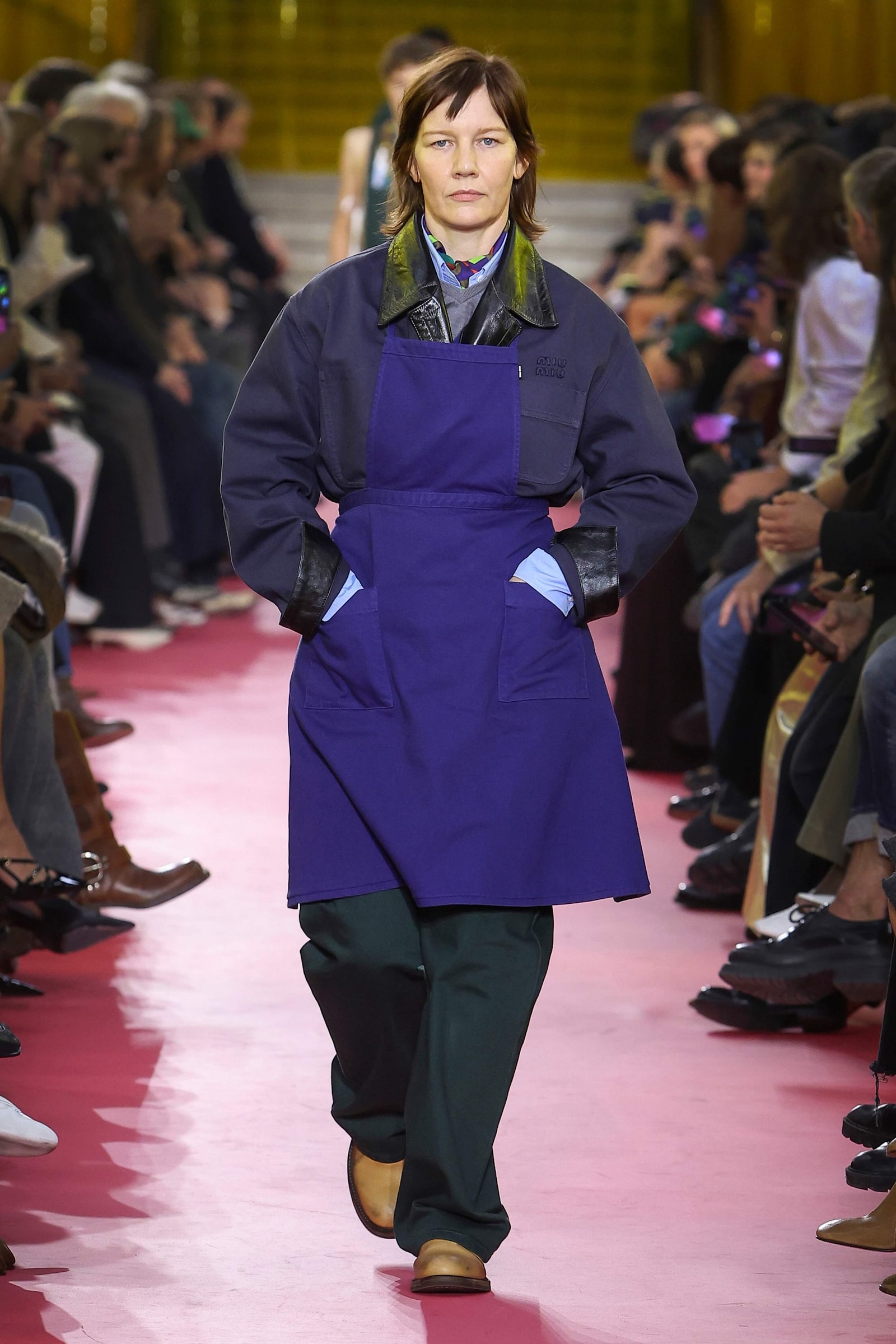
When she creates, Miuccia Prada thinks big. She may actually prefer that I not use the word ‘create’ – ‘makes’ is maybe more accurate, less pretentious and more in keeping with Prada’s view of herself. When discussing fashion, she talks of her work, and of her job. She is a woman obsessed with use, with usefulness and meaning – and, indeed, use is a word she uses often, when talking about her clothes, made as an antidote to muchness and meaninglessness and empty stylistic gestures. Her Spring/Summer 2026 Miu Miu show pushed that concept to a logical extreme – At Work was the title, and the models seemed to be pulled from various primary and tertiary industries, dressed in industrial or industrious garb.
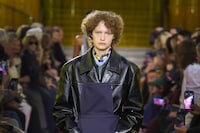
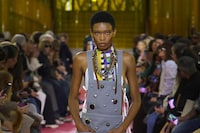
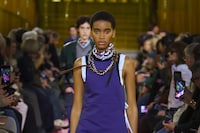
“From factories, to service, to caregiving and the home,” said Prada. “Across all, the apron as a symbol of work that can express multiple messages and ideas about all these different genres of work. And deeper, it talks about the effort and challenges of women.” Prada is always fascinated by the histories of women, the notion of evocations of their clothes as testimonials to their lived experiences. And aprons are her self-confessed favourite garment, which have often featured in both her Prada and Miu Miu shows – though never as the primary thematic. Here, the apron wasn’t just reproduced, ad infinitum, it was rethought and re-engineered. Near enough every look was topped with one, and no two were alike. The show began with near-direct mirrors of industrial clothes, leather or drill aprons strapped atop uniform inspired looks – the show opened with the German actor Sandra Hüller, method acting as a plant forewoman as she wound her way through a forest of guests perched on Formica tables, like an especially fashionably crowded factory cafeteria on a late 2.30pm Monday lunchtime.

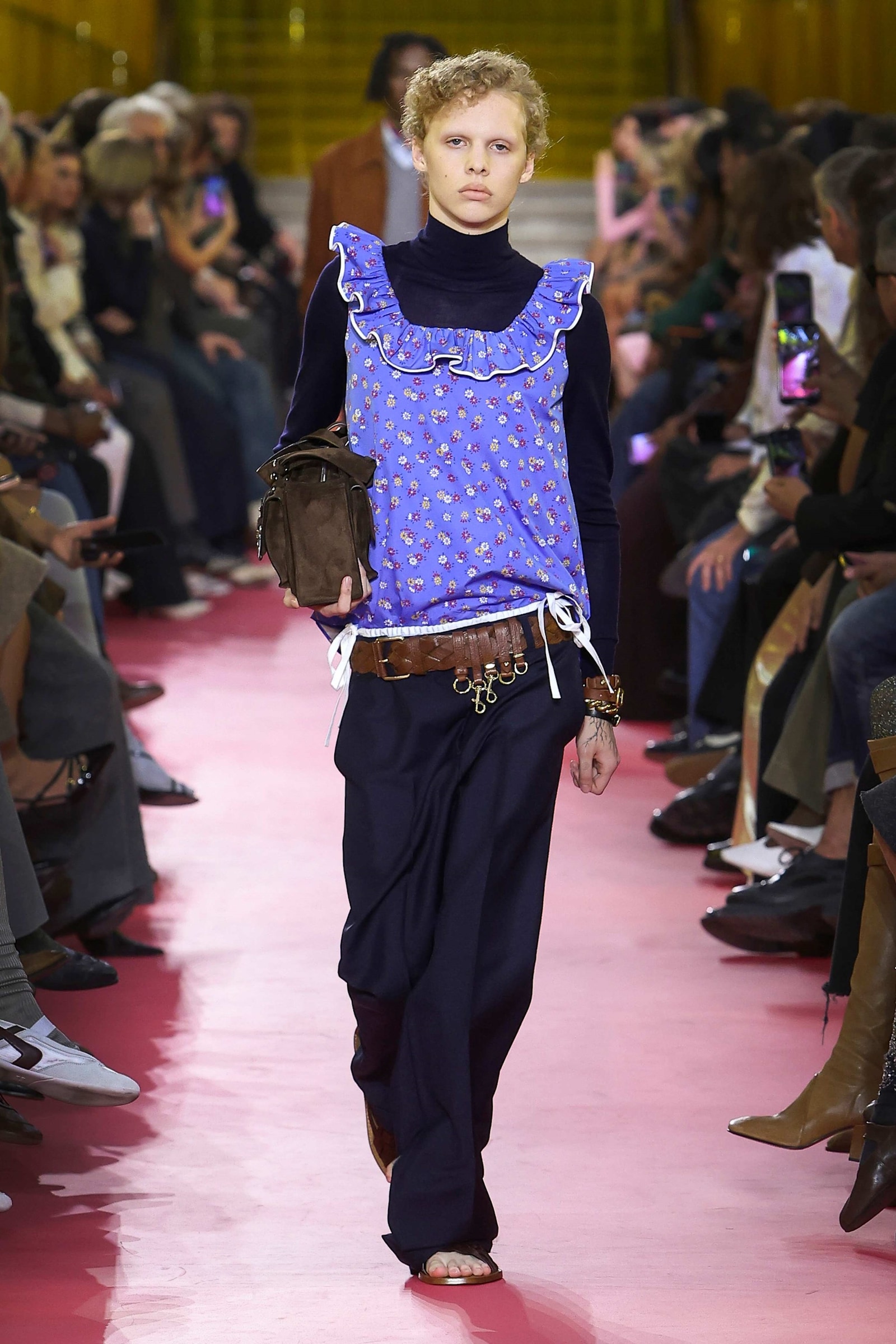

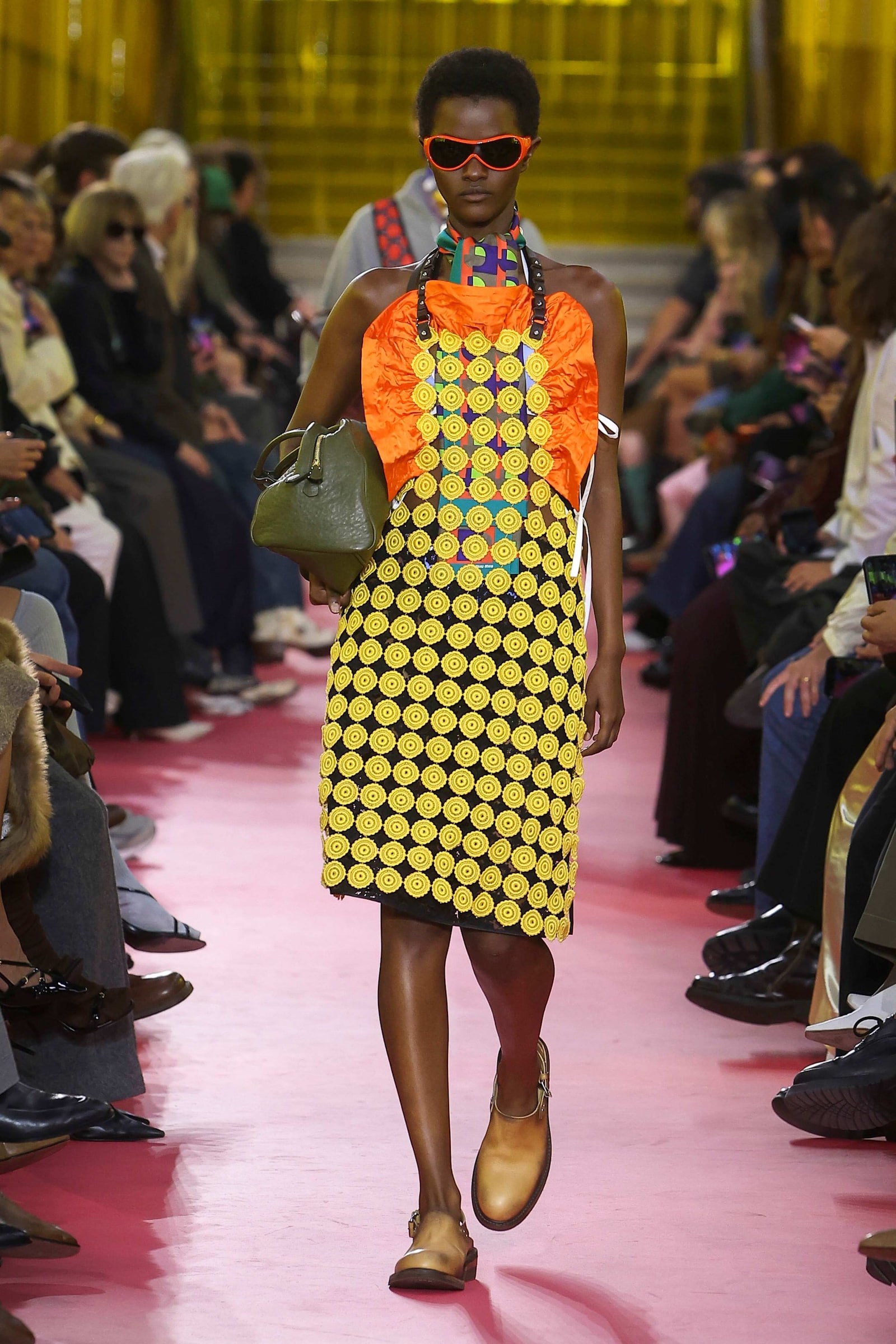
Lunch was accurate – next came hausfrau housecoats in vibrantly printed cottons, layered over knits. Then nurse’s cotton poplin aprons, in clinical white and NHS blue, sometimes twisted one atop the other, often open over the skin. There is, of course, a whole fetishism attached to women in aprons, of servile naughty nurses and reader’s wives and French chambermaid fantasies – Prada cited Luis Buñuel’s Le journal d’une femme de chambre, which toys a little with the latter. But then the aprons themselves became fetish objects, twisted and reworked and smothered with lace and embroideries, afforded new importance, wealth and value – just as Prada wants to do with the work of women. Later looks executed them in rich cloqué silk, while a final selection contrasted humble raw calico – the stuff normally used by Miuccia Prada and her team for their toiles, literally for the ‘making’ of these clothes – with a smothering of rich jewelled embroideries, as if the aprons became some kind of glittering prize, as opposed to a tool for work.
This collection was a fantastic, rousing fashion show, filled with newness and desirability. But it was also very much a fashion show in a grand Prada tradition, of images and garments that Miuccia Prada loves, of a vocabulary of dress that feels entirely hers. Indeed, Prada’s toying with those symbols has, probably, only one antecedent who truly equals her fascination with women’s roles, with the elevation of symbols of work to high fashion – Gabrielle Chanel. Her legacy has, of course, been on everyone’s minds this week. In a famed 1931 profile for The New Yorker, Janet Flanner wrote that Chanel “has put the apache’s sweater into the Ritz, utilised the ditch-digger’s scarf, made chic the white collars and cuffs of the waitress, and put queens into mechanics’ tunics.” A century later, Miuccia Prada has done the same, all over again. And it still feels revolutionary.
