
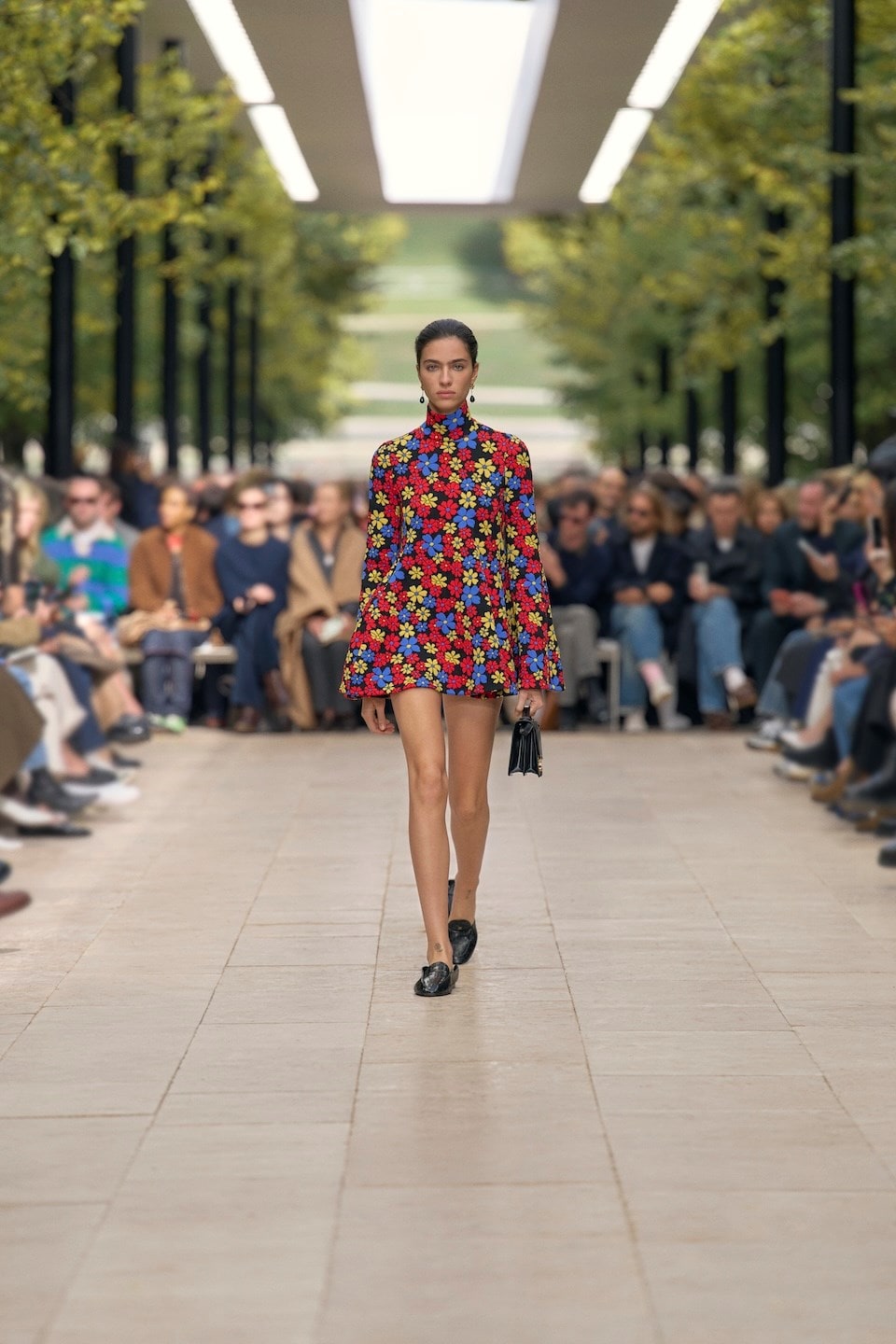
Continuum is, perhaps, an inevitable counter-reaction to the churning shifts of the industry right now. This season, possibly the most seismic in contemporary fashion history, has framed over a dozen designer debuts, re-shuffles and shifts. It’s a moment of change. Michael Rider at Celine made his own debut back in July, showing womenswear and menswear together just before the official couture schedule began. Effectively, he jumped this season to grab his own moment – but, for his Spring/Summer 2026 collection, rather than upending and reinventing, he decided to, as the French say, continuer tout droit.
Rider chose to present his collection in the Parc de Saint-Cloud, an idyllic slice of French countryside just past the southwest edge of Paris in the domaine of the grand château of the same name. Maybe that was a comment on his work in the shadow of a storied French house – metaphorical, rather than literal. But, really, the transportation of the audience served as an emphasis on continuation, an ongoing refining and defining of the Celine women and men. “The women and men kept walking and the seasons changed,” Rider said, in a statement before the show. “As if the July show never really ended.”
The clothes themselves once again mixed ideas and ideals. “What Celine is, and what it isn’t,” said Rider. Which sounds abstract and ephemeral, and really kind of is. To Celine, or not to Celine – that indeed is the question. There’s a distinct sense of Frenchness, or rather more specifically a Parisianity, where the brand was founded by Céline Vipiana in her own name in 1945. It started off making shoes for children, then began crafting thoroughbred-looking clothes that kind of caught a horsey whiff of the style British people call Sloane Ranger, and Americans – like Rider – may recognise as waspy, albeit far more polished, pussy-bow bloused and gilt chained. The latter came in in the 1970s, hung with a logo taken from the chain circling the Arc de Triomphe, apocryphally inspired by Vipiana’s car breaking down on the Place de l’Étoile.

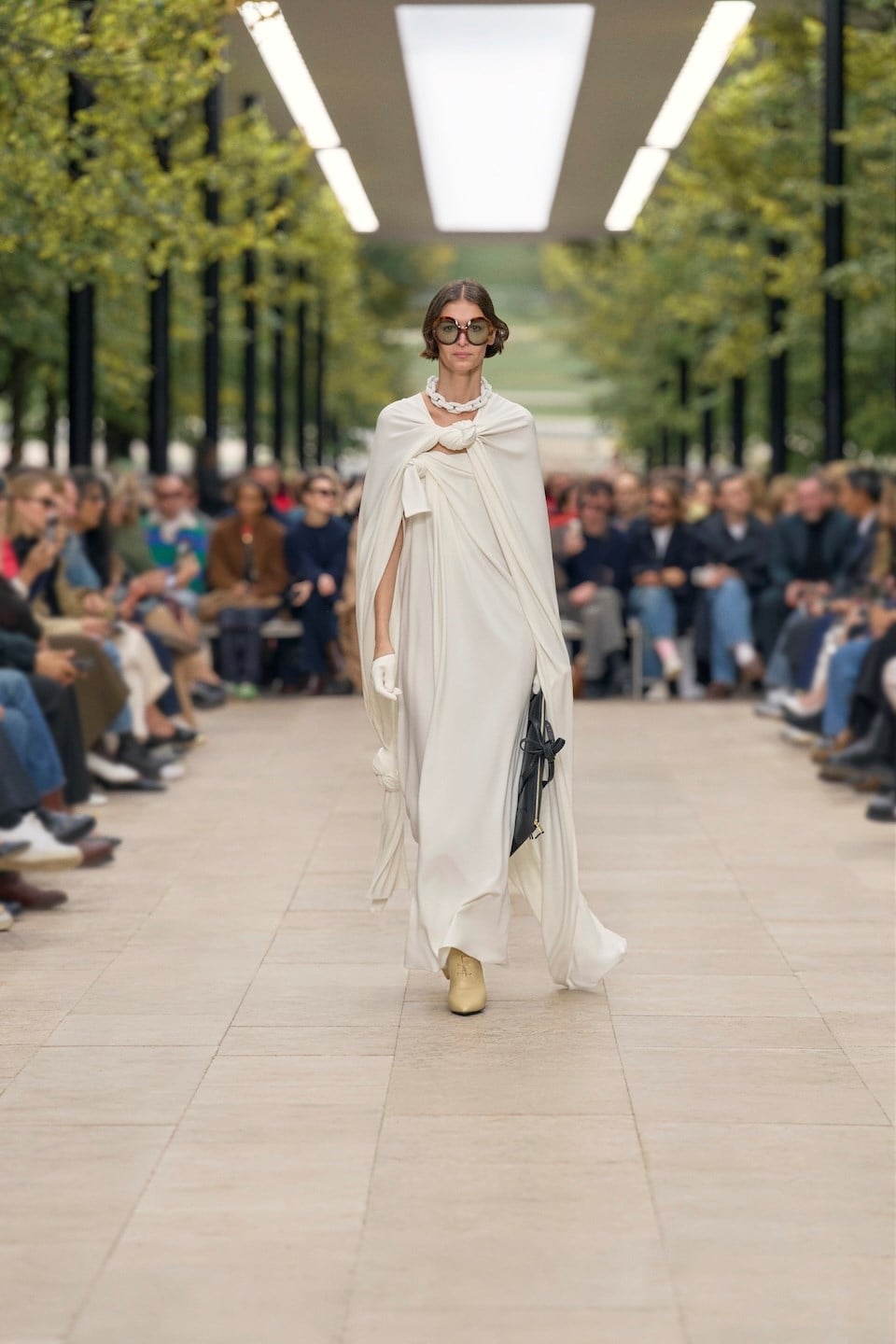

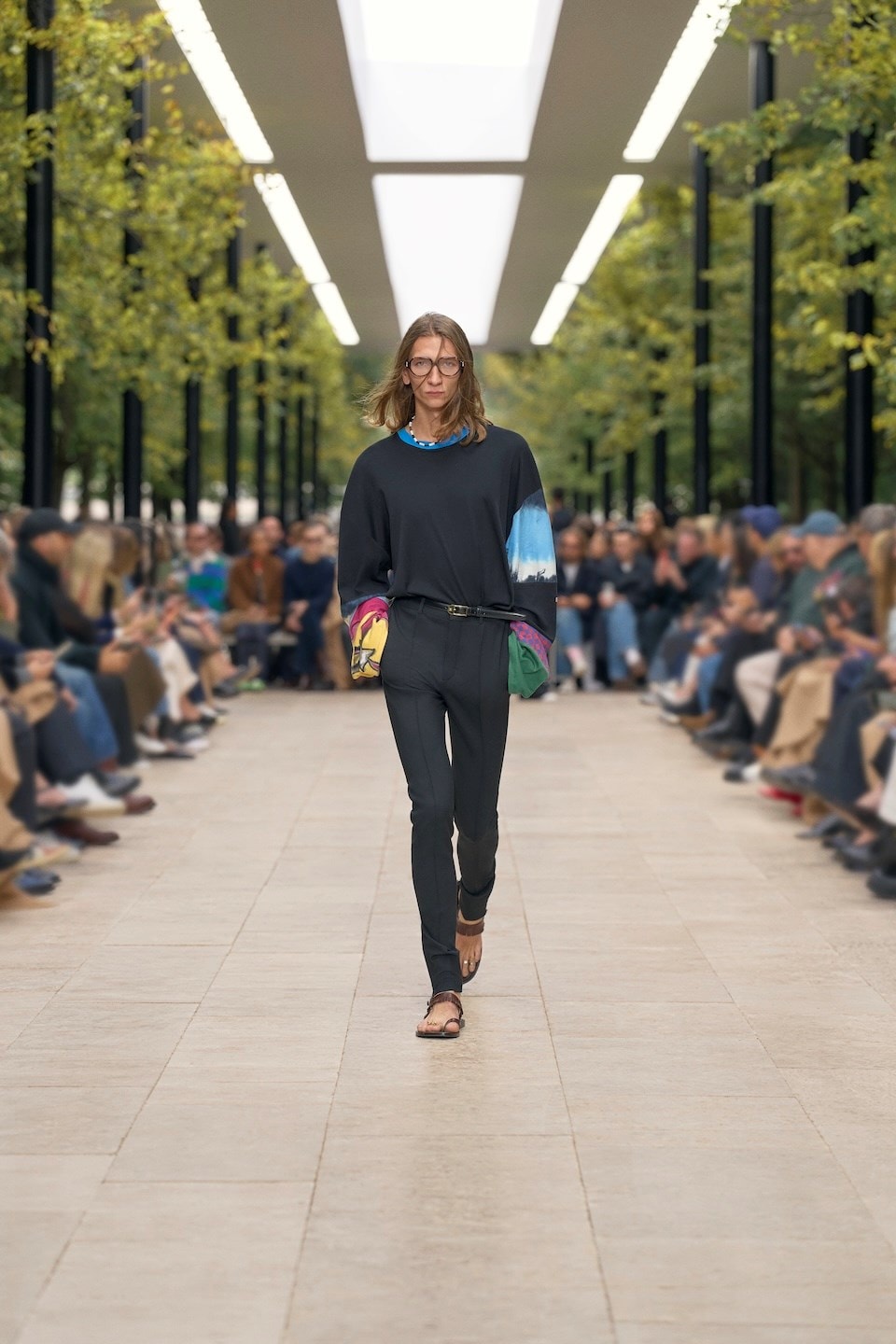
Maybe that’s true, maybe it isn’t. Does it really matter? Celine is freed from the kind of weight of grand legacy that sometimes lumbers its couture counterparts, liberated to a degree from expectation. That gives Rider an immense, untethered freedom to propose what he simply feels is right for now. Which sounds great, but it’s something that could easily overwhelm – yet Rider seems perfectly at home in honing from that hazy identity precisely what he wants the house to be. There’s plenty of room for manoeuvre. Celine made scarves, at some point – they look good, so why not send them out clutched in almost every models’ hand, twist them into a top, or line a trench with them? There were belts that seemed composed of Celine spare parts, hardware tugged from past handbags, it seems, and dangled about the waist like logoed detritus. Maybe the babydoll dresses were a reflection of Celine’s past in children’s wear? Then again, they’re all over the place this season, from houses without any baby backstory.
Who knows? Who cares, really? Rider’s Celine seems about instinct, feeling, unsentimental reaction to now, as opposed to paying lip service to history. You could compliment it by saying there’s a lack of consideration – or rather over-consideration, which is rife right now. The thing that stuck with you was Rider’s easy, unselfconscious silhouettes – in particular a box shouldered jacket, shown on all genders, single or double breasted, drawn in vertically at the torso, fitted yet unfitted, somehow familiar yet still new. After a merch-heavy debut of pieces attractively plastered with Celine logotypes, like advertising billboards announcing his arrival, by the end of this show you didn’t need a logo to let you know where those clothes came from. In a scrambled, oversaturated fashion landscape, that’s a hell of an achievement.
