Jean Paul Gaultier Spring/Summer 2026Photography by Yannis Vlamos. Courtesy of Jean Paul Gaultier
Tracing Duran Lantink’s Archival Pulls at His Jean Paul Gaultier Debut
Duran Lantink enters the house of Gaultier with a debut for Spring/Summer 2026 alive with archival echoes, reshaping the codes for a new era. Here, Alexander Fury offers a history lesson
Lead ImageJean Paul Gaultier Spring/Summer 2026Photography by Yannis Vlamos. Courtesy of Jean Paul Gaultier
After three years of designer cameos reinterpreting Jean Paul Gaultier’s greatest hits – from Haider Ackermann to Simone Rocha to Rabanne’s Julien Dossena – Dutch designer Duran Lantink permanently took the reins of the house and presented his debut ready-to-wear collection for Spring/Summer 2026. Gaultier named one of his collections Grand Voyage and this was very much the theme, delving into the designer’s back catalogue to propose signature Gaultier-isms for a new era. What a privilege, for any designer. Here are a few house classiques reimagined.
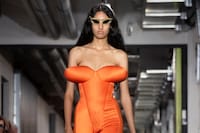
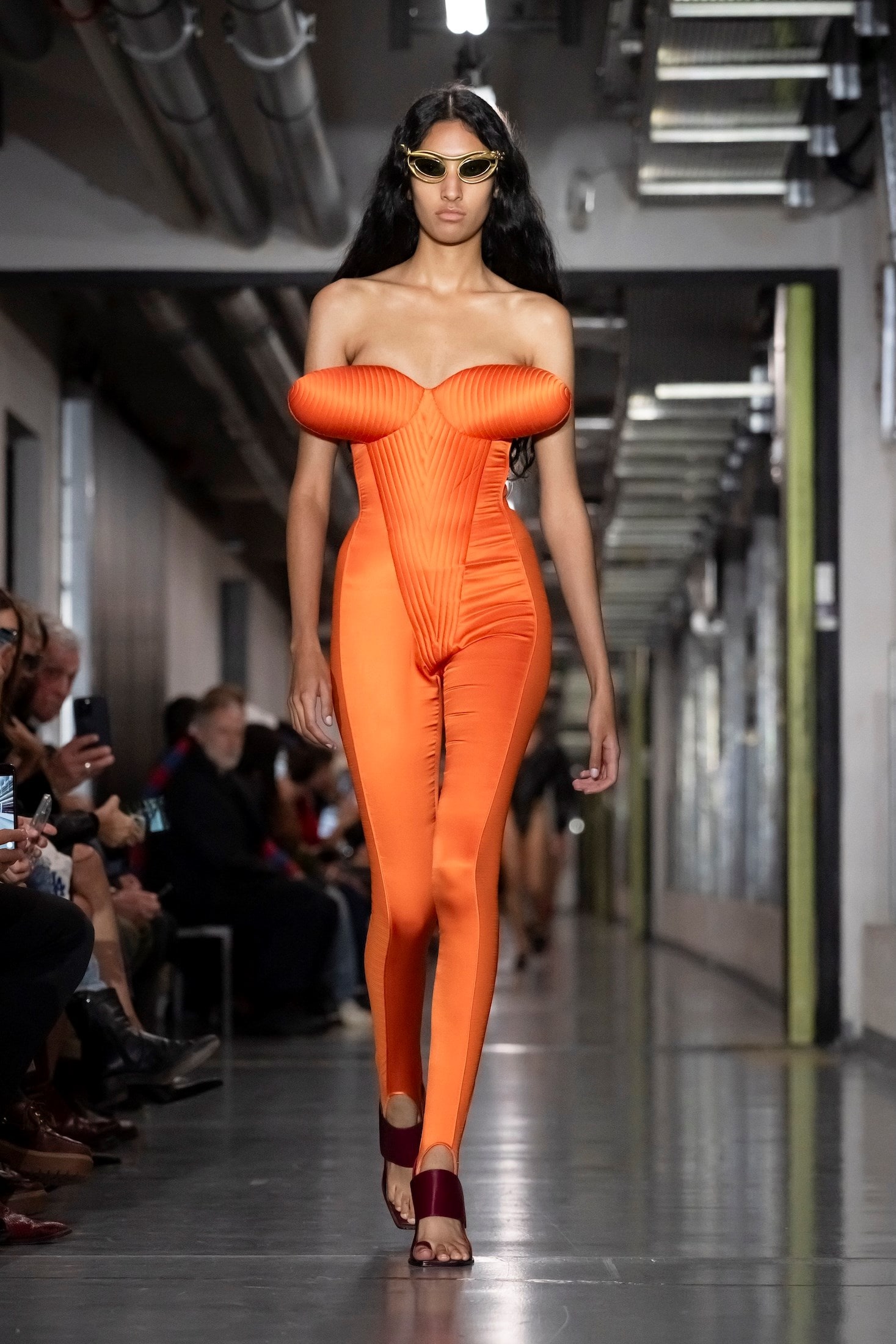
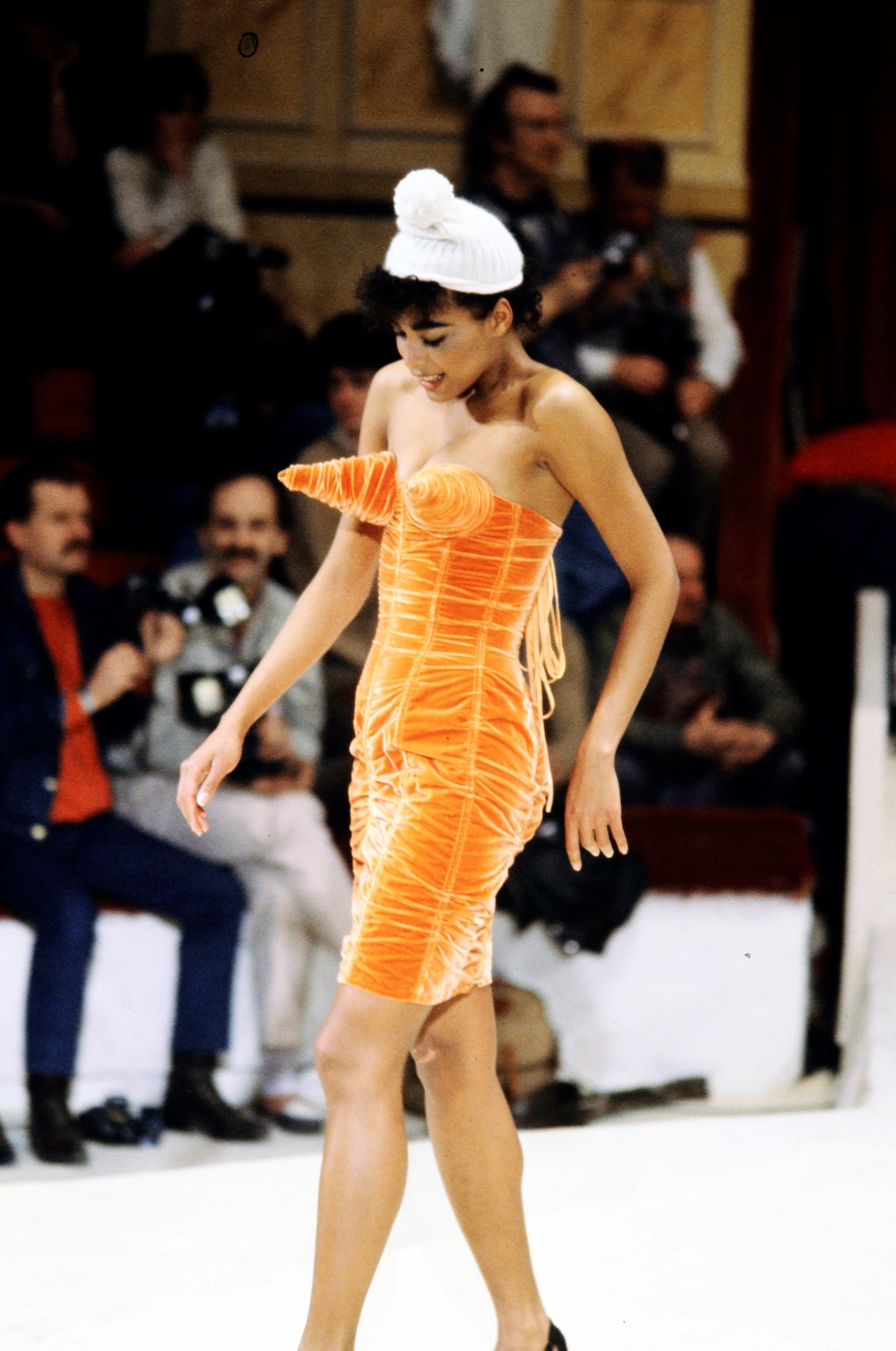
Lantink’s first look simultaneously referenced two of Gaultier’s most recognisable and significant looks and collections – his Autumn/Winter 1995 Mad Max collection, and a dress from his Autumn/Winter 1984 show, Barbès. The latter is, arguably, the most famous Gaultier garment of all time – a velvet dress, ruched like an Austrian blind, with vast protruding cone breasts in a virulent shade of clementine orange. The same colour was used in the Mad Max show for a pneumatically-padded ‘sleeping bag’ dress, the models resembling “every embodiment of the dangerous, indestructible woman as found in science fiction and on MTV,” according to Amy Spindler of the New York Times. Both collections proposed images of women as forceful entities at one with their sexuality and physicality – powerful in their hyper-femininity, rather than masculinised. Lantink used that colour and those blown-up, pumped-out proportions as his opening statement on his reimagining of Gaultier.
Jean Paul Gaultier Spring/Summer 2026Photography by Yannis Vlamos. Courtesy of Jean Paul Gaultier
Jean Paul Gaultier Autumn/Winter 1984Photo by Guy Marineau/Penske Media via Getty Images
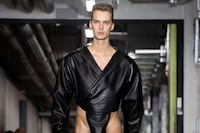
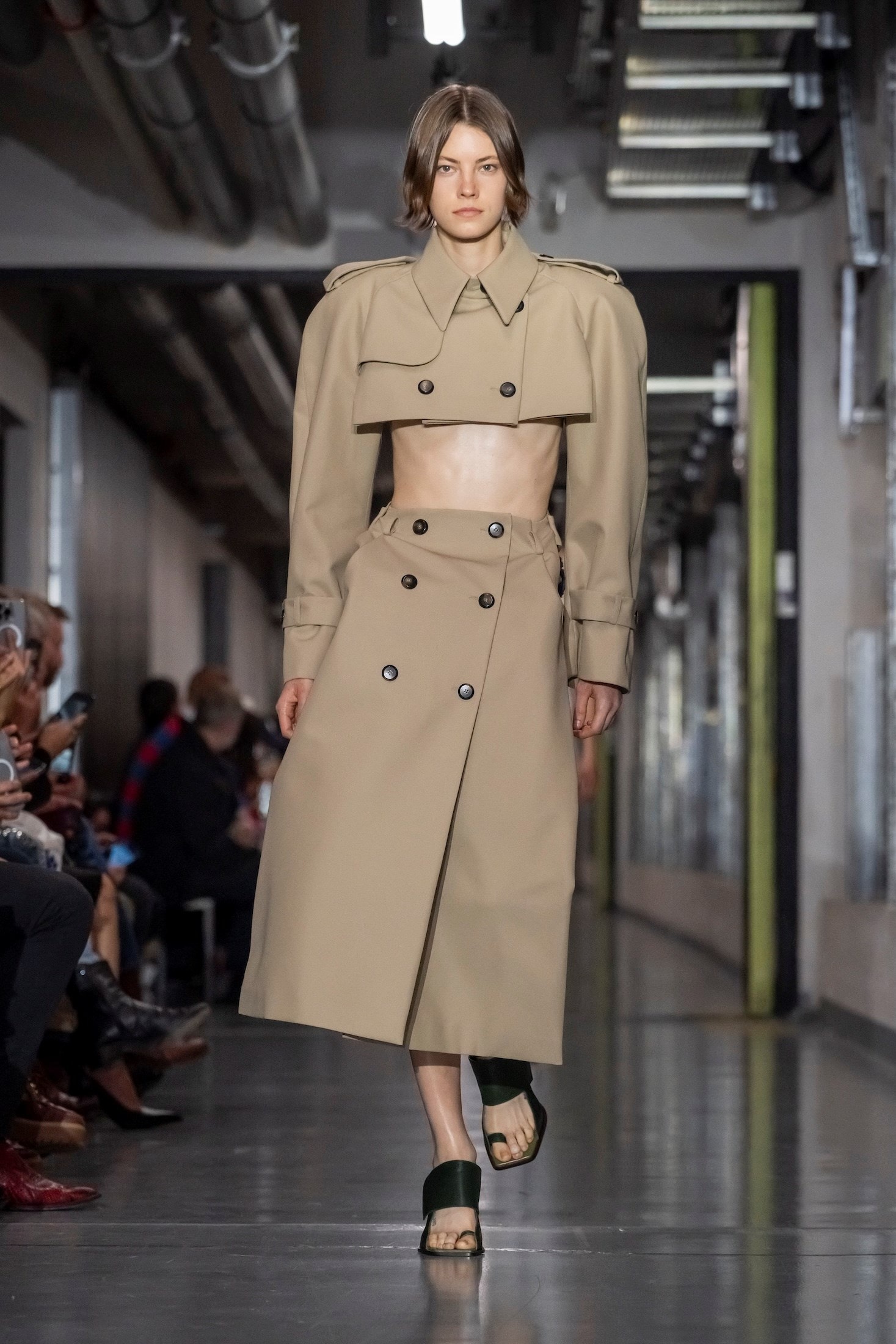
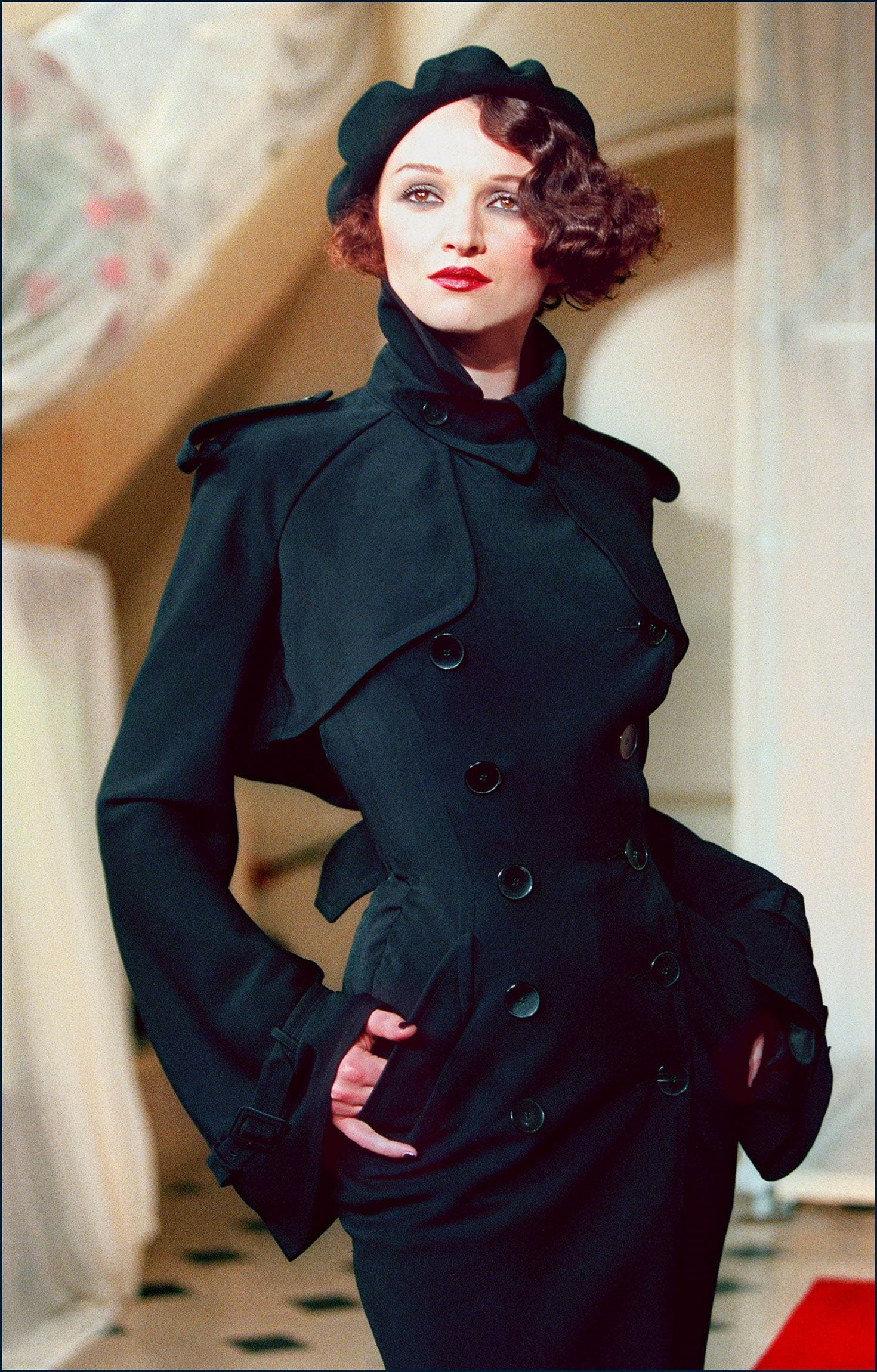
Jean Paul Gaultier was enamoured with the work of Yves Saint Laurent – drawing from his back catalogue, he reinterpreted that designer’s appropriation of the trenchcoat in multiple manners. For one memorable couture collection (Autumn/Winter 1998), he deconstructed it to a trompe l’oeil evening gown with brief bolero; others skewed off the shoulders and spiralled around the body. Duran Lantink offered his own take, chopping his trench to a two-piece and affording the skirt a boxy volume. Speaking of boxy, Gaultier once based a collection around the French 1970s fashion television show Dim Dam Dom, with mind-boggling cubed prints. "Big cubes, small cubes, my head is a cube,” said the model Amber Valetta in a video screened at the show. The designs were based in part around the abstracted shapes in the avant-garde fashion show in the satirical film Qui êtes-vous, Polly Maggoo? directed by fashion photographer William Klein.
Jean Paul Gaultier Spring/Summer 2026Photography by Yannis Vlamos. Courtesy of Jean Paul Gaultier
Jean Paul Gaultier Autumn/Winter 1998 haute couture(Photo by JOEL ROBINE / AFP) (Photo by JOEL ROBINE/AFP via Getty Images)
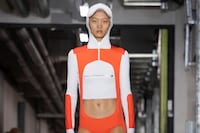
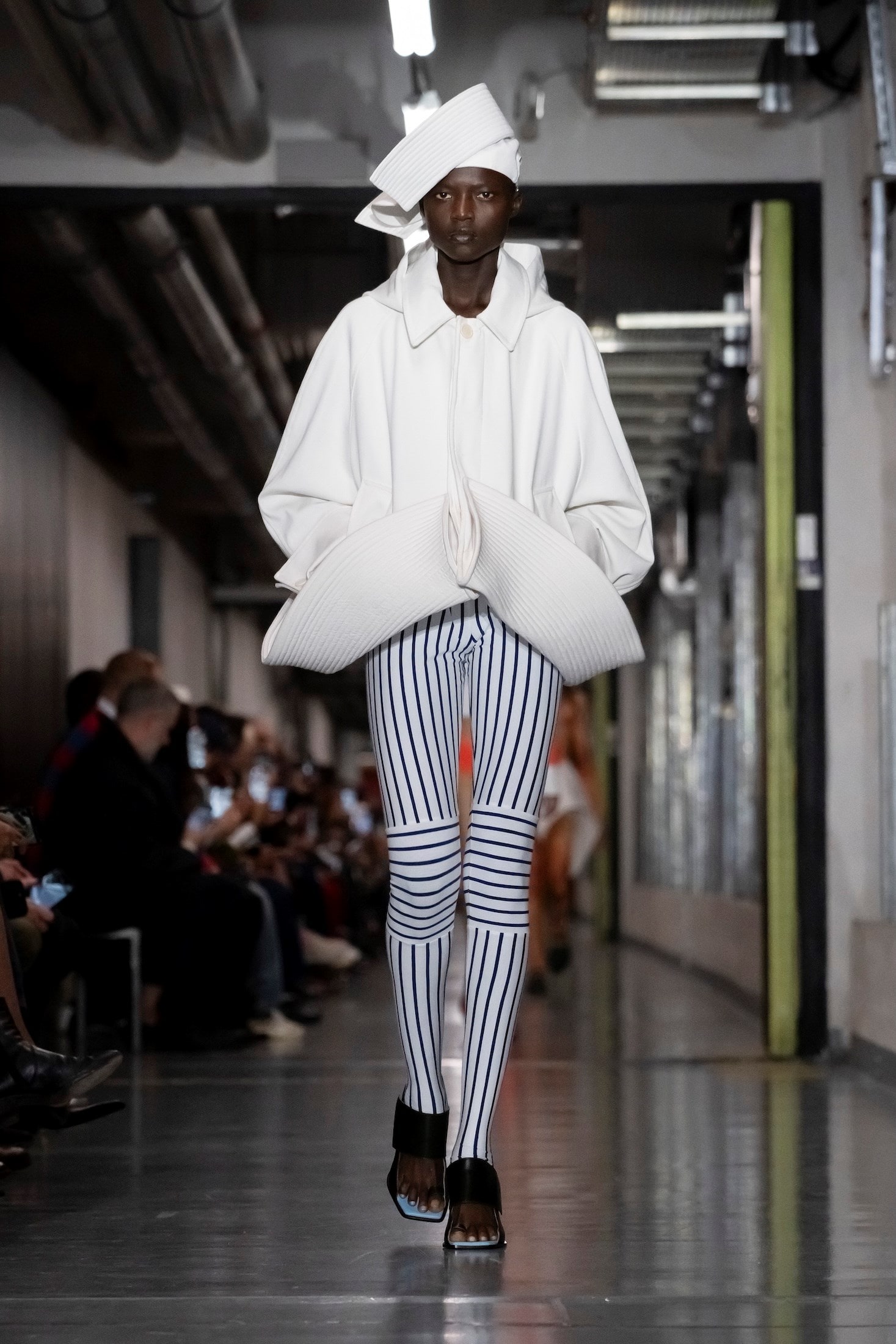
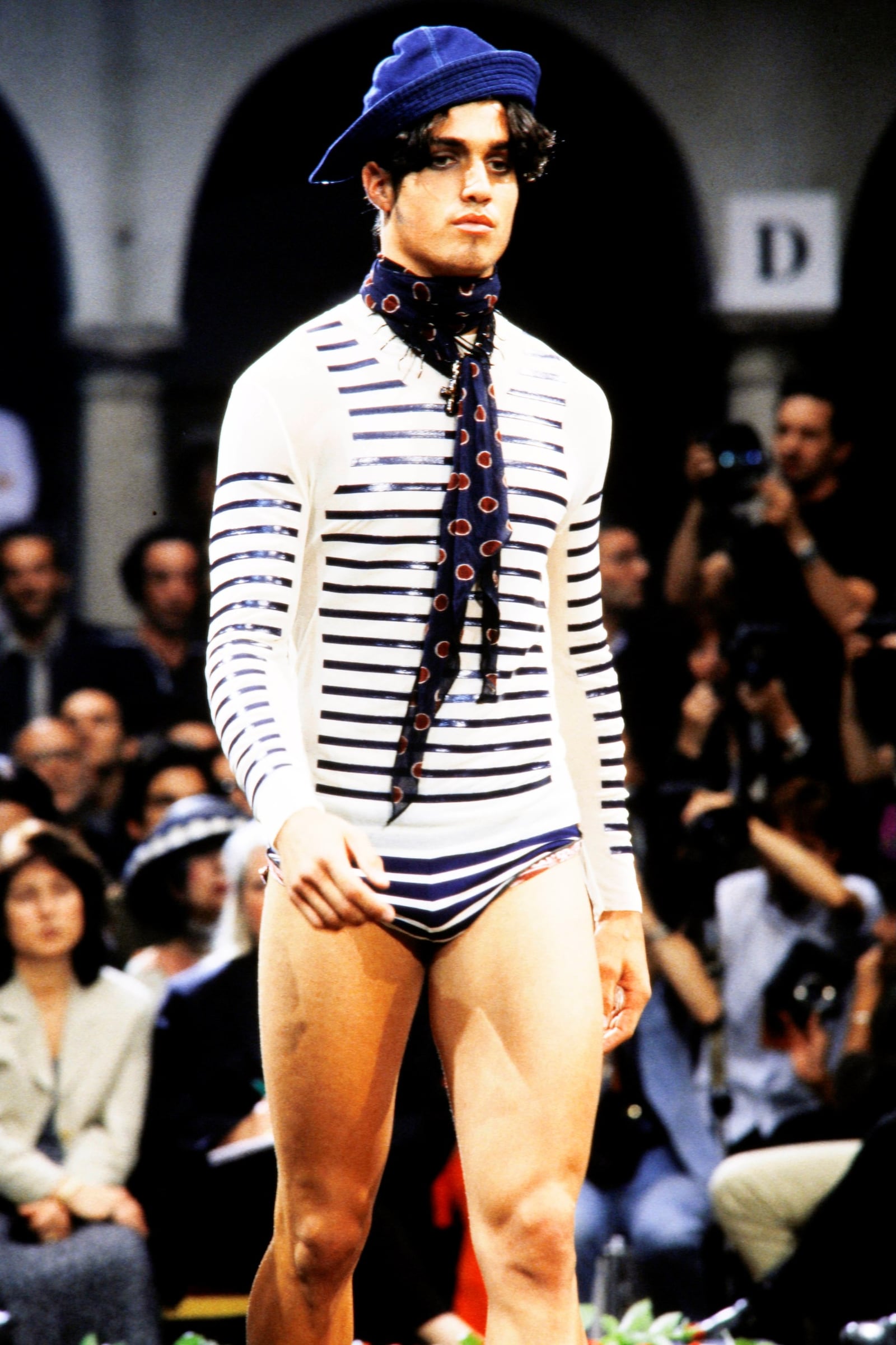
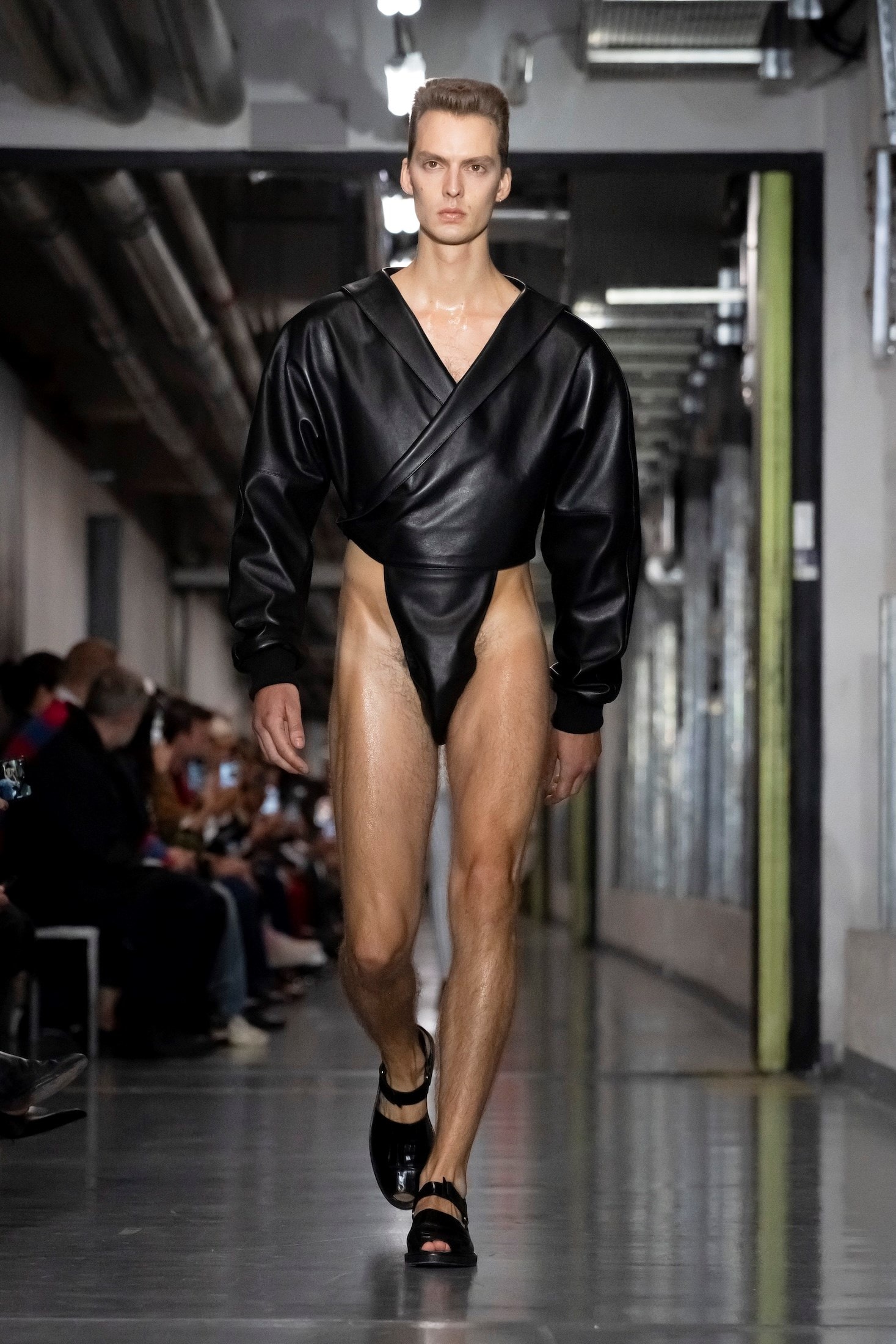
Gaultier often happily embraced cliché, exploring and exploding them through radical reconsiderations. A great example is the Breton stripe jersey, a stereotype of Frenchness that Gaultier wholeheartedly embraced and made his own. Originating in Britanny in France’s northern coast, the sweater was introduced to the French Navy’s uniform in 1858 – the stripes were a visibility device for sailors who tumbled overboard. Introduced under Napoleon III, there were 21 blue stripes to represent his ancestors’ victories. Gaultier ceaselessly reworked the design – in ruched tulle, ostrich feathers and clingy sensuous knits for men, often cropping to a T-shirt designed to hug the body, with shoulder buttoning retained for a frisson of undress, toying with the sexually loaded image of the sailor as gay pin up. Lantink spun the signature stripes around the bodies of his models, while the cotton ‘Dixie cup’ sailor hat was even twisted into a trapeze-line top.
Jean Paul Gaultier Spring/Summer 2026Photography by Yannis Vlamos. Courtesy of Jean Paul Gaultier
Jean Paul Gaultier Spring/Summer 1998 menswearPhoto by Giovanni Giannoni/Fairchild Archive/Penske Media via Getty Images
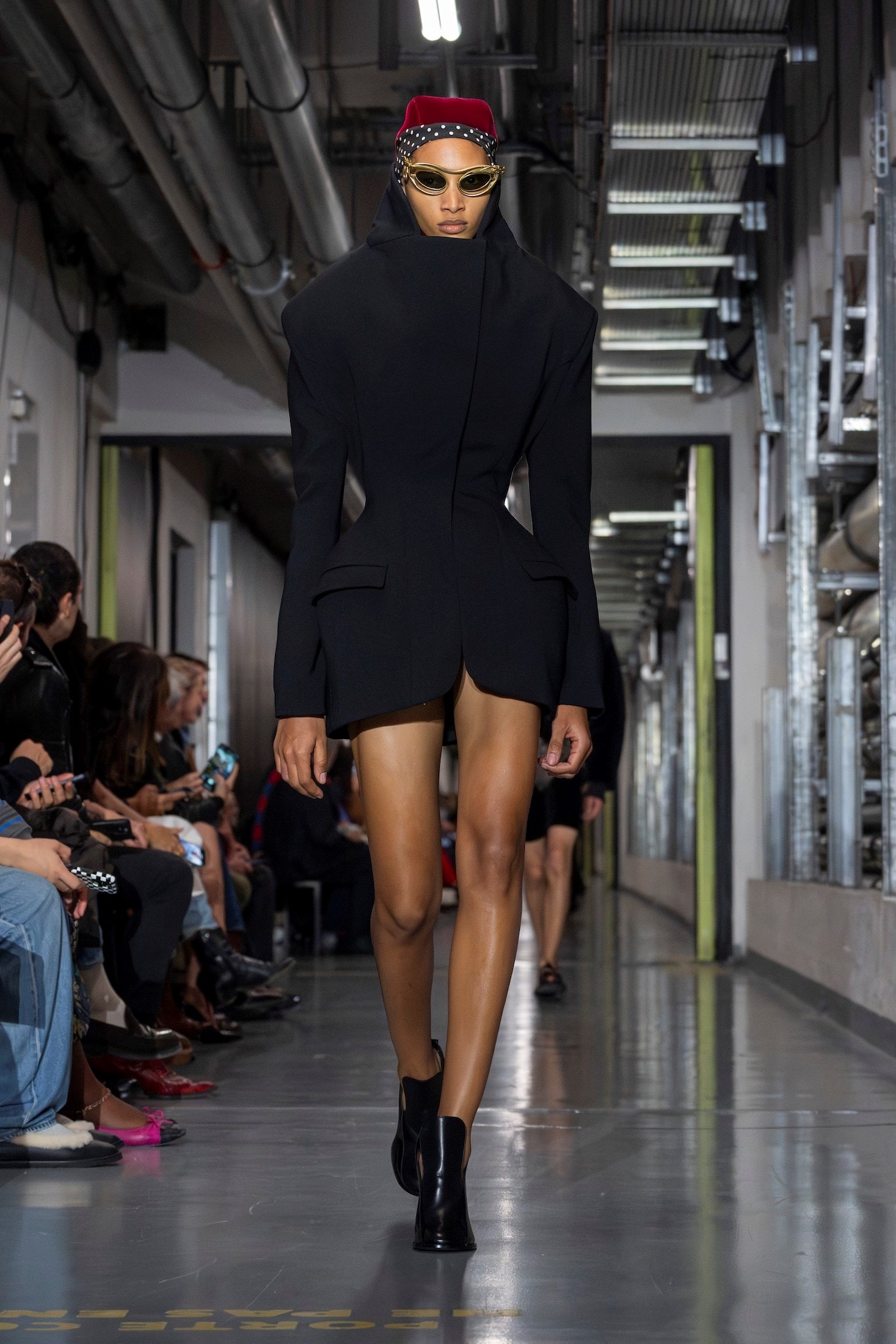
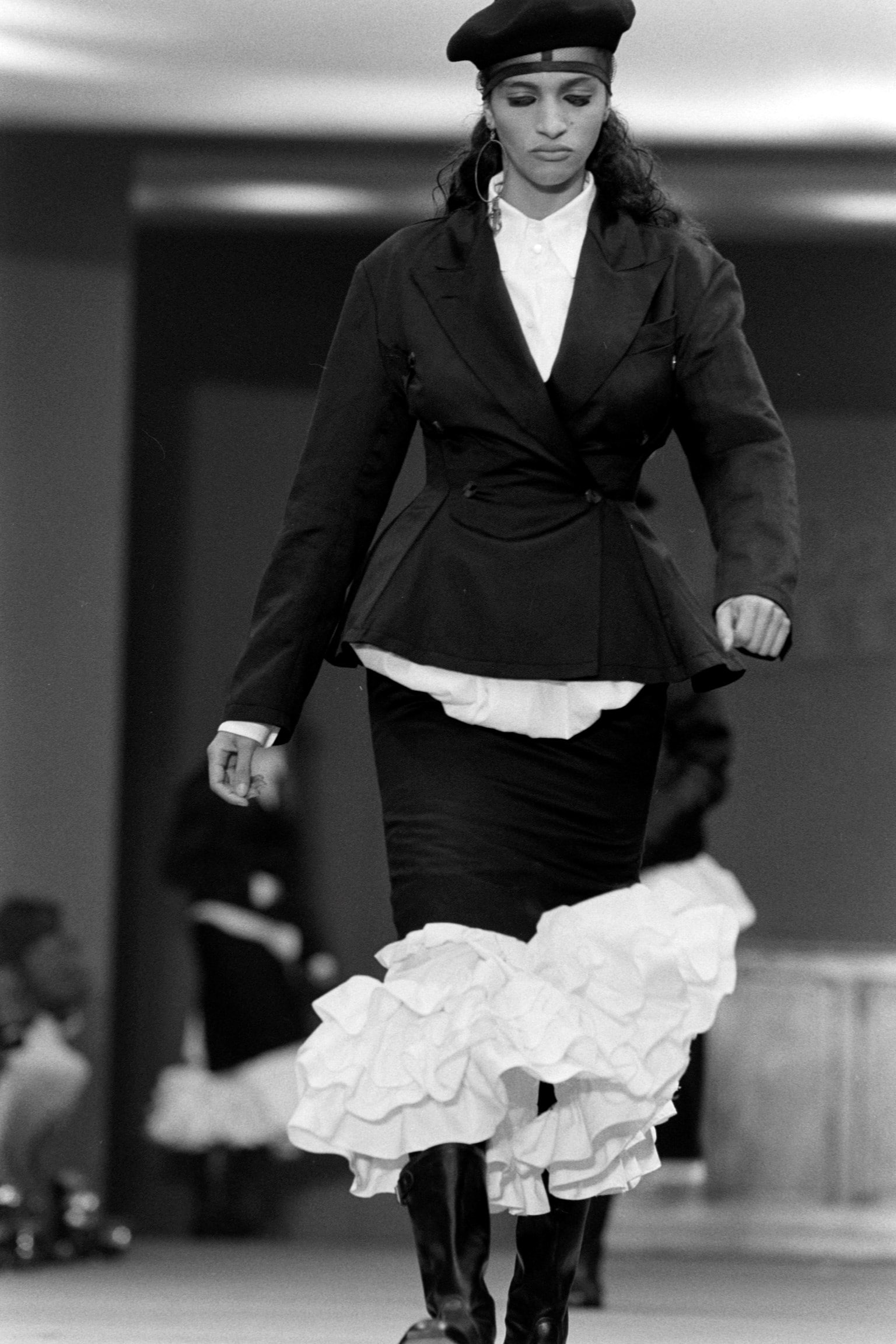
Corsetry is a well-established Gaultier signature, present from the early 1980s when he began toying with the notion of underwear as outerwear. The most famous example? Madonna’s fleshy pink Blonde Ambition bodysuit, breasts piercing through the chest of a tailored suit like torpedos skewering a symbol of masculine restriction and authority – if we want to get all semiotic about it. Gaultier used corsetry to play with perceptions of the body, and applied them equally across all genders. His first perfume, still a best seller, was showcased in a frosted glass bottle that resembled a corseted torso. Duran Lantink is equally enamoured with distorting and reproportioning the human form, so it was inevitable that he would alight on this element in the Gaultier back catalogue. A nod to the founding designer’s background as a couture-trained master tailor, his corsets were compressed into jackets. A greedily interesting note: both the shade of burgundy and polka dot design on the headscarf are a direct reference to Gaultier’s Spring/Summer 1988 collection ‘La concierge est dans l'escalier’.
Jean Paul Gaultier Spring/Summer 2026Photography by Yannis Vlamos. Courtesy of Jean Paul Gaultier
Jean Paul Gaultier Spring/Summer 1986Photo by Michel Maurou/WWD/Penske Media via Getty Images
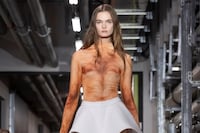
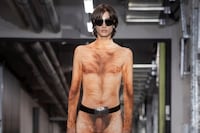
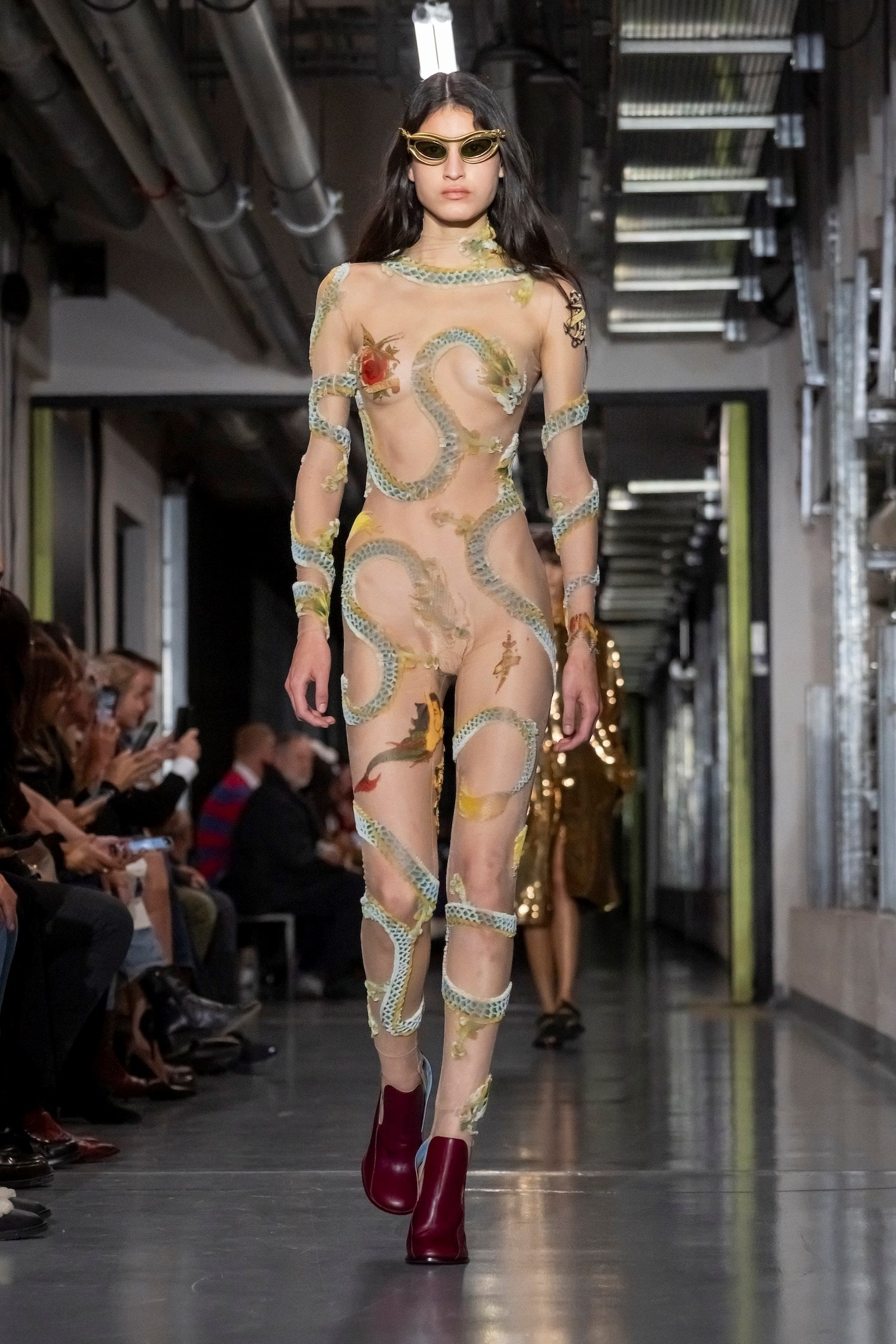
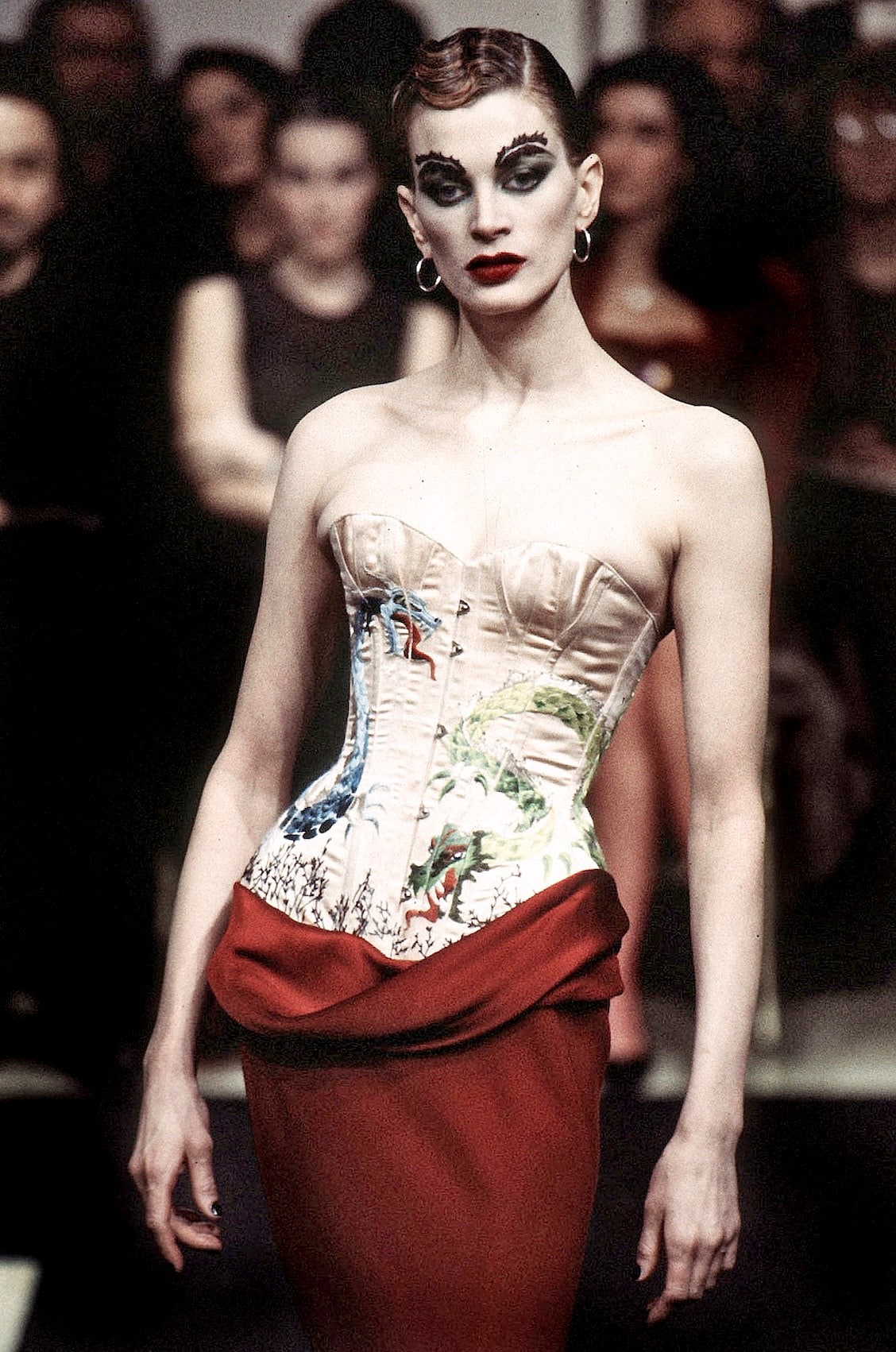
Gaultier has always loved to shock – from sexualised nuns popping up like jacks-in-the-box within a circus ring, to collections exposing the body, apparently smothered in tattoos and piercings. Yet, in 1997, Gaultier did the most shocking thing of all – he joined the haute couture schedule, France’s enfant terrible becoming part of the snobbiest establishment. In part a response to being overlooked for the post of artistic director of Dior (apparently, Bernard Arnault couldn’t reconcile the idea of leading that house with the co-presenter of the raucous late night British television show Eurostrash), Gaultier reinvented himself. The collection, titled Ambiance Salon Haute Couture, showcased exquisitely rebooted clothes in the most traditional fashion – models walking slowly, close to the audience, in silence. It was masterful. One of the most memorable looks, worn by Kristen McMenamy, was - bien sûr - a satin corset embroidered with coiled dragons like a tattoo, a motif Lantink returned to its origins and spun around a nude tulle bodysuit.
Jean Paul Gaultier Spring/Summer 2026Photography by Yannis Vlamos. Courtesy of Jean Paul Gaultier
Jean Paul Gaultier Spring/Summer 1997 haute couturePhoto by Victor VIRGILE/Gamma-Rapho via Getty Images