
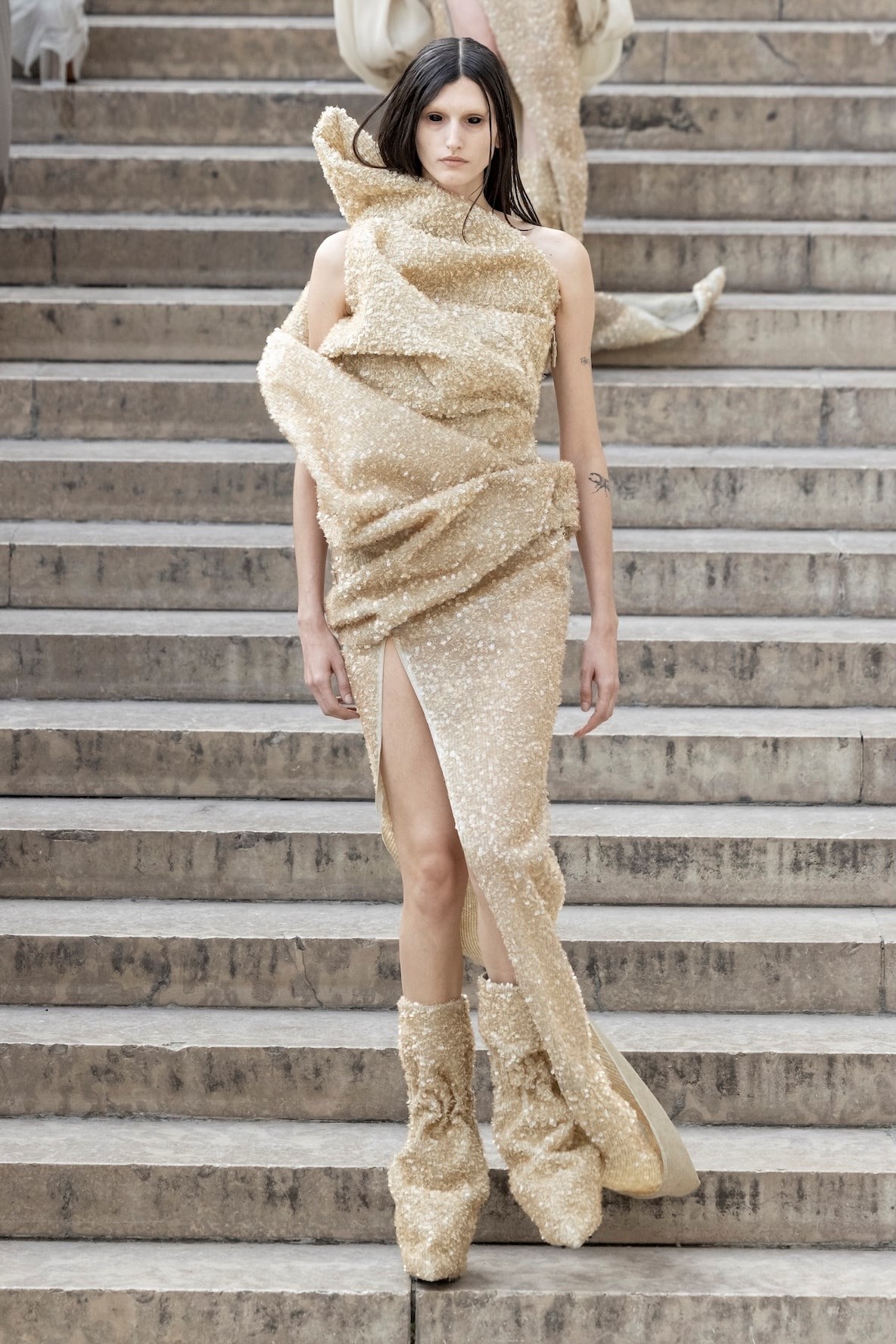
“Tough clothes for tough times.” Leave it to Rick Owens to address the unsaid. Indeed, in a season of turmoil both globally and within the stormy teacup of fashion, when the default reaction of designers – and press, honestly – has been head-burying extrapolations into fantasia, Owens decided to get real, at least of a fashion. “Steely tenacity” were his words to describe clothes of recycled nylon, industrial rubber, hefty leathers, and indeed actual steel.

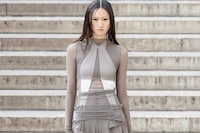
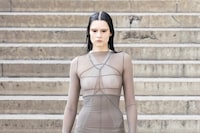
Owens’ men’s and womenswear shows share titles, which generally indicates an echoed thematic – this time, the title was Temple. But if his June men’s outing, knotted to the grand opening of his great (in every word) retrospective at the Palais Galliera, felt celebratory – a coming of the faithful, joyful and triumphant – there were darker utterances with his womenswear. First of all, rather than boldly scaling a citadel like his men, they trudged down a wide, grand staircase, albeit of scaffolding, before wading into the murky shallows of the fountains out back at the Palais de Tokyo. That was fitting – Owens has always loved a phrase by the fin de siècle actress Cécile Sorel who, after sweeping down the grand staircase of the Casino de Paris, declared “L'ai-Je Bien Descendu?"
That translates to “How well did I descend?” Which is an odd thing to echo when your clothes have ascended onto literal pedestals into one of the foremost museums in France. Yet, of course, Owens often descends into depths – frankly, the fact the waters here were only ankle deep was out of character. That French notion of the nostalgia of mud – the seeking out and celebration of low life – is inherently Owens, albeit with an American accent. Here, while his clothes combined references to priestess garb and apparent gestures to Mennonite dress – pinafores and puffed sleeves at Owens? Who knew? – their grand robes were left trailing in the muck. “There was a time when I was doing so many gowns that Michèle once told me, “You’ve made your women so regal, they’ve become unfuckable,” Owens deadpanned post-show. So this time, there were the industrial, biker jackets and trousers and hairy, spiky rubber sequinned dresses trailing like some form of spiny sea creature dragged from the deep. Nothing regal about that – down off those pedestals, out of the ivory tower.

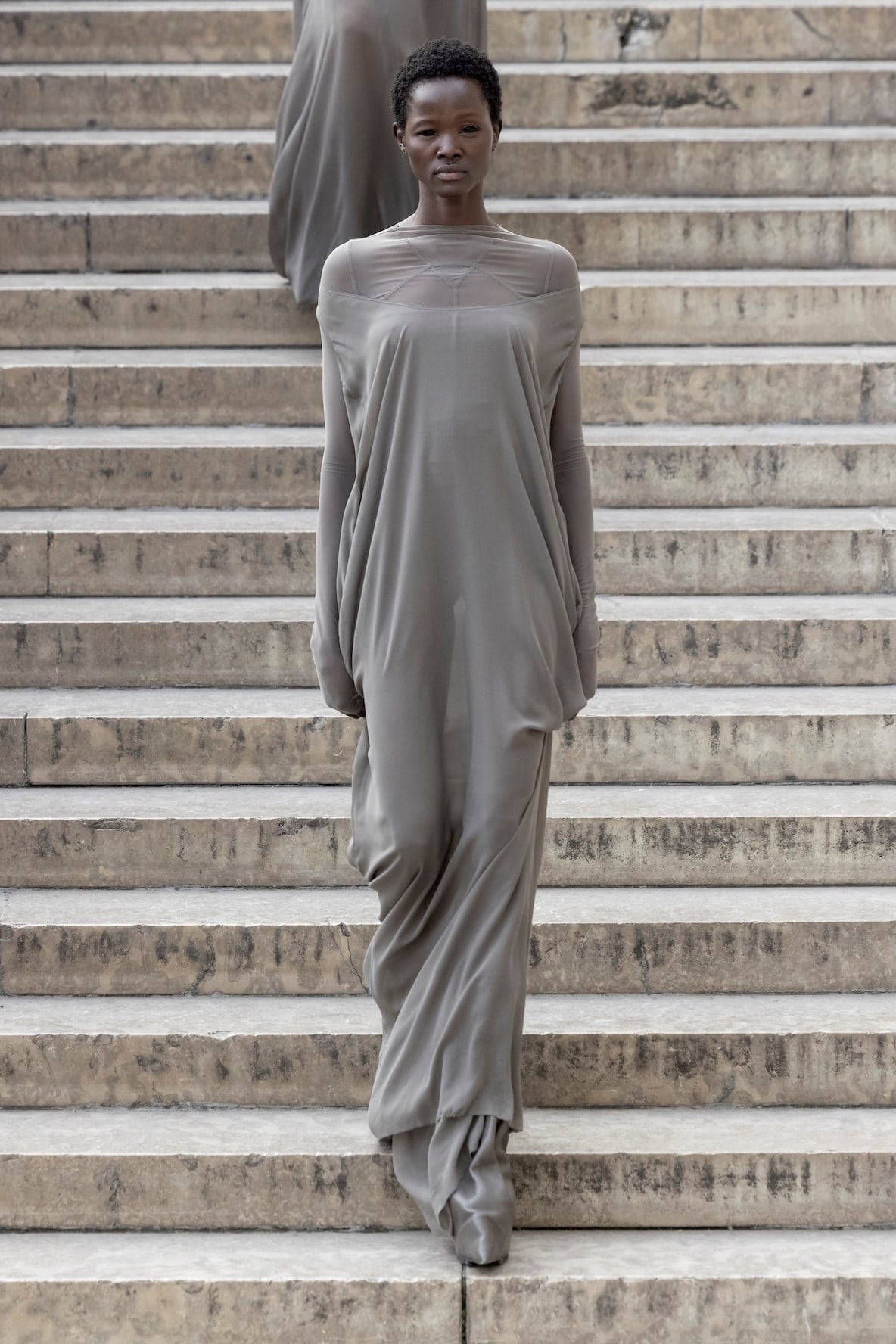

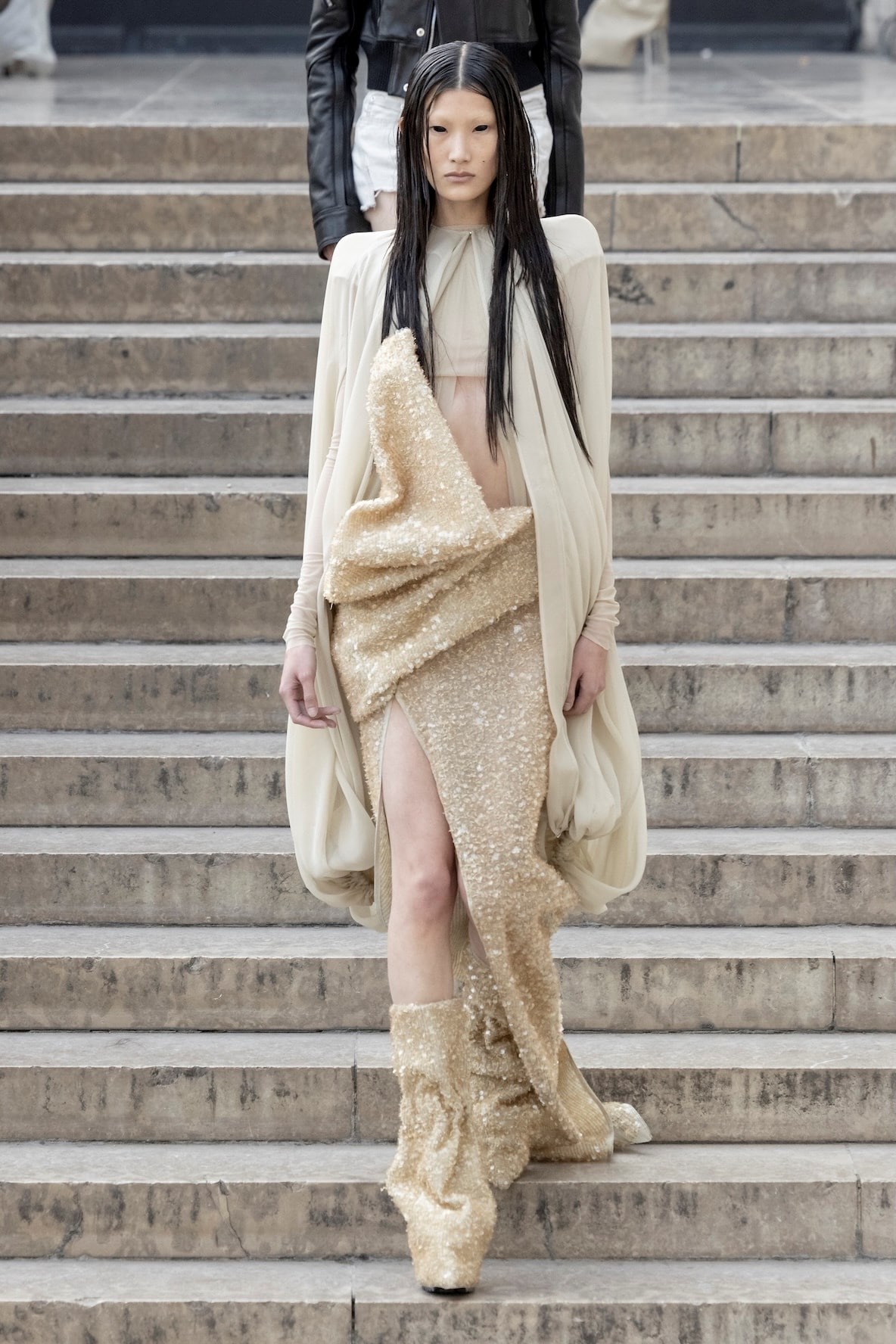
Steel came in at the shoulders, jutting out from under dresses as an armour (again) – while bodies were striated with lines, like sinewed musculature stripped of the skin, a woman laid bare. There was a distinct dystopia here, which isn’t a criticism. Rather than elegiac dreaming – which, oddly enough given the apocalyptic overtures that people often stereotype Owens with, he’s managed to evoke more powerfully than almost anyone else – this was Owens mirroring the confusing and fractured sense of contemporaneity. Even the plaintive, yearning lyrics of Jefferson Airplane’s (Don’t You Want) Somebody to Love were given a foreboding air, a dirge echoing as the models descended to their watery conclusions. It felt less like an urge, more like a threat – find love, or else.
This isn’t a criticism – it’s praise. Sometimes, the world is a scary place. Sometimes, we need scary clothes to navigate it, and to find somebody to love.
