
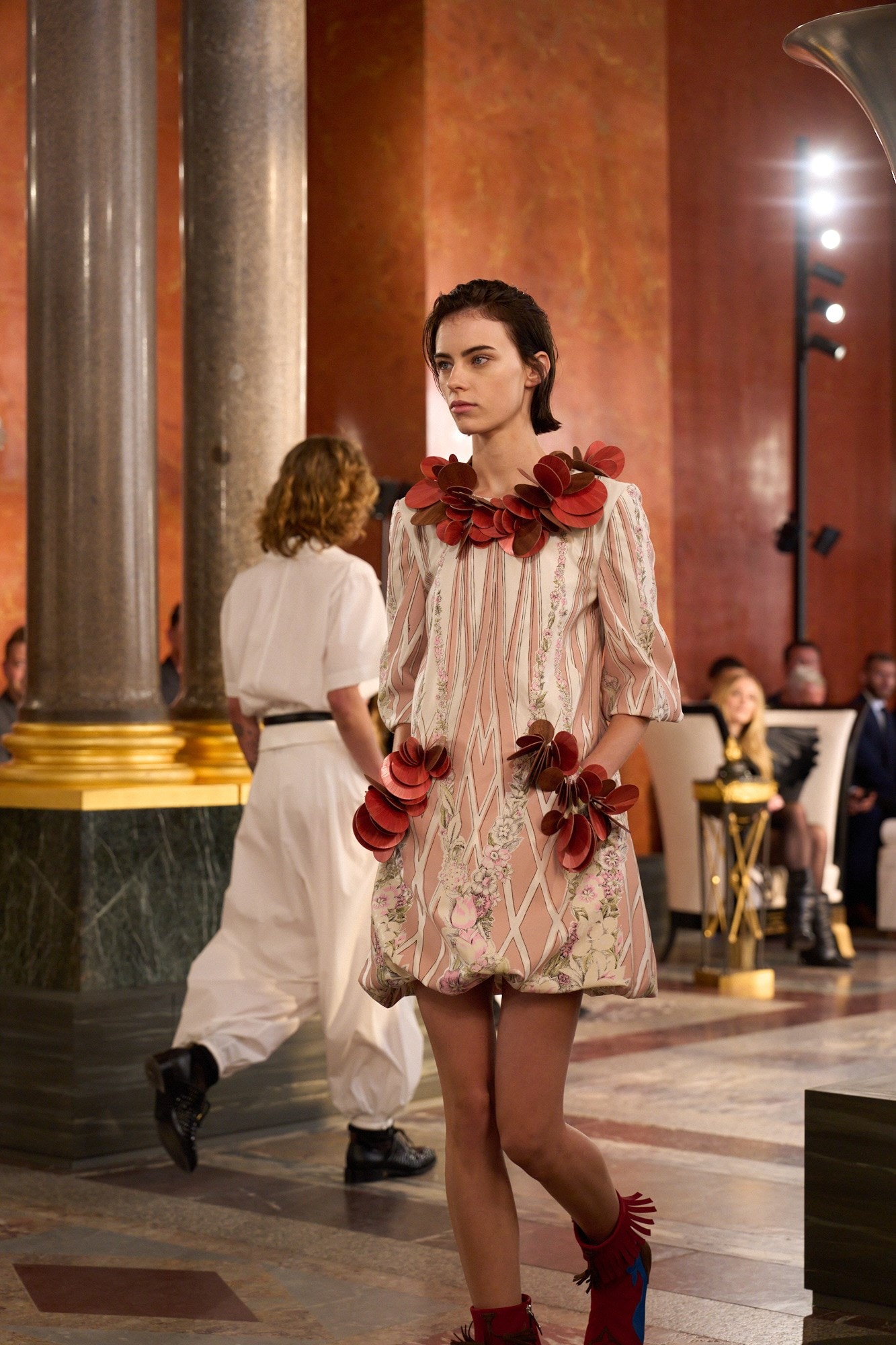
What does intimacy mean, when you’re working for the biggest luxury goods house in the world? Well, it’s bigger and better than most. How about a stroll around the private summer apartments of Anne d’Autriche, Queen of Navarre and wife of Louis XIII, an annex of the Louvre with inlaid marble floors and casually strewn priceless artefacts? That was the thinking, evidently, of Nicolas Ghesquière for Louis Vuitton – a brand that served crowned heads, albeit not until the 19th century. “It’s very rich in terms of multicultural proposition, already,” he said backstage after his Spring/Summer 2026 show, specifically of that apartment – but, of course, could have been talking of his clothes too, which roamed through time and space, texture and technique.
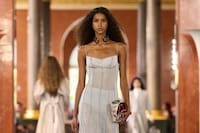
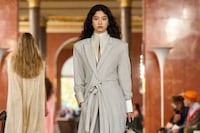
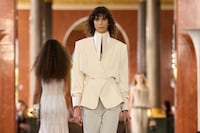
So that’s why Anne’s apartment, rather than being mired in the annals of time was, for one exceptional event, punctuated by jaw-dropping examples of decorative arts. And high arts, too – work by Robert Wilson, 18th-century master ébéniste Georges Jacob, the Art Deco designer Michel Dufet and 19th-century ceramics by Pierre-Adrien Dalpayrat. An immersion into French taste from the 18th century to present day was how Ghesquière chose to describe it. And besides that approach reflecting the way his personal Parisian apartment is decorated, it obviously also encompasses Ghesquière’s own body of work, and its wider effect on fashion proclivities.

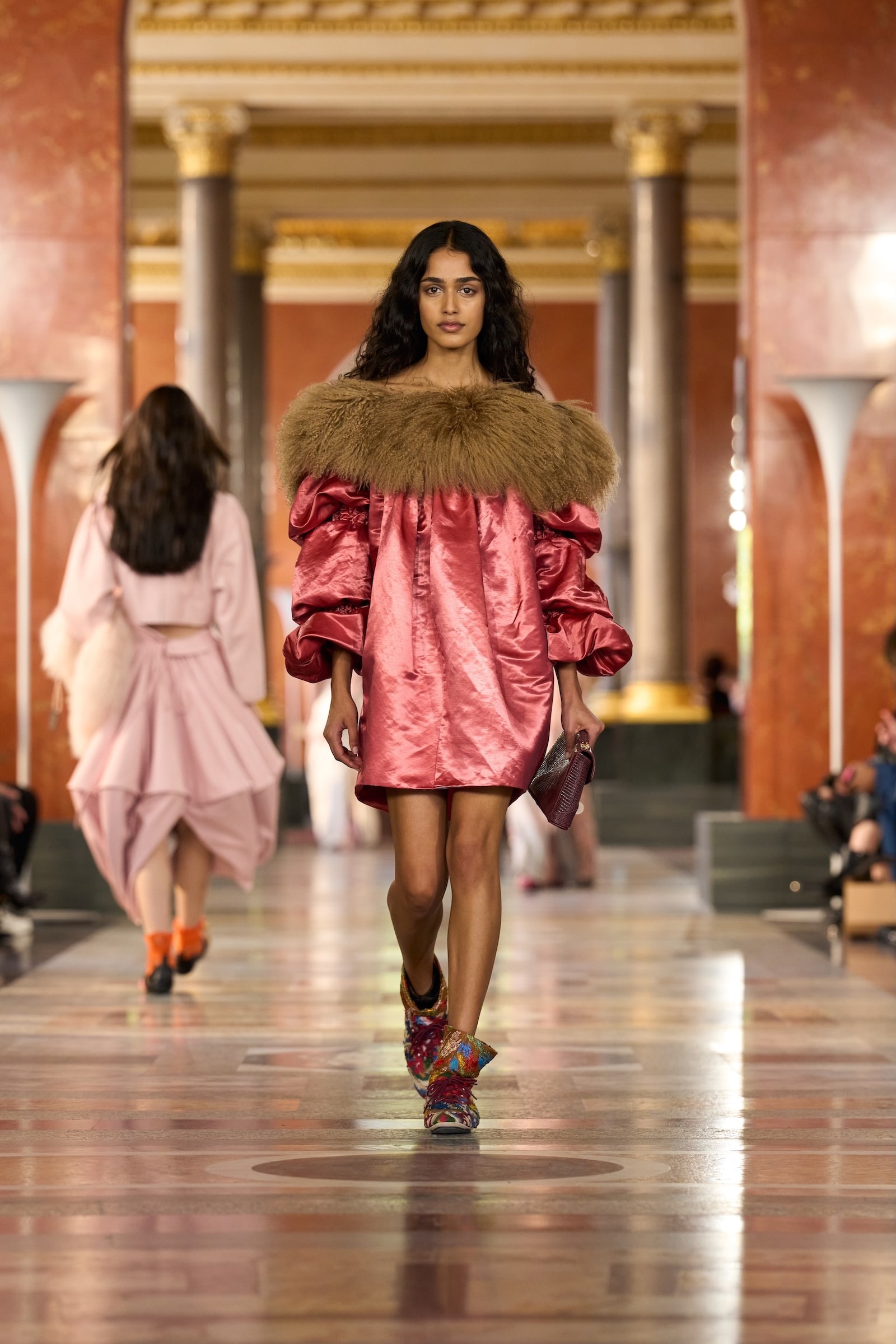

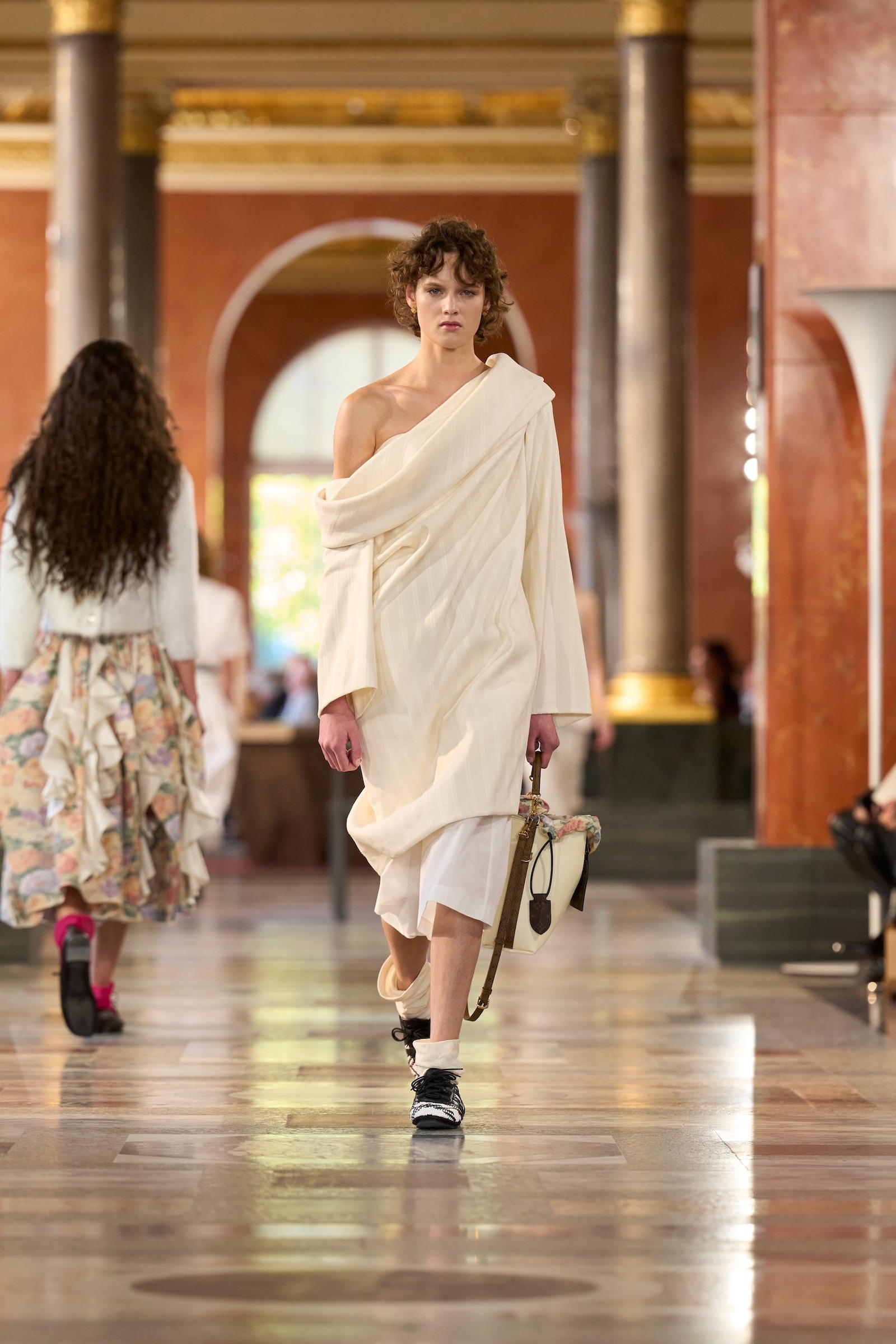
“In praise of intimacy as an art de vivre,” was Ghesquière’s opening line. The art of living is, of course, subjective: the way a queen lives is very different to you and I. And, equally, the way Ghesquière envisages everyday life – and a notion of private intimacy – isn’t our everyday slobby sweatsuits. He isn’t a designer interested in sportswear, frankly. Rather, it seemed to be about dressing extravagantly, elegantly, but entirely for yourself, privately, as opposed to for the spectacle of observation. The notion of joy is a recurring theme for the Spring/Summer 2026 collections – this was a collection about the joy of dressing, and of fashion, albeit purely for yourself.
And just as the rejuvenated apartments showcased a dazzling collage of eras and approaches, so did the clothes: draperies that approximated sculptures, fringed beads that looked like paint somehow still drying, corsets and turbans and stiff collars that seemed to nod back to the 17th century. Some pieces were so thickly curled with embroideries they resembled richly stuccoed walls in some French manse. Many of the bags, conversely, were simple – they looked a little like wash-bags, private and personal accoutrements rather than swanky status symbols, and all the more lovely for it in their understated, utilitarian glamour. The waist of the final look was circled by a chain bearing a timepiece – a historical Vuitton artefact, a watch created by the Italian designer Gae Aulenti for Vuitton in 1988, a literal representation of traversing time that Ghesquière so often explores in his Vuitton work. But the feeling here was that this collection was almost a private pleasure, a designer indulging his own urge to explore, to dress up, and to unleash his imagination. Vuitton as Ghesquière’s playground, to invent and reinvent.
