
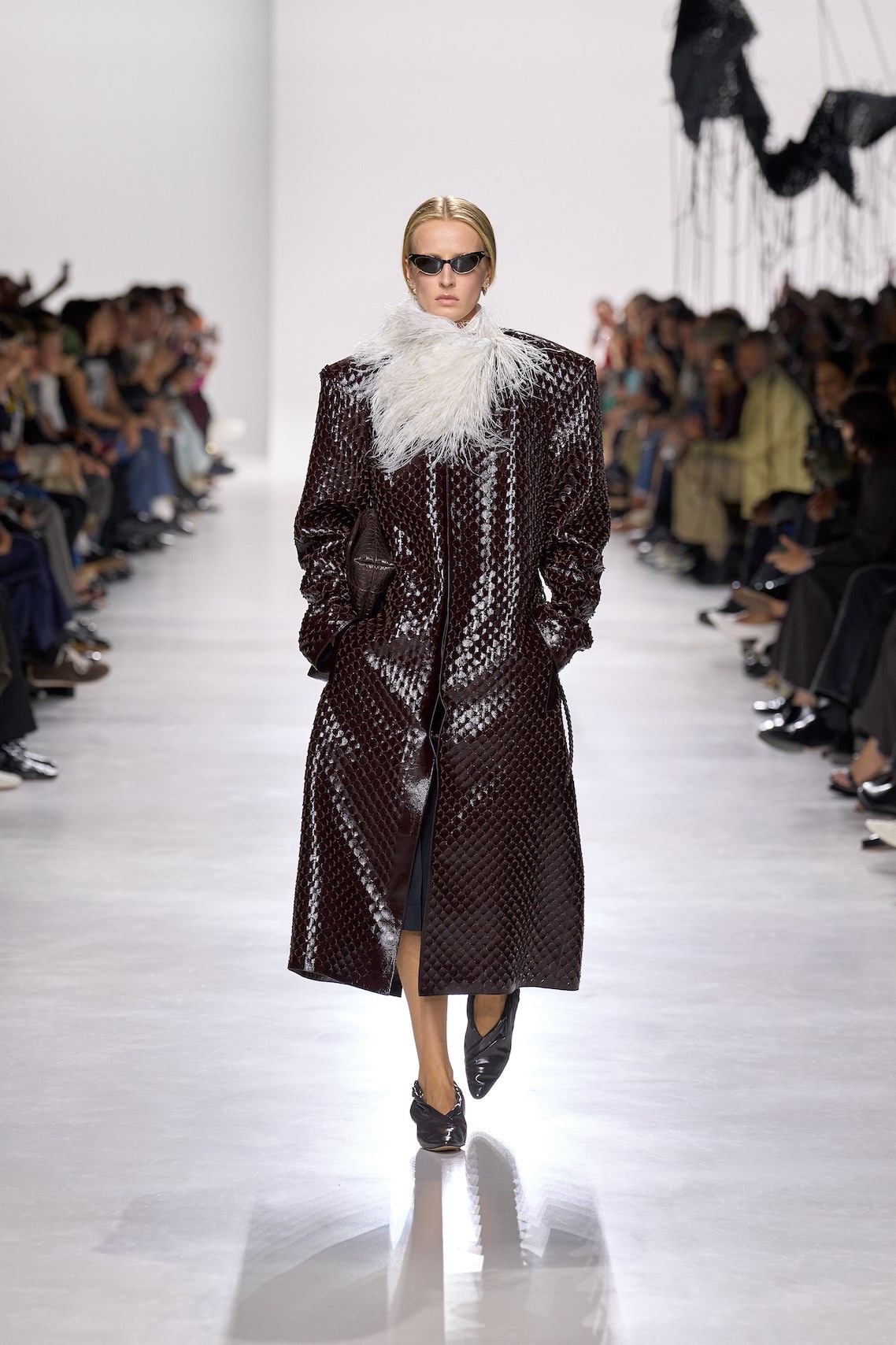
Another day, another debut. In the churn of this season’s opening gambits for over a dozen fashion houses, British designer Louise Trotter’s iteration of Bottega Veneta was always going to be dedicated to the house’s guiding principle: craft. “I like that the ‘Bottega’ is a workshop,” was Trotter’s – literal – opening statement, couching the house in the fundamentals of handcraft, the action of making. Fashion not only as a noun, but as a verb.
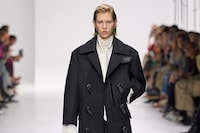
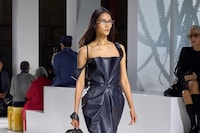
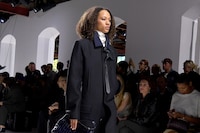
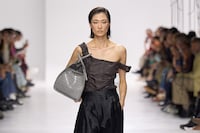
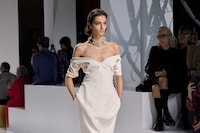
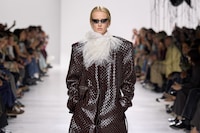
Trotter comes from Carven – with stints at Lacoste and Joseph before that. But here, she’s talking Bottega’s language. Not Italian, but rather things to make and do. She talked about the centrality of intrecciato leather, not only in terms of garments – although she wove together as dazzling array of pieces from Bottega’s signature criss-cross basket-weave nappa strips, from jeans, shirt and matching bandana, to a glossy caban coat, to a newspaper clutched by one of her rugged, square jawed and (very) wide shouldered male models. She was also fascinated by intrecciato as a metaphor – “Two different strips woven together that become stronger – the two things make a stronger whole.”
Certainly, that was a metaphor for Trotter’s collection, insomuch as it was an apparently seamless transfer from Matthieu Blazy’s tenure to hers. Rather than eradicating the message of Bottega’s recent past, Trotter embraced all the house has stood for of late, both in terms of techniques and the individuality of each and every look, creating a collection as collective, different characters walking side by side. An evening dress crossed with a trench coat, quiet day suiting with amped-up neon embroideries. And the methodologies of the clothes were often dazzling, with not only all that weaving, but animalistic fringes, wide leather bands exploding into ruffles of free-wheeling stripes, and tufted leather bags that wound up resembling lugged multicoloured bales of very, very expensive hay.

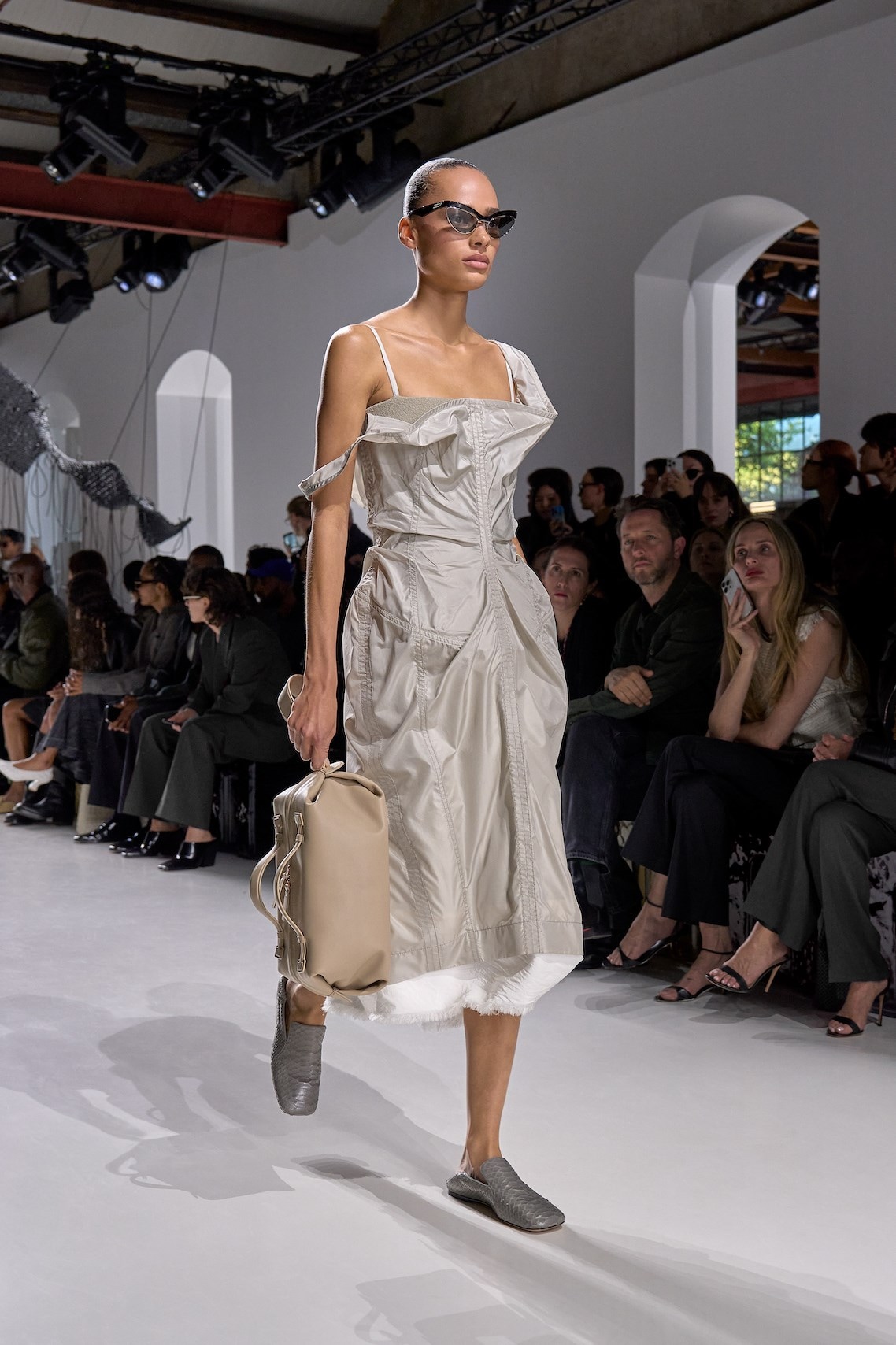

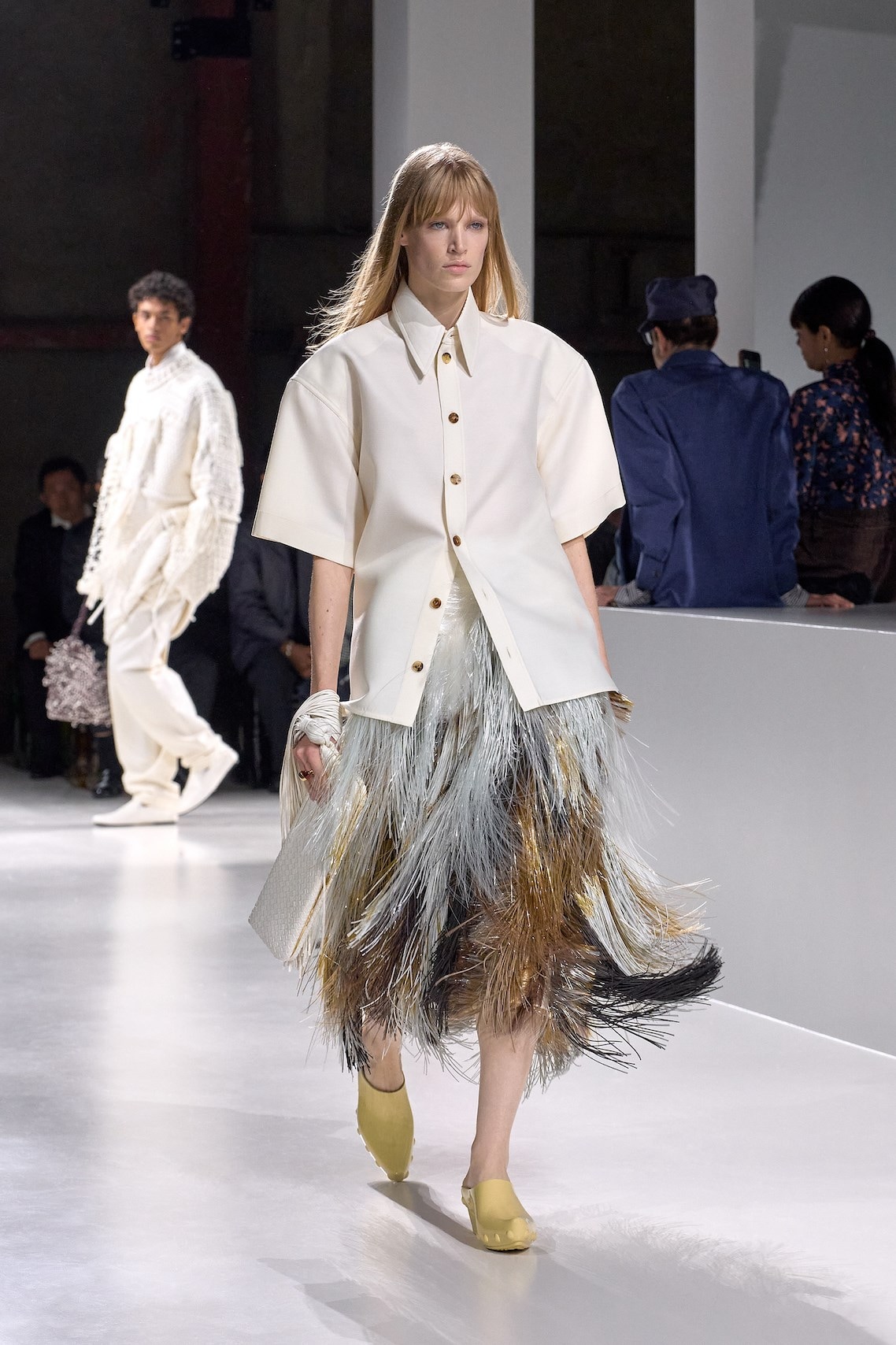
It all chimes with Bottega Veneta’s original 1970s tagline, “When your own initials are enough”, posited as a riposte, during an era of blatant logo mania to pressure BV to evolve its own cash grab emblem to compete with other brands. The notion there is, of course, that Bottega Veneta doesn’t need to be explicit, as the implicit quality of its craft makes its presence felt. But the idea of initials reflecting identity was also spun off into these disparate, distinct characters.
Crafting here wasn’t just part of the clothes – Trotter approached British artist and Oscar-winning director Steve McQueen to create a soundtrack that wove together (geddit) snippets of Nina Simone and David Bowie’s versions of Wild Is the Wind into an impossible duet of interlocking voices.
Bottega Veneta was not only celebrating newness, but also, well, oldness: the other favourite fashion theme is, of course, an anniversary, and 2026 marks 60 years of Bottega. So a few greatest hits were cited – Bottega of old, like Lauren Baccall’s clutch from American Gigolo. Fittingly, Richard Gere’s suit is also on display in the new Armani exhibition at the Pinacoteca di Brera. And there was a feel of Gigolo to some of these clothes, to the louche elegance and subtle colour. That felt like a sweet spot for Trotter to mine, as she carves her own initials into Bottega.
