
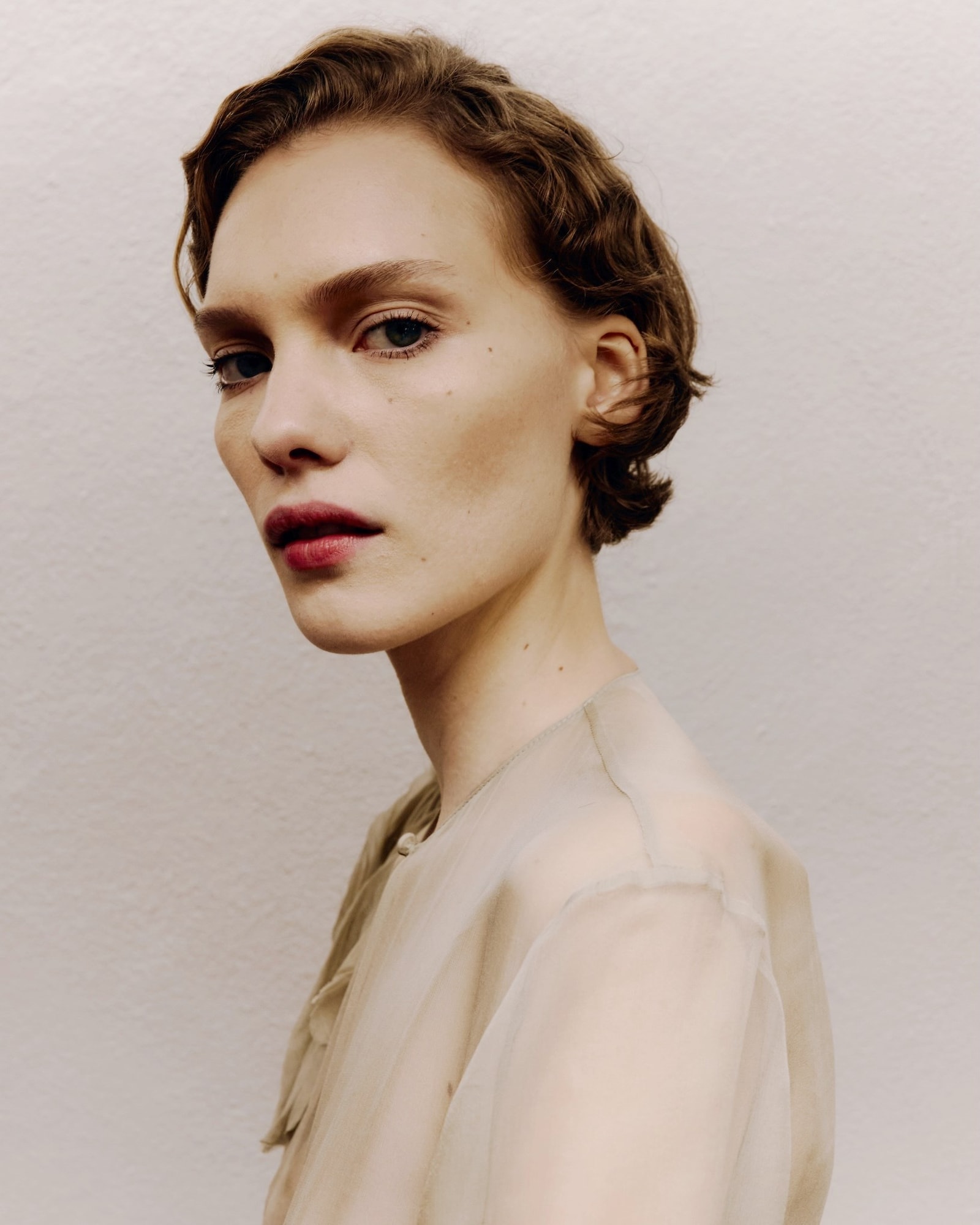
About halfway through his Spring/Summer 2026 Ferragamo show, Maximilian Davis played the low, throbbing, instantly recognisable (at least, to a homosexual such as myself) baseline of Kylie Minogue’s Slow. Which is fitting. What Davis is doing at Ferragamo is a slow burn, a gradual build up of new ideas of wardrobing and reworked bits of hardware, silhouettes and approaches that, like that Minogue beat, could come to be inextricably aligned with the label in future.




A lot of that newness, actually, is quite old – Davis is a wicked tailor, and this collection in particular jumped back a century, looking to a 1925 image of an obscure silent movie star, Lola Todd – weirdly, an actor with a fashion background who used to design her own costumes for many of her roles. There was a picture of her in Ferragamo’s archive dressed in leopard print that sparked Davis’ thinking.
1925 has been on lots of designers’ moodboards this season, it seems – that was the year of the International Exhibition of Modern Decorative and Industrial Arts in Paris – which gave title, if not necessarily birth, to the Art Deco movement. It was also the year of the debut of Josephine Baker and La Revue Nègre, the birth of an international superstar and a shift in perceptions of performers of colour more widely. Davis is aware of his position as a Black creative at the head of an Italian luxury house – a history maker, effectively. And it informs his creativity, while not defining it.


Example – that Lola Todd made Davis consider the politics of anomalies. “I was interested in how certain materials, prints and textiles were imported from across Africa and the Caribbean into America and Europe to become a sign of status,” he said. Josephine Baker wasn’t cited, directly, as an influence, but when Davis talked later about the 1920s as a moment “where women were creating a new femininity – it was a celebration of freedom, a reclaiming of self,” it made me think of her indelible and still powerful image of liberation. There were also references to the zoot suits of the Harlem Renaissance, and nods to dandyism – chiming, perhaps, with the closing days of the Superfine: Tailoring Black Style exhibition at New York’s Metropolitan Museum.
Talking about the 1920s and retro-tailoring could bog this collection down in retrospective glances – yet, it felt like an electrifying expression of elegance, past and present. Narrow shift dresses in exquisite combinations of print and devoré velvets with blooming corsages came in decidedly odd colours, like corrupted hand-coloured photographs, while men’s tailoring was cut generously, layered elegantly, scarves swathed around hips and trailing on the floor. The all-important shoes and handbags looked great.


Ferragamo decided to stage their show outside, in a season that saw Milan marred by, effectively, a white squall that grounded flights and lashed the city. The brand took a risk and decided to proceed al fresco, rather than retreating indoors – and there was something poetic about the models walking on sodden black carpet, each damp step making it seem like ink was seeping from beneath their shoes. Ferragamo took a risk with that venue, and it paid off. The same is true of the appointment of Davis.
