
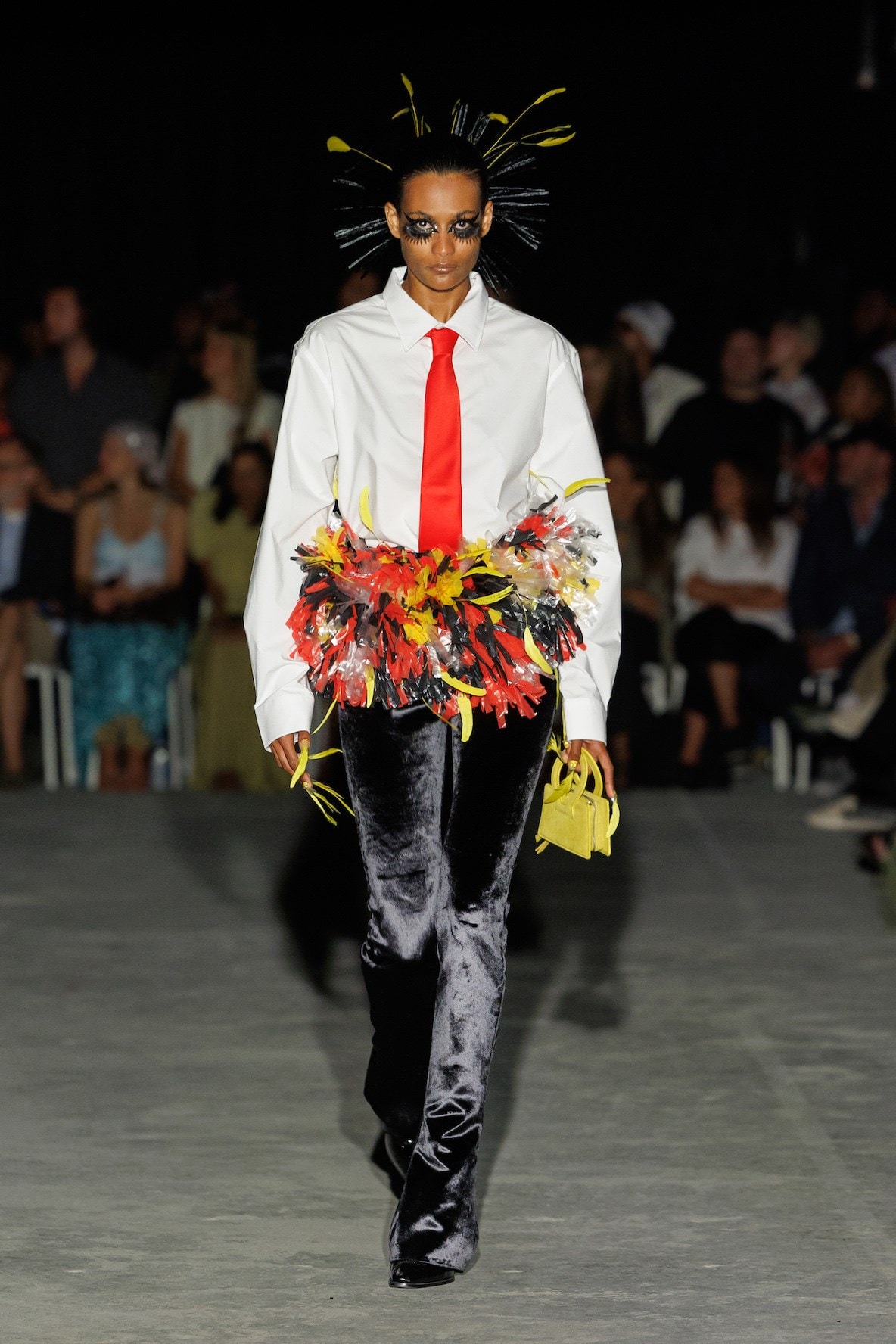
I love the fact Raul Lopez trucks a few parlour palms into whichever venue he decides to show his Luar wares. It’s like a piss-take on a salon setting, a nod and a wink to tropes of fanciness which, like so many other received notions and accepted ideas, Lopez seeks to gleefully invert. Why can’t feathers not only smother a dress, but sprout from cuticles and eyelashes? And for all genders alike, no constraints, no boundaries.

For the Spring/Summer 2026 season, Lopez was in Carnival mood – which is something that, coincidentally, shaped the collection of Rachel Scott’s Diotima, showing four hours before. Both alighted on Carnival as an expression of resistance and protest through extravagance, of joy as agitation, undoubtedly a reflection of an American condition in fashion right now. Of course, Carnival cannot – or rather, should not – be divorced from its racial roots, its legacy in colonialism and enslaved people using audacity to buck against authority. The messaging is as potent in 2025 as it was back in 1520, when Carnival began in the Dominican Republic – and, actually began in the Caribbean full stop – and where Lopez’s family hail from.

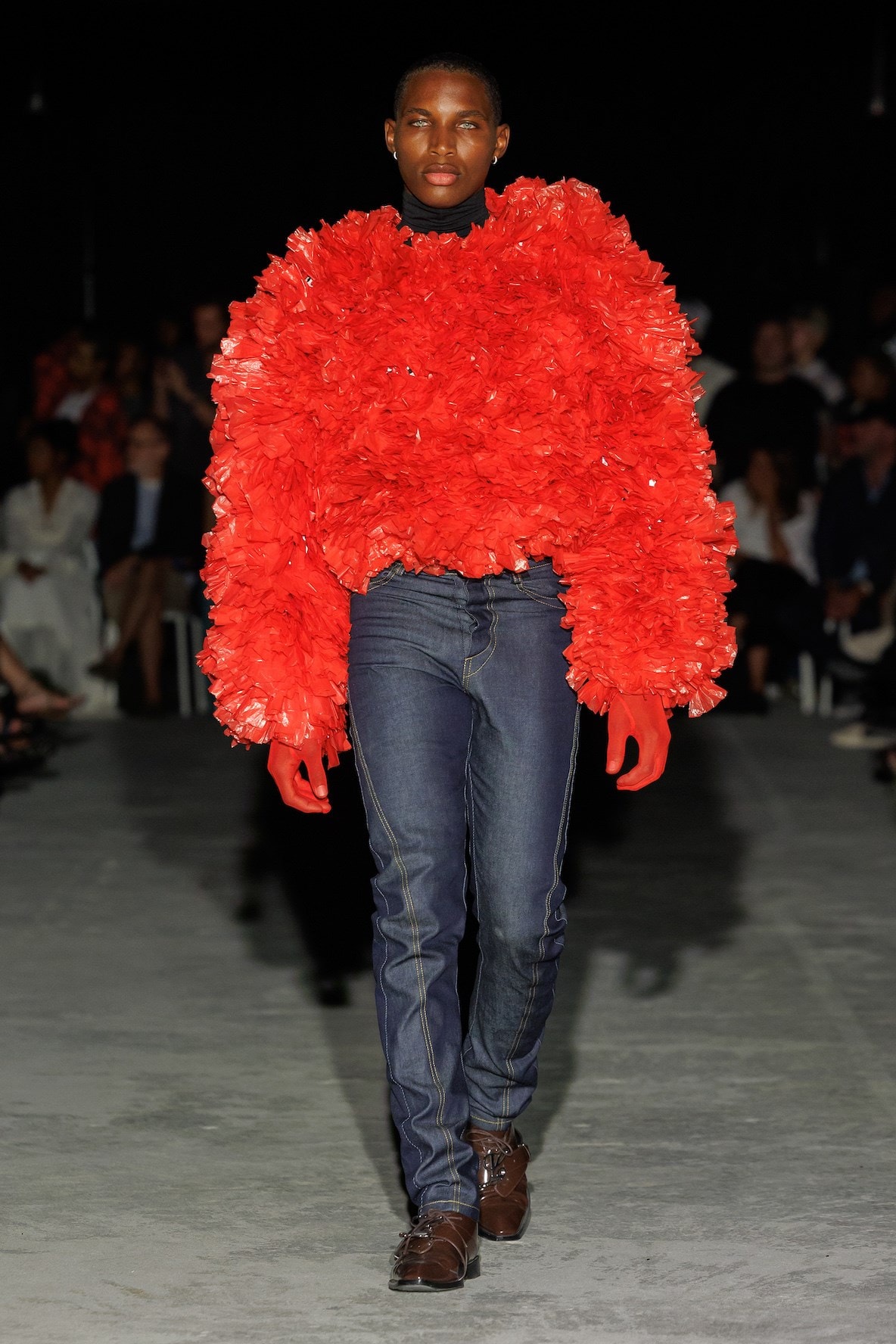

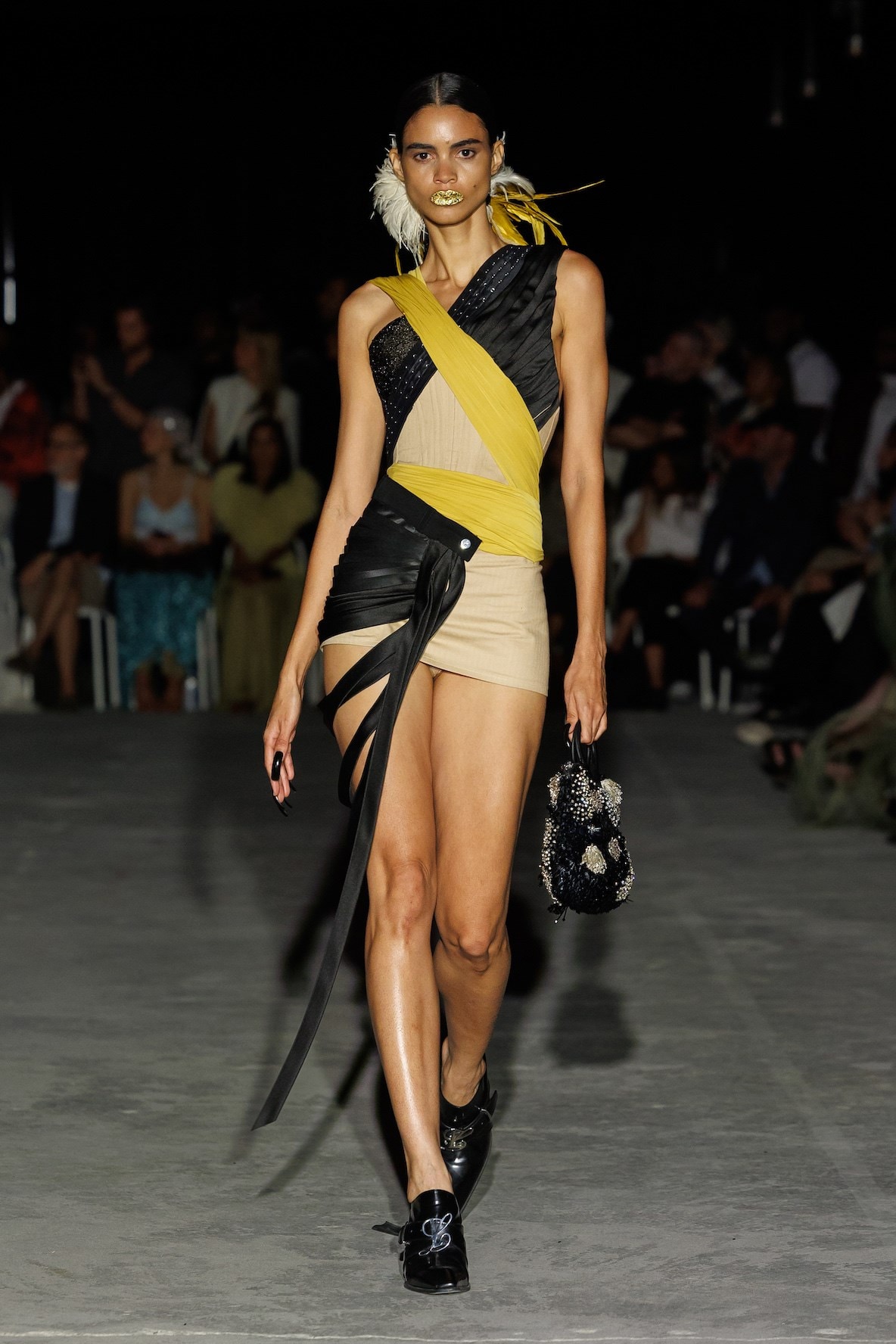
Many of Luar’s models looked tarred and feathered – a punishment originating in 12th-century England but widely practised in the American colonies, as a punitive form of intimidation. Luar rather has reclaimed the act, just as, last season, he reclaimed the slur of El Pato – translating as duck, a pejorative term for gay in some Latino countries – as a term to be sported proudly.
Feathers, of course, are inherently flamboyant, gay. Susan Sontag declared that camp is a woman walking around in a dress made of three million feathers. Unlike fur, say, they have never really been co-opted as a symbol of power, as expressive of machismo. But Luar used them across frothy chubby jackets for everyone, as well as laser cutting the surfaces of tailoring to resemble quills trembling on point. This collection showed Lopez’s ever-increasing ambitions, with deluxe fabrics like velvet and leather and complex shapes, wide cuts and corseted midriffs exploring zones of tension around the body.

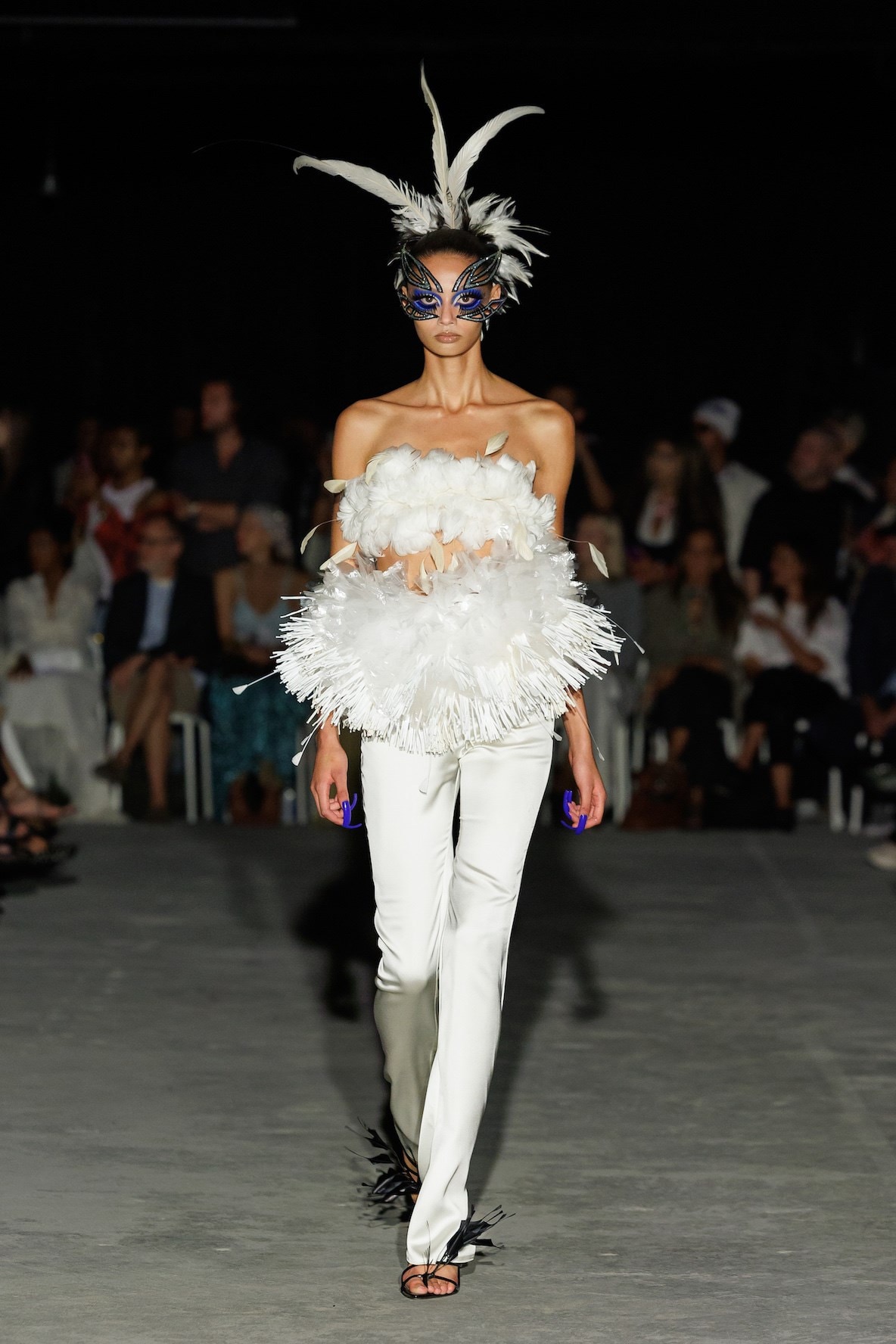

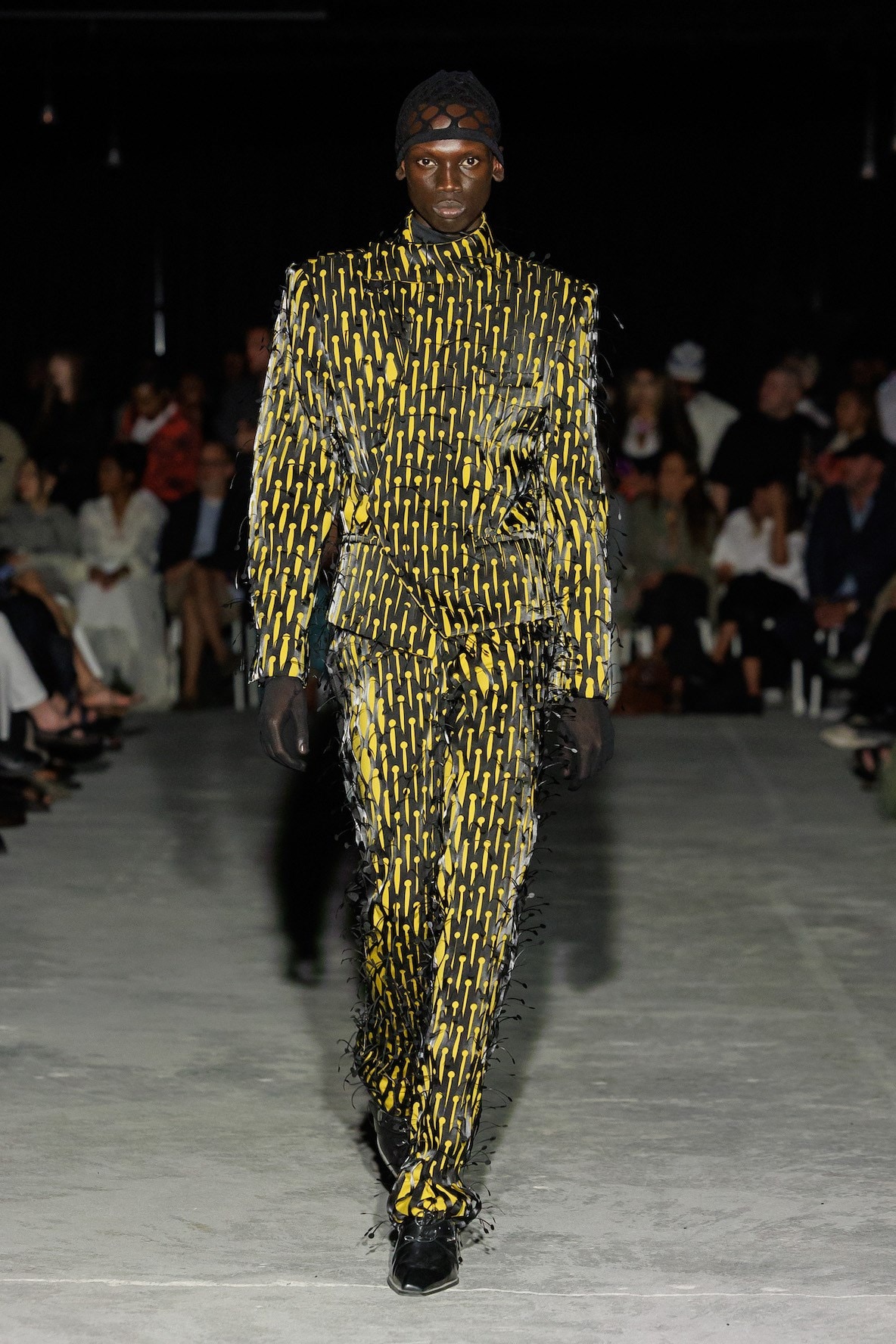
There were wider questions posed in these Luar clothes – about what connotes value, or signifies wealth. And, indeed, who gets to decide. Lopez collaborated with Dominican craftspeople to create some of the extraordinary effects, tufting ordinary plastic into giant animalistic ruffles to wrap evening dresses, or compressing them into honeycombed collars like renaissance finery. The messaging seemed clear – anything can be beautiful, valuable, worthy, if you expand your mind.
Lopez is always questioning received notions of beauty through his Luar clothes – his shapes abstract, cut up existing erogenous zones, discover new ones. They’re not always comfortable to behold, rather they’re provocative, sometimes wickedly funny, often brutally sexy and unapologetic. And in the often safe landscape of American fashion, they’re revelatory – a window into the way another generation wants to look, and how they think, both about themselves and the world around them. If this collection had an exuberance, a happiness, it was skin deep – that tension talks a lot about how people are thinking today, about themselves, about their bodies, and about what’s going on socio-economically, and politically. That said, perhaps there’s something to be said for ignoring it all and dancing on the lip of the volcano? After all, it may never happen.
