
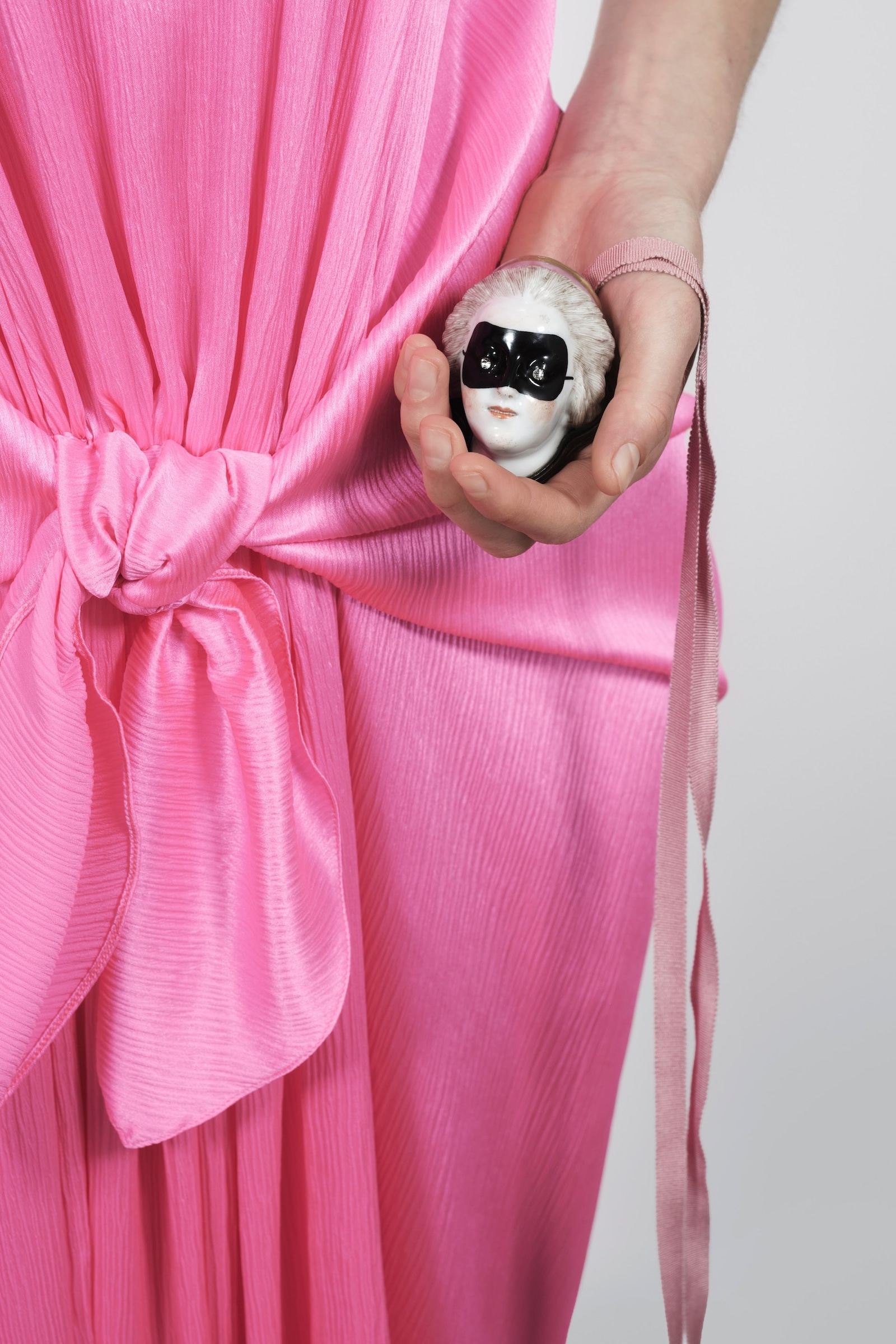
You rarely walk into a fashion presentation and see a wall of well-worn garden implements stamped with a designer logo. At least, I never have. They had a few spades hanging up during the Chanel Supermarket show, but that’s as close as I’ve been. There was a whole array of them on the wall at Jonathan Anderson’s Paris presentation. There were lots of walls, the entire space blocked into small rooms, showing off a variety of wares, many – if not most – of which weren’t clothes. “We’ll do exhibitions with artists, craft, you can buy furniture,” Anderson said, whipping around at breakneck speed during the usually slovenly pace of the couture shows. “This is just a selection.”
It’s a selection, alright – it includes hand-made silver and gold jewellery, paintings, the aforementioned trowels, and a poufed-out denim dress with a skirt of New Look proportions that seemed a nod to Anderson’s other new gig, that of artistic director of Dior across womenswear, menswear and haute couture. That’s a huge remit – which, perhaps, was part of the motivation for rethinking the structure and meaning of his eponymous label, first launched in 2008. “I think I’m enjoying my own brand,” Anderson says. “I’m going to need it as a release, or a playground.”






Indeed. At Dior, Anderson will be responsible for at least eight fashion shows a year, and countless other collections and product drops. Adding an extra two shows for his own label was possible – but would he really want to do that? The change, however, sits deeper. “It’s rethinking the model,” Anderson says. “If you have a young brand – even though we’re not anymore – you’re relying on wholesale. Which means by the time you deliver, it’s already discounted. You’re devaluing the product before it even gets into shops.” The difference here is that Anderson is giving products eternality rather than ephemerality.
The mix is extreme. Alongside knitted jumpers co-branded with the British heritage knitwear company Pringle are sterling-silver scissors by Ernest Wright, who have been hand-making them in Sheffield for over a century. Alongside twisted everyday staples (a scrunched-up, back-to-front version of a pair of jeans features prominently), are boxer shorts executed in silk damask, specially woven to reupholster the Chippendale furniture of Dumfries House. I ask how much they are – the response is eye-watering. But Anderson loves how there are still stitch markings for where the chair’s arms should be upholstered. “It's kind of an amazing thing, that people don’t really get to see,” he says. “Everything has a story.”

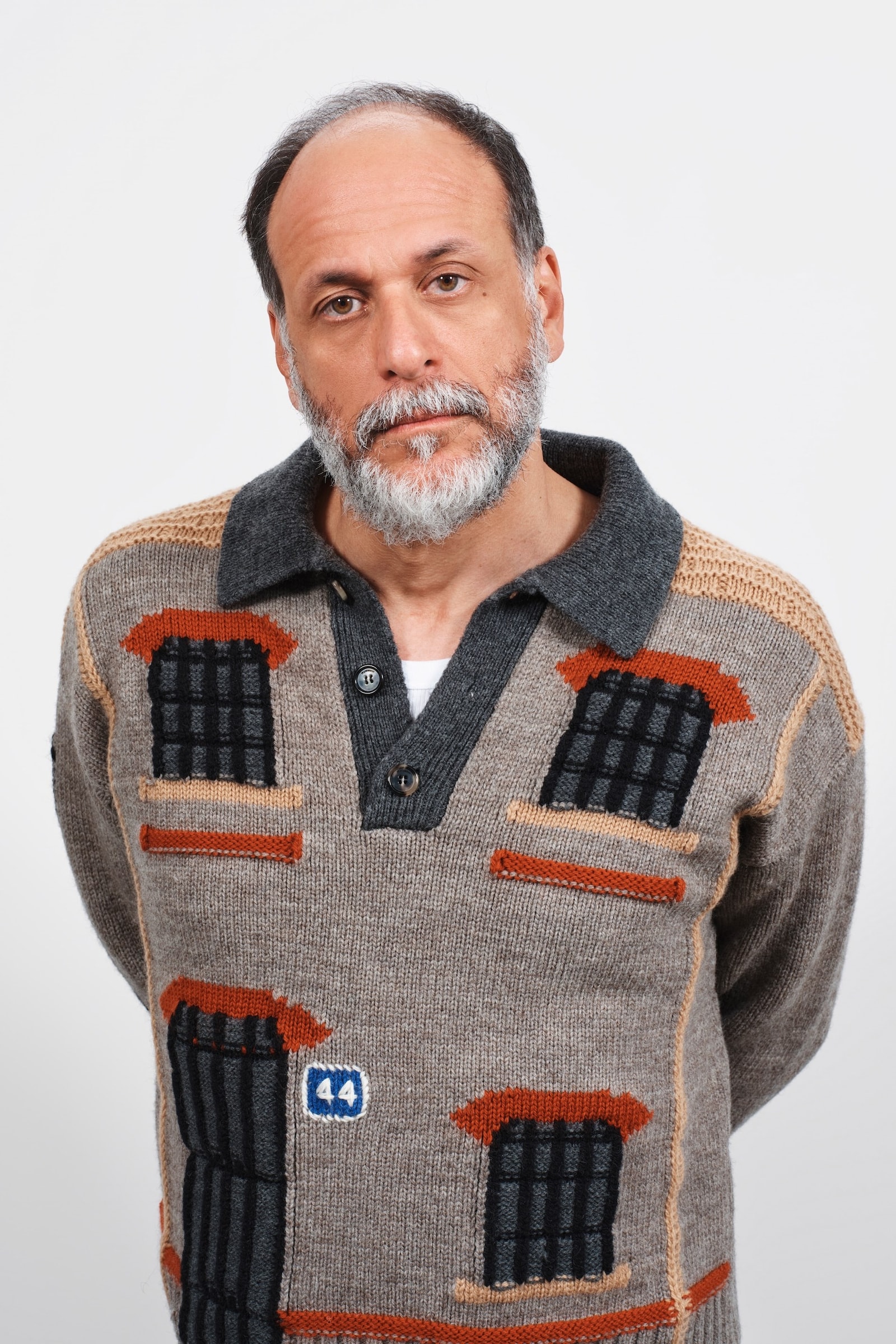
Sometimes, that story is Anderson’s own. “There’s something from every collection,” he says – and the geekier JWA-heads would recognise fragments from his collections. He calls it a curated edit “of everything we’ve done, from the very beginning of the brand, and making it better. Or what I would wear. Or what I would want someone to wear.”
But it’s also a bit like cracking open Anderson’s head and looking at what’s inside, which is far from limited to just fashion. That also explains why Anderson is opening his next London store in Pimlico – off the beaten track for fashion, but bang on the money when it comes to people obsessed with interiors, art and culture … basically, with the everything-else that he now wants his brand to actively interact with, to celebrate and champion. He cites a love of the Conran Shop – and this, it seems, is a redux of the radicalism of that proposal.

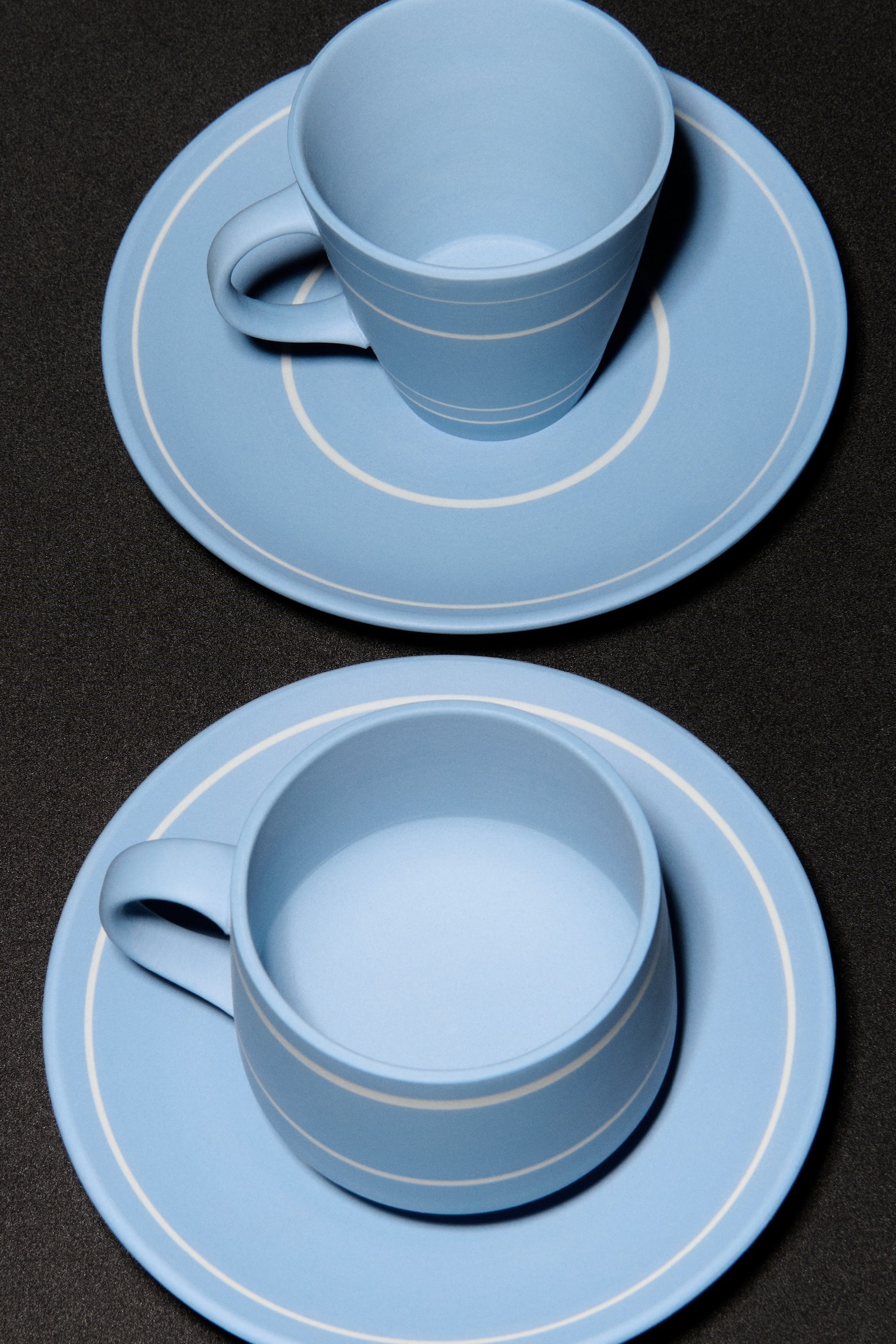
The new store will include his passion for all the above, as well as Lucie Rie ceramics (he’s realised an unrealised project by the cult ceramicist with Wedgwood) and Charles Rennie Mackintosh furniture. “It’s projects I’ve always wanted to realise,” Anderson says. “I collect Mackintosh furniture. This is a stool he made for the Argyle Street Tea Rooms, and I really wanted to make with this guy who’s restored all the original architecture. This one has never been reissued – I wanted to make it in Scotland, exactly the way it was in the three colours in white, black, and oak. And I like that that’s it. It will always be there.” He then lifted a black dress from a nearby rack. “Or making a beautiful lace dress. It’s timeless.”
There are big plans. Anderson wants to showcase art within the stores, to continue creating these limited-edition design capsules. What he doesn’t want to do, he says, is a fashion show. “Retail becomes a show, ultimately,” he says.
