
What’s Celine all about, really? Well, it’s one of those brands with an elasticity to its meaning, allowing a wide breadth of interpretations. And it’s had them, especially across the last 30 or so years. There have been three, to date. First of all, there was Michael Kors’ sharp reboot in the late 1990s, putting the brand back on the fashion map; then, Phoebe Philo spectacularly reinvented Celine – with an aigu accent – in her own image, which then became the image of droves of women around the world. And latterly, Hedi Slimane supercharged Celine (sans aigu) with abstract nods to its Parisian antecedents – bourgeoisie tweeds and gilt-strapped bags, sneering snobbish skaters, Le Palace regulars, and ribboned bits of haute couture proposed for men and women alike. Which gives the brand’s new creative director Michael Rider the liberty to take the reins and steer Celine just about anywhere he wants to go.





Rider began in a way both big and small – his collection, for men and women, rap through 72 looks, but was shown in Celine’s showrooms on the rue Vivienne – where, incidentally, Rider worked from 2008 to 2018 alongside Philo as designer of ready-to-wear. He then left for six years at Ralph Lauren – he’s American himself. So, this was a homecoming, of sorts, at least to a home away from home. And the big collection – it was resort, which also had a modesty to it – whizzed out fast, models barrelling from two different exits to give the show an energy and give the audience whiplash from zigging back and forth between their crossing paths. We were close, so we saw the details. Big, small.
The clothes themselves were … well, very Celine. Which is an odd thing to say, having said before that Celine is open to meaning. Rider himself seemed to be grappling with that idea. “Celine stands for quality, for timelessness and for style, ideals that are difficult to catch, and even harder to hold on to, to define,” he wrote in a manifesto sent out to press. He not only had to define them, but had to make them material, in a bunch of different sizes, and ready to hang on shop floors around the world.


Yet there was something about them that tapped into a sense of Celine as a grand French brand – not a couture house, but something tied up with grand luxe, with sportswear’s easiness, with a sense of how you wear clothes being just as important as what you wear. “Attitudes” was the word Rider used. “I’ve always loved the idea of clothing that lives on, that becomes a part of the wearer’s life, that may capture a moment in time but also speaks to years and years of gestures and occasions and change, of the past, the present and the future, of memories, of usefulness and of fantasy, of life really.”
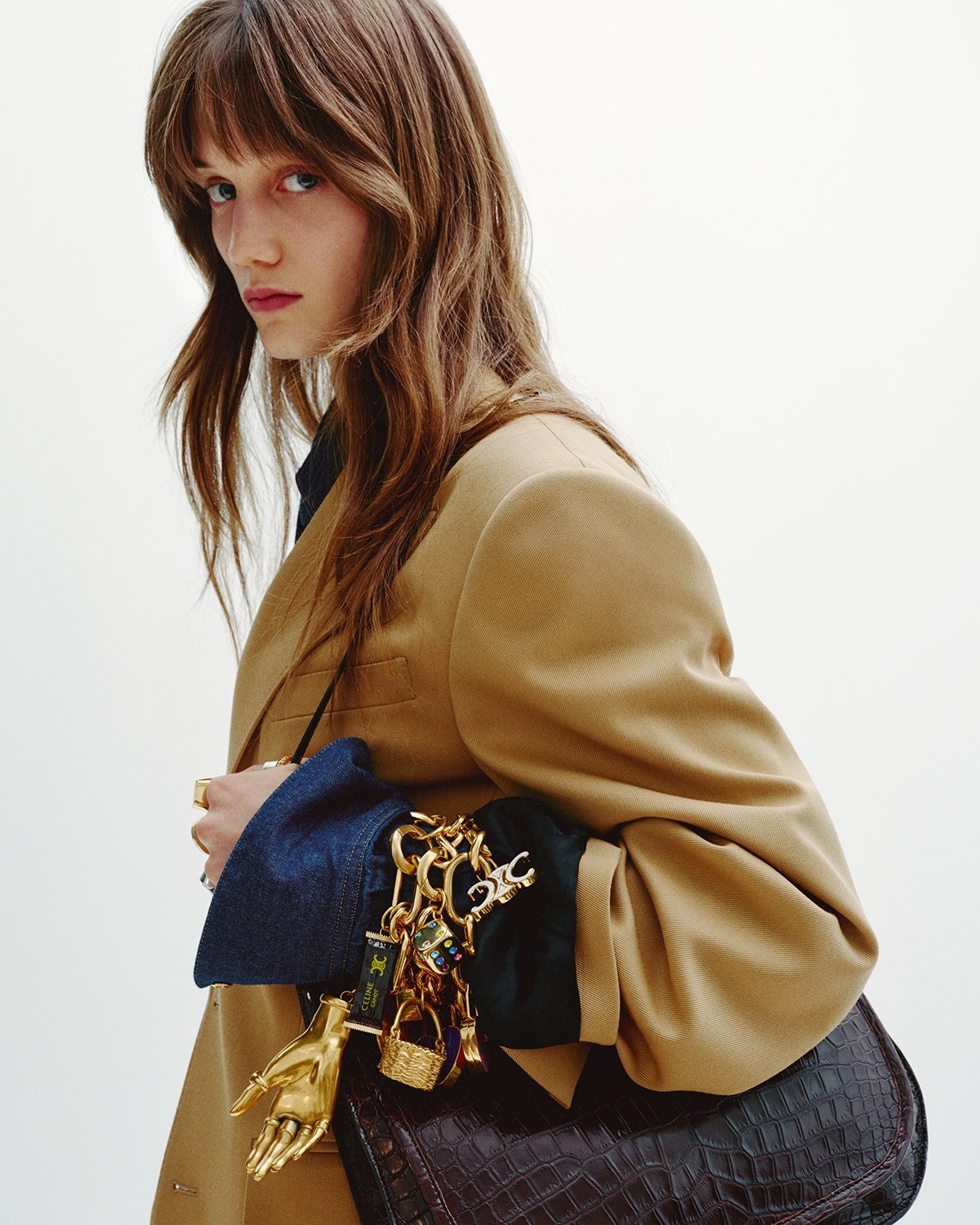
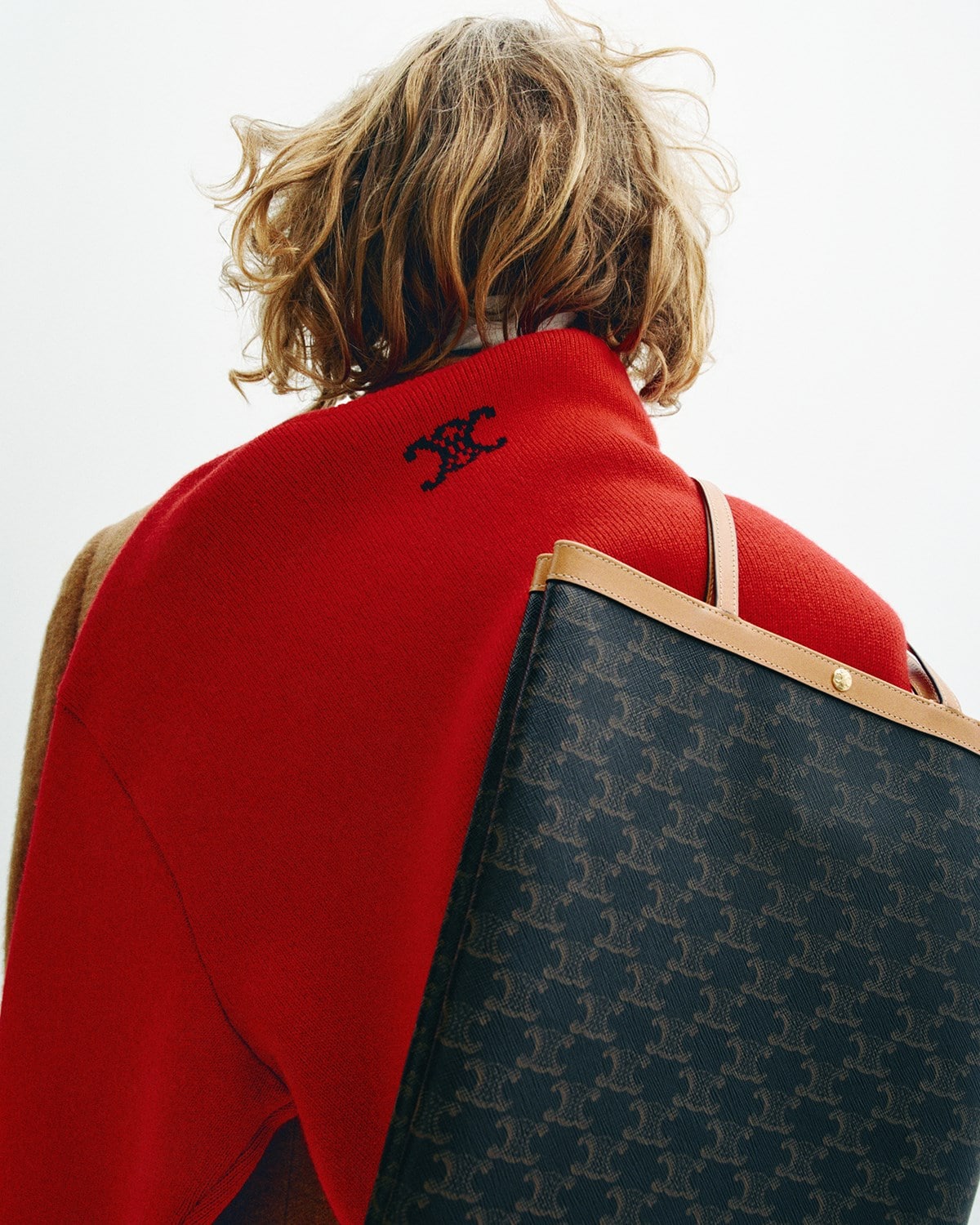
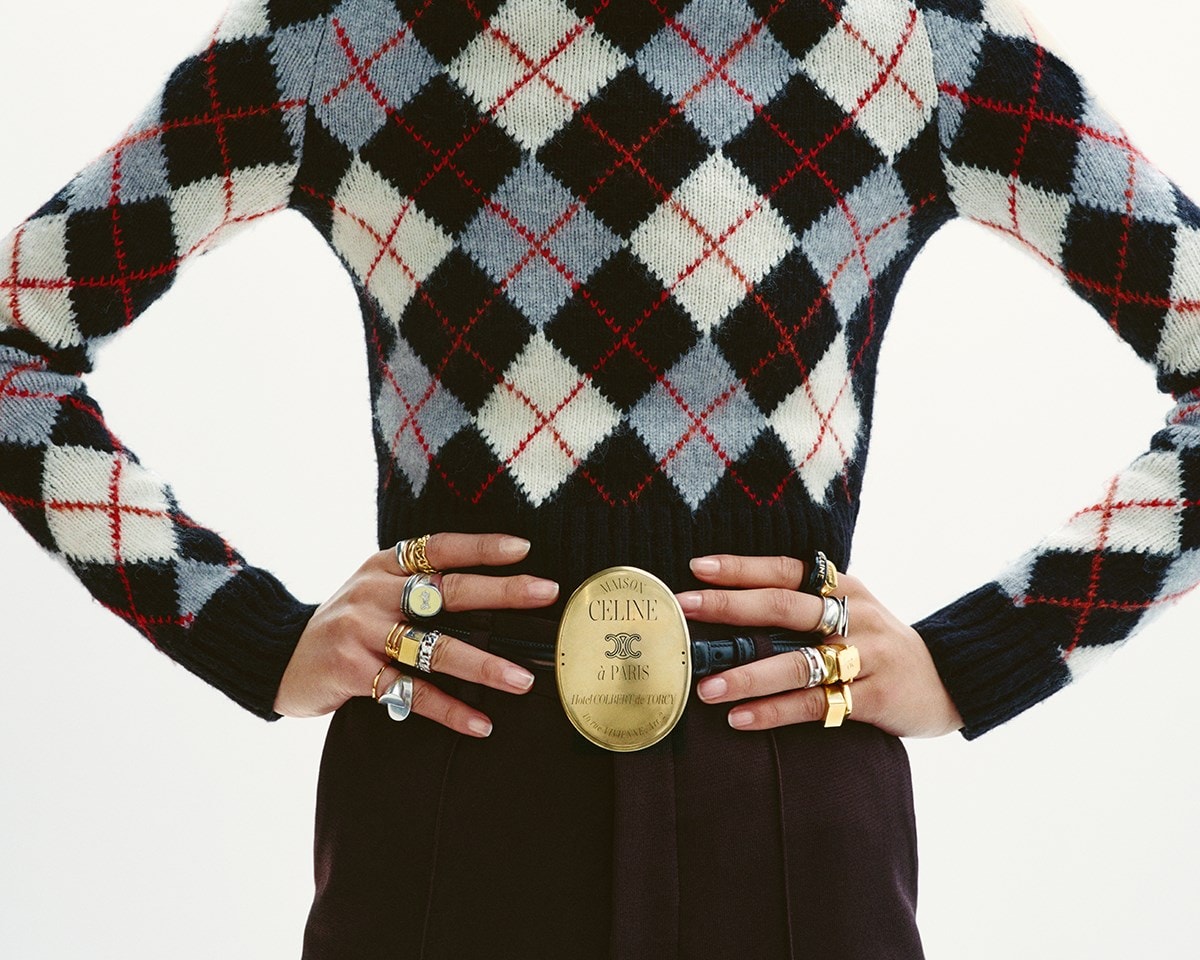
There were general nods to history aplenty – a few chic 60s couture shifts, a late-70s nod to Celine’s heyday, a couple of evening outliers that reminded me of Napoleonic-era gowns, even. What was interesting here was that, as that statement suggests, rather than wiping the Celine slate clean as his forebears did, Rider acknowledged the house’s past. There were references to his own time at Celine a decade ago, in the sense of ease in pleated trousers, in jackets hugging the waist, in swirling skirts and contrasts of colour and great tailoring, as well as a revived, revamped version of that era’s best-selling Luggage tote (this time, the zip curves in a smile). There was the street sense of Slimane nodded to, too, as well as a presence of the logotype he tweaked into a status symbol, flashing across the back of trousers, on belts, and across T-shirt chests, allowing kids to pledge their allegiance to a fashion house the same way they would fanatically to a musician back in the day. There was even, to my eyes, a great glob of Michael Kors Celine, in the hanging gilt belts and slight ladylike nods. There was a Celine show 25 years ago where Kors played the theme music to Dallas, Dynasty and Lifestyles of the Rich and Famous, and showed chain-link belts mimicking the one that circles the Arc de Triomphe. That’s where Celine filched its logo from, back in the day – Jennifer Lopez tore one off her waist in the video to Love Don’t Cost A Thing. The jewels here were more anarchic, more eclectic, and looked just right for now, weighing down wrists or dusting knuckles.

There was a distinct Frenchness at play – but, in a way, that reminded you of Rider’s own past. He’s been creative director at Ralph Lauren, a company that made its global name known by a nose-pressed-to-the-window view of prepped-out English establishment dress. It was an outsider, emulating. Rider is American too, and his Frenchness has a similar picture-postcard sense, an outside pair of eyes catching the subtleties and idiosyncrasies – the attitudes, indeed – that comprise Frenchness, and nailing them down in these looks. And that was an achievement – because that Frenchness is, really, what Celine is all about. Here, it was distilled to an essence, and it resonated. This was a debut with warmth, with soul and with plenty to love. And, most importantly, to wear.
