
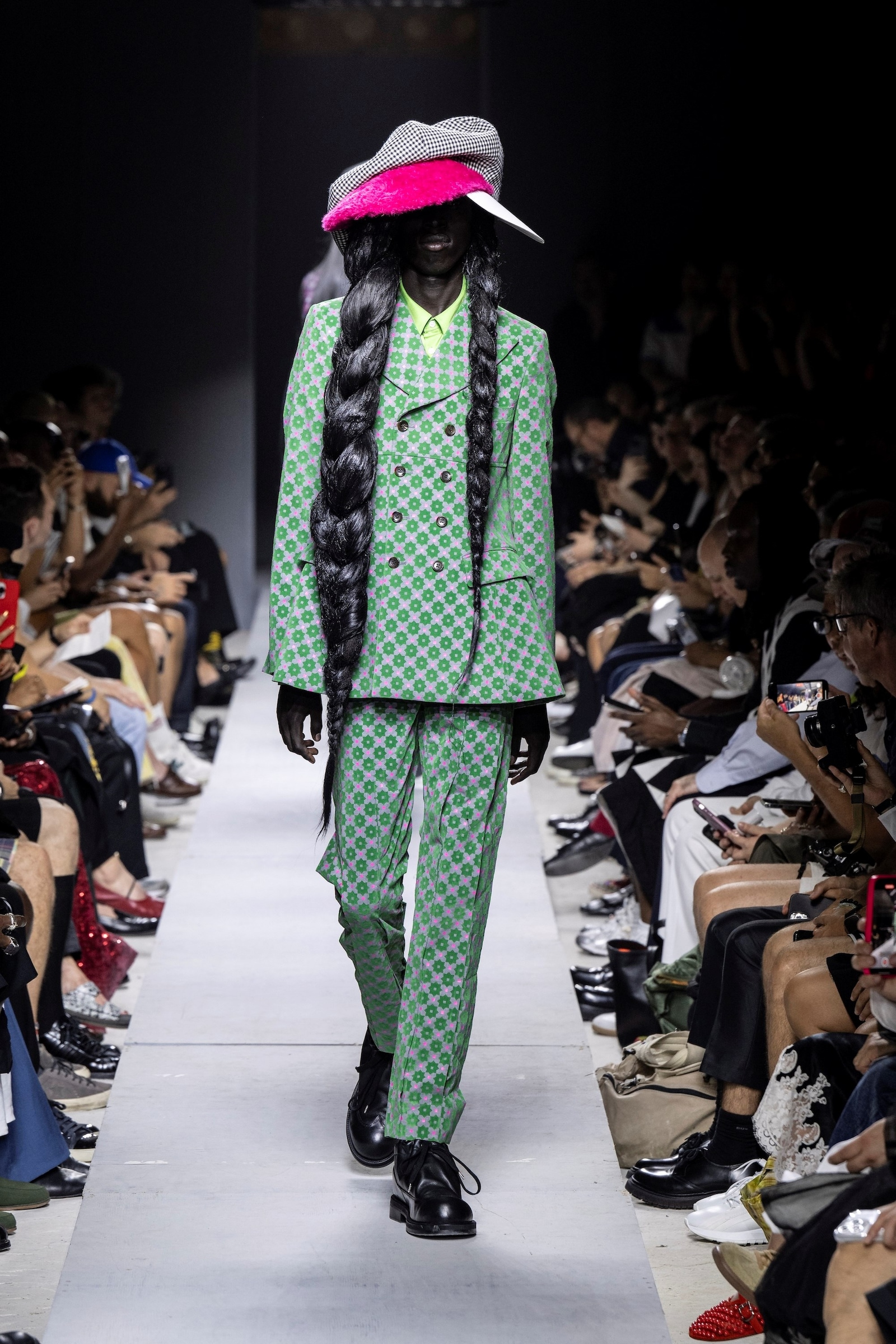
Shamanic power. That was what Rei Kawakubo channelled for her Spring/Summer 2026 Comme des Garçons Homme Plus show. Shamans are healers – diviners, for divine power. They come to human aid. After an Autumn/Winter collection literally shaped by war, with army clothes sprouting colour and flowers in visual protest against the state of the world, now Kawakubo seemed to be offering a solution – or a saviour.
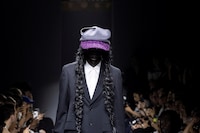
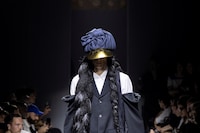
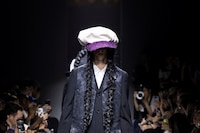
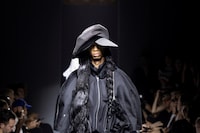
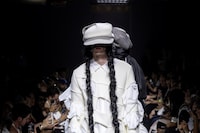
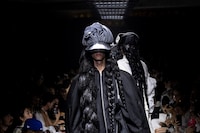
Which is interesting. Her Comme des Garçons Homme Plus lines always revolved around suiting. “It’s always that kind of reaction to what’s popular – it’s an anti-streetwear thing,” Kawakubo told me. But it’s also deeper – in a sense, tailoring is a structure, a system, into which to inject rebellious ideas, her punk spirit. In a sense, Kawakubo creates men in suits – a benign phrase that has evolved from a pejorative for mere bureaucratic paper-pushing busy-bodies to a descriptor for the overpowered overlords wrecking the world in which we try to live. But Kawakubo’s suits are never the usual suits – rather she twists that language of tradition and convention into something utterly unexpected, new and all the more powerful for the shadows of recognition of the staid conservatism of its origin point. “Not Suits, But Suits” was the title Kawakubo afforded the collection – which really says it all.
So, this season, Kawakubo’s suits were scarred with zips, brightly printed, sliced open and ruffled. Hemlines hemmed and hawed, lapels were inflated and folded back. “I had the feeling that we would really need to get someone powerful like a shaman to come back to lead us to peace, love and fraternity,” Kawakubo stated, via email, as explanation of her intention. It is her a second collection, in a row, explicitly exploring peace – because Kawakubo is keyed to the world, and although forward-thinking and resolutely experimental in her approach, she reflects her time. And, sometimes, in doing so she contradicts it. Accordingly, there was a joy in these Comme pieces, in the brilliant colour, the swaggering shape, a majesty in their proportions. They looked like leaders, but not the flawed ones we know and loathe.
