
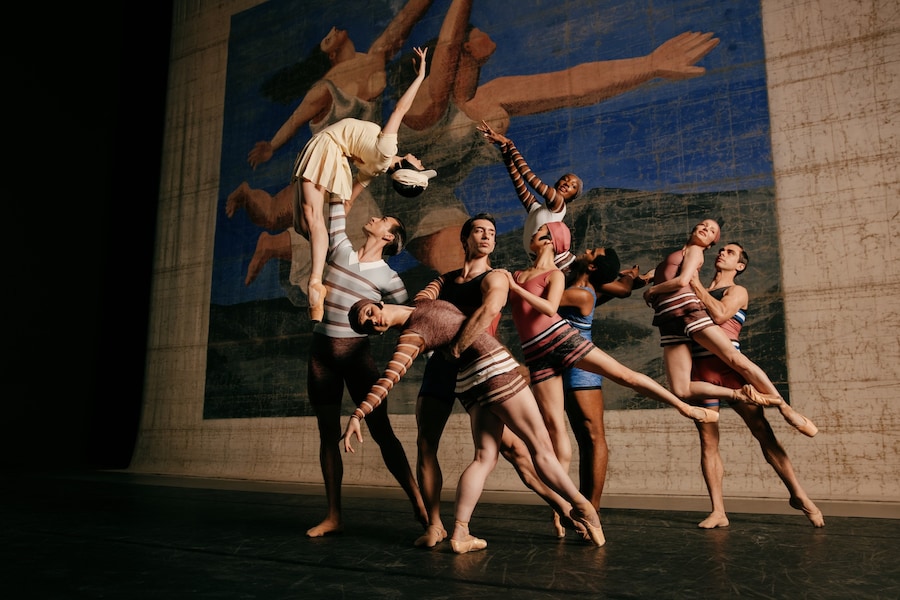
Performed in front of an enormous Pablo Picasso cloth at V&A East Storehouse, Chanel stages an extraordinary re-imagining of their 1924 ballet
On Tuesday night, to celebrate a century of Chanel in the UK, the house took the opportunity to stage an extraordinary re-imagining of the 1924 ballet Le Train Bleu, originally debuted by Sergei Diaghilev’s Ballets Russes in 1924 and here with choreography re-imagined by English National Ballet’s associate choreographer Stina Quagebeur. Unusually, it took place within the V&A’s new outpost, V&A East Storehouse in Hackney Wick – which doesn’t seem terribly Chanel. But, then again, Chanel has had a distribution outpost in not-so-glamorous Croydon since 1933.
Here, then, are five (what other number?) facts to know about Chanel’s celebration of its British century:
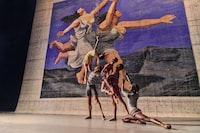
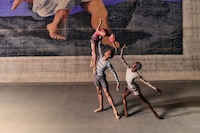

1. Le Train Bleu was a mini-Chanel fashion show
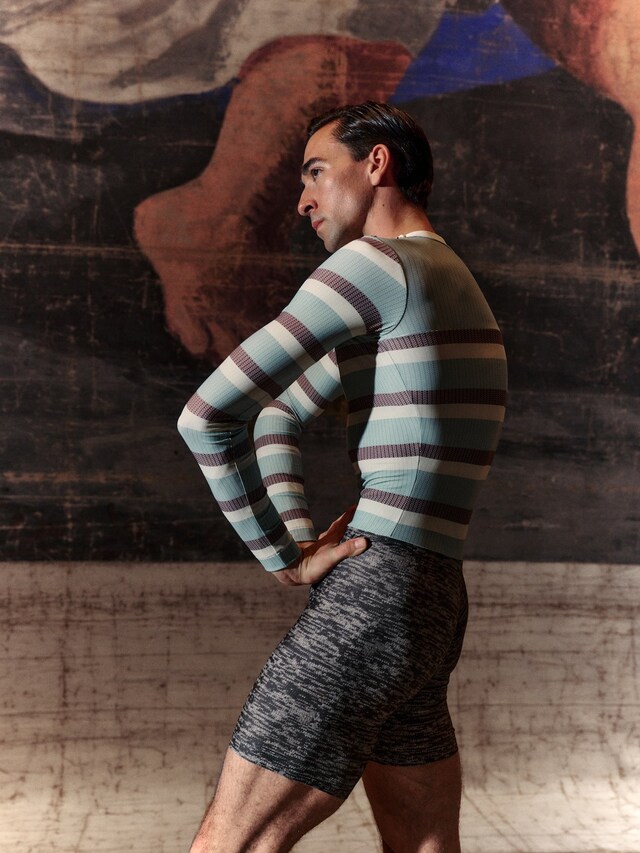
A light-hearted, quick-footed and rather acrobatic one-act ballet set on the French Riviera and named after a wealthy train that ferried the railway-age equivalent of the jet-set from Calais to the Mediterranean Sea, Le Train Bleu debuted on 20 June 1924 at the Théâtre des Champs-Élysées in Paris, entirely costumed by Gabrielle Chanel. The clothes, of course, weren’t your usual fluffy tutus or muscle-packed tights – Chanel created easy tennis and golf attire in jerseys and tweeds, and knit swimsuits for young women and ‘gigolos’ as they were officially designated. Indeed, they looked like they could dance right off the stage and into the wardrobes of her clientele. Purchased at Sotheby’s in 1969, a selection of the original costumes are held in the archives of the Victoria and Albert Museum – and for this performance they were reinterpreted by English National Ballet’s Costume Atelier. The original knits have been, more comfortably, printed onto Lycra.
2. Le Train Bleu arrived in London just before Chanel
The ballet was first performed in Paris, but then crossed the Channel (pre-Eurostar, granted) to the London Coliseum, where a reporter complained that it was “as difficult to get a seat for ‘The Blue Train’ as it is to get a seat for the thing itself during the height of the Riviera rush.” The same action was undertaken by Chanel herself a year later, when she registered Parfums Chanel Limited in the UK, an important moment in both the history of the company, and also Chanel’s future global domination. In 1927, she also opened a Chanel salon and atelier in Mayfair, leading to the establishment of British Chanel Ltd, and showed biannual collections in the capital. Interestingly, at Chanel’s grand centenary dinner for grand clients a few, like Daphne Guinness, were even descendants of original Gabrielle Chanel clients from those early London days.

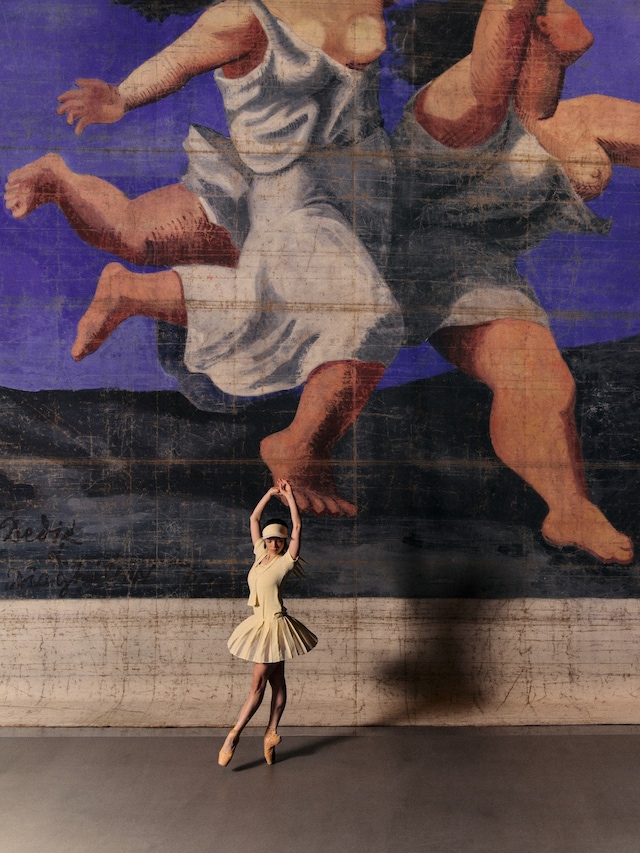
3. Picasso painted the scenery
The production sported a monumental Pablo Picasso front cloth – it was, and remains, the largest work by the artist in the world, based on his 1922 work Deux femmes courant sur la plage (fitting to the theme) and is signed by the artist himself. That is also held in the collection of the V&A, and Chanel has supported the conservation of it. So, on Tuesday night, the ballet corps of nine principals (in itself unheard of) took to the floor in front of the work.
4. Le Train Bleu never actually arrives
… or rather, we get there too late. Diaghilev’s original programme note stated, “The first point about Le Train Bleu is that there is no blue train in it. This being the age of speed, it already has reached its destination and disembarked its passengers.”

5. The V&A East Storehouse is a masterpiece all its own
Bigger than 30 basketball courts and housing some half a million items, the Diller Scofidio & Renfro-designed V&A East Storehouse is “a wunderkammer of wunderkammers” to borrow the words of Tristram Hunt, director of the V&A. I, somewhat less flatteringly, compared it to a museum crossed with the most fabulous IKEA outlet you’d ever visit, where 18th century Chinese soldier-vases rub shoulders with marble busts, Gobelins tapestries, Eileen Grey furniture and a great concrete hunk of Robin Hood Gardens, Alison and Alison and Peter Smithson’s brilliantly brutalist (and now demolished) housing estate in Poplar, east London. Oh, and of course, Chanel dresses – including a 1926 cape, entirely lined in marabou, that was a recent gift from Chanel’s very generous Patrimoine. It also formed a sensational backdrop to a re-imagining of a ballet that still feels contemporary. A series of public performances across the summer will give audiences ample chance to experience this re-imagined century-old moment for themselves. And the largest Picasso in the world, as a stand-alone cinema-screen sized work of art, is an exceptional experience all by itself.
