
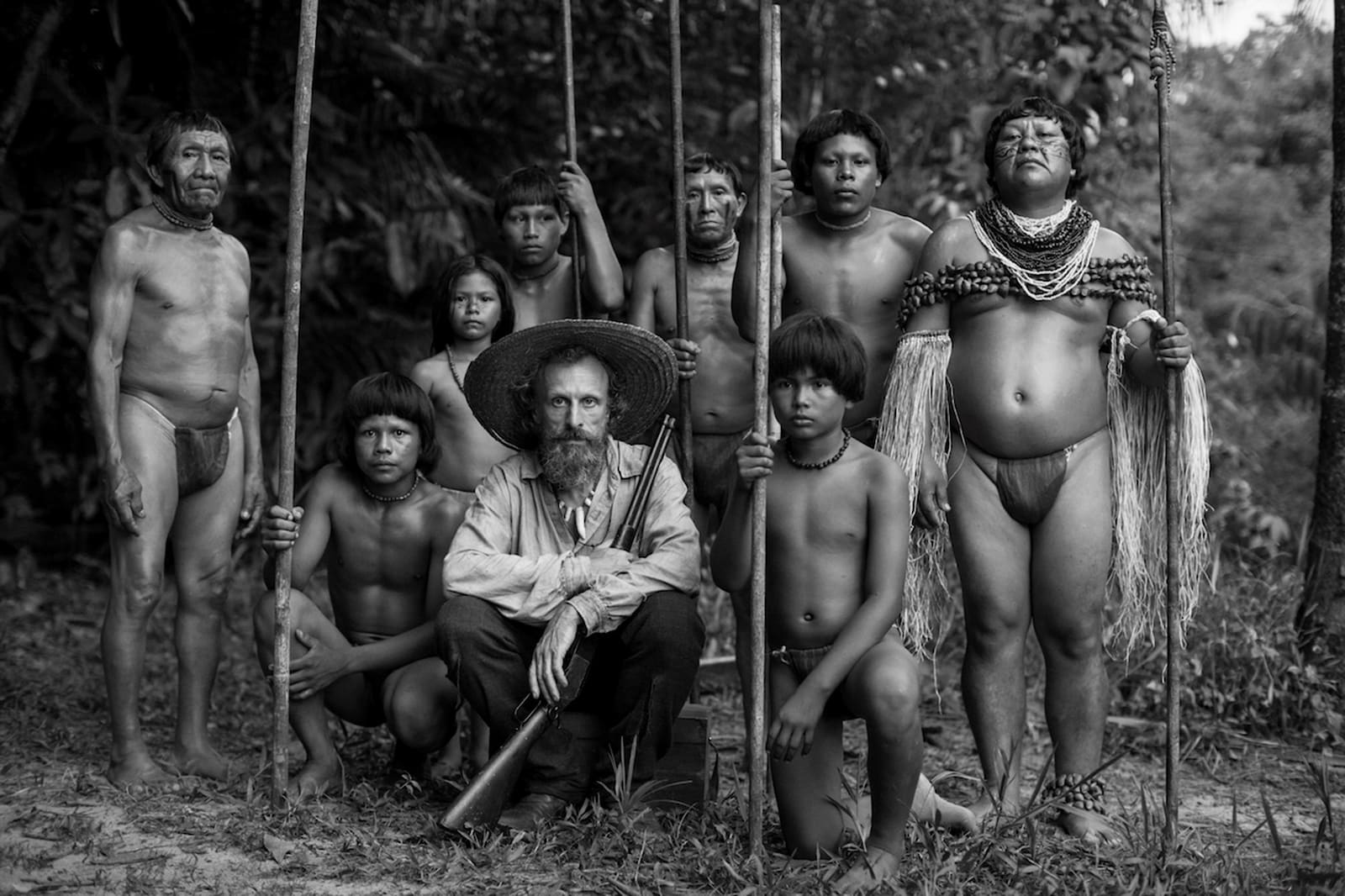
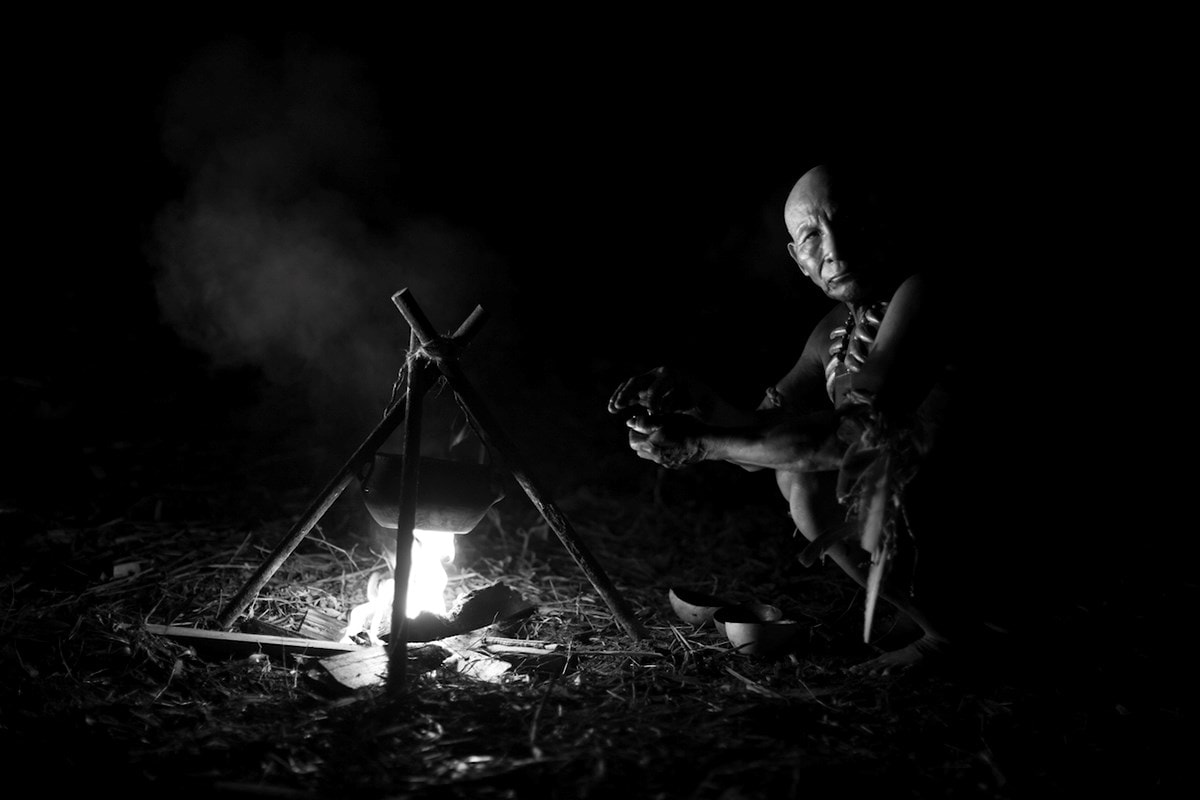
When Colombian director Ciro Guerra said that he was intending to make a film set in the Amazon jungle, written in the Amazonian language and shot in black and white, many people told him he was crazy. But the visionary filmmaker, a man who describes himself as being guided by intuition, remained undeterred. He spent the next two and a half years researching and writing his script, making frequent trips into the jungle and consulting with the indigenous tribes that inhabit it, to set the wheels in motion. Three months of filming and two years of post-production followed before the beguiling film, titled Embrace of the Serpent, was finally finished. And as it turns out, Guerra's intuition was spot on, the movie going on to win the Art Cinema Award at Cannes Film Festival 2015, as well as being nominated for Best Foreign Language Film at last year's Academy Awards.
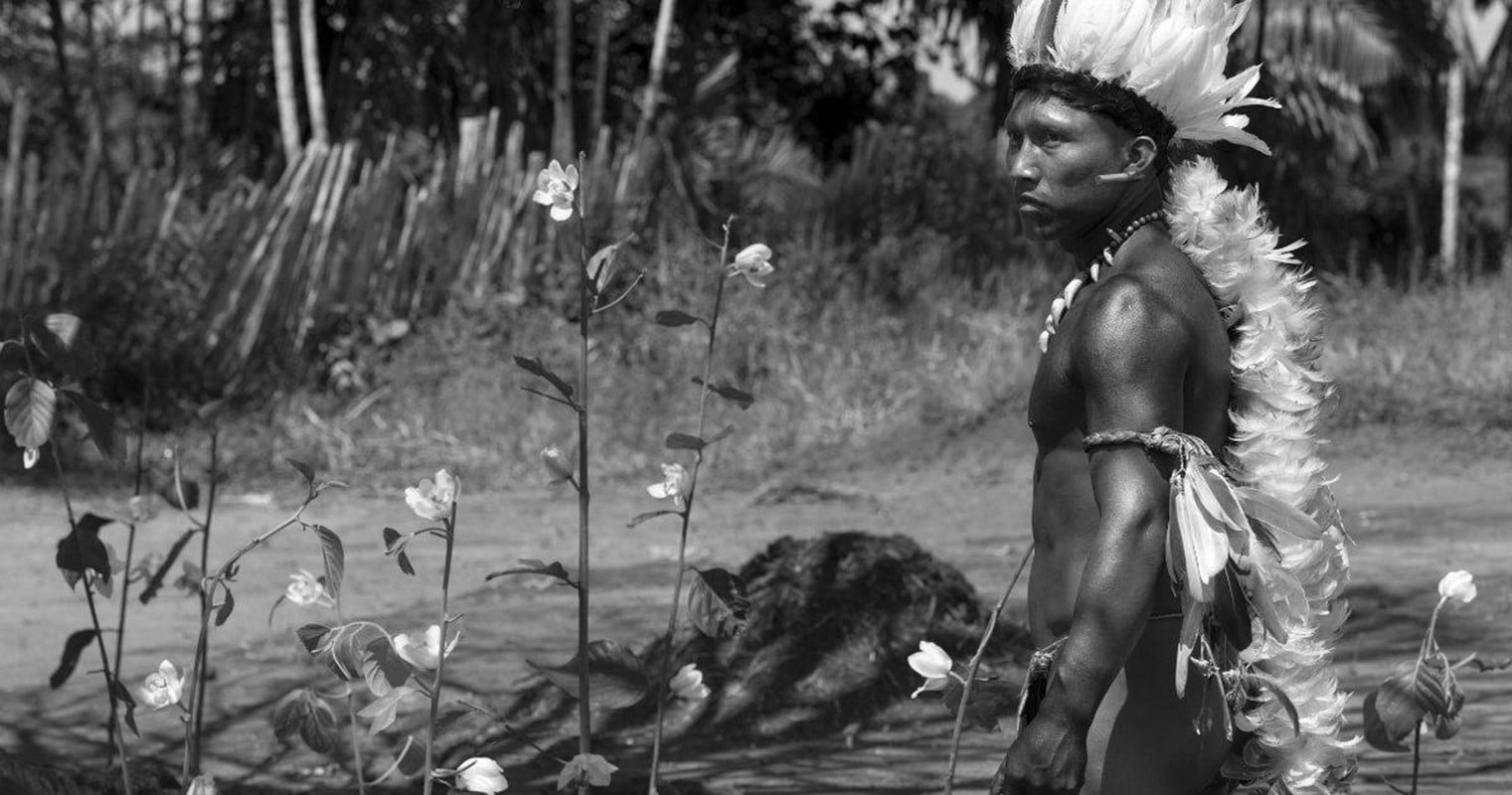
Embrace of the Serpent certainly envelopes you in a tight grip. A dizzying adventure through the overwhelming Amazonian landscape, it weaves seamlessly between two storylines (set in 1909 and 1940 respectively) linked by the film's lead character, a wise and solitary shaman called Karamakate. We first meet Karamakate as a young man, as he is being enlisted by sickly German scientist Theo and his semi-Westernised guide to help them find a plant that will cure Theo's deteriorating illness. 31 years later, his memory fading fast, the shaman is approached by an American scientist, in possession of Theo's journal, who claims to need the hallucinogenic plant to enable him to dream. In both cases, Karamakate sets off on the same voyage, with the same stubborn distrust of Western values, but to two very different ends.
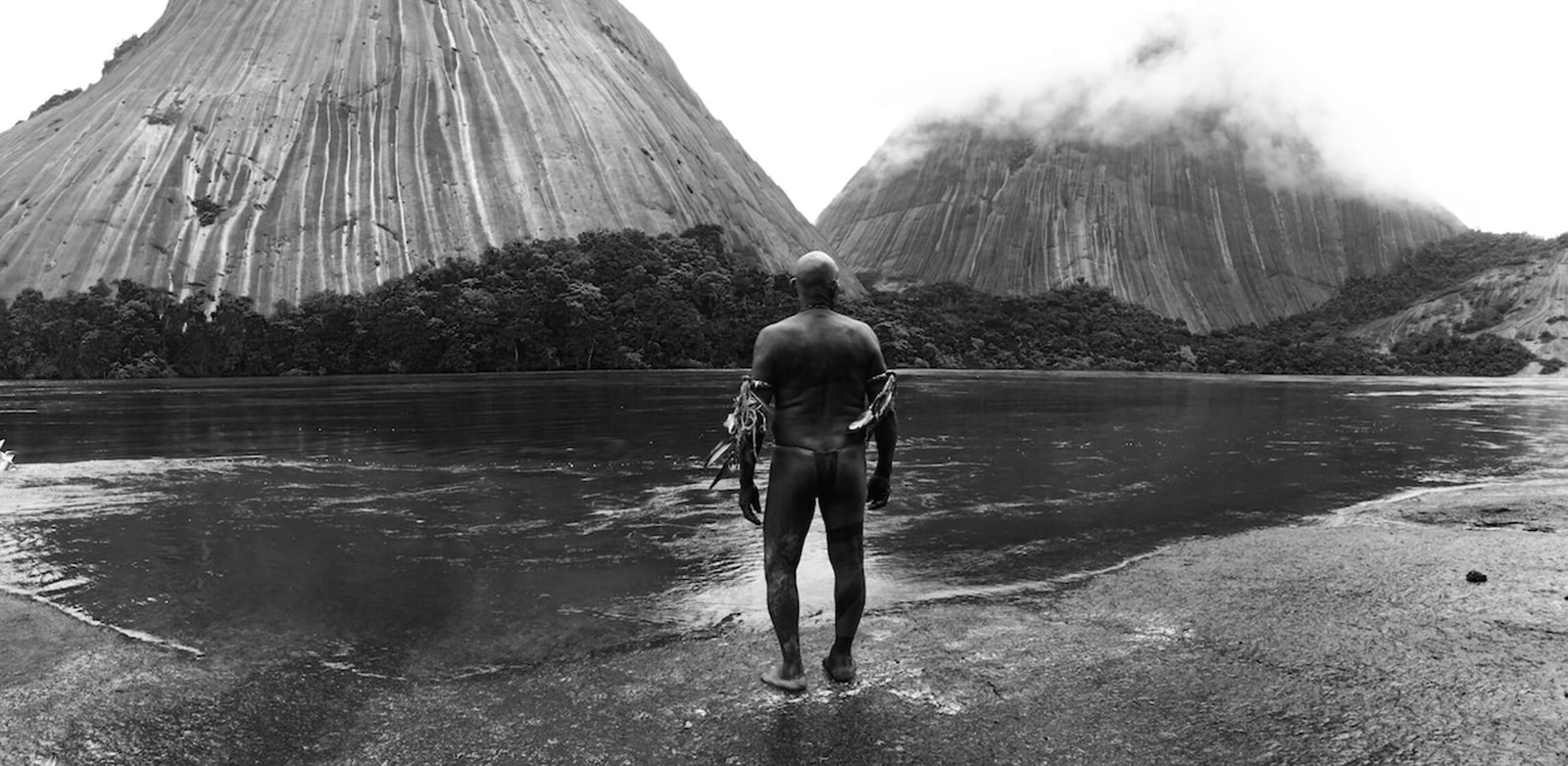
The film boasts many highlights, from its stunning cinematography which thrusts the viewer headfirst into the all-engulfing jungle (it is the first fictional film in Colombian Amazon in more than 30 years) to its exceptional cast of both Western and indigenous actors. It is filled with entrancing, poetic sequences, which are punctuated by moments of humour, humanity and occasionally horror (courtesy of the tyranny imposed by Western rubber plantations and crazed missionaries) so that you are never left too long to daydream. But what really sticks, and retains its hold, is the philosophy of the Amazonian people; the ways in which they are attuned to their environment, inherently able to listen and respond in a way that the contemporary world has forgotten how to do. Here, as the film prepares to hit UK screens, we sit down with Guerra to discover more about the making of this extraordinary cinematic feat, and his own philosophies for life and directing.

On the film's roots...
"The process started in 2010. I had just finished my previous film, and my two previous films were very personal films, they dealt with personal issues and experience, and I wanted to go away from that and just make a film about something that wasn’t known. And the Amazon, the Amazonian world is completely unknown to us in Colombia, even though it’s half of the country. So I started to do some research on it – reading, out of curiosity – and I came upon the study of this explorer and I thought it was a fascinating story, and I couldn’t believe it had never been told."
On relinquishing control...
"I believe that films eventually take on a life of their own and you have to follow them, you have to listen to them. But this film in particular was a huge beast. I started with a very Western script and this was a process of turning a very Western script into a very Amazonian film. The script had to lose a lot of its logic, maybe it’s evident in the film – it had to go mad a little bit because what the film needed was beyond the reach of my logic."

On tapping into a modern lethargy...
"I think there’s a sort of exhaustion in modern life, and that at this particular moment in time people are more open to other ways of being – to discussing issues about spirituality, and different ways of being in the world. 10 years ago it wasn't like this at all, and I personally felt it too, and it’s part of the reason why I started on this project, but I’m surprised by how deeply people have connected to that. When we started making this film, people would say, 'A black and white film in the Amazonian language, who the hell is going to watch that?' But the film has been a success in almost all the countries where it has played."
On the character of the jungle...
"Thinking of a place as a character is not something we do in our tradition, but it’s a perfectly natural part of Amazonian tradition – and I found that very interesting, [and I wanted] to try to write the jungle as a female character, which is what I did. Also, we were extremely respectful to the place before and during the shoot, because we had the guidance of the indigenous communities, and we felt that the jungle was helping us back, was being respectful to us and allowing us to make the film. There was definitely a dialogue between what was happening in the film and the making of the film; every film is in many ways a documentary of its making.
There are many moments of the film that are not planned, that are gifts. For example when it started to rain in the middle of the shot – there’s no way to plan that. And the butterfly sequence, that’s not in the script – it just wouldn’t be possible. It’s those kinds of things that the jungle can give you, and then you can resignify them when you are editing. We were there for three months and there were no accidents, no diseases, no one was bitten by anything or was attacked, even though we saw all kinds of animals. "

On the most challenging parts of filming...
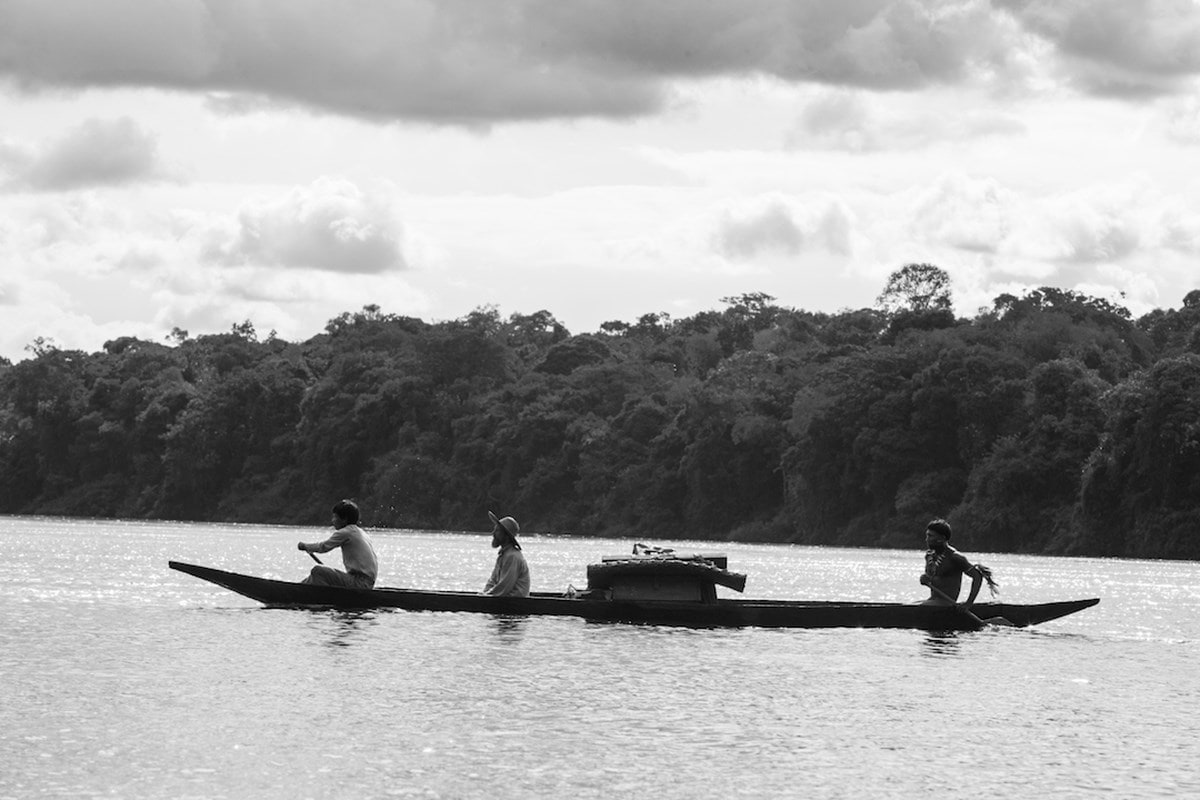
"The most difficult scenes aren’t the once that appear difficult, it was actually hardest to shoot the dialogue bits on the boat. Because there wasn't a big production team, so we had a boat with the cast, a production boat, a camera boat, a sound boat, and then to put all of these boats together we had like one minute before they started to drift away. So we would have a few seconds to do it and then it would an hour to bring everyone back together to do it again. So shooting those scenes was an absolute nightmare."
On the effect that making the film has had on him...
"It’s very difficult to sum up, because for me it was an entire experience – four years of learning to see things from a different perspective. And once you do that, what becomes difficult is going back to normal life. The best way that I could sum it up would be to say that I lost a lot of weight: a lot of emotional, spiritual, intellectual weight. After the process I just feel lighter."

On the film that made him want to make films...
"I think the film that’s had the most influence on me when I was a kid was Fellini’s 8½, that was a film that I saw when I was 13 or something, and it really blew me away and opened my mind to the possibilities of cinema, that it was not just entertainment; that it has the ability to penetrate the subconscious and had a similarity to dreams."
On the best piece of advice he's been given...
"The best advice I’ve gotten is not just for cinema but for life – and it’s just to be trustworthy. When people know that they can trust you, then they can go with you to places that they don’t imagine. You need to earn that trust and it’s a very valuable so you have to keep it – to respect it."
Embrace of the Serpent is in cinemas nationwide from June 10, 2016.
