
As Nostalghia and The Sacrifice return to cinemas in new 4K restorations, AnOther revisits five films that define Andrei Tarkovsky’s oeuvre
Beginning with his Great Patriotic War-set Ivan’s Childhood, auteur Andrei Tarkovsky made just seven features over the span of 24 years. But despite the restrictive creative conditions of the Soviet Union’s Brezhnev era – a saga of censorship that led to the filmmaker leaving his homeland for the final years of his life – all of his films feel completely uncompromised. In his dedication to foregrounding philosophy, art and poetry (Tarkovsky references his poet father, Arseny, in multiple films), Tarkovsky earned the reputation of a ‘slow cinema’ master, using long takes and experimenting with rhythm and duration as a film’s driving force. He frequently collaborated with co-writers, including the prolific director Andrei Konchalovsky, digging deeper into his recurring themes of creation, the soul and the divine, lost innocence, a decaying world and the subconscious (the director often documented his dreams in a detailed journal). His influence is clear on filmmakers as wide-ranging as Terrence Malick, Lars von Trier and Alex Garland.
Tarkovsky made his first five films in the Soviet Union before turning to Europe for his final two features, Nostalghia in Italy and The Sacrifice in Sweden – both films have just received a 4K restoration and are being re-released by Curzon this month. Tarkovsky’s life was cut short by cancer – allegedly because Stalker was shot in toxic locations – months after The Sacrifice won the Grand Prix at Cannes in 1986. Both films, linked by their morbid and meditative stillness, explore the lives of men who are cut off from the world, chasing fraught spiritual renewals in striking European locales. To mark the double re-release of the director’s final films, AnOther revisits five films that define Tarkovsky’s poetic and spectral cinema.

Andrei Rublev (1966)
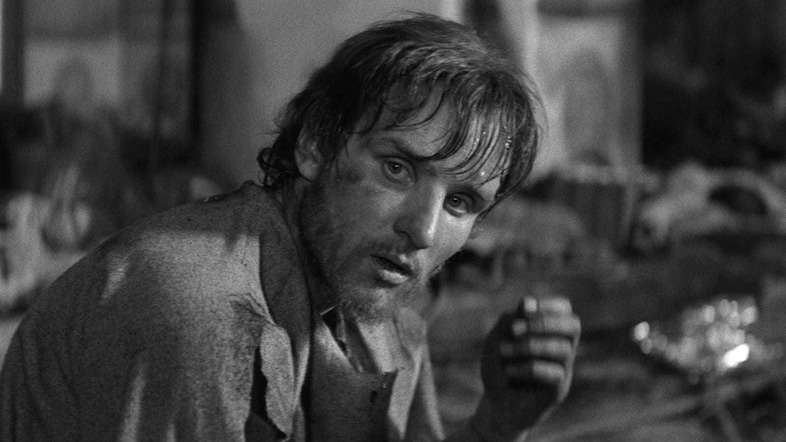
Tarkovsky’s first masterpiece was a three-hour-long 15th-century biopic of the titular Russian Orthodox icon painter. How Rublev (Anatoly Solonitsyn) was affected and disturbed by his medieval surroundings is expressed across symbolic episodes in eight parts: a subversive jester arrested by soldiers, an orgy of naked pagans, a jealous royal prince allying with invading Mongols and finally a boisterous young bellmaker questioning his own ability. Andrei Rublev is a mammoth but probing and sensitive black-and-white epic, brimming with filth, punishment and despair. Coursing through the film are pointed questions about Christian dogma, how art can be diminished and the merits of closing yourself off from a cruel world. Accused of “ideological erroneousness” by the Soviet censors, the film was not approved for release until 1971 – albeit with some cuts – nonetheless its depiction of a corrupted and suffocated Russia remains, interwoven with Rublev’s poetic journey of survival and revelation.

Mirror (1975)
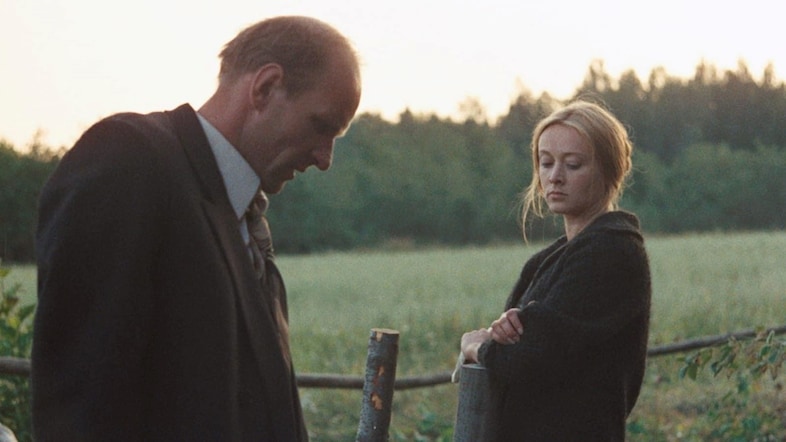
In Mirror, an autobiographical drama woven from dreams and childhood memories, Tarkovsky embraced experimental rhythms and structure to unspool a character’s troubled psyche. Aleksei is a poet, whose personal regrets and neuroses are laid bare by fixating on memories of his parents, his ex-wife and son and the Second World War – his face never appears on screen. With mundane recollections interspersed with surreal images, sometimes paired with Arseny Tarkovsky reading his own poetry in voiceover, the title relates to the film’s form, both in how the filmmaker reflects himself through cinematic images and in how the narrator sees hang-ups and behaviour repeated through his life; a key mirror image between Aleksei’s mother and wife is achieved by casting the same actress, Margarita Terekhova, in both roles. The film’s lyrical style and frequent shifting between different timelines and techniques make Mirror one of Tarkovsky’s less accessible works, but the legible emotion felt in every scene is a guide through the maze of memory.

Stalker (1979)
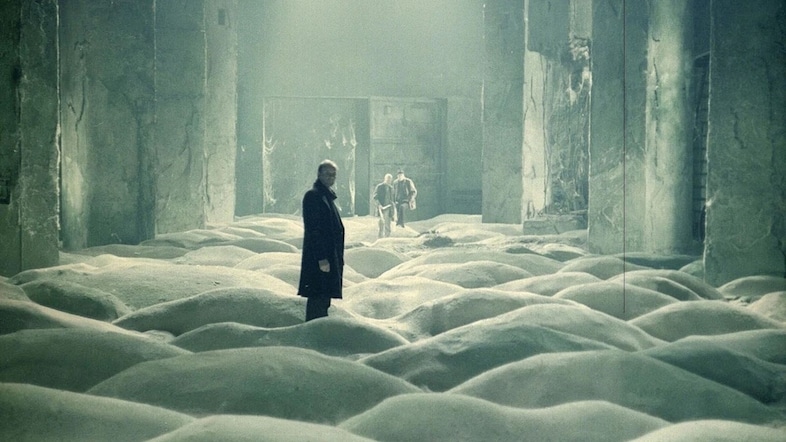
Tarkovsky’s loose adaptation of the novel Roadside Picnic by the Strugatsky brothers is at once absorbing and beguiling. Two bitter, disillusioned men – a writer (Anatoly Solonitsyn) and a professor (Nikolai Grinko) – venture into “the Zone”, a derelict, cordoned-off territory rife with inexplicable phenomena, in order to reach a room that will grant their greatest wish. Their guide (Alexander Kaidanovsky), an expert in traversing the illegal area and an idealist who both fears and loves the Zone’s mystery and metaphysics, is a “Stalker”. The Stalker’s glacial, philosophy-heavy voyage through the Zone contains some of Tarkovsky’s most famous images, gradually building a sense of a spiritually decayed world as it flits between an oppressive sepia and the lush natural colours of the Zone – as well as the eerie blues and greys of its abandoned industrial interiors. The Zone, littered with abandoned objects, watches impassively as the trespassers confront their own depleted faith and desire.

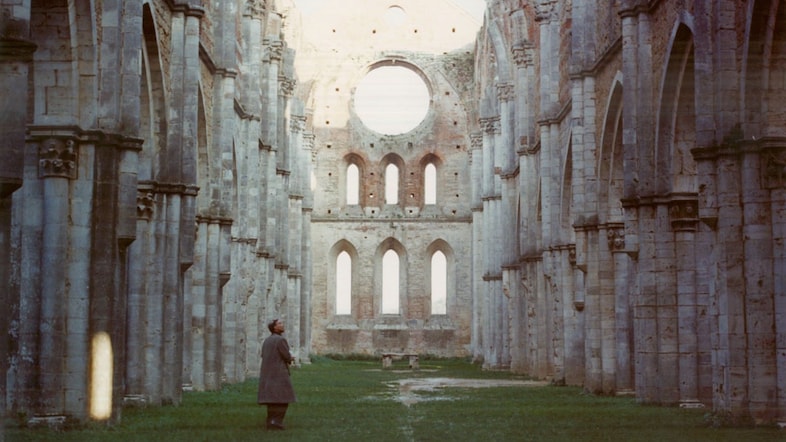
Nostalghia (1983)
The first of Tarkovsky’s films made outside the USSR (although Tarkovsky only vowed to never return to Russia after its completion) is the loneliest of all his works, with deeply desaturated images that can be difficult to distinguish from black-and-white dream sequences. A Russian poet, Andrei Gorchakov (Oleg Yankovsky), visits Italy to research Russian composer Pavel Sosnovsky, but Sosnovsky is not the only despairing man that Gorchakov identifies with – he is fascinated by the troubled local recluse Domenico (Erland Josephson) who once locked his family in their home for seven years. Nostalghia is interested in the slippery, frustrating borders – between madness and sanity, reality and dreams, poetry composed in different languages – that elude perfect translation, while also functioning as a diagnosis of the consuming homesickness that Tarkovsky believed was unique to Russians abroad. Named by Tarkovsky as his most “Russian” film, Nostalghia features the filmmaker’s most breathtaking ending – in a filmography like Tarkovsky’s, this is no mean feat.

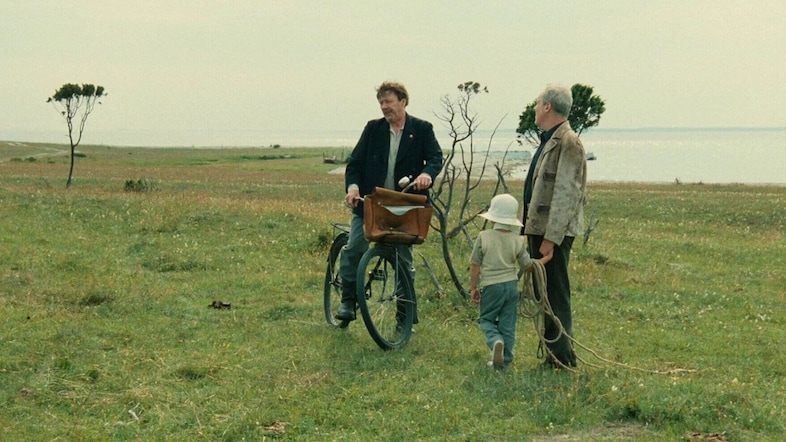
The Sacrifice (1986)
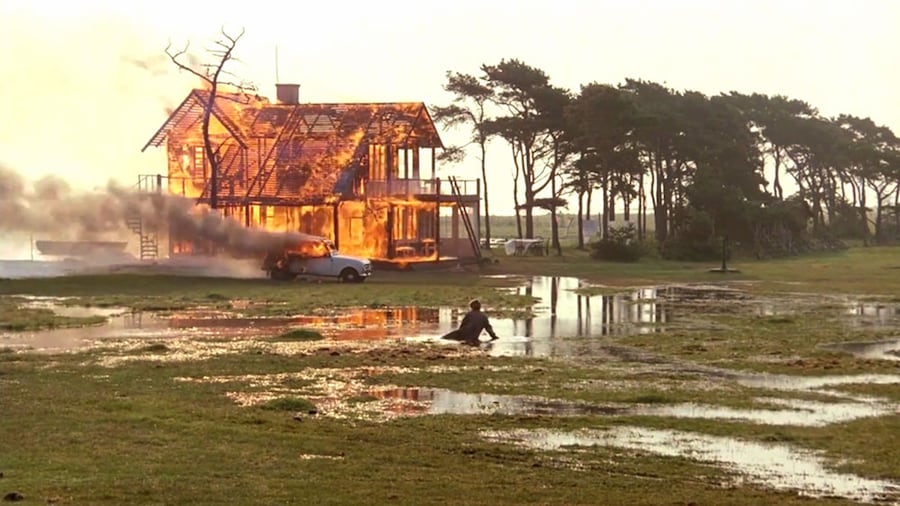
Although Tarkovsky denied the influence of Ingmar Bergman on his final film, shot in Sweden, there are some clear parallels: Tarkovsky collaborated with Bergman’s regular cinematographer Sven Nykvist, lead actor Erland Josephson previously starred in Scenes from a Marriage, and the director initially tried to shoot it on Bergman’s beloved home of Fårö Island. But The Sacrifice is of a piece with Tarkovsky’s prior films, especially with its focus on existential despair and an attempted, compromised spiritual renewal. The story of Alexander, a disaffected academic who promises God he will sacrifice everything he loves to save the world from nuclear war is an evolution of the nuclear and apocalyptic anxieties expressed in Stalker and Nostalghia. The island location is stunning, but the stately interiors grow dimmer and gloomier as dread consumes Alexander’s home – only for the house to be consumed by something far brighter and more destructive in the film’s transcendent climax, captured in one of Tarkovsky’s finest long takes.
Andrei Tarkovsky’s Nostalghia is in cinemas from 24 July and The Sacrifice from 31 July.
