
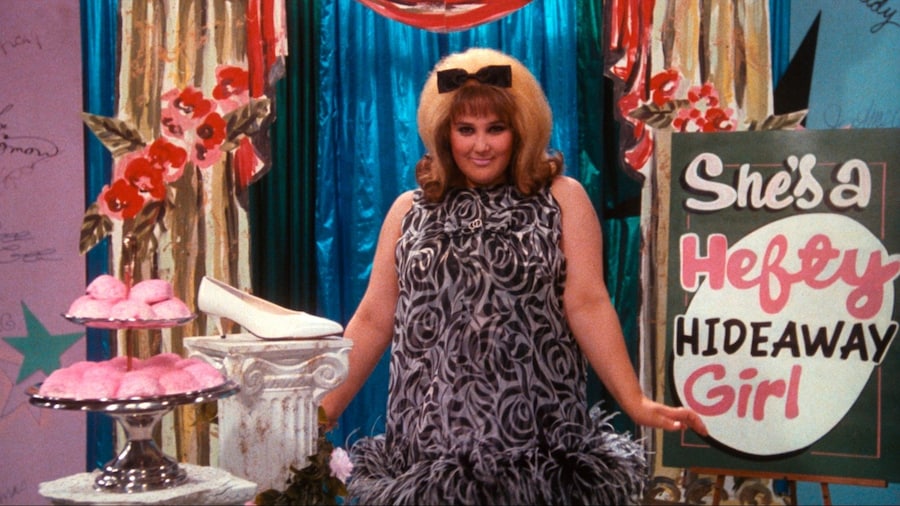
As Hairspray and Desperate Living get the 4K treatment from Criterion, the cult legend behind them recalls working with Liz Renay, likens Desperate Living’s Queen Carlotta to Donald Trump and argues that Tracy Turnblad would be a trans activist now
John Waters has always believed in the power of “comic terrorism”. It’s why he made a placard with the aphorism “Trump killed bad taste” for a recent protest in Provincetown calling out the president’s increasingly unhinged authoritarian policies. “That’s how you fight,” says the 80-year-old filmmaker, author and cult icon. “You don’t make the enemy feel stupid, even when they are. You make them feel smart, and you make them laugh and listen.” Speaking from his home in Baltimore, where he filmed all his movies, Waters is funny, focused and punctual to a fault – just as he was when he spoke to AnOther in 2022.
Waters’ giddy brand of comic terrorism drives 1977’s Desperate Living and 1988’s Hairspray, two of his classic provocations, which have just received lavish 4K restorations by Criterion. Waters, always a sharp and articulate salesman, calls it a “crazy but inspired idea” to rerelease them at the same time. “Hairspray is probably my easiest film for audiences, and Desperate Living is probably the hardest,” he says.
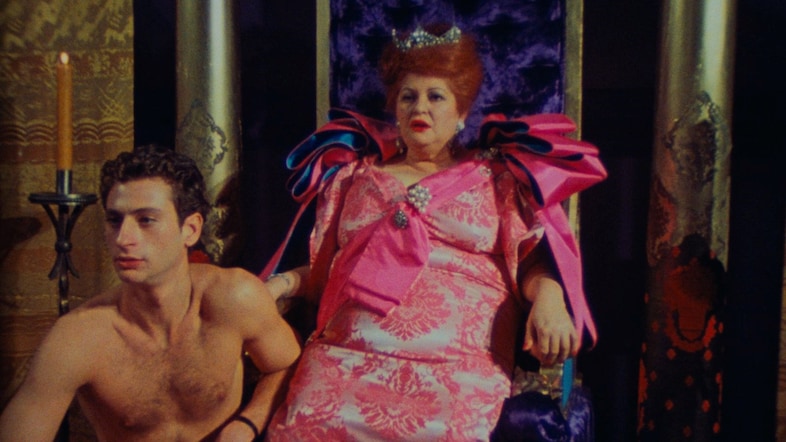
Nothing in Desperate Living, the final film in the director’s hallowed “Trash Trilogy”, will make audiences retch like the infamous scene in the first, 1972’s Pink Flamingos, where Divine eats an actual dog turd. But this relatively unsung gem in his filmography – it’s Waters’ only early feature without Divine – is still a bracing watch. After highly strung housewife Peggy Gravel (Waters mainstay Mink Stole) murders her husband, she and her apathetic housekeeper Grizelda (Jean Hill) flee to Mortville, a surreal shantytown run by the fascist Queen Carlotta (Edith Massey).

As you’d expect from Waters, Mortville is a messy den of transgression where lesbian renegade Mole McHenry (Susan Lowe) leads a plot to overthrow Carlotta so she can install a new queen: her glamorous and very sexually liberated girlfriend Muffy St Jacques (Liz Renay). Though this is Renay’s only appearance in a Waters’ film, she’s an inspired addition to the director’s regular troupe of actors, the Dreamlanders, whose diehard members include Lowe, Stole and Mary Vivian Pearce.
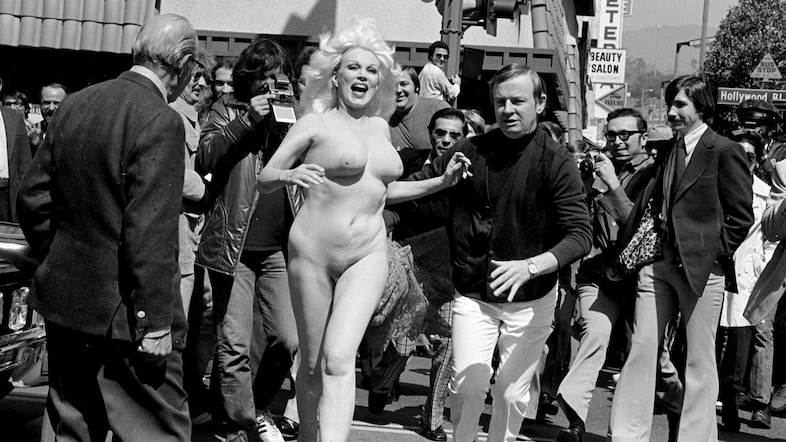
“She was a mobster hag, basically,” Waters says of Renay, who had previously appeared in a few B-movies, but was best known for being her outre and outrageous self. “To promote her stripping act in 1974, when she was nearly 50, she ran down Hollywood Boulevard at noon completely naked. So I just knew that she was an anarchist and a sexual terrorist in a way. And she was a great sport during filming.” When Waters needed a pair of breasts for Desperate Living’s lesbian glory hole scene, Renay gamely volunteered her own.

Desperate Living is filled with subversive set-pieces, including a deliberately grotesque depiction of gender reassignment surgery, but Waters believes its political message remains timely. “Queen Carlotta is not unlike the president we have now,” he says. “When she’s going through Mortville yelling, ‘Hi, stupid people!’ I’ve seen people cut that [into TikTok clips] of Trump waving from his limo.” He sees no reason why we shouldn’t perceive the whole movie as a “satire on fascism”.
Hairspray, which follows teen activist Tracy Turnblad (Ricki Lake) as she rallies against racial segregation on a 1960s TV show, is seemingly sweeter but equally political. “All my movies say the same thing: mind your own business, exaggerate what society thinks is your downfall, make it a personal style and win,” Waters says. “I think Desperate Living says it in a much angrier, crazier way than Hairspray, though Hairspray is more effective because it snuck [that message] into Middle America without anybody realising it.”
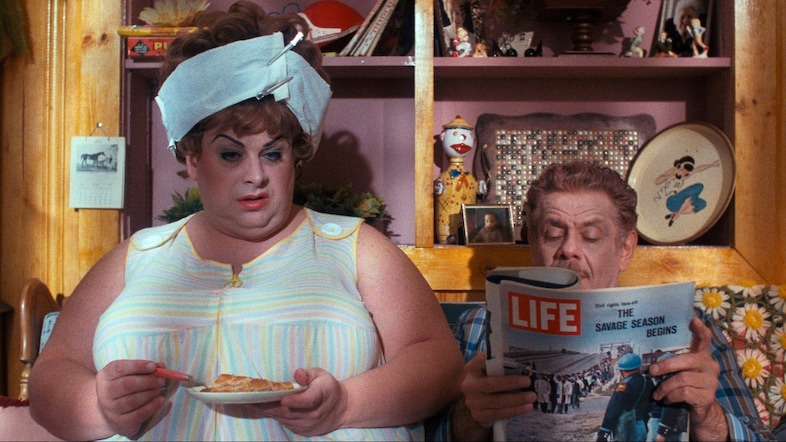
Though Hairspray eschews Waters’ earlier filth and fury in favour of broader, warmer comedy, he insists that “not one bit” of him was trying to make a mainstream movie. “Since it was [a film involving] Divine and myself, I was shocked when we got a PG rating,” he says. “I never imagined it could cross over, and it did, to an extent. The horrible thing was, Divine died two weeks after the movie came out. That puts a dampener on a comedy’s box office.” Waters notes, accurately, that the subsequent Broadway adaptation and glossy Hollywood remake, which came out in 2007, “crossed it over way more.”

Still, Waters points out that Hairspray was always a Trojan horse of transgression, not least because of Divine’s career-capping role as Edna Turnblad. Famously, Waters used to describe his drag queen leading lady as “the most beautiful woman in the world, almost”. As Edna Turnblad, the actor born Harris Glenn Milstead – who always identified as male in real life – gives a brilliant final performance as an archetypal 1960s housewife, almost. “Tracy Turnblad does not think her mother is trans, so it’s almost like a secret between the actors and audience. I think that’s why the film gets away with it,” Waters says.
In his notes for the rereleases, Waters writes affectionately: “Tracy Turnblad, Mole McHenry – neither racists nor fascists could stop either one of them.” So, if these characters were transposed to 2026, what would they be rallying against? “Oh, Tracy would be a pro-trans activist,” Waters replies, quick as a flash. “She didn’t realise that her mother was trans, but maybe Mole could tell her and guide her through the experience. Mole and Tracy, they were both leaders in a way, and I think they’d have respected each other’s power base.” Is it too late for a sequel set in a Marvel-style Waters multiverse? Let’s hope not.
Hairspray and Desperate Living are out now on Criterion Collection 4K UHD.
