
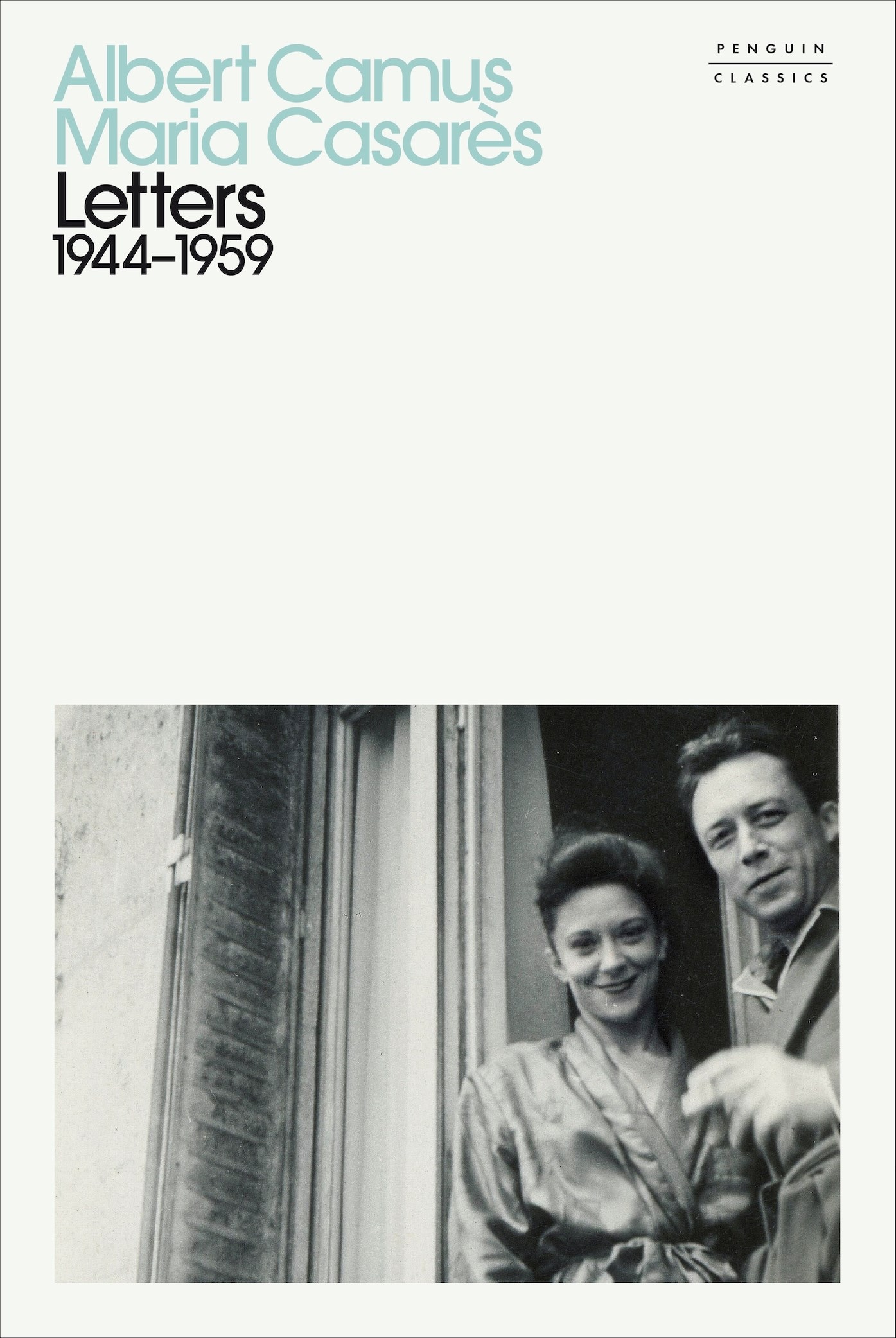
As if the landscape of modern dating isn’t depressing enough, a collection of love letters exchanged by journalist, playwright and philosopher Albert Camus and actress Maria Casarès from 1944 to 1959, published for the first time in English, offers a stark reminder of how far society has declined in matters of seduction and romance.
In 2026 daters can expect little more than “u up?”, where once upon a time it was “ … my heart is overflowing with love for you. Something exists that belongs only to us, and a place where I can be with you effortlessly,” that counted as an early piece of flirty correspondence. This section comes in the third letter Camus ever wrote to Casarès, just days after they met in Paris, on 6 June 1944, the day the Allies landed in Normandy.
Camus was born in November 1913 in Algeria. His father died when he was just a year old and he was raised in poverty by a single mother. His intelligence was spotted by teachers who helped him earn a scholarship to high school. Casarès was born in Spain in 1922, the daughter of a Spanish Republic politician. The family fled the Franco-led Spanish Civil War for Paris in 1936. When they met, Camus was married, but the war had separated him from his wife who was in Occupied Oran. Casarès was starring in his absurdist play, The Misunderstanding. They both went to a party hosted by Simone de Beauvoir.
 and Torun Moberg pose together at the Nobel banquet after Camus was awarded the Nobel Prize for Literature.)
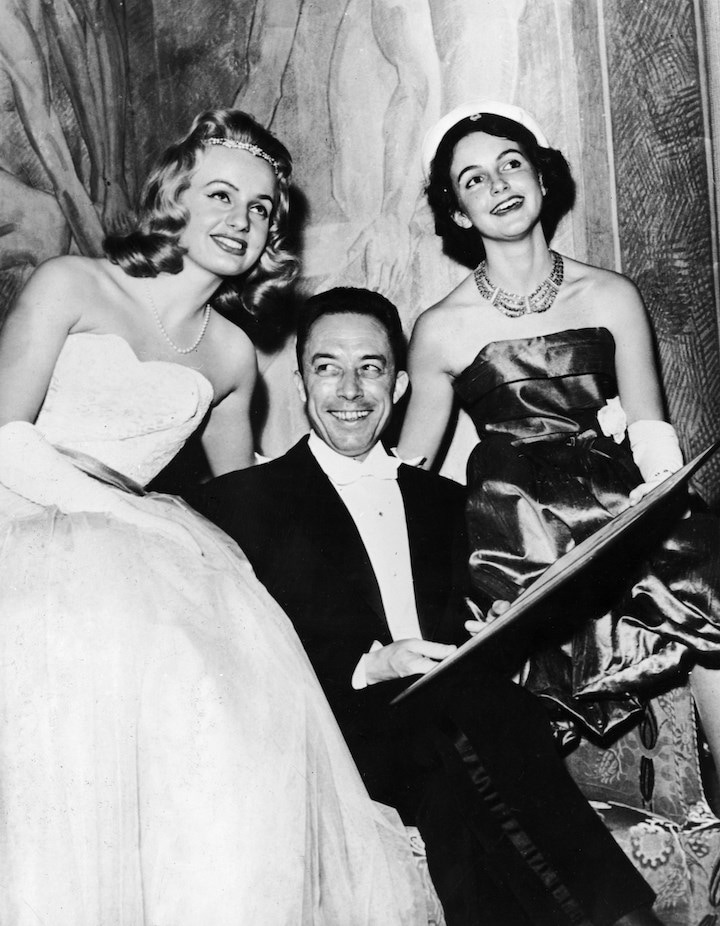
What ensued was a short and intense affair that saw summer fade into autumn and throughout which Camus yearns, anxious about when he’ll next see Casarès, is vocal about how much he thinks about her and how much he needs reciprocity. “I want to have the certainty of your thoughts and your love,” he writes in June 1944.
Almost anyone’s efforts are going to feel second-rate when compared with a Nobel Prize winning writer and a world-famous actress ensconced in an affair in Paris during the closing stages of the Second World War. But this new book – translated into English by Sandra Smith and Cory Stockwell and about the size and weight of a small Jack Russell – contains 865 letters between the lovers that only highlight how lazy communication is today, and how governed by ever changing technology. On apps, meeting people is so easy it’s dehumanising. Swipe with abandon. Meet. Don’t meet. Slide into DMs. Ghost. Breadcrumb. Meanwhile, in each letter Camus writes in the early days (and there are only his side of the correspondence from those first few months, not hers) he is a man possessed, utterly obsessed and unafraid to admit to whole days spent depressed in bed, speaking of his heart being “caught in a vise”.
He claims to have concentrated all of his affections on Casarès – affections were once divided “a bit here and there” – and admits to not knowing how to cope: “the result is a kind of monstrous love that demands everything, demands the impossible … ” We just don’t write like this anymore. Perhaps we lack the emotional honesty or bravery – or both – and are consumed by optics.
The correspondence between Camus and Casarès has a timbre, pace and depth that lasts 15 years (save for four years when Camus had ended things after that initial summer of 1944, before they had a chance meeting on Boulevard Saint Germain several years later and resumed their affair). A lot of their time was spent apart – she worked all over the world and he was married to someone else. But there’s a lot more than lust and sweet nothings. The pair discuss politics, literature and their work as well as quotidian concerns. In April 1955, Casarès playfully tells Camus: “I am going to treat you to the baptism of my ravishing writing desk which is now adorned with two new lamps” before explaining how she’d spent a small fortune on home furnishings. Camus’ writing is tidy, impeccable; he’s economical with words. Casarès is lavish with her prose, unruly and unfiltered as if every thought in her head spills directly onto the page, no edits. Speaking of being annoyed with someone she says she finds it “painful to notice how a total lack of intelligence and culture can exasperate one’s feelings … Tell me I’m not evil.”
The collection is an insight into a love story that majors in celebrity, glamour, heartbreak and obsession. It’s also an insight into war – many letters were written during the Occupation of France and detail the Resistance for whom Camus actively worked. Two of his very early letters were fraught with the spectre of war: “this separation, amid so many uncertainties, beneath a sky full of dangers, is difficult for me to bear … it is also a wonderful yet terrible thing to have to love each other in the midst of danger, uncertainty, in a world that is crumbling and at a time in history when people’s lives count for so little.” If war adds to the sense of urgency, there’s also the fact that Camus was a philosopher with absurdist principles: he believed that the world was essentially nonsensical but that love, romance and passion would help create meaning.
His final letter references the car journey that would kill him, aged 46, on 4 January 1960. Camus had written to Casares arranging dinner upon his return to Paris from his house in Lourmarin, Provence, where he’d been for the last couple of months of 1959. He’ll call her when he gets back, he writes, suggesting dinner “unless there are problems on the road”.
In the days following his death, Camus’ friend and neighbour Rene Char went to his Paris studio and took Casarès’ letters, returning them to her. She kept them until the early 1990s when she gave them to Camus’ daughter, Catherine, who wrote the published collection’s preface, in which she describes the couple’s love as “undeniably irresistible”.
Catherine’s mother, Francine, was the wife Camus never left and whom he is buried next to. It’s uncomfortable to consider that she knew all about her husband’s great love – and how her already fragile mental health was pushed to the very limit because of it. (It’s also worth noting that Camus was organising meet ups with two other women besides Casarès in the week before he died: he was passionate and romantic but a womaniser none the less.)
These letters feel a little alien: Flip open any page of this vast volume and you’ll find stuff like “love me forever I’m begging you” (Casarès to Camus). Today there are reams of op eds on how Gen Z are too nonchalant to admit they are into anyone. At heart, these pages are a monument to a lost art but not a lost sentiment. We might not need to write letters – but we do need to need. We do need to care. One of the most touching and pertinent missives of all was sent by Camus just over a month after he first met Casarès: “Everything to do with you interests me.” And this, surely encapsulates the essence of love, no matter when or how it is written.
Albert Camus Maria Casarès: Letters 1944-1959 (Penguin Classics) is out now
