
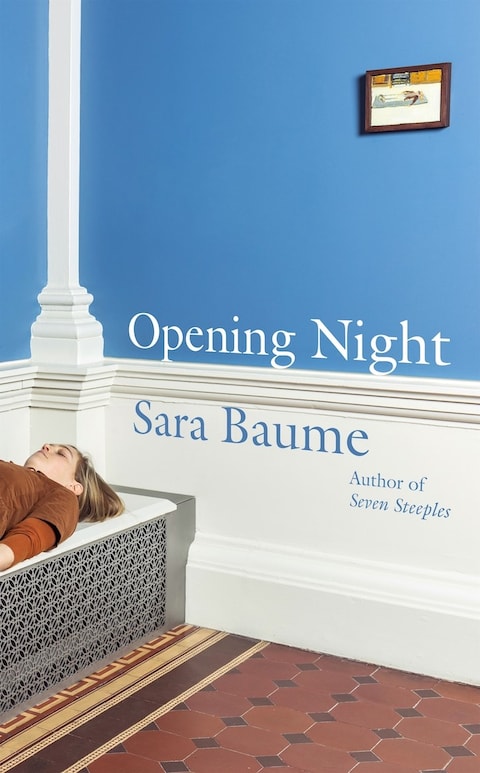
One uncanny painting ignited a profound friendship in two women – resulting in the intimate illustrated memoir, Opening Night
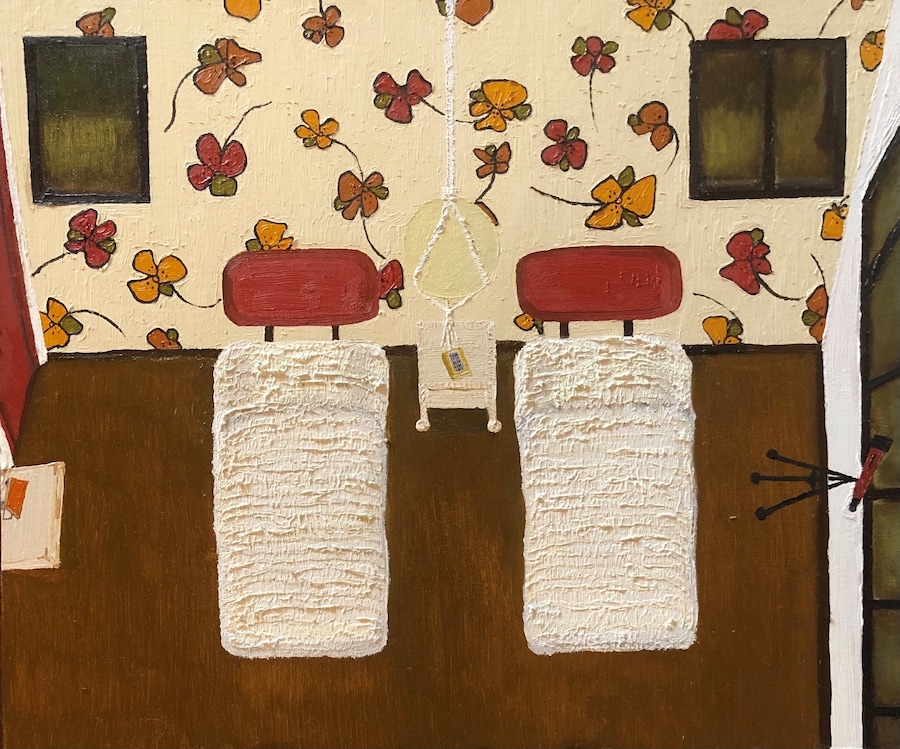
Sara Baume met Mollie Douthit’s paintings before she met the woman. At a small group show in a friend’s house, Baume encountered a small canvas portraying a bedroom scene, something off about the proportions; ordinary but simultaneously strange. Baume sought the friendship of its painter, from which emerged monthly swims, sleepovers, and soup. Somewhere along the way, it was agreed that Baume, a novelist, writer and artist by training, would write about Douthit, and so we get Opening Night, a book as much about art as it is about the Atlantic swimming conditions in particular bays in West Cork or two women laughing about Love Is Blind.
The duo seem to surprise themselves at the depth of their friendship and the well of inspiration it provides for their individual creative endeavours. Both are concerned with the minute and quotidian, the situations where on the surface, it feels like nothing much is happening but, rather, that all of life is happening at once: something is spread on toast; a couple spend a lifetime together; a dog takes up the backseat of the car. More than a memoir, Opening Night gets to the heart of the ordinary life that sustains a creative one.
Here, the pair discuss the concept of the muse, their collaborative friendship and being a good person versus being a good artist.

Jemima Skala: Mollie, did you have input into Sara’s writing at all?
Mollie Douthit: I remember when she told me, “You’re my next book” – or asked me rather than told me – and I remember thinking, OK, if this was flipped, and I was saying to her, “Sara, you are my next painting,” how I would want freedom on that. So, my approach was, I’m not gonna hold her back. Nothing really changed in our friendship. She sent me everything and I would read it, but I really didn’t read it closely until it was all done. And then when I read it properly it was as if I was reading a novel or a book, not our story. And I wanted her to have the freedom of her own work. I didn’t want to put restraints on her process because I think that’s unfair.
JS: Sara, you write in the book, “I was beginning to find it difficult to discern whether my attachment to Mollie came from sincere affection and concern, or from the crazed desire to make good art.” How does that translate into your real friendship?
Sara Baume: That was a line I think that I worried about as soon as I wrote it. I worried that Mollie was going to be upset by it. And she wasn’t, because she understands this conflict between being an artist and being a friend, or being an artist and being a human; that we are always slightly manipulating the world around us. I’m not necessarily saying that’s a good reflection of ethical behaviour in a person, but it is often how artists are wired.
“By looking at other artists through Mollie’s eyes, and at the influence they’ve had on her work, it has given me a different way of thinking that I’m carrying with me as I move on to other projects” – Sara Baume
MD: Yeah, but I think it can work the opposite way. Yesterday, I went out for sushi and I sent our friend Tich, who’s in the book, a picture of the sushi. And he said, “I think that’s going to be a painting.” And I thought, “No, you cannot do that!” I can’t intentionally go out for sushi with the hopes that it’s presentable so I can make a painting out of it. You can’t search out a friend who’s good material to use. We were so lucky to find each other. There are a lot of things that happened after the book which I think have really proven that we are solid friends. The book was this tiny little blip of a moment, which makes me so sad because there’s so much more there.
SB: The last few years of our friendship, and the process of writing this book, have been transformative for me. I’ve spent a lot of time asking myself whether I’m a good person, I suppose because I’ve never had a friend who needed me as much as Mollie has. Then there came a point when I also started to evaluate past friendships; when I realised I’ve been a shit friend at times, because I’ve reliably prioritised the drive to make good artwork over focusing on the people in my life.

JS: How do you feel about the word ‘muse’ applied to your friendship?
MD: It’s actually a word that I’ve never really liked, because I feel it’s an external influence that has to be there in order for things to work out, whereas I go in and paint and eventually something will happen. Sara has continued to write since finishing the book, and I’ve not been part of that writing. And I’m making lots of paintings that have nothing to do with her.
SB: That’s true. We’re probably both a bit uncomfortable with the word ‘muse’, but we’ve certainly shared influences – Celia Paul, Gwen John, Alice Neel – and by looking at other artists through Mollie’s eyes, and at the influence they’ve had on her work, it has given me a different way of thinking that I’m carrying with me as I move on to other projects.
JS: I understand the resistance to the word muse because it’s been so often used to limit women’s agency in art, but I think there is possibly a value to finding a different use for it.
MD: Yeah, when you say it like that, it’s interesting because now, as the conversation has progressed and I start thinking, and Sara’s been talking, what I really valued so much was that someone was actually interested in hearing about these painters, who wasn’t interested in painting previously, and would take notes. We would meet up and we could talk about the painters again. Then the thing that Sara valued in me was that I was also a keen reader, so we had this dynamic of push and pull of literary interest and art interest. That’s the muse for me in our relationship, this cultural influence. With an undercurrent of Love Is Blind, because we love both low and high-brow and didn’t judge each other for either!
“She was writing about me and I was writing-painting about her. It was so natural” – Mollie Douthit
JS: Mollie, you’re now making work about Sara, about the period after the book ends. How has your friendship influenced how you both continue to create and the work that you’re making?
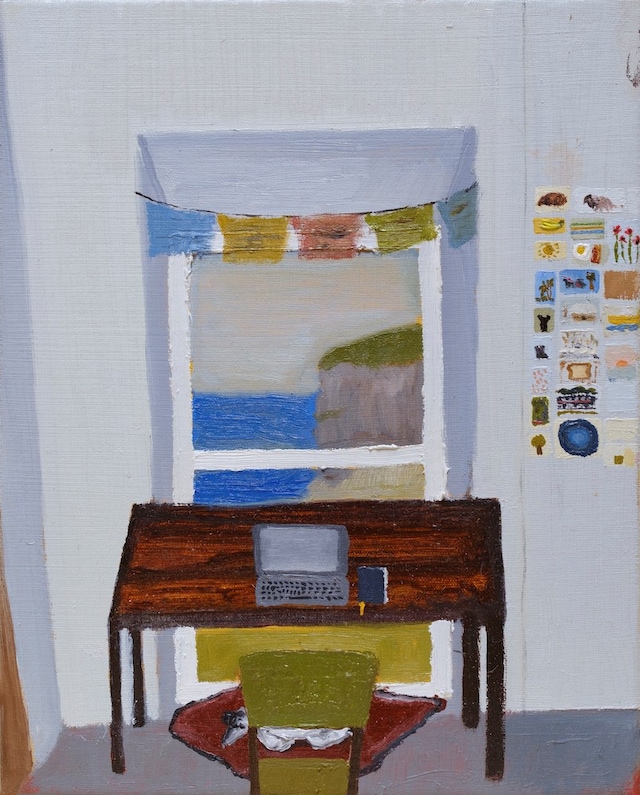
MD: After the opening night of my exhibition, I focused on getting rid of my chronic dental pain. I went home to the States – it was supposed to be two weeks and it ended up being five months – and it went super dark. It all went to shit. But during that time, Sara was my lifeline. When I came back to Ireland, Sara picked me up in Cork and from there, I got my life back together and built that body of work.
It was about that period of time and the people that held me together during that, and specifically for Sara, because Sara was this voice in my head. I’ve had a lot of people in my life who I think have always accepted who I am, but Sara is this mirror who understands what I’m doing.
SB: They were really hard paintings for her to make. Comprising all these bright colours and gorgeous little sharp details, but they were also full of this awful, frightened feeling. At the beginning of the book, we’re both making work about our grandmothers, but then the events of life take over and Mollie starts painting about the present moment, and then gradually starts to make paintings about our friendship. So, we each ultimately became the other’s subject.
MD: All of a sudden, I realised that we’d become very distant collaborators. She was writing about me and I was writing-painting about her. It was so natural.
Opening Night is published by Granta and out now.
