
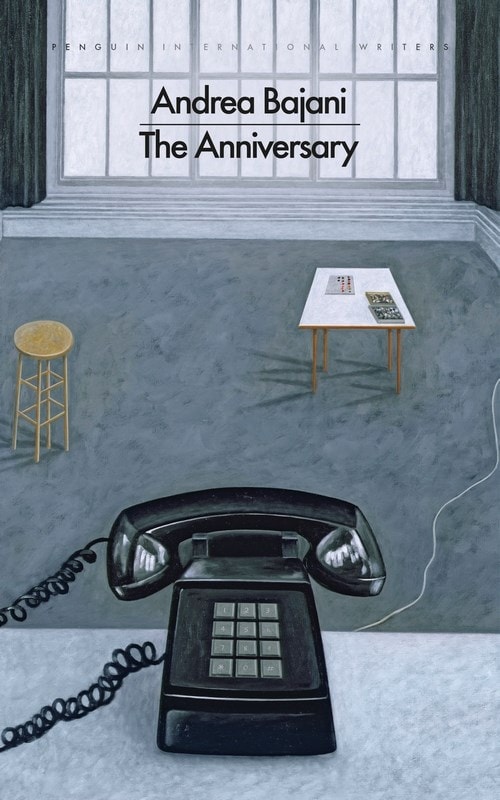
There is a horribly telling description about halfway through Andrea Bajani’s novel The Anniversary, which quietly demonstrates the devastation wrought by relentless, all-consuming abuse. The book’s unnamed narrator explains how his father – a deeply violent bully – wordlessly reenters the family home he’d earlier left after having physically attacked his wife. He then, the narrator details, lays “down in bed next to my mother’s body”. It’s easy to miss amongst the text’s emotional maelstrom, but this specific phrasing – mother’s body – underlines how, whilst his mum survived the vicious assault, it is as if her spirit has been crushed leaving only her corporeal self. We spend the rest of the novel hoping she can rebuild and reclaim a sense of who she is.
The long-lasting, generational impact of such abuse frames the experiences of our narrator, who, after growing up both witnessing and being subject to it at the hands of his tyrannical father, decides, at the age of 40, to firmly break away from his family. The titular anniversary regards his reflections ten years after the fact. “They’ve been the best ten years of my life,” he explains.
Last year, the novel won Bajani the Strega Prize, a prestigious award judged by a panel to be the greatest work of fiction written in Italian and published in the given year. The win spawned a public discourse of unusually large size for a book and many readers, via discussions around patriarchy, violence and complicity, seemed to find deep parallels with their own circumstances and families.
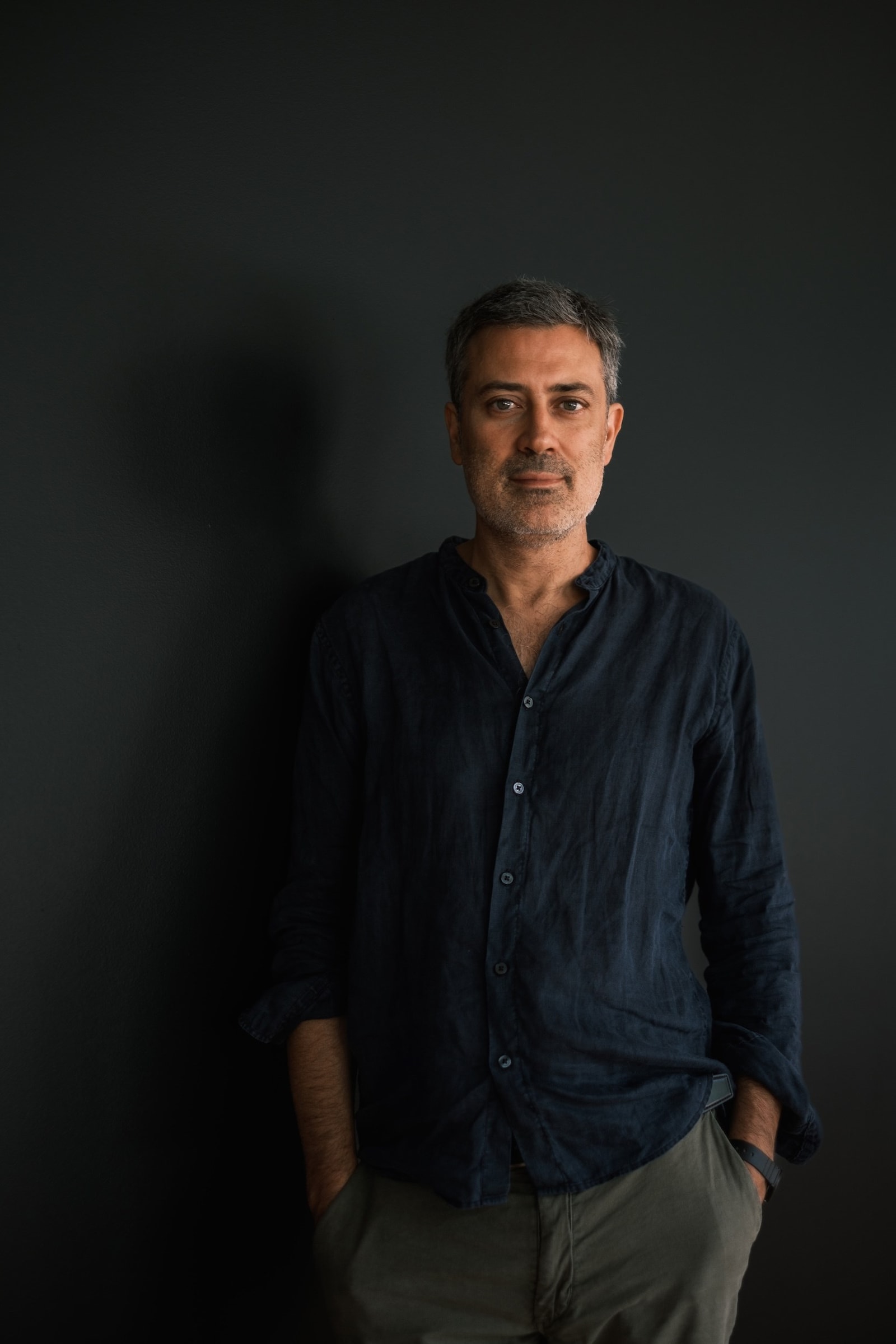
Whilst passages in The Anniversary read as if they might be autobiographical, the Rome-born Houston-based Bajani is at pains to state that it should be viewed as fiction and he seems reluctant to discuss whether the work draws on his personal experience.
On 2 July, Geoffrey Brock’s English-language translation of this important work will be published as part of Penguin’s esteemed International Writers series. To mark this occasion, we spoke to Bajani who tells us why as a writer he has very little interest in autobiography, how the difference between “true” and “real” is the very nature of the novel, and why, whilst about one family, the text’s themes demand consideration in relation to society at large.

Sam Elliott Connor: I have to ask, how autobiographical is The Anniversary?
Andrea Bajani: I have very little interest in autobiography, as a writer. On the contrary, I’m interested in the world that writing – when it’s true literature – invents: a world that doesn’t exist in the actual life of the author. I write to go to a place I don't know, not to return to where I've already been. Of course, I understand the question. It’s a need of our times – an era in which people feel like nothing is real and desperately search for authenticity. Everyone is trapped in such a continuous performance nowadays that we feel a deep need to encounter human beings who aren't fake. But the difference between ‘true’ and ‘real’ is the very nature of the novel, which, as I write in The Anniversary, almost always ignores the real and always provides the true.
SEC: Which is why, I guess, whilst some readers seem to classify The Anniversary as a memoir of sorts, you have said it should instead be regarded as fiction. Can you clarify further why this is?
AB: I like this question, and I think it gets to the heart of the matter. A memoir is a sort of genre that has precise rules, which the writer must stick to from the first line to the last. It has to be faithful to the facts, to the writer’s identity, etc. The Anniversary, on the other hand, is an act of faith in the novel – which, by its very nature, shouldn’t submit to rules and is inherently restless and unclassifiable.
SEC: At one point, the narrator identifies the father’s behaviour as being part of a fascist legacy. Tell us about this.
AB: What interested me, among other things, was the political nature of The Anniversary. If you read it simply as the story of a dysfunctional family – with the specific neuroses of each character, a violent father, a victimised mother and children imprisoned in a totalitarian system – you risk missing the collective significance of the book. Instead, it points its finger at a specific issue: there is a kind of violence that is supported, and even produced, politically and culturally. The patriarchal family model, which is based on the assumption that one family member can hold power simply by virtue of their gender and can exercise that power through violence, is a model that was, and still is, politically instituted. In some cases, this model has produced – and continues to produce – immense suffering that is rarely questioned. If you look at a photo of Mussolini, you immediately recognise that model.
“I write to go to a place I don't know, not to return to where I've already been” – Andrea Bajani
SEC: And this links to larger issues around patriarchy, its toxic impact across the globe, and the abuse women and children are so often subject to.
AB: Yes, that’s absolutely correct. And I think if you miss this aspect, you lose a big part of the novel’s impact. Localising it to a specific family, a specific era, or even a specific geography would mean stripping it of its power. The enormous international response The Anniversary is receiving tells us one thing: this isn’t just an Italian issue; it affects everyone. Cultural models are, ultimately, permissions to feel nothing – to silence empathy. How many people aren’t even shocked when a man yells aggressively at a woman? That lack of shock is political. Then, there’s another equally political point: the story is told through a male voice – someone who rejects that specific patriarchal legacy. And he claims the right to distance himself from his parents, in the face of that violence, as a way to keep himself safe.
SEC: Did it feel different when The Anniversary was released compared to your other works?
AB: The reader response as soon as it was published in Italy was incredible. It shot to the top of the bestseller lists in just a few days. I realised immediately that I had touched a raw nerve. This had never happened to me before, and it suddenly changed my perception of the book. It gave me a deep sense of responsibility, which was later amplified when it won the Strega Prize. If that novel was so important to so many people I had to take it seriously.
SEC: I’ve read that subsequent to the Strega win, there was some controversy around the notion of people breaking away from their family.
AB: The core issue was the taboo that The Anniversary ended up touching: the fact that the institution of the family can be questioned. Freud teaches us that when a taboo is uncovered, it triggers two reactions: one of liberation, and the other – the opposite – of condemnation. People are afraid of contagion. When a reader told me, “As soon as I finished reading the book, I told my siblings that we should have done what the protagonist did,” I knew the contagion had begun. That explains the reader’ reactions: the vast majority felt a sense of liberation, sure, but the reaction you just mentioned was also very strong.
“Cultural models are, ultimately, permissions to feel nothing – to silence empathy. How many people aren’t even shocked when a man yells aggressively at a woman? That lack of shock is political” – Andrea Bajani
SEC: Has your relationship to The Anniversary changed since its initial publication? If so, how?
AB: You write in solitude, without thinking about what a book will become once it goes out into the world. I thought I had written a “small” story about a specific group of characters. When it came out, I realised – as I mentioned – its collective nature. It became a deeply political book. I knew it was, but at a different level of consciousness. Today, I am happy to have discovered that and to hold this book in my hands.
The Anniversary by Andrea Bajani is published by Penguin as part of its International Writers series and is out on 2 July 2026.
