
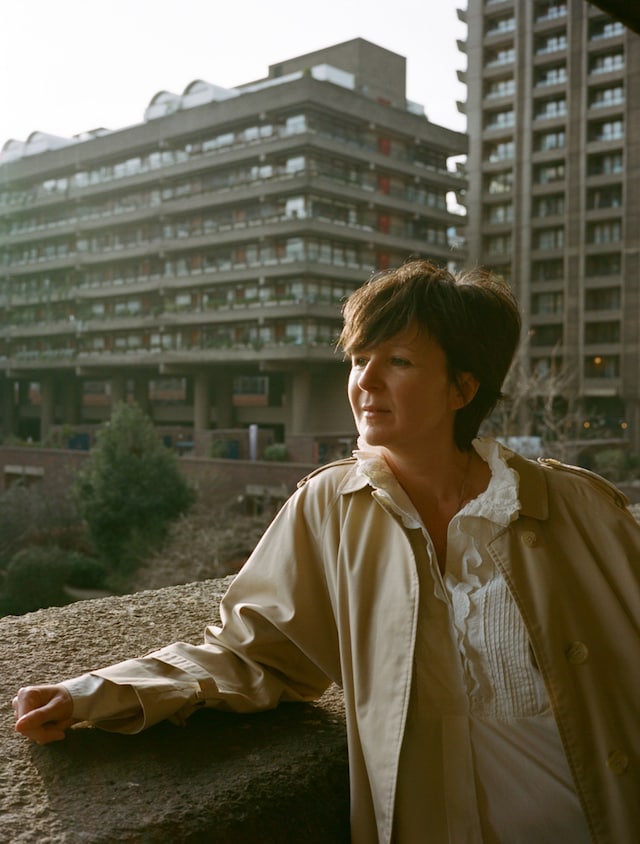
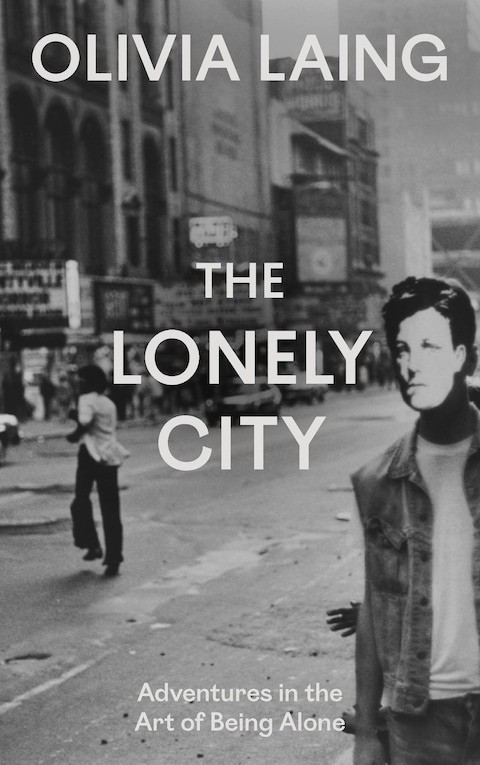
As The Lonely City, Laing’s exquisite meditation on art and loneliness, gets a 10th anniversary release, the author chooses a favourite excerpt in which they visit Warhol’s time capsules – 610 boxes filled with precious relics and Factory detritus
Olivia Laing’s work to date has encompassed clear-eyed, transportive non-fiction (chasing down the ghosts of literary giants in the grip of alcoholism, blooming explorations of paradise) and fiction (her compulsive recent novel, The Silver Book, just out in paperback, delves into the sorcerer’s den of Rome’s Cinecittà Studios during Italy’s Years of Lead). Whatever the focus, a constant of the author's work is its recuperative power, its warm-blooded empathy and dedication to the “strange, great gift of art.” A decade ago, Laing’s revelatory book The Lonely City, with its freewheeling meditation on artists whose works “seemed troubled by loneliness” – David Wojnarowicz, Edward Hopper and Henry Darger among them – was written during a stretch living in New York when they too were submerged in a spell of loneliness – the particular kind big cities excel at. Laing finds a remedy in art, not only destigmatising loneliness but discovering the beauty in it: “I have been lonely, and no doubt I will be lonely again,” they write. “There isn’t any shame in that. Loneliness is a special place, I’m certain of it: adrift from the larger continent of human experience, but intrinsic to the very act of being alive.” Here, Laing chooses a favourite excerpt from The Lonely City to celebrate the book’s 10th birthday special-edition release.

Time Capsules
The largest and most extensive artwork Andy Warhol ever made was the Time Capsules, 610 sealed brown cardboard boxes filled over the last thirteen years of his life with all the varied detritus that flooded into the Factory: postcards, letters, newspapers, magazines, photographs, invoices, slices of pizza, a piece of chocolate cake, even a mummified human foot. He kept one on the go in his office at the Factory and one at home, moving them when full into a storage unit, though his intention was eventually to sell or exhibit them somehow.
After his death they were transferred to the Warhol Museum in Pittsburgh, where a team of curators have been working since the early 1990s to systematically catalogue their contents. The project wasn’t yet open to the public, and so once again I wrote a begging letter to the curator, who agreed that I could spend five days viewing but not touching some of the contents.
I’d never been to Pittsburgh before. My hotel was a few blocks from the Warhol Museum, and each morning I walked to it on a street that ran parallel to the river, wishing I’d brought gloves. I fell in love with the museum at first sight. My favourite space was towards the top of the building: a maze of dimly lit, echoing rooms in which a dozen of Warhol’s movies from the 1960s were being projected. I’d never seen them full-size before, flickering and granular, the colour of mercury or tarnished silver.
All those lovely things his eye had eaten up. John Giorni’s dreaming, somnolent body. The beautiful Mario Montez, resplendent in a white fur headdress, slowly and erotically consuming a banana. A naked, cavorting Taylor Mead, whose memorial service at St Mark’s Church I went to the next year, wanting to pay my respects to the diminishing Warhol circle. Nico in Chelsea Girls; the sky behind the Empire State Building growing infinitesimally more light. Time in the room was running palpably slow, hanging heavy, because of the way the films were projected at half speed.
The Time Capsules themselves were kept on metal shelves in the archivists’ lair on the fourth floor. At the end of the room, a man inside a plastic tent was carrying out the delicate work of conservation, and at a table near the front a young woman with a magnifying glass was identifying people in Warhol’s photographs. The artist Jeremy Deller was also visiting, resplendent in a Barbie pink Puffa jacket. He’d known Warhol in the 1980s and among the pile of pictures he found a couple of them hanging out together in Warhol’s suite at a grand London hotel, Deller in a stripy blazer and Andy with a floppy, slightly foolish hat perched above his wig.
To view the Capsules, we had to don blue plastic gloves. The curator took down the boxes one by one, laying out each item on a protective sheet of paper. Time Capsule –27 was filled with Andy’s mother Julia Warhola’s clothes: her floral aprons and yellowing scarves, a black velour hat with a rhinestone pin, a letter that began Dear Buba and Uncle Andy, Did Santa Clause come up there? Did you see TV? Old satin flowers, a single earring, a dirty paper towel, many of them packed away in plastic carrot bags, a lasting record of Julia’s eccentric storage solutions, her stubborn thrift.
In Time Capsule 522, there were remnants of Basquiat, including his birth certificate, which he had tagged, and a drawing he’d done of Andy all in blue, his arms wide open, holding a camera with the word CAMERA in block capitals beneath it. There was a letter from him too, on paper from the Royal Hawaiian hotel, three sparsely written pages, that started HI SWEETHEART, HERE IN WAIKIKI.
But alongside these seemingly precious relics were other boxes filled with hundreds of stamps, with hotel pyjamas still in their wrappers, with cigarette butts and pencils, with pages and pages of jotted notes containing names for Superstars that never were. A used paintbrush, a ticket stub for the opera, a New York State Driver’s Manual, a single brown suede glove. Candy wrappers, not quite empty bottles of Chloé and Ma Griffe, an inflatable birthday cake signed with a Sharpie, Love Yoko & Co.
What were the Capsules, really? Trash cans, coffins, vitrines, safes; ways of keeping the loved together, ways of never having to admit to loss or feel the pain of loneliness. Like Zoe Leonard’s installation Strange Fruit, they have something of the feeling of an ontological investigation. What is left after the essence has departed? Rind and skin, things you want to throw away but somehow can’t. What would Winnicott have made of them? Would he have used the word perverse, or would he have seen their tenderness, the way they work to arrest time, to prevent the quick and dead from slipping too far, too fast?
Andy’s nephew Donald was giving a talk at the museum while I was there, as he did most weeks. One afternoon we sat down in the café together and he told me about his uncle, speaking slowly and distinctly into my little silver tape recorder. What he remembered most was Andy’s kindness, how he liked to joke around with the kids, as his two beloved dachshunds, Amos and Archie, ran barking round the room. His apartment had been crammed from top to bottom with fascinating objects, and Donald remembered thinking even then that it was a microcosm of New York, the city that seemed so thrilling to him as a child.
Uncle Andy had a knack for listening, for getting whoever he was with to speak about their lives, even if they were children. ‘I think he didn’t like to talk about himself, because he just found other people more interesting,’ Donald said, adding later that he thought Warhol had found himself boring. Andrew Warhola, that is, the vulnerable human self still resident beneath the silvered wig and corset.
He touched on Warhol’s Catholicism, something that he shared with both Darger and Wojnarowicz: how every Sunday was a holy day, on which he would invariably go to church. This information aligned with references in the diaries to spending repeated Christmas days doling out food in homeless shelters, an aspect of Warhol that tends to be eclipsed by tales of party-going and celebrity friends. He talked too about how much Andy had missed his mother after she died, how he had learned to live around the loss.
I asked him then if he thought that Warhol was happy and he said that Andy was at his happiest in his studio, a place that Donald described as his playland, adding that he thought Andy had sacrificed a great deal to become an artist, including the possibility of having a family of his own. Later, after I’d turned off the machine and we were walking out of the café, we began to chat about the Capsules, and he said musingly, maybe they were a partner to him.
Maybe they were, or at least a way of occupying the space a partner would have inhabited. Or maybe it was just reassuring to know that whatever happened, whoever vanished next, he had all the evidence in order, boxed and ready for the case against death.
The 10th anniversary edition of The Lonely City will be published on 4 June. Olivia Laing will be talking about Andy Warhol, David Wojnarowicz and the Lonely City at Union Chapel on 23 June. Tickets are available here.
