
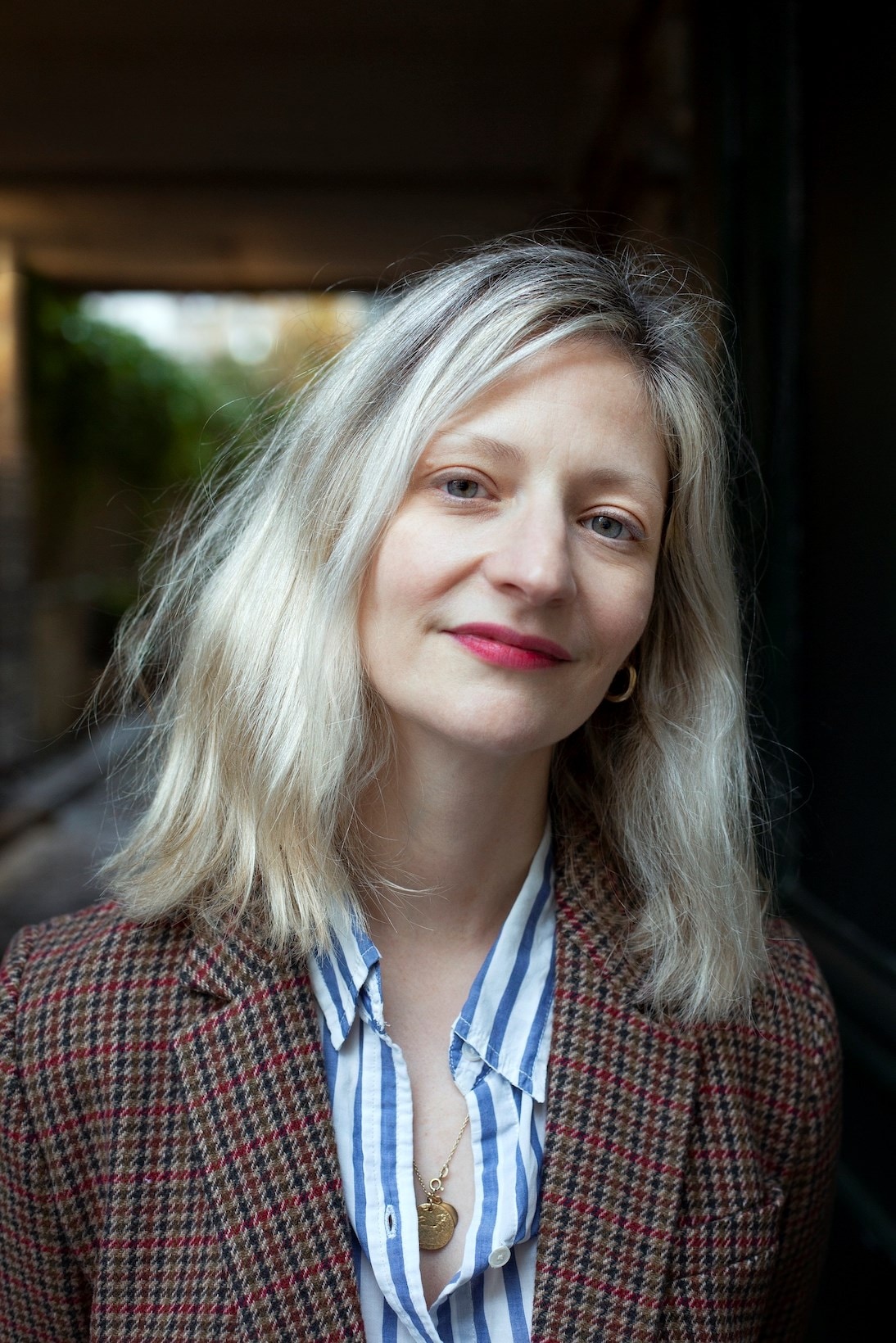
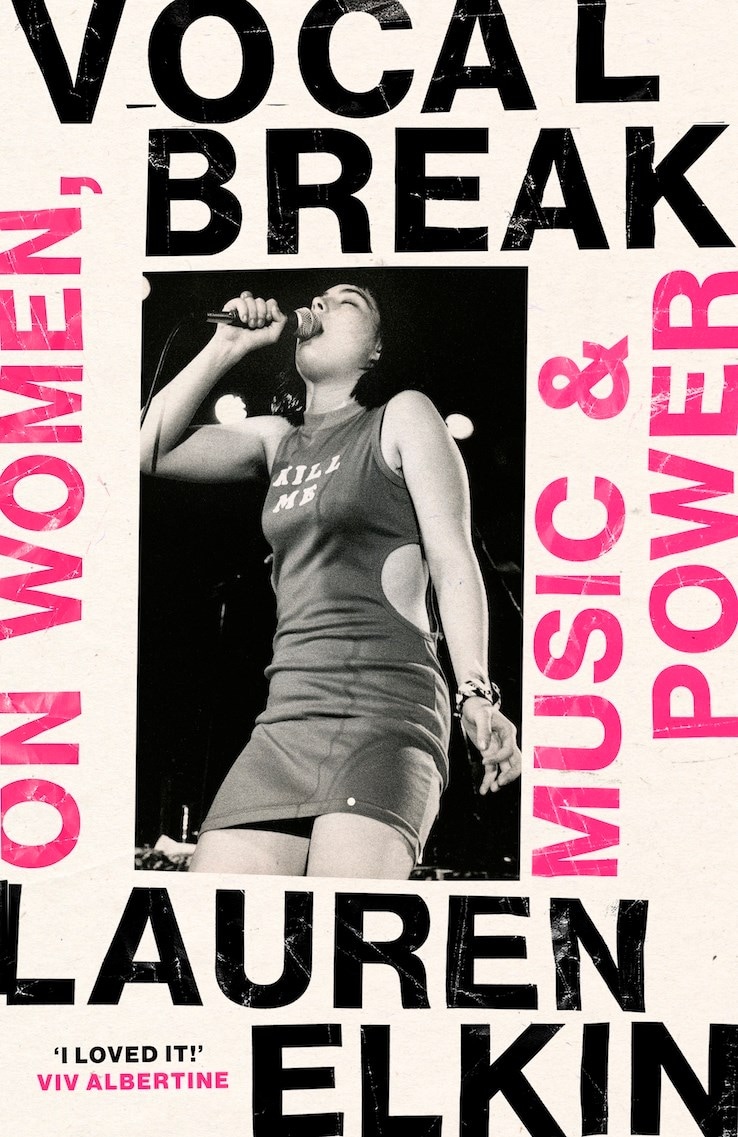
Part memoir, part manifesto, Lauren Elkin’s new book Vocal Break traces the cultural history of women singing as an act of expression, rebellion, vulnerability and power. Moving between personal anecdote, literary criticism and feminist theory, the Art Monsters author examines the female voice as both spectacle and threat, exploring how women have historically been treated for using their voices. Seductive, authentic, naked, shameful, Elkin draws on the lore of sirens, Hans Christian Andersen’s The Little Mermaid, Homer’s Odyssey, and figures ranging from Cyndi Lauper and Kathleen Hanna to Cynthia Erivo, Maria Callas, Kamala Harris and more.
Elkin trained as a professional singer and dedicated her youth to pursuing a career in musical theatre. It wasn’t until later that the soprano changed mediums, instead pursuing her writerly voice as an instrument that is less exhaustive and freer. Subsequently, Elkin explores the singing voice as a site of contention, utilising her own vocal break – the point at which the voice transitions between chest and head voices, possibly cracking – as a metaphor for the uncontrollable factors of resistance that women face.
Vocal Break feels like the natural succession of Elkin’s work – from Flâneuse to Art Monsters, as in-depth but niche studies of facets of feminism, and even her novel Scaffolding, where such themes come to play in each somewhat fictional character’s arc. She explores the notion of ‘cool’, comprehensively analyses gendered conventions and prescriptions across genres and singing styles, and looks at how even today women’s voices are silenced through politics, religion and technologies like AI and autotune. From personal anecdotes to Lacanian psychoanalysis, Vocal Break is a gesamtkunstwerk that evokes a sense of both fury and awe – and with classics by the likes of Bikini Kill, the Raincoats, Tori Amos and Charli xcx, it doubles as a great playlist. Girl, it’s so confusing sometimes.
Here, we speak to the author about her experiences training in musical theatre, the politics of singing and how writing the book allowed her to heal.

Rose Dodd: Having trained traditionally as a soprano singer from a young age, how long has this book been bubbling under the surface for you?
Lauren Elkin: I had no idea that this book was in me. I started out writing about cities and feminism, and in my adult life as a writer and a journalist, about literature and art, and that was where I felt really at home. I’ve always loved and played music, but I didn’t have a vocabulary for talking about it, one I left in the past.
With Art Monsters, I had planned to write about different women in different artistic spaces behaving monstrously from the get-go. I had planned a chapter about the singer Diamonda Galás, and others about Pussy Riot and Bikini Kill, but, as the visual art sections kept expanding, the music chapters ended up feeling as though they didn’t belong, they were disrupting the flow, so I took them out and that’s when I started planning to write another book about women’s voices and taking up space and activism, leaving monstrosity behind.
RD: At what point did you decide it would not only be theoretical but personal, as much memoir as manifesto?
LE: I was sort of free writing, I found my way into my own singing past, and was like, ‘Oh, if I’m going to write about women’s voices, I’m obviously gonna have to write about my own.’ I approached it almost like a memoir, thinking about my attempts at training to become a professional singer and why I moved away from this, what scared me about it, and the ways I wasn’t able to take up space, so to speak, with my voice. I narrowed that down to the technicality of my vocal break and my inability to resolve it, and once I’d identified that technicality, it opened up all of these more figurative, cultural and political possibilities.
RD: From the traditionalism of your training to your frustration when told what you should sound like, even look like, it seems like music was a gateway to a feminist awakening at a young age – even if you almost didn’t realise it at that point.
LE: I was a teenager in the 90s and the general attitude towards feminism was like, ‘Oh, that’s done, we don’t need that anymore,’ so I thought I lived in a kind of post-feminist world. ‘Feminism‘ was a really dirty word, you did not want to be affiliated with it, but at high school, I hadn’t yet articulated this to myself.
I was very surprised by the body shaming that I was experiencing when training for stage to meet the standards of what an ideal body for a woman is – and I was already a very thin teenager. I remember being told to have a nose job. I have to cut my face off to be a professional singer? That makes no sense. I wouldn’t because Barbra Streisand didn’t. She was afraid it would change her voice.
After the conservatory, I transferred to Barnard [the women’s college of Columbia University], and that’s where I had my explicit feminist awakening, but I think I had already internalised many of these lessons long before. I’d already felt that I didn’t want my voice to be controlled. I’d never been very comfortable with institutions or conventions – I didn’t want to be told how to fit in a box.
“I’d never been very comfortable with institutions or conventions – I didn’t want to be told how to fit in a box” – Lauren Elkin
RD: You had to make a choice between pursuing singing and musical theatre, or following an alternative path as a writer – an expression of voice but in a freer sense, as you put it in Vocal Break. Tell me about this decision.
LE: I auditioned for this musical at Williamstown Theatre Festival and I truly thought I was going to get the part but I didn’t, and I remember feeling really perplexed, like, I’m a good singer. I realised that summer, it wasn’t some injustice, instead I felt relieved, like I finally understood what was needed to move and succeed in that world and I didn’t have it – the savvy, the pizzazz, the sparkle. And I was like, I don’t have to put my body through that in front of other people anymore, and be judged, or compared to hundreds of other people in auditions. After that summer, I spent a year in Paris and it was transformative. I spent all these days writing in notebooks at cafes. I went into college as a theatre person, and came out as a writer. What I loved about theatre was being in a story, being in relation with other people, and obviously singing and performing. But all of that found its way into writing, and being a public-facing writer, in conversation with people who have a shared passion.
RD: Reading Vocal Break opened my eyes to how political singing can be. From the punk movement and riot grrrl, to opera. So much is prescribed to what a woman’s singing voice can or should be, much of which is dictated and directed by external forces, oftentimes male – but women have long used them to defy convention, genre, capitalism, racism and sexism.
LE: I write about the political voice in two ways. One, the voice being used explicitly as a tool of political resistance, and the other is about the politics of listening, which is how we receive the female voice and how the female voice is heard in the culture. I was at Charleston festival this past weekend and Maria Alyokhina from Pussy Riot came to my talk. I told her I’d wanted to write a chapter about Pussy Riot, and she said, ‘But I’m not a singer, why would you write about me?’ The act she went to prison for, she chose to do in song. They could have done any number of performance art-based interventions, but they picked singing as their way to resist.
RD: Female voices continue to be silenced. As Trump is in his second term, and turmoil overshadows the world, you mention that you find it hard to justify writing a book about singing. This surprised me. For me, the ground you cover, the manifesto, feels relevant and timely.
LE: I feel like I’m perennially having to justify thinking about these ‘niche’ subjects that I think are of enormous political import, but at the end of the day, it is just about singing. I’m devastated about what’s happening in the US, but when in response to the protesters in Minneapolis being killed by ICE, people took to the streets to sing together – and that gladdened my heart – but I could also imagine MAGA people laughing at that, which, even though I agree with you that it is hugely important, makes me doubtful.
RD: In many ways, the book was an act of reparation to a part of yourself that you lost along the way. Did you find what you were looking for?
LE: I did. I think, through writing this book, I became comfortable with singing again, and got over a fear I had of not being good enough. I’m not trying to make it as a singer, so now I can sing however I want, and I can feel proud of this thing I once did.
RD: Singing can feel powerful, and, when you resonate with a particular song at a particular moment in time, there’s nothing like it.
LE: Singing is good for you, it’s clinically proven to be good for you. They prescribe it for women suffering from postpartum depression, people suffering from dementia; singing returns you to yourself. What else is there to say? We should all be singing.
RD: That feels like a good note to end on, but to finish off, what’s your favourite song right now?
LE: Olivia Chaney in collaboration with the Decemberists, it’s called Offa Rex, The Queen of Hearts. That’s my current jam.
Vocal Break: On Women, Music and Power by Lauren Elkin is published by Chatto & Windus and is out now.
