
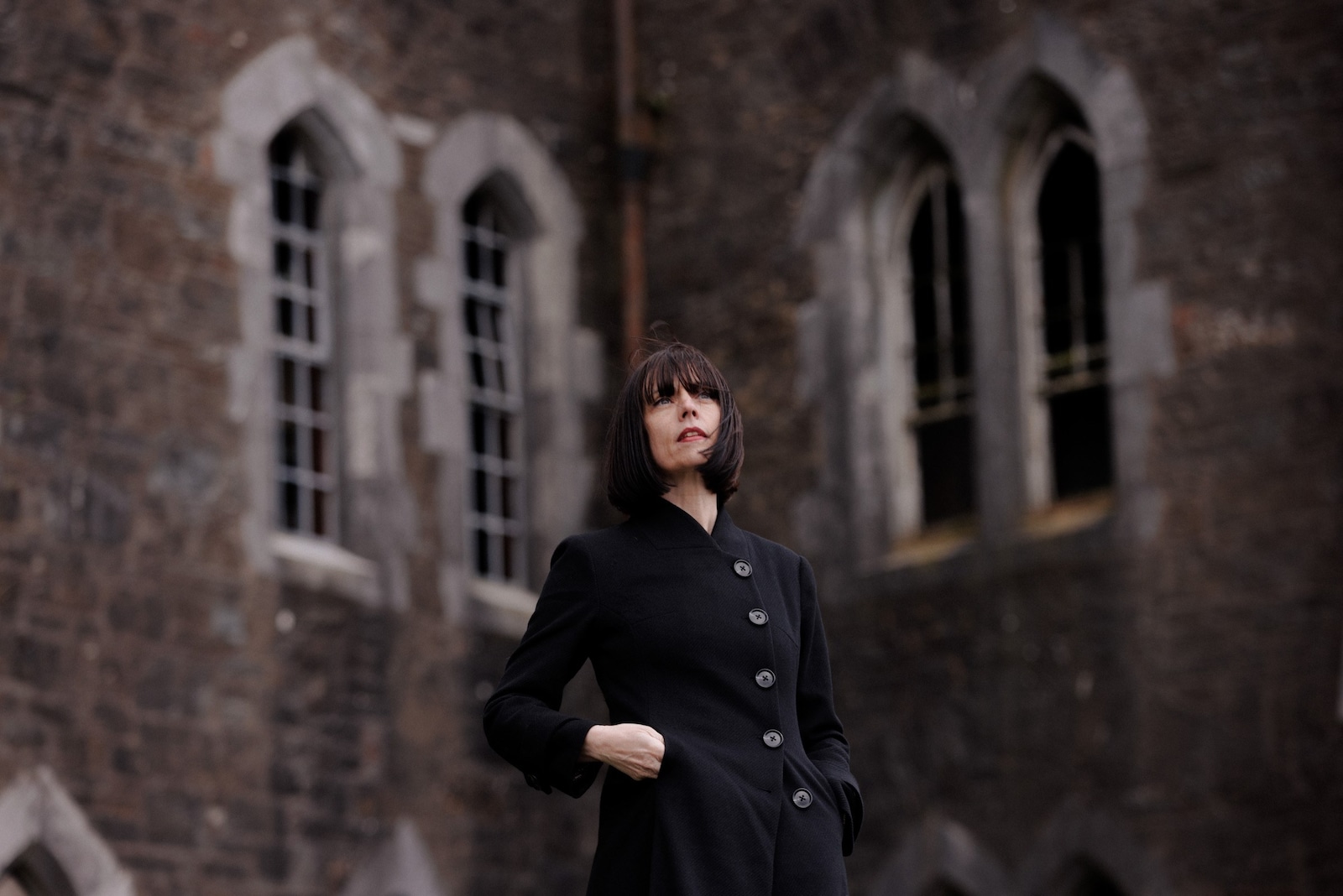
“This is a female text and it is a tiny miracle that it even exists, as it does in this moment, lifted to another consciousness by the ordinary wonder of type.” So begins A Ghost in the Throat, the astonishing prose debut by writer and poet Doireann Ní Ghríofa. After deciding to translate Caoineadh Airt Uí Laoghaire – an elegiac, longform poem by Eibhlín Dubh Ní Chonaill, written after the killing of her husband in 1773 – Ní Ghríofa finds her life blurring with the poet’s, despite the centuries between them.
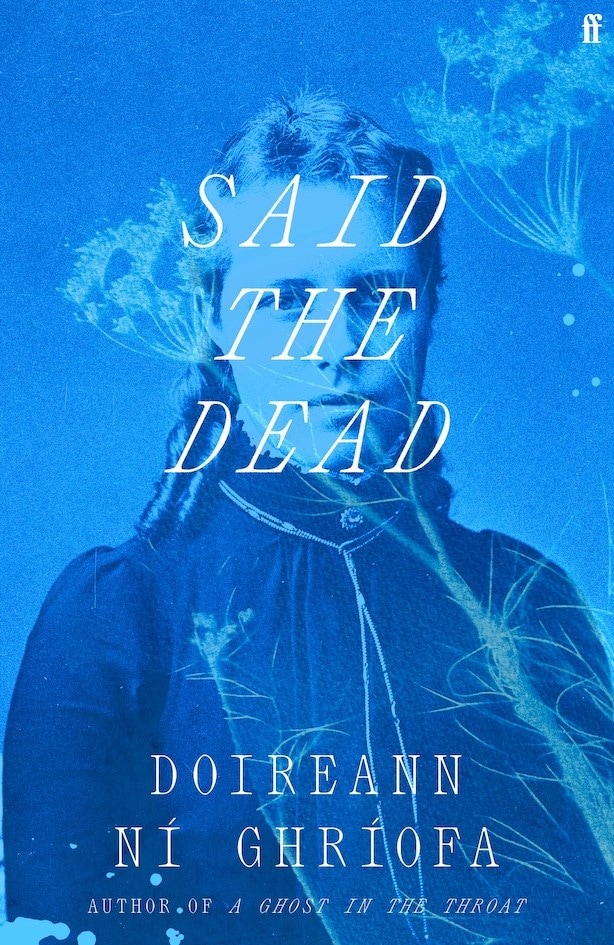
In her new book, Said the Dead, Ní Ghríofa turns her attention once again to women from the past – only this time, her subjects are the patients of a derelict Victorian mental hospital in Cork. When a passerby, the Reader, notices that it’s going to be converted into a block of modern apartments, she begins making her way through the hospital’s archive and learns about patients like Anna Martha, a violinist and artist who loses everything after her father's death, becomes a probationary nurse, has a breakdown, and ends up committed to the very institution she briefly worked in; and Bridget, who returns to Ireland pregnant after being assaulted by her employer in America, carted through Cork while in labour in the middle of the night. In what follows, Said the Dead is a luminous and genre-defying exploration of the histories we risk losing when women are remembered only through the systems that contained them.
Here, Doireann Ní Ghríofa discusses haunting the archive and the patients’ stories she found there.

Katie Tobin: A Ghost in the Throat, was about the danger of disappearing into another woman’s life. In Said the Dead, the Reader disappears into dozens of lives at once. Is this an element you wanted to go further with after writing your first book?
Doireann Ní Ghríofa: What we’re touching on there is what feels so mysterious to me about writing: where do ideas come from, and what draws us to certain subjects? What I’m learning about myself as a writer – and it really does feel like a process of slowly learning this about myself – is that I am very drawn to women’s lives and to learning more about them. Unfortunately, I’m also not great with boundaries. So, when I follow that curiosity to try to learn more about someone else’s life from the past, I often end up drawn very deeply into that life and into my own efforts to discover more about it. For me as a writer, it’s important to welcome the reader into that messiness of process – sometimes bordering on obsession – and into how difficult it can be to let go of these lives. Or, to accept the gaps in the historical record rather than trying to fill them.
KT: You spent years in the Cork City and County Archives reading the patient casebooks. Was there a moment or voice that made you certain this was your book?
DNG: The voice I followed most was Dr Lucia’s, the assistant medical officer at the hospital. Hers was the most present voice in the records I encountered. Whenever she noted the speech of a woman sitting in the room with her at the time, it was really electric to read that. At the same time, it never felt like enough because it was always just a fragment. It was vivid, but I also resented that brevity. Everything was mediated through this doctor’s report, even when I wanted direct access to the women themselves. But she was the one holding the pen. Other women’s voices spoke to me, too. Your namesake, Kate, who says, “Ireland is mine,” and, “There’s a Catholic rebellion … I got the gold.” These kinds of almost defiant statements really spoke to me.
KT: Do you think we lose anything when we convert historical spaces like this?
DNG: I think we should be confronting this question much more directly in contemporary Ireland, where we’re experiencing a severe housing crisis. There are a lot of derelict buildings dotted around the edges of our towns and villages and in the hearts of our cities that we walk past every day. It’s so frustrating to see buildings boarded up when there are people in dire need of accommodation.
I’d often park my car directly outside the institution while writing this book – so that I could feel the shadow of the building come through the car as I was typing – and saw children playing on what used to be the asylum terrace. I think that offers part of the answer. No matter how difficult the history was there, bring in children, have them grow up there, have new lives and new histories, not overwrite those vexed histories, but be there causing friction in parallel with them, maybe.
“For me as a writer, it’s important to welcome the reader into that messiness of process – sometimes bordering on obsession” – Doireann Ní Ghríofa
KT: Along the same lines, the Reader reverts the patients’ names from pseudonyms to their real names after a conversation with an archivist. After all that’s been taken from women, she doesn’t feel like it’s right to take their names, too. Did you feel that there was any conflict between protecting these women and doing them justice by sharing their stories?
DNG: Yes, I felt a huge tension throughout the book, and I still do. These are people who were in distress and held in an institution, and there are serious ethical questions around that. But I also felt their lives deserved to be remembered. Over the years in the archive, it felt like I was building a living archive inside my own body. I became aware that I could only hold it temporarily – and then I would die, and those memories would die with me. That was why it felt important to write about them. This brief human body that had become a living archive of their stories – I wanted to create a different kind of archive in ink and paper, so that other people could read about these lives, and so that they might then become alive again in other human imaginations and other human bodies. I know that’s just the basic mechanics of reading, but I never really got over the astonishment of it, of how precious an act reading is. I’m also very conscious that they didn’t consent to being written about. All I can say is I tried to do right by them.
KT: Are there any subjects that you found particularly challenging to write about?
DNG: Men, I struggled with. I’m very conscious that the way I write is heavily gendered, and I did read some of the case books from the male side of the asylum. But they scared me because there was so much sexual violence and violence in them. I wasn’t a strong enough person to be able to withstand that kind of engagement with such distress.
KT: I love reading the acknowledgements of most books. In yours, you thank Paula Rego for her painting Angel, which “helped [you] to see what this book wanted to be.” How did this painting inform your writing process?
DNG: I’m so glad you picked up on that. Paula Rego has been really important to me, and that particular painting is so powerful. Whenever I was writing at home, I had a little print of that painting pinned to the noticeboard above the desk beside my bed. I feel like the whole book is encapsulated in the tornado that Paula Rego put on the canvas: the intensity of the gaze, the stance, the lushness of the folds in her dress. Looking at it, I felt: I have to do my best to live up to that defiance and power. We often imagine the lives of the women in this asylum as powerless, but they still had power and strength. They were articulating that through the case books, through their lives before – and often after – they left the institution. Each of them had their own power, and I wanted the book to register that power, and to honour what astonishing people they were.
Said the Dead by Doireann Ní Ghríofa is published by Faber & Faber and is out now.
