
Friendship and obsession are at the core of Stephanie Wambugu’s debut novel, Lonely Crowds. The book’s protagonist and narrator, Ruth, becomes almost instantaneously bound to Maria upon their first encounter as little girls, and through the book, we see this relationship and their selfhoods evolve. First in the suffocating classrooms of the Catholic school they attend, then through their rarefied liberal arts education at university, and finally in the art world in 1990s New York. Their friendship, intimate, emotional, and tumultuous, anchors the book and serves as the lens through which Ruth sees the world, especially when she was younger.
While Ruth’s life at times appears wrapped up in her closest friend, in one instance, begging to be in detention so she could be around her, and in another, revealing, “I might have died if she went to New York and I had to stay there at home.” Maria comes across as someone who is fiercely independent, a charismatic and confident child who disrupts both Ruth’s and her parents’ lives completely and is the subject of fascination in every room she enters.
It is an impressive, gripping debut that has been lauded by critics and readers alike for its honest writing that addresses several topics, from female friendship and familial dynamics to devotion and the relationship between identity and artmaking, with the precision, insight and nuance of a seasoned novelist.
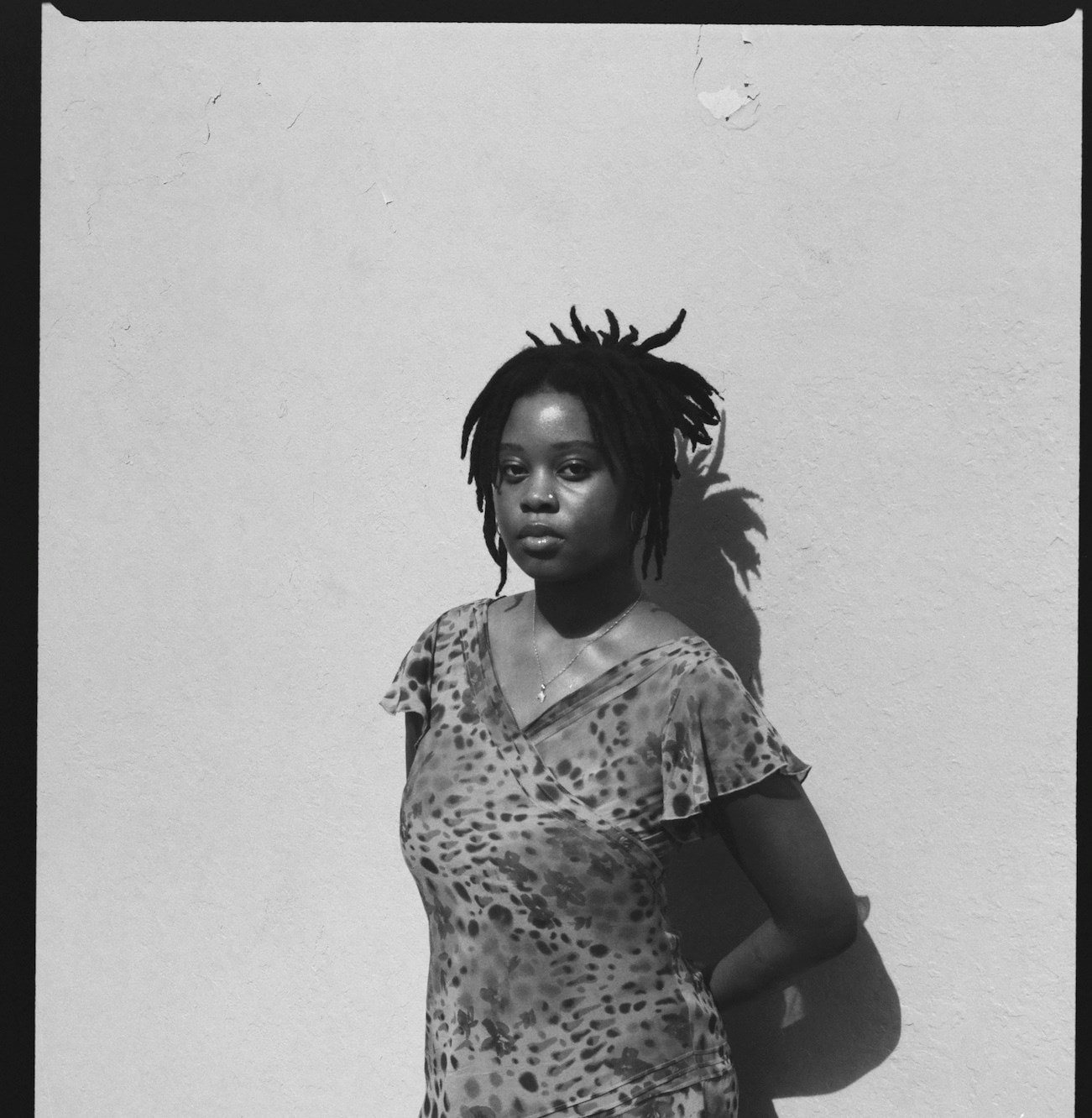
Here, Stephanie Wambugu talks about obsession as a narrative device, how she avoids the autofiction label and why she keeps returning to academic institutions in her fiction.

Zara Afthab: There are many themes in the book; you touch on class, religion, education, friendship, family, suffering and even artmaking. How did you structure the novel narratively to encompass these themes?
Stephanie Wambugu: As the novel is about Ruth and Maria’s education, their different periods of schooling were an easy container to put a lot of ideas into. I was able to pose really fundamental questions about how the world works and what kind of moral education they should receive. Ruth went to a religious school, and she’s learning things for the first time as a young person, so she’s asking these very rudimentary questions that were helpful as a narrative device. I was able to put questions and thoughts that would be more essayistic into the mouths of children, and then later, when they were in college and were exposed to an entirely different worldview, it was possible to do the same thing, but about class and ideas Ruth encounters such as Marxism, art history and questions about sexuality, feminism, and so on. She’s constantly grappling with her feelings of ambivalence about school, and that’s what the epigraph, with the Kafka quote about education doing him harm, alludes to: that she, in some ways, feels that she’s been catapulted out of her class of origin through school and her education, but also feels somewhat wounded by these institutions.
ZA: Ruth’s obsessive tendencies with Maria and in her other relationships are a constant throughline of the book, and you write about this behaviour with a lot of honesty. How did this idea of a person who is governed by her obsessions come about, and what drew you to her as a narrator?
SW: I think, like most people with low self-esteem or an unformed sense of self, which is maybe all of us, to some extent, Ruth is looking for other people to model herself on or to latch onto, someone who will give her a sense of meaning and help her build a self. She’s adrift and looking for someone or something to orient her, and I think she feels a lot of emptiness because of that. The good thing about some of that emptiness or vacancy is that she can be a repository for other people’s whims and ideas and become fixated on the inner workings of another person, which, in some respect, makes her a good narrator.
ZA: There’s a sentence at the very start of the book where Ruth says, “When I met Maria, I learned that without obsession, life was impossible to live. I’d forgotten. Now I remembered.” How did these ideas of devotion develop as you were writing?
SW: I wanted to write a book that was in part about religion and disavowing the religion you grew up with, but also about someone stumbling into their sexual and romantic life for the first time. The Bildungsroman is the perfect genre for that, as it allows the book to address both questions equally. I also think these thoughts run parallel to what a writer or an artist feels. Their devotion to the work that they do can often feel akin to romantic obsession, or at least that’s how I feel. When I’m not writing or when I’m not able to feel engaged in my work, I feel very depressed in the way that someone might feel depressed when left by a lover. I think that can easily become a cheesy metaphor, but this devotion to your work as an artist was partly why Ruth had to be written as a painter.
“I wanted to write a book that was in part about religion and disavowing the religion you grew up with, but also about someone stumbling into their sexual and romantic life for the first time” – Stephanie Wambugu
ZA: You share a lot of your biography with Ruth. You are both Kenyan, grew up in Rhode Island and graduated from Bard College, but from what I’ve read, the book is completely fictionalised. Was there ever a fear that it would be labelled autofiction?
SW: I knew that the conflation between the character and myself would be inevitable, so I wrote that into the book in some ways, by making her Kenyan and having her go to Bard, but beyond that, it wasn’t difficult for me to separate myself from the book and the characters. I think if you’re not white, there’s an assumption that your writing is autobiographical if your character is from the same ethnic group as you, and I wanted to get the question of how much of your writing is fictional out of the way. It’s also partly why I set the book when I did, as I thought it was a fitting time in art history, when similar cultural questions were being asked and answered about identity and representation, and about whether or not to engage with those ideas as an artist.
ZA: The book never outright details when it is set or the passage of time; it is instead punctuated by different stages of Ruth’s life. As a child, there’s an honest naivete that comes through in Ruth’s use of language, and then the writing shifts ever so slightly to reflect each stage of her life. Did you use your own writing from when you were younger as a reference?
SW: I did keep many, many journals from when I was five years old to the start of my twenties, but I got rid of them while moving, so I had no writing from that period of my life to reference. However, one thing I was aware of was how children accidentally arrive at profound insights, but can’t really express them and are limited by language and so when I was writing Ruth as a child, I wanted her to have the same power of observation she would she had as an adult, but to be kind of hemmed in by what she was able to say and what she was able to say clearly. I wanted this style and diction to mirror the process of maturation, from a kind of naive, more impressionistic way of writing to being able to say things more explicitly, to then using allegory, simile, and metaphor to build and develop over time so that when you encounter her as an adult you notice an ability to convey granular detail and make a finer point than she was able to make when she was younger.
ZA: I heard on a podcast a few months ago that your next book is set at Columbia University during the student encampments for Palestine. What about academic institutions is intriguing to you, and why is it the setting that backdrops your debut and forthcoming sophomore novel?
SW: I don’t think there are many other places like a university where people live, work and study. They are like self-contained ecosystems that can sometimes feel utopian. That said, all of the realities of debt, how expensive it is to go to school and world politics at any given time, threaten to puncture or creep into the fantasy that everyone is engaged in, and that was especially true during the encampments where the outside world couldn’t be avoided and students took it upon themselves, in a fairly courageous way to insist that the world’s come to a halt, to recognise what was happening in the world and what their country was responsible for doing. The novel is also about sexual norms, alienation and romance, all these other themes I write about in my fiction, and a campus is such a capacious container where all these questions and themes can be engaged with.
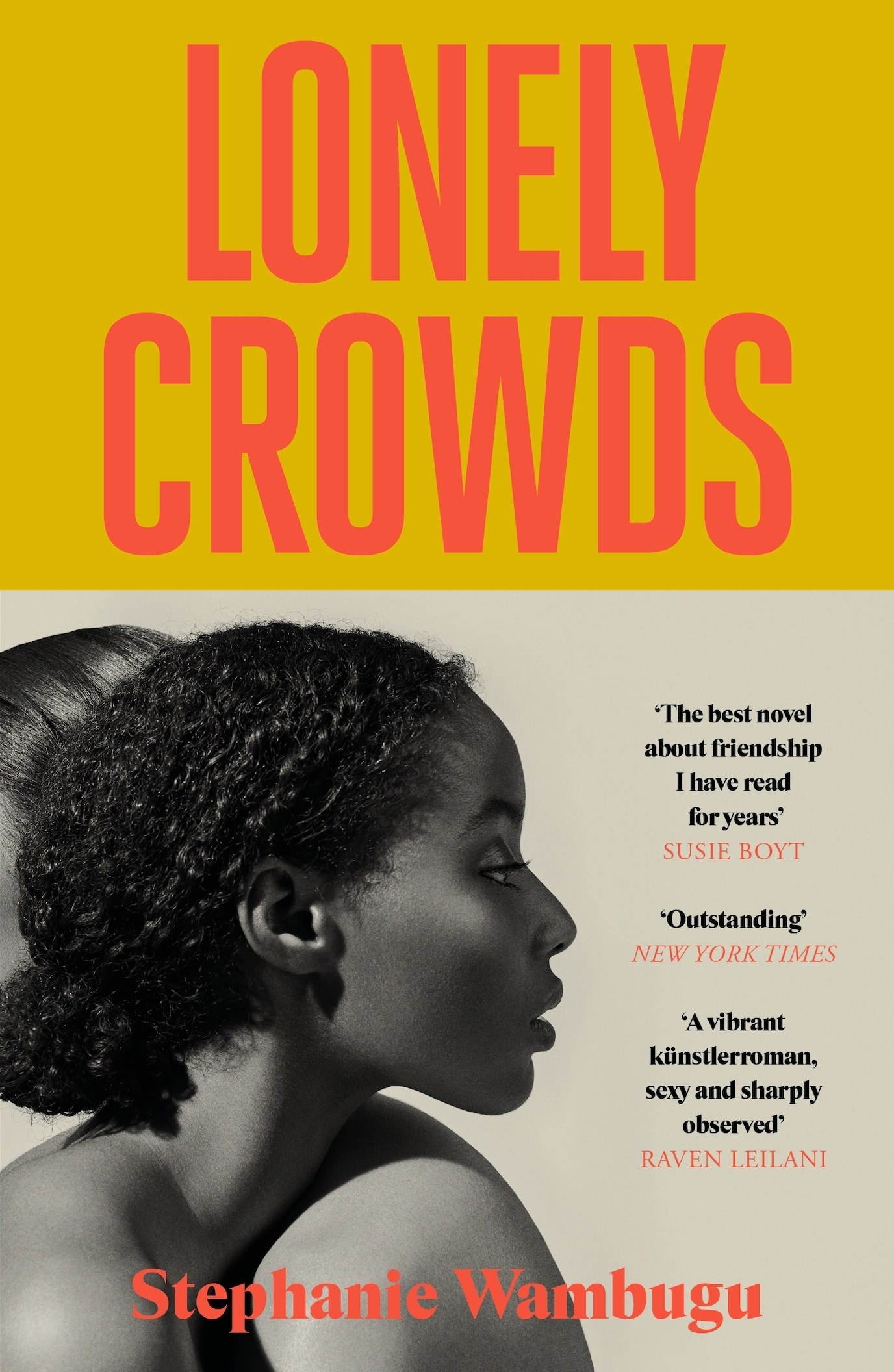
Lonely Crowds by Stephanie Wambugu is published by Canongate and is out now.
