
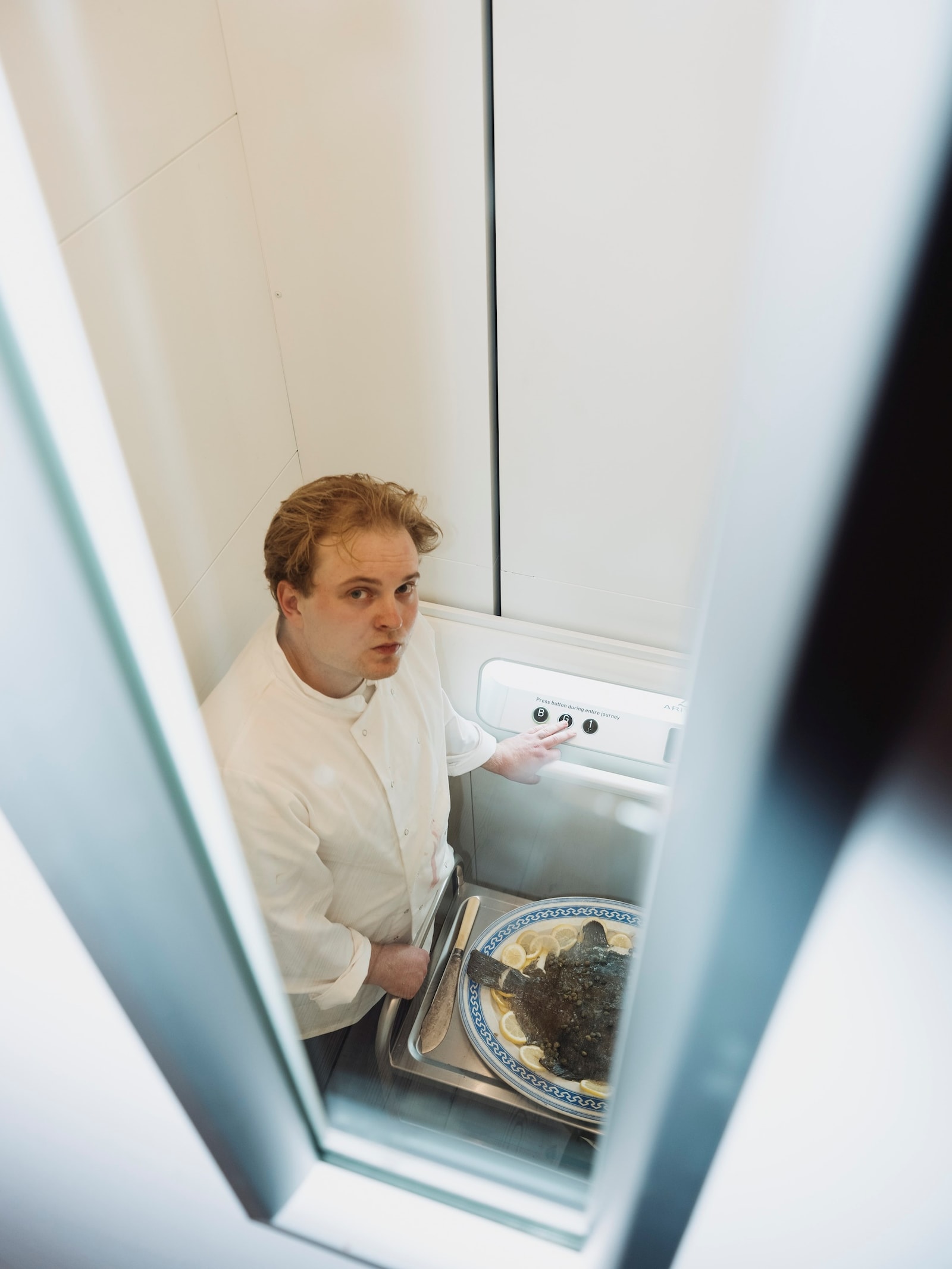
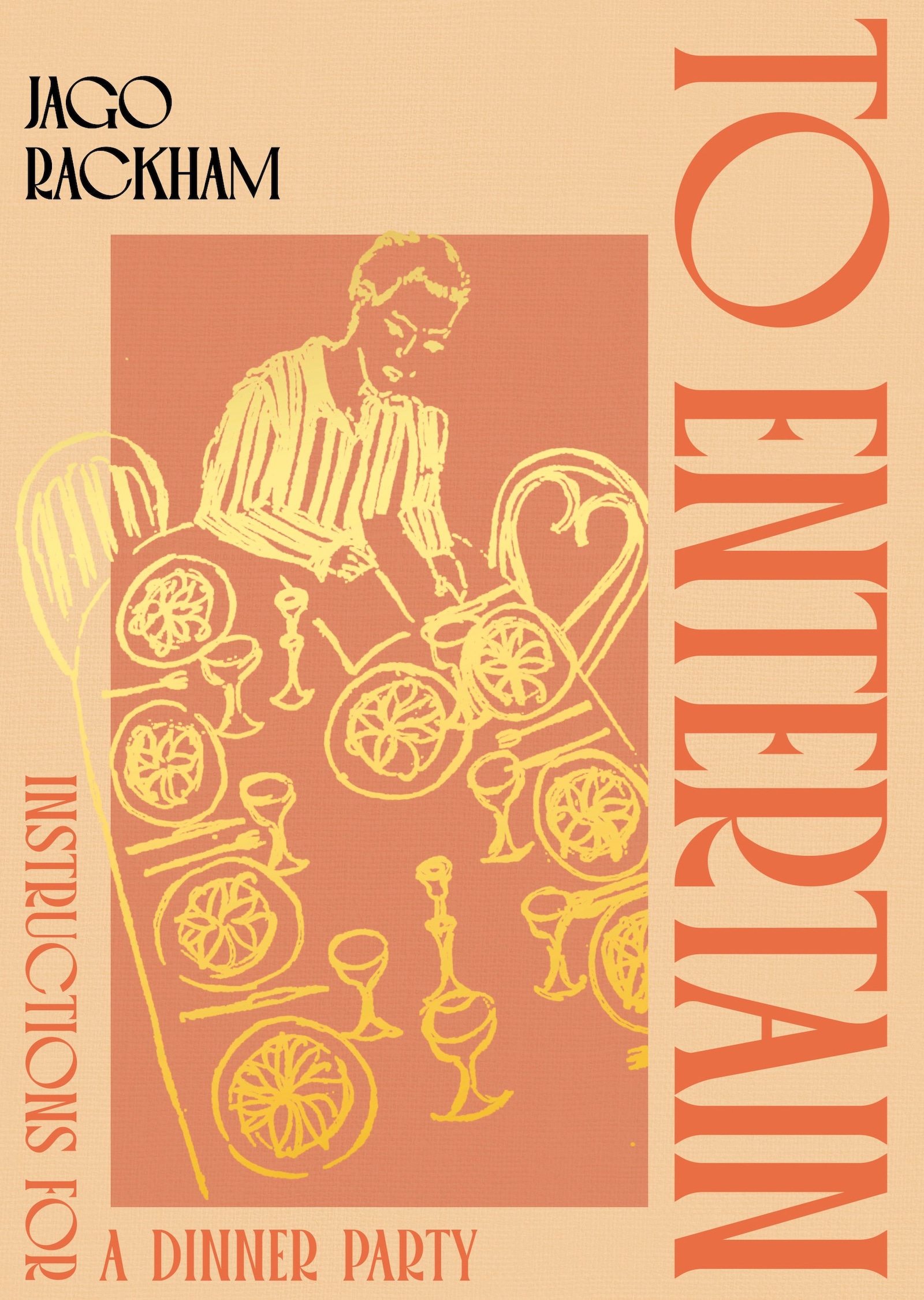
To Entertain, the debut by the writer and cook Jago Rackham, is not an easy book to categorise. Subtitled ‘instructions for a dinner party’, online it’s listed variously as a ‘party planning’, ‘etiquette’ or ‘food and drink’ title. Reading it, though, quickly you come to see it less as a set of instructions and more as a brilliant, genre-defying work; part-memoir, part-recipe book, and with a dedication to beauty that’s complemented by illustrations by the artist Faye Wei Wei.
Inspired in part by an ‘account book’ handed down to his grandmother, across sections as wide-ranging as ‘Money’, ‘Dinners for Lovers’, and ‘Quiet, Shy Guests and Anxious Hosts’, Rackham weaves together contemporary reflections alongside old diary entries for a nuanced consideration of what it means to bring people together.
Tracing back through years of dinner parties in a succession of rented flats in London, To Entertain is also about creating a world, and a tribute to Rackham’s life with his partner of 18 years, Lowenna Hearn, to whom the book is dedicated. “I would have been nothing without her. I would probably have become a civil servant or lawyer,” says Rackham. “It’s like an inosculation, which is the word for when two trees grow against each other and fuse. You become indivisible from someone after a very long time, if you’re very intensely sharing ideals and purpose, and our purpose, I think, is to try and create something that’s safe.”
Here, Jago Rackham talks more about his debut book.

Holly Connolly: How did the book come about?
Jago Rackham: For Lowenna and I, trying to create temporary, physical spaces of community was always really important. When we moved to London when we were 18, we would have dinners with our friends. That was partly a financial thing; you have no money, and giving people dinner can actually be pretty cheap. But it was also a lot to do with trying to create spaces of safety in a world that can often feel unkind and scary. In terms of Lowenna’s autism, this performance of having dinner parties became a defence mechanism for her against the world, and a way of controlling it.
Then the book itself came from trying to work out what I could do that would impart this into the culture. It’s not a manifesto, but a vehicle to encourage people to spend time together in a nice way – a way that has kindness in it. In the last big edit of the book, I said, “I want to go through this and change anything that feels unkind.” I didn’t want it to be an unkind book. I don’t want to be telling people how to act. I wanted to make something that was suffused with kindness.
HC: And how did the form come about?
JR: It took me ages to try and work out the form. But one really formative thing was that I had been thinking about actual guidebooks, books that teach you how to do something and why. I was in discussions about creating a book, and I had just been at my grandma’s, and I had asked her what the first cookbook she had was. It was a book that her mother had given her when she just got married, she would have been 20 or 21, and it was this horribly sexist book, full of class pretensions, essentially about how to be a housewife.
Even though I hated everything about this book, I quite liked the way it was written, just quite instructionally, and I thought, “That’s a really fun form to play with.” I’d been trying all through my twenties to write a cookbook with my friend Felix, and I always got stuck on the form. We had all these recipes, but I couldn’t work out how to structure it. It felt like, it’s just recipes, does it need to exist? With this form, there was something about having a framework to hang all the ideas on, to smuggle in little bits of thinking about the world.
“I wanted to make something that was suffused with kindness” – Jago Rackham
HC: The realm of food can be quite gendered; the distinction between the machismo figure of a male chef, and then big cultural icons like Nigella Lawson, whose focus is ‘domestic’ cooking. Your work, and the influence of your grandma’s book, is interesting to me, because in a way you’re operating in quite a ‘female’ space.
JR: Absolutely, and that is the space I feel comfortable in. Most of my friends are women, and professionally, the other thing I do, which is cooking weird food for events, is very female-dominated. I don’t know many men who are making big, silly cakes.
I’ve always said I’m a cook, not a chef. I haven’t cooked in a professional restaurant for any length of time, so ‘chef’ would feel like stolen valour, and restaurant cooking is very different to domestic cooking. They serve very different purposes.
I also really identify with certain female authors like Elizabeth David and Patience Gray, who have been so influential to me. These women were writing brilliant prose, but maybe found themselves as ‘cookery’ writers because that was a place that women could be writing. I call myself a cook as a self-conscious attachment to them as well.
HC: You got sober while writing the book, and a lot of the material in it is drawn from a time when you still drank. There’s a really refreshing lack of piety, or any kind of tedious redemption narrative, when it comes to alcohol.
JR: It’s weird, I didn’t really feel upset about it. When I became sober, I decided that I had to be able to be okay with alcohol. I work in food, and all my friends work in art, fashion or food. If I was to stop drinking, and say, “I can’t be around alcohol,” I don’t know how I would socialise. I like other people having fun, and I still think that nice wine is probably the most delicious thing that we have managed to create.
I was scared when I was first getting sober. I thought, “God, I’m going to lose my personality.” But actually, I can still stay up to 6am if I need to, drinking Red Bull and smoking cigarettes. I’m still shouting all the time. I think if I was going to try and write a book about dinner parties while having ill feelings towards drinking, then it would be a pointless book, because it’s not how people enjoy dinner parties.
“I don’t know many men who are making big, silly cakes” – Jago Rackham
HC: How do you feel the different parts of your practice interact with each other?
JR: In terms of how cooking and writing are attached to each other, cooking has taught me so much about writing because cooking has this deadline, which is dinner, and it’s like, you can’t stay up all night and serve dinner in the morning. More than that, with cooking, when it’s ready, it’s just ready. No one is ever going to see what you wanted to do, they only see what you do. When I started my Substack I hadn’t really been published anywhere, and I was very frustrated, but I decided to start it with cooking in mind, and with how you cook.
HC: Is there a separation between your life and your practice? It feels like everything you do is centred around a lifestyle, or a certain way of living.
JR: There’s no separation. It’s a lifestyle, in that way. It’s funny, when I was stressing about writing the book, something I worried about was, “Is it silly? Is it a lifestyle book?” I remember someone telling me, “Well, it is a lifestyle book, but that’s okay. It’s illustrative of a lifestyle.” I would like it if the book can be seen as a map for living. It’s about dinner parties, but if it can be about more things, that’s really nice. The other thing about being kind is, I want to trick people into doing as I do.
HC: It’s manipulative.
JR: It’s manipulative. It’s that thing of, you can be persuasive with argument, or you can be persuasive with illustration. There’s something my friend Madeline talks about that I think about often, that the greatest thing to be able to achieve through making art would be to make your way of life seem necessary.
To Entertain: Instructions for a Dinner Party by Jago Rackham is published by Robinson and is out on April 9.
