
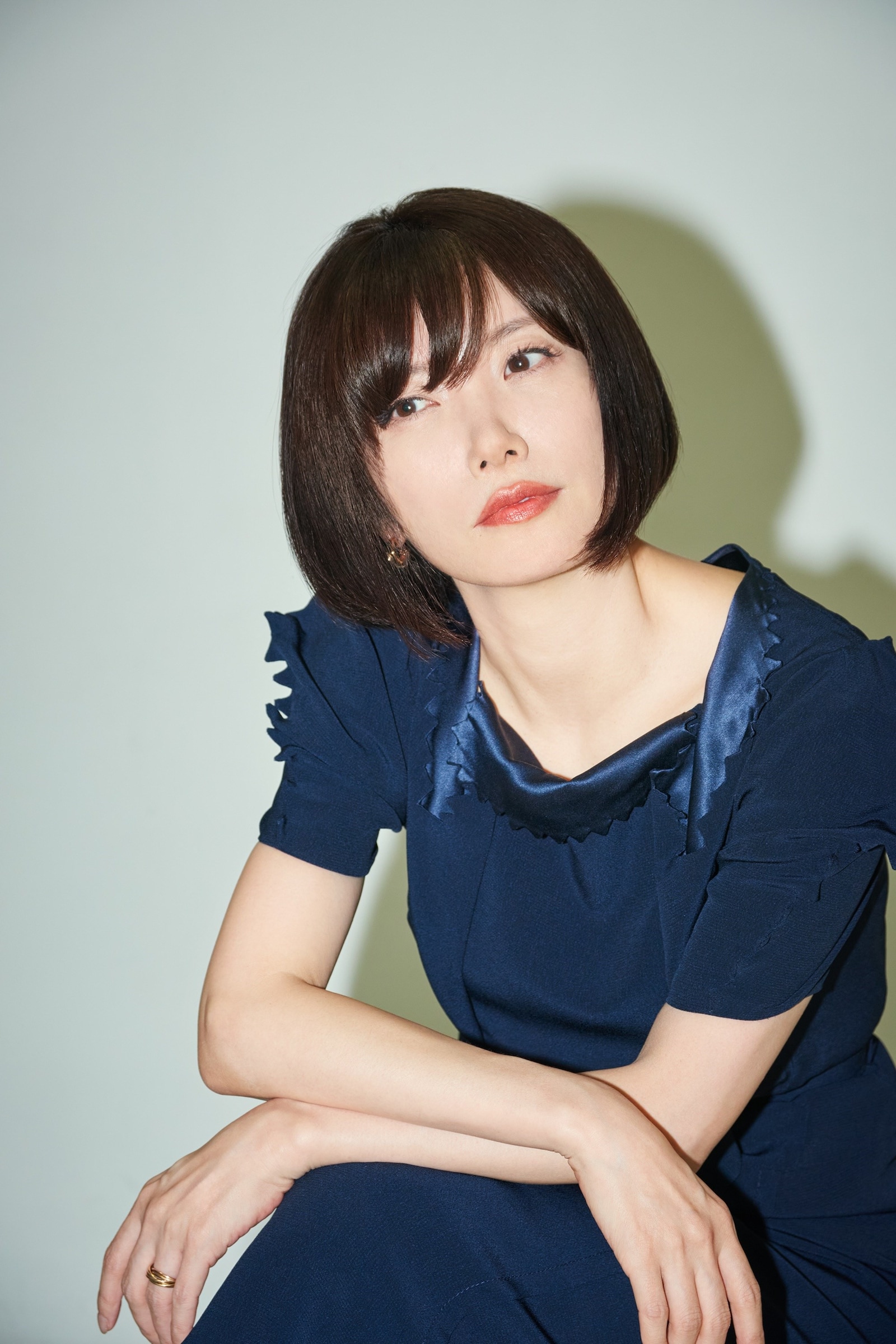
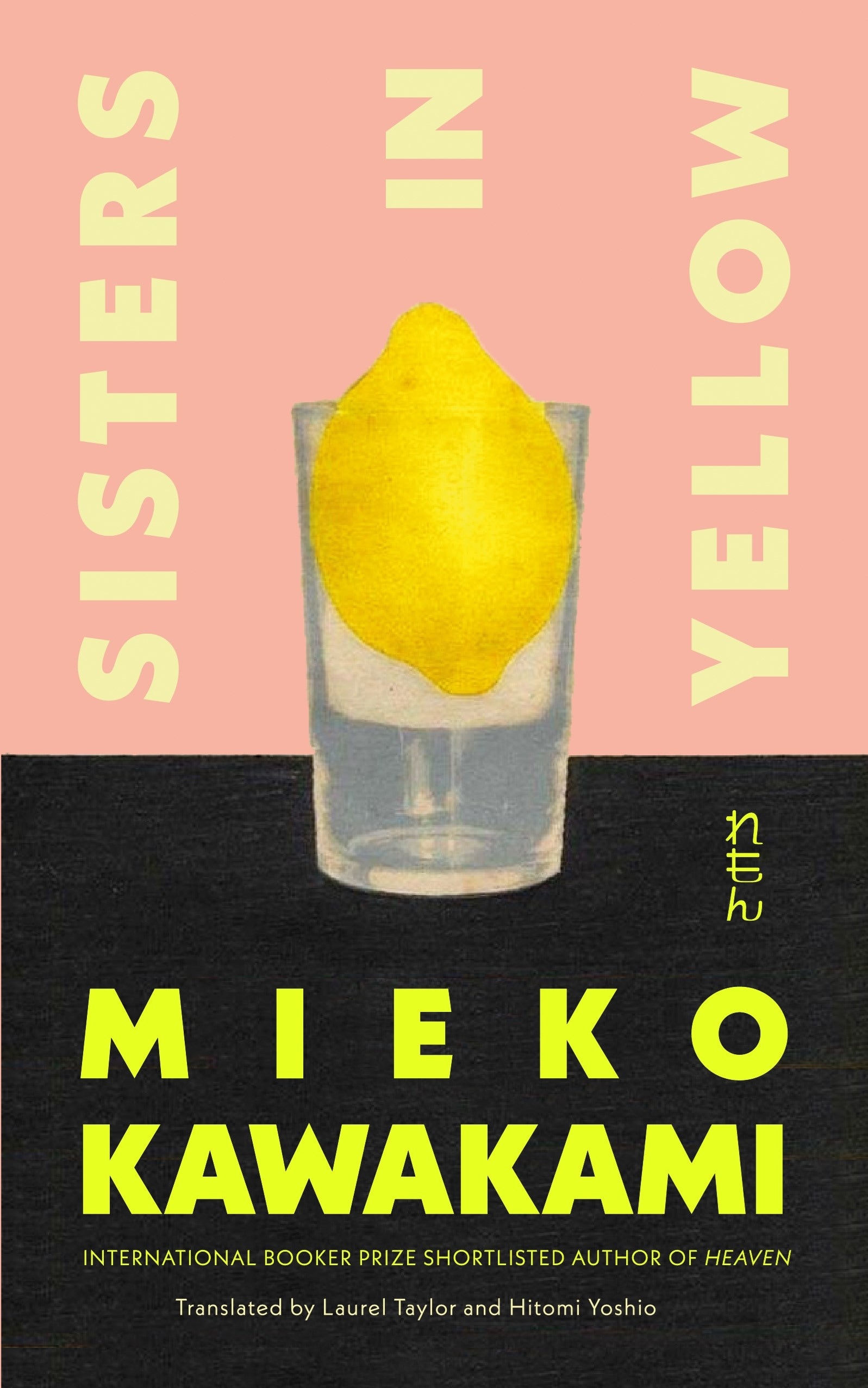
Set in Tokyo during the 1990s, Sisters in Yellow is an unforgiving portrait of the Japanese underworld as seen through the eyes of a teenage girl. Hana, the 15-year-old protagonist of Mieko Kawakami’s latest novel, lives in a tiny apartment in Higashimurayama with her struggling mother, a hostess at a local dive bar. One day, her mother disappears without a word, leaving an enigmatic older woman called Kimiko in her place. What follows is a classic coming-of-age tale of optimism followed by a loss of innocence; Kimiko and Hana open their own bar, Lemon, in Tokyo’s Sangenjaya district, but after a shock incident causes everything to fall apart, Hana finds herself with no money and no prospects. She descends deeper and deeper into the criminal underworld of the adults surrounding her, in a desperate pursuit of money that will lead her to the brink of insanity.
With its intense depictions of loneliness, class struggle, and female friendships, Sisters in Yellow is a novel that does not offer any easy answers, although readers are likely to make their own judgements about where the moral centre of the novel lies. A high-stakes, noirish thriller, it also represents a tonal departure from Kawakami’s previous three novels – Breasts and Eggs, Heaven, and All the Lovers in the Night – with their quieter explorations of sexuality, isolation, misogyny, and the female experience (when Breasts and Eggs was first published as a novella in Japan in 2008, it was described as “unpleasant and intolerable” by Tokyo’s then governor, Shintaro Ishihara).
Kawakami is one of Japan’s most acclaimed contemporary writers, although she is often branded overseas as a “feminist author” – a label she feels is reductive. “I do write about women’s bodies and lives, and I am most certainly a feminist – but I make it a point to reject that category whenever I come across it,” she says today. “There seems to be an implicit suggestion that feminist literature is a separate form of expression, distinct from Literature with a capital-L. And that makes people feel less threatened, because it’s contained in a special category.” But with her sensitive and visceral portrayals of her characters’ inner lives, the author offers a universal window into the human condition that extends far beyond the confines of feminism, or her home country of Japan, earning her legions of readers around the world.
Here, Mieko Kawakami talks about Tokyo nightlife, her thoughts on being labelled a feminist author, and the purpose of literature.

Violet Conroy: In your own words, could you describe Sisters in Yellow?
Mieko Kawakami: Sisters in Yellow is a coming-of-age story that follows a young protagonist named Hana, who is thrown into society as a teenager and forced to navigate the days and nights of Tokyo of the 90s. Hana just wants to live the kind of life a normal girl might lead, but fate has other plans for her, requiring her to become tougher and tougher. Although she ends up getting involved in the criminal world of credit card fraud, she remains earnest, hardworking and compassionate. Hana learns to survive using the cards that life dealt to her. I hope that readers will feel and experience the life of survivors like Hana, and the exuberance of their energy that never wanes but only grows with adversity.
VC: Where did the idea for Sisters in Yellow first come from?
MK: I always strive to write about emotions, relationships, memories, and details about everyday life that have yet to be put into words. My novels are filled with vivid depictions of lives and cultural landscapes that are perhaps different from what overseas readers might imagine Japan to be. With the spread of social media, we’ve developed a habit of reading a few lines, scrolling on, and immediately forgetting what we read. We think we understand the world, but the truth is often much more complicated. Behind every headline, there are lives of individuals. Sisters in Yellow begins in 2020, when Hana, now an adult, finds a newspaper article about a certain incident. By the end of the novel, as we follow Hana’s journey, you’ll find that reality is far different from what can be imagined from the original article.
VC: In Breasts and Eggs and Sisters in Yellow, many of the characters work as hostesses. When you were younger, you also worked as a hostess. How would you describe this profession and world to an outsider, and why is it a theme you keep returning to in your novels?
MK: There’s so much that goes on in the night that is invisible in broad daylight. If you live in the safe and protected world of the day, you will never know the obscure lives of those who exist in the night. Reflecting on how the worlds of day and night converge and diverge, for me, is the key to the very essence of diversity. The vast majority of people in the world are simply living to survive day to day, without ever stopping to think about whether they’re liberal or conservative, or how the stock market is doing.
When you’re a writer or a reader, and you spend time with those who share your values and concerns, it’s easy to fall into the illusion that our value systems and critical mindsets are the universal norm. But these aren’t necessarily individual achievements; in most cases, our values and norms are inherited and represent only a skewed facet of society. As a writer, I always try to write about society and the world from multiple angles and viewpoints.
“If you live in the safe and protected world of the day, you will never know the obscure lives of those who exist in the night” – Mieko Kawakami
VC: You depict the characters in Sisters in Yellow with remarkable empathy and compassion. Do you wish that, as humans, we had more capacity to accept ambiguity, instead of being quick to judge and label certain people or scenarios?
MK: Yes, for sure. The rules of law, or what privileged individuals consider right or wrong or common sense, are not universally applicable to everyone. We can’t choose what kind of culture we’re born into. Even on social media, where it seems possible to connect with people across places and time, we actually know very little about the person behind an account. People see what they want to see, often in exaggerated form. But life exists outside of that. Even if there are truly exceptional moments in our lives, those moments can’t be adequately expressed on social media. We can only deepen our relationships with another person, genuinely understand their goodness and their suffering, by taking time, meeting in person, and exchanging words. And for that, you need to be prepared to accept ambiguity.
VC: You’ve mentioned that you got tired of being called a feminist author. Do you identify personally as a feminist – but feel that this is a reductive way of looking at your novels and the characters in them?
MK: There’s been a bit of a misunderstanding here. Parts of what I said in an interview got taken out of context, and my original intention got distorted. When Breasts and Eggs was published overseas, I was often introduced as a “feminist author who writes feminist novels.” I do write about women’s bodies and lives, and I am most certainly a feminist – but I make it a point to reject that category whenever I come across it. I don’t mind how my work is read, but putting that label on my work feels very limiting, like taking the easy way out.
There seems to be an implicit suggestion that feminist literature is a separate form of expression, distinct from Literature with a capital-L. And that makes people feel less threatened, because it’s contained in a special category. There’s an old-fashioned label they used to use for women in the Japanese literary industry – “joryū sakka” (woman writer). I feel like “feminist author” has a similar connotation to that. If we can engage in a substantive discussion and my work is interpreted as a “feminist novel” as a result, then I would be happy with that. I’m not fed up with feminism, not at all. I just don’t want the label to be used as an excuse for intellectual laziness.
VC: What do you feel your role is as an author? How do you want your books to make readers feel?
MK: Literature doesn’t have the same effect or function as politics, journalism, or medicine does. Both reading and writing take a lot of time. It’s a slow process, in every sense. At the same time, even with billions of people in the world, no one can take your place in death. We all live, each of us, an existence that is at once inexplicable and inescapable, every day. Cliché expressions offer no answer to this vast despair and mystery that is life. But literature – whether we encounter it when we have the strength and capacity, or whether we read in the midst of our despair – can contain something that might serve as a guiding light, or joy, or letting go, or understanding itself. I want readers to feel that something. To try to create that moment is why I write.
Translation: Hitomi Yoshio
Sisters in Yellow by Mieko Kawakami is published by Pan Macmillan and is out now.
