
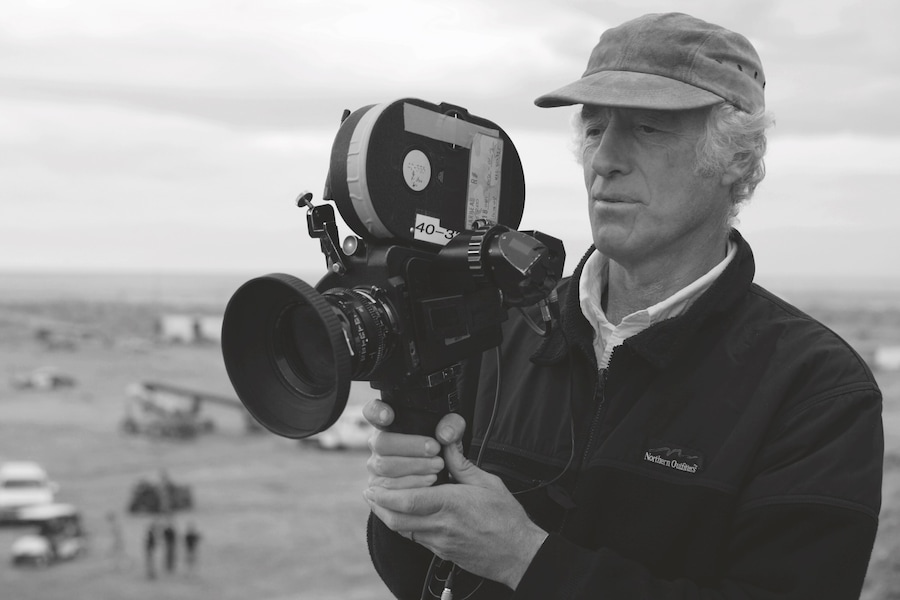
Roger Deakins is perhaps the most celebrated cinematographer working today. As his new memoir Reflections is released, he shares five essential films that raise the bar for the art form
Roger Deakins has shot some of the most gorgeous films ever made – just don’t say that out loud when he’s in earshot. “Cinematography isn’t about beautiful images,” he tells me. “It’s about producing a whole series of images that serve a story. If I come out of a premiere and somebody says, ‘Oh, I love the shot when such and such …’ I know I’ve made a mistake.” This philosophy is explored more deeply in Deakins’ richly detailed new book, Reflections: On Cinematography. Part memoir, part behind-the-scenes guide to the craft of movie making, it takes readers on a chronological journey from his boyhood in Torquay through to becoming the most celebrated cinematographer of the modern era.
Marbled throughout the book is an emphasis on filmmaking’s collaborative nature. “When I haven’t got on with directors, it’s usually because I haven’t felt it’s been a collaborative process,” Deakins says. No such issues with Denis Villeneuve, Sam Mendes or the Coen brothers, the directors Deakins has worked with most often. What makes those relationships so special? “Well, they’re all very visual, and they understand the whole process of filmmaking. But I don’t think their technical experience is nearly as important as their passion – that’s what really makes great filmmakers.”
Deakins’ most enduring working relationship, however, is with his wife, the script supervisor James Ellis Deakins. The pair met in 1992 on the set of Michael Apted’s neo-western Thunderheart and have been joined at the hip ever since, including on the writing of Reflections, with Ellis Deakins helping fill in details and dealing with the publishing side. “When we started going out, we already had a very strong professional relationship,” she tells me, “and that’s always helped us over the years, because we can be talking about something personal, but if something work-wise comes up, we can flip really easily.”
That’s pretty handy, because for her husband, the personal and the professional are basically the same thing. “Yeah, I don’t see any difference between my personal life and work,” Deakins admits. “But luckily, James and I don’t have to come home to one another and try to explain what our day was like. We’ve lived it together.” During the writing of Reflections, Deakins had a specific reader in mind: “I was writing it for myself when I was 17, because I didn’t feel there was a personal book out there by any cinematographer that also really went into the work they’ve done and their process.”
With this idea of education in mind, here, Rogen Deakins suggests five films that every aspiring cinematographer should study.

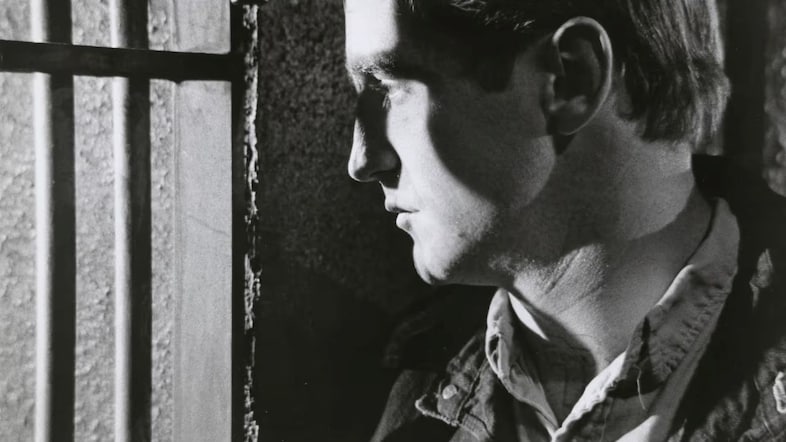
In Cold Blood (1967)
Director: Richard Brooks | Cinematographer: Conrad Hall
“I tend to think cinematography shouldn’t stand out. It should all be part of a piece. In Cold Blood is a perfect example of that. Conrad Hall shot it, and he had such a deep consideration for the frame and how the image and the scenes are connected. So every time there’s a scene transition, there’s been a thought ahead of time: ‘we’ll end up on this, and then we’ll start on this image’, or they’ve thought about what direction the camera is travelling in through the frame, and how it’s going to move into the next shot. And of course, those are decisions by the editor and the director, as well as the cinematographer, but they all were working together, and it’s so elegant and seamless.”

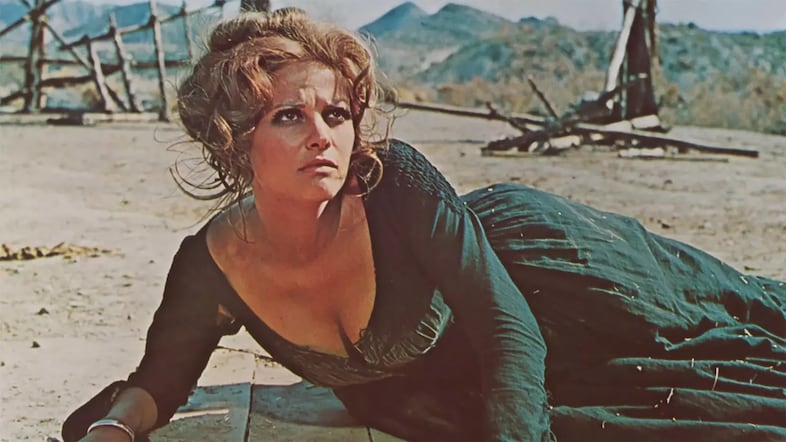
Once Upon a Time in the West (1968)
Director: Sergio Leone | Cinematographer: Tonino Delli Colli
“I’m not a fan of ostentatious camerawork, but there are exceptions, like Once Upon a Time in the West. Leone goes from really big close-ups cut together, like in the opening at the train station to these huge crane shots where the camera just floats over the landscape. That juxtaposition is very beautiful, it’s operatic, and it works in unison with what the director wants. If you compare Once Upon a Time in the West with Lawrence of Arabia, say, both have this epic, widescreen quality and a similar feel for the landscape, but David Lean’s film is much more restrained, with much less dramatic cutting between wide shots and close-ups. With Once Upon a Time in the West, Leone sets up this unusual rhythm between [the] images and stays true to it, and it has such an emotional effect.”

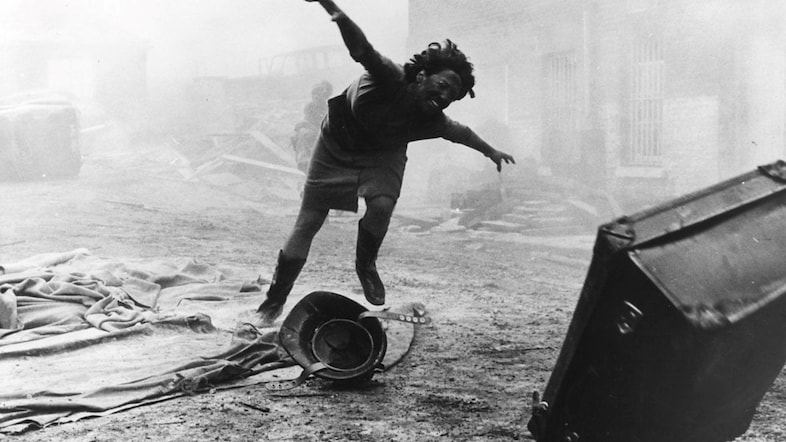
The War Game (1965)
Director: Peter Watkins | Cinematographers: Peter Bartlett and Peter Suschitzky
“At the total other extreme, there’s Peter Watkins’ The War Game. It’s rough. It’s shot on 16mm. It’s in black and white, very grainy, but it’s brilliant cinematography because it fits so well with what Watkins is trying to do. I used to have these conversations with Conrad Hall, asking, ‘How do you photograph despair and still keep an audience?’ There’s a danger when you’re filming in a squalid place and the images look beautiful. You see that in photography a lot, but you also see it in films. I find it really distasteful when images that are trying to depict horror are beautiful. But when you look at something like The War Game, there are none of those issues, because the images are intentionally so harsh and rough and uncompromising.”

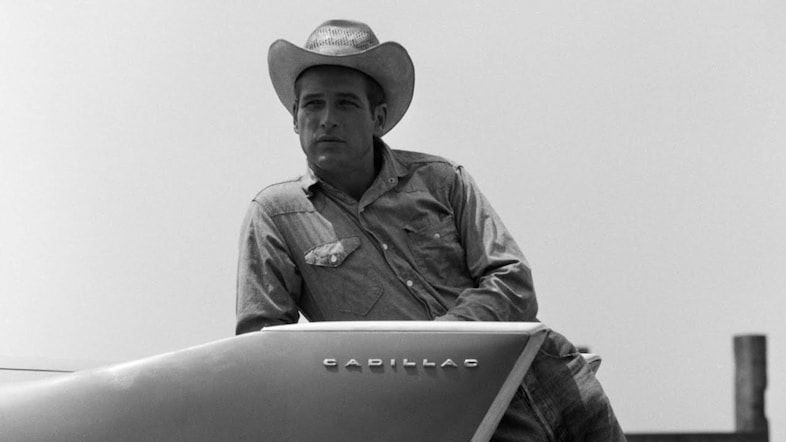
Hud (1963)
Director: Martin Ritt | Cinematographer: James Wong Howe
“James Wong Howe’s cinematography in Hud is great because it tells you so much about the character through the frame. It’s not like TV today, where it’s just cuts to close-ups of people because they’re talking. Here, it’s like the camera is choosing the shot. There’s a sequence with no close-ups. It’s just medium shot, medium shot, medium shot, then Howe hits you with two close-ups in one scene, and it makes those close-ups so much more powerful. The framing also shows us that Hud is an outsider. You have lots of two-shots and three-shots of other people together, but Paul Newman’s character is usually alone. He’s isolated in a single shot, but no other character is shown in a similar way.”

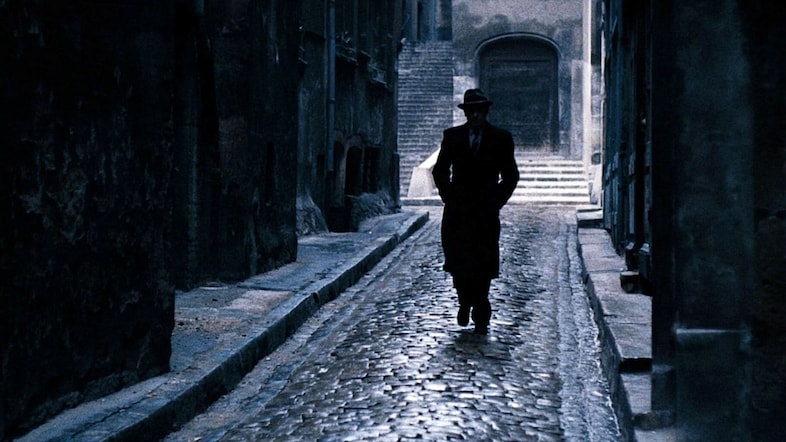
Army of Shadows (1969)
Director: Jean-Pierre Melville | Cinematographer: Pierre Lhomme
“Melville is such a great filmmaker. He shot his films over a very long time period. On some of his earlier films, he could only work at weekends because he didn’t have the money. But what he did on those small budgets was remarkable. He was a director who would just go out with his cinematographer and grab shots, but they were always very considered. You don’t even think about any of that when you watch his films, particularly Army of Shadows. It just has this sense of mood and place, and his frames are so uncluttered and direct and haunting. Anybody who wants to learn about directing and cinematography should sit down and watch all of Melville’s work.”
Reflections: On Cinematography by Roger Deakins is published by Cassell and is out now.
